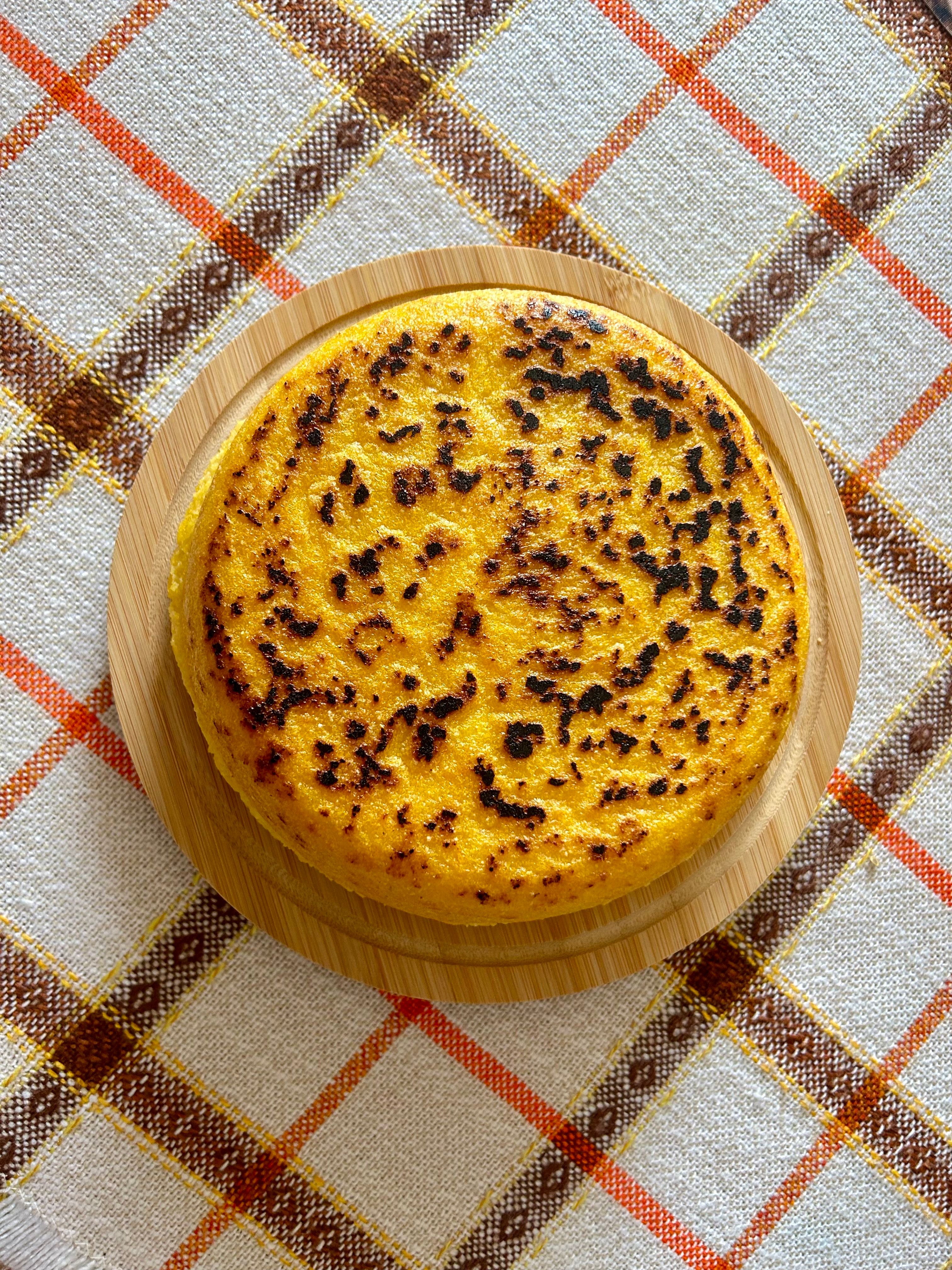
The diets react (see scores below)
Common Ingredients
- cornmeal
- water
- salt
- butter
- cheese
- sour cream
Specific recipes may vary.
Incompatible with 6 of 11 diets
Diet Ratings
Mamaliga is a Romanian polenta made from cornmeal as its base ingredient. Cornmeal is a grain product with an extremely high net carb content — roughly 70-75g of net carbs per 100g dry weight. Even a small serving of mamaliga (a standard side portion might use 50-80g of dry cornmeal) would deliver 35-60g of net carbs, easily exceeding the entire daily keto carb budget in a single dish. While the accompaniments — butter, cheese, and sour cream — are keto-friendly fats, they cannot offset the disqualifying carb load from the cornmeal foundation. Mamaliga is fundamentally incompatible with ketosis regardless of portion size at any reasonable serving.
Mamaliga in its traditional Romanian form contains multiple animal-derived ingredients that disqualify it from a vegan diet. While the base of cornmeal, water, and salt is fully plant-based, this dish is prepared and served with butter (dairy), cheese (dairy), and sour cream (dairy). All three are direct animal products excluded under vegan rules. The dish could theoretically be made vegan by substituting plant-based butter, vegan cheese, and dairy-free sour cream, but the traditional recipe as listed is not vegan-compliant.
Mamaliga is a Romanian cornmeal porridge (similar to polenta) that is fundamentally incompatible with the paleo diet. Cornmeal is a grain — a direct violation of core paleo principles. Beyond the primary ingredient, the dish is compounded by multiple additional non-paleo components: salt (added), butter and sour cream (dairy), and cheese (dairy). Every single ingredient in this dish is either a grain, a dairy product, or added salt — all explicitly excluded from the paleo framework. There is no paleo-compliant version of this dish without replacing its defining ingredient (cornmeal), at which point it would no longer be mamaliga.
Mamaliga is a Romanian cornmeal porridge that sits uncomfortably within Mediterranean diet principles. The cornmeal base is a whole grain and not inherently problematic, but the traditional preparation with butter, cheese, and sour cream introduces significant saturated fat from dairy sources and displaces the preferred fat (extra virgin olive oil). Dairy in moderation is acceptable in the Mediterranean diet, but a dish where butter and sour cream are primary components rather than minor additions pushes it toward the caution zone. Cornmeal itself is also a refined/processed grain compared to preferred whole grains like farro, barley, or whole wheat, though it retains some nutritional value. The dish has no vegetables, legumes, or plant-forward elements to offset its dairy-heavy profile.
Some Mediterranean diet interpretations are lenient about dairy fats used in traditional regional cuisines, and cornmeal polenta is well-established in Northern Italian Mediterranean cooking (e.g., Lombardy, Veneto). A more permissive reading would treat mamaliga similarly to polenta — acceptable as an occasional grain side — especially if cheese is a modest addition rather than a primary ingredient.
Mamaliga is a Romanian polenta made primarily from cornmeal, which is a plant-derived grain and the foundational ingredient of this dish. Cornmeal is strictly excluded from the carnivore diet as a grain/plant food. While the dish also contains butter, cheese, and sour cream — which are animal-derived dairy products debated within carnivore circles — the dominant and defining ingredient is cornmeal, making this dish fundamentally incompatible with carnivore principles. Even the most liberal carnivore practitioners who include dairy would not consume a grain-based dish. There is no version of mamaliga that could be considered carnivore-compatible.
Mamaliga is a Romanian cornmeal porridge (polenta) that contains multiple excluded ingredients. Cornmeal is a grain (corn) and is explicitly excluded on Whole30. Additionally, butter and sour cream are dairy products, which are also excluded (only ghee/clarified butter is the dairy exception, not regular butter). Cheese is likewise excluded dairy. With three separate categories of excluded ingredients — grains, dairy (butter), dairy (cheese), and dairy (sour cream) — this dish is clearly non-compliant.
Mamaliga is a Romanian polenta made primarily from cornmeal, which is low-FODMAP per Monash University. Water and salt are FODMAP-free. Butter is low-FODMAP at standard servings (Monash approves up to 1 tablespoon). The problematic ingredients are cheese and sour cream. Hard aged cheeses (e.g., parmesan, cheddar) are low-FODMAP due to minimal lactose, but soft or fresh cheeses (e.g., feta, ricotta, cottage cheese) are high-FODMAP. Sour cream is low-FODMAP only at 2 tablespoons per Monash — typical Romanian servings may easily exceed this. The dish description does not specify cheese type, which is a critical variable. If hard cheese is used with a modest sour cream portion, mamaliga could be low-FODMAP; if soft/fresh cheese is used or sour cream is served generously, it becomes high-FODMAP. A standard Romanian serving often includes a dollop of sour cream and white cheese (brânză), which may push lactose levels into high-FODMAP territory.
Monash University rates hard cheeses as low-FODMAP and sour cream as low-FODMAP only up to 2 tablespoons, but many clinical FODMAP practitioners advise caution with dairy-rich dishes during strict elimination given serving-size ambiguity. The type of cheese used (soft vs. hard) dramatically changes the FODMAP status, and without specification, practitioners often recommend avoiding traditional mamaliga preparations during the elimination phase.
Mamaliga (Romanian cornmeal porridge) has a split nutritional profile from a DASH perspective. The cornmeal base is a whole grain and DASH-compatible, providing fiber, magnesium, and potassium with low sodium. However, traditional mamaliga is typically enriched with butter, full-fat cheese (often brânza or telemea, which can be quite salty), and sour cream — all of which conflict with DASH principles. Full-fat dairy is not recommended on DASH, butter adds saturated fat, and aged/brined Romanian cheeses can be high in sodium. The dish as commonly prepared is high in saturated fat and potentially high in sodium, though the cornmeal base itself is DASH-friendly. A modified version using low-fat dairy and minimal salt could score significantly higher.
NIH DASH guidelines clearly limit full-fat dairy, butter, and high-sodium cheeses. However, updated clinical interpretations note that recent meta-analyses have not consistently linked full-fat dairy to worse cardiovascular outcomes, and some DASH-oriented dietitians allow small portions of full-fat cheese and dairy if overall saturated fat targets are met — under this view, a modest portion of mamaliga with reduced-fat toppings could be acceptable.
Mamaliga is essentially Romanian polenta — a cornmeal porridge that presents significant challenges for Zone Diet compliance. Cornmeal is a high-glycemic grain carbohydrate that Zone classifies as 'unfavorable.' As a side dish with no protein source, it throws off the 40/30/30 macro balance immediately. The accompaniments (butter, sour cream, cheese) add saturated fat rather than the preferred monounsaturated fats, and contribute minimal lean protein. There is no lean protein component, no low-glycemic vegetables, and the fat profile is predominantly saturated. While a tiny portion of cornmeal could theoretically fit as a carb block within a carefully constructed Zone meal, the traditional serving of mamaliga — especially with butter, cheese, and sour cream — pushes this dish firmly into problematic territory. The lack of protein and dominance of high-glycemic carbs paired with saturated fat is essentially the inverse of Zone principles. The score edges above 1-2 because cornmeal does have some fiber buffering its glycemic impact compared to pure sugar, and the dairy provides trace protein.
Some Zone practitioners note that in Sears' later writings (Toxic Fat, The OmegaRx Zone), context and portion control are emphasized over categorical exclusion. A very small portion of mamaliga (1/3 cup cooked) used as a single carb block within a broader Zone-balanced meal that includes lean protein and monounsaturated fat could technically fit the block system. The cheese and sour cream also provide some protein blocks. In this interpretation, mamaliga as a condiment-sized portion rather than a side dish could be managed — but traditional Romanian portions make this practically difficult.
Mamaliga is a traditional Romanian polenta made from cornmeal, water, and salt — a base that is relatively neutral from an anti-inflammatory standpoint. Cornmeal is a whole grain source with some fiber and B vitamins, but it lacks the robust antioxidant and polyphenol profile of colorful vegetables or omega-3-rich foods. It is also a high-glycemic food, and refined cornmeal in particular can spike blood sugar, a known driver of inflammatory markers. The traditional enrichments in this dish — butter, cheese, and sour cream — are the primary anti-inflammatory concerns. These are full-fat dairy products high in saturated fat, which anti-inflammatory guidelines consistently recommend limiting. Butter in particular is flagged as a food to restrict. The cheese and sour cream compound this saturated fat load further. On the positive side, dairy contains some anti-inflammatory nutrients (calcium, short-chain fatty acids in fermented forms), and sour cream has a mild fermentation component. However, the overall profile of this dish — high-glycemic grain base plus multiple full-fat dairy additions — places it in cautionary territory. A version with olive oil substituted for butter, a modest amount of lower-fat cheese, and no sour cream would rate significantly better.
Some anti-inflammatory researchers note that full-fat dairy, including butter and cheese, may not be as pro-inflammatory as once thought — a position gaining support from certain meta-analyses suggesting saturated fat from dairy has a neutral or even slightly protective cardiovascular effect. Dr. Weil's framework, however, still recommends limiting full-fat dairy, and the glycemic load of cornmeal-based dishes remains a concern across most anti-inflammatory protocols.
Mamaliga in its traditional Romanian form is a polenta-style cornmeal porridge that, when prepared with butter, cheese, and sour cream, becomes a high-fat, low-protein, low-fiber dish with poor nutrient density per calorie. The cornmeal base is a refined starchy carbohydrate with minimal fiber and no meaningful protein. The additions of butter, full-fat cheese, and sour cream layer in significant saturated fat, which worsened nausea, bloating, and reflux from slowed gastric emptying. There are no primary protein sources listed, making this dish fail the #1 GLP-1 dietary priority entirely. The saturated fat load also conflicts with Priority #3. While cornmeal has modest caloric density, the overall nutritional profile — high saturated fat, negligible protein, low fiber, and empty starchy carbohydrates — makes this a poor choice for GLP-1 patients, particularly given that reduced appetite means every meal must maximize nutritional value.
*See how scores were generated at our methodology page.
Nutritional profile
Six traits that cut across every diet.
Fiber & Plants
How much whole-plant food and fiber it delivers.
Healthy Fats
The quality of its fats (unsaturated, omega-3).
Whole / Unprocessed
How close it is to its natural, unprocessed form.
Gut Gentle
How easy it is on digestion (low FODMAP, few irritants).
Low Glycemic
How little it spikes your blood sugar.
Protein Density
How much protein it packs per calorie.
Controversy Index
Higher controversy = more disagreement between diets.
Diet-Specific Tips
 Mediterranean — 4/10
View tips
- Cornmeal is a grain but not a preferred whole grain in Mediterranean guidelines
- Butter replaces olive oil as the primary fat, contradicting core Mediterranean principles
- Sour cream adds additional saturated fat with minimal nutritional benefit
- Cheese is acceptable in moderation but here combines with other dairy fats
- No vegetables, legumes, or plant-forward ingredients present
- Not a traditional Mediterranean dish, though polenta analogues exist in Italian cuisine
 Low-FODMAP — 5/10
View tips
- Cornmeal (polenta) is low-FODMAP — safe base ingredient
- Butter is low-FODMAP at ≤1 tablespoon per serve
- Sour cream is low-FODMAP at ≤2 tablespoons but easily over-consumed
- Hard cheeses (e.g., cheddar, parmesan) are low-FODMAP; soft/fresh cheeses are high in lactose
- Romanian brânză (white cheese) is typically a soft or semi-soft cheese — high lactose risk
- Cheese type not specified — verdict depends heavily on which cheese is used
- Traditional serving portions may exceed safe lactose thresholds
 DASH — 4/10
View tips
- Cornmeal base is a whole grain and DASH-compatible
- Butter adds saturated fat, conflicting with DASH fat limits
- Full-fat sour cream is not recommended under DASH (low-fat dairy preferred)
- Traditional Romanian cheeses (e.g., telemea, brânza) can be high in sodium and saturated fat
- Added salt during cooking increases sodium load
- Portion-controlled mamaliga with low-fat dairy substitutions would score higher
- No lean protein or vegetables in this preparation to offset less favorable ingredients
 Zone — 5/10
View tips
- Cornmeal is a high-glycemic 'unfavorable' carbohydrate in Zone terminology
- No lean protein source — macro ratio is severely imbalanced
- Butter and sour cream add saturated fat, not Zone-preferred monounsaturated fat
- Traditional serving size would consume multiple carb blocks with no protein blocks
- No low-glycemic vegetables or omega-3 anti-inflammatory components
- Cheese provides minor protein but with high saturated fat accompaniment
- As a side dish category, it cannot stand alone as a Zone-compliant component without significant meal restructuring
 Anti-Inflammatory — 4/10
View tips
- Cornmeal is a moderate-glycemic carbohydrate with limited antioxidant profile
- Butter is a saturated fat explicitly limited in anti-inflammatory guidelines
- Full-fat cheese adds significant saturated fat load
- Sour cream is full-fat dairy; mild fermentation provides minimal offsetting benefit
- No omega-3 sources, antioxidants, or anti-inflammatory herbs/spices present
- Plain polenta base (cornmeal + water + salt) would be more neutral on its own