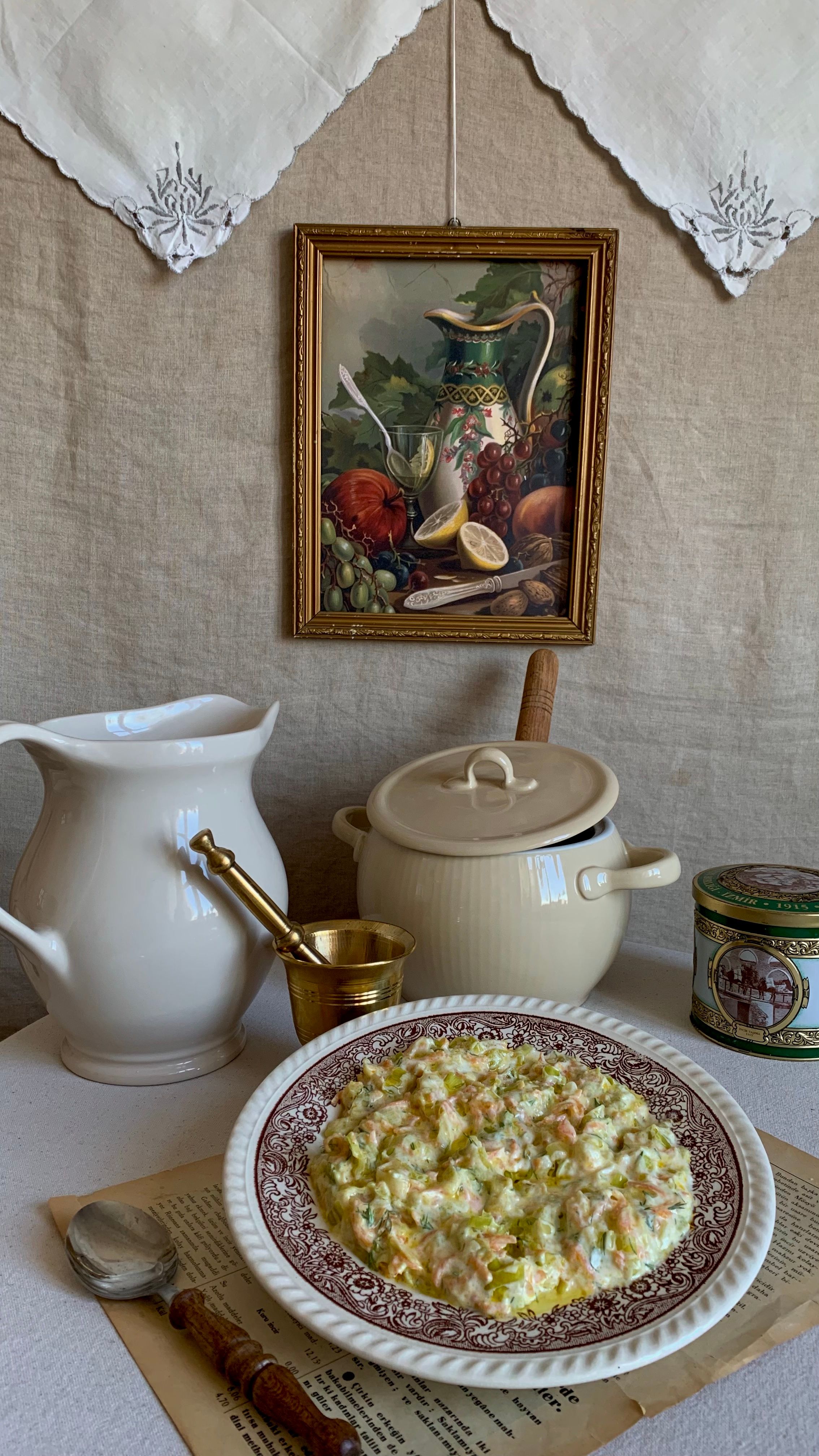
Photo: Büşra Yaman / Pexels
Romanian
Salata de Boeuf
The diets react (see scores below)
Common Ingredients
- beef
- potatoes
- carrot
- peas
- pickles
- mayonnaise
- mustard
- eggs
Specific recipes may vary.
Incompatible with 9 of 11 diets
Diet Ratings
Salata de Boeuf is fundamentally incompatible with ketogenic diet principles. The dish contains multiple high-carbohydrate ingredients that collectively push net carbs far beyond the daily keto limit in a single serving. Potatoes are a starchy vegetable with approximately 15-17g net carbs per 100g, and they typically form a large portion of this salad. Peas add another significant carb load (~9-12g net carbs per 100g). Carrots contribute additional net carbs (~7-9g per 100g). While the beef, eggs, and mayonnaise are keto-friendly, and mustard and pickles are generally low-carb, the starchy and legume components dominate the dish and make it impossible to consume in any realistic portion without breaking ketosis. A standard serving of Salata de Boeuf could easily deliver 30-50g of net carbs from potatoes and peas alone, exceeding the entire daily keto carb budget.
Salata de Boeuf is a traditional Romanian cold salad that contains multiple animal-derived ingredients, making it entirely incompatible with a vegan diet. Beef is a direct animal product (meat), eggs are an animal product excluded by all mainstream vegan standards, and mayonnaise in its traditional form is made with eggs. All three of these ingredients independently disqualify the dish. There is no ambiguity here — this salad is built on a foundation of animal products.
Salata de Boeuf contains multiple non-paleo ingredients that disqualify it outright. Peas are legumes and are excluded from paleo. White potatoes are discouraged under strict paleo guidelines. Commercial mayonnaise is almost universally made with seed oils (soybean or canola oil), making it a processed, non-paleo condiment. Pickles typically contain added salt and often vinegar with preservatives. Mustard can be acceptable in its pure form but commercial versions often contain additives. While beef and eggs are approved paleo foods, and carrots are perfectly acceptable, the combination of legumes (peas), debated starchy tubers (white potatoes), and seed-oil-based mayonnaise makes this dish clearly non-compliant as traditionally prepared.
Salata de Boeuf is a Romanian festive salad that conflicts with Mediterranean diet principles on multiple fronts. The primary protein is beef, which should be limited to only a few times per month. More critically, mayonnaise is the dominant dressing, introducing significant amounts of refined vegetable oils and no olive oil. The dish is entirely absent of extra virgin olive oil, fresh vegetables in their whole form, or any plant-forward emphasis. While potatoes, carrots, peas, and pickles are vegetables, they are bound in a heavy mayonnaise base rather than dressed with olive oil or fresh herbs. Eggs add modest nutritional value but don't redeem the overall profile. This dish represents a central and Eastern European culinary tradition that diverges substantially from Mediterranean dietary patterns.
Salata de Boeuf is a traditional Romanian beef salad that is almost entirely incompatible with the carnivore diet. While it contains carnivore-approved ingredients (beef and eggs), the dish is dominated by plant-based foods: potatoes, carrots, peas, and pickles make up the bulk of the salad's volume and carbohydrate content. Mustard typically contains plant-derived ingredients and vinegar. Even the mayonnaise, while egg-based, usually contains plant oils (sunflower or soybean oil) and other additives. The dish is fundamentally a plant-heavy salad with beef as a minor component, making it a clear avoid on any tier of the carnivore diet.
Salata de Boeuf contains peas and commercial mayonnaise, both of which are problematic on Whole30. Peas are legumes and are not among the explicitly excepted legumes (green beans, sugar snap peas, snow peas). Standard commercial mayonnaise almost universally contains soy oil or soybean oil (a legume derivative) and often added sugar, making it non-compliant. The remaining ingredients — beef, potatoes, carrot, pickles (check for added sugar/sulfites in brine, though sulfites are now allowed), eggs, and mustard — are individually compliant or can be sourced in compliant versions. However, the pea inclusion alone disqualifies the dish as traditionally prepared, and without a Whole30-compliant homemade mayo (made with avocado or light olive oil), the mayonnaise is also an issue.
Some Whole30 practitioners note that if you substitute the peas with additional compliant vegetables and use a homemade avocado-oil mayo with compliant mustard, a modified version of this dish could be made fully compliant. Official Whole30 guidelines, however, are clear that peas (beyond the three explicitly allowed exceptions) are excluded legumes, so the traditional recipe cannot be approved as-is.
Salata de Boeuf is a Romanian cold salad with several components to evaluate individually. Beef is low-FODMAP and safe. Potatoes are low-FODMAP at a standard serving (~75g). Carrots are low-FODMAP. Eggs are low-FODMAP. Plain mustard is generally low-FODMAP in small amounts. Mayonnaise is typically low-FODMAP (made from oil and eggs), though commercial brands should be checked for HFCS or garlic/onion additives. The two problematic ingredients are peas and pickles. Green peas are moderate-to-high in GOS and fructans — Monash rates them as low-FODMAP only at 1/4 cup (42g), and a typical serving of this salad will likely contain more. Pickles (fermented cucumbers) are generally low-FODMAP, but commercial pickles may contain garlic, which is high in fructans and would make them a concern. The combined effect of peas (likely exceeding the safe threshold in a full serving) and potentially garlic-containing pickles creates meaningful FODMAP risk. This dish is not automatically off-limits but requires careful ingredient checking and portion control, especially around peas and pickles.
Monash University rates green peas as low-FODMAP only at 1/4 cup, a threshold easily exceeded in a generous salad portion — many FODMAP practitioners would advise avoiding this dish during strict elimination due to the cumulative stacking of peas with any garlic-containing pickles or mayonnaise. The dish can be made low-FODMAP with garlic-free pickles and controlled pea portions, but as traditionally prepared, clinical caution is warranted.
Salata de Boeuf is a traditional Romanian beef salad that presents multiple significant concerns for the DASH diet. The dish is dominated by full-fat mayonnaise, which is high in sodium, saturated fat, and calories — a binding agent that DASH guidelines explicitly discourage in large quantities. Pickles (pickled cucumbers or other vegetables) are extremely high in sodium, often contributing 300–900mg per serving, directly conflicting with DASH's sodium limits of 1,500–2,300mg/day. Beef, particularly if not lean cuts, adds saturated fat. While some ingredients like carrots, peas, and potatoes offer potassium, fiber, and magnesium — nutrients DASH encourages — they are outweighed by the problematic components. Eggs add moderate concern given cholesterol and the overall fat load of the dish. The cumulative sodium load from pickles, mayonnaise, and mustard alone likely exceeds a significant portion of the daily DASH sodium allowance in a single serving. This dish as traditionally prepared is not compatible with DASH principles.
Salata de Boeuf presents a challenging Zone profile with several unfavorable elements competing against some redeemable ones. The primary carbohydrate sources — potatoes and peas — are both flagged in Zone methodology: potatoes are explicitly listed by Dr. Sears as a high-glycemic vegetable to avoid, and peas, while tolerable in small blocks, are starchy legumes with moderate glycemic impact. Carrots are acceptable low-glycemic vegetables. The beef protein is lean enough if trimmed, and eggs add good protein, but the macronutrient ratios are skewed heavily toward carbohydrates from the potato base, with the fat profile dominated by mayonnaise (typically omega-6-heavy seed oil), which conflicts with Zone's anti-inflammatory emphasis on monounsaturated fats. The overall dish as traditionally prepared lands far from the 40/30/30 target — likely closer to 55-60% carbs, 15-20% protein, and 20-25% fat, with poor fat quality. It can be nudged toward Zone compliance only with significant modification: drastically reducing potatoes (or substituting cauliflower), increasing beef and egg portions, and replacing commercial mayonnaise with an olive-oil-based version.
Some Zone practitioners would argue this dish is more workable than the score suggests: the protein from beef and eggs is genuinely lean and block-friendly, pickles add negligible carbs with probiotic benefit, and mustard is Zone-favorable. If portion size is small (limiting potato exposure to one block of carbs) and paired with additional low-GI vegetables, a modified version could approach Zone ratios. The dish is not categorically excluded — it simply requires aggressive portioning and ingredient modification.
Salata de Boeuf is a traditional Romanian festive salad with a profile that conflicts significantly with anti-inflammatory principles. The primary concerns are: (1) Beef as the main protein — red meat is a 'limit' food in anti-inflammatory frameworks due to saturated fat and arachidonic acid content, which can promote inflammatory eicosanoids. (2) Mayonnaise is the dominant binder and is typically made with refined seed oils (soybean or sunflower oil), which are high in omega-6 fatty acids — a key driver of inflammatory imbalance when consumed regularly. Commercial mayonnaise also often contains additives and preservatives. (3) The dish is calorie-dense and fat-heavy, with little in the way of anti-inflammatory micronutrients. On the positive side, carrots and peas contribute some antioxidants and fiber, and mustard contains anti-inflammatory compounds. Pickles may support gut health if lacto-fermented, though commercial pickles often contain vinegar and additives rather than live cultures. Eggs provide choline and selenium but are a contested ingredient. Potatoes are a neutral starchy base. Overall, the combination of red meat + commercial mayonnaise (seed oil base) + refined starch in a single dish makes this a poor fit for an anti-inflammatory eating pattern, especially if consumed regularly as is traditional during Romanian holidays.
Mayonnaise's inflammatory status depends heavily on preparation: homemade mayonnaise using extra virgin olive oil or avocado oil would substantially improve the omega-6 burden and is endorsed by some anti-inflammatory cooks. Similarly, some researchers argue that moderate red meat from grass-fed sources has a more favorable omega-3:omega-6 ratio than conventional beef, which could partially offset concerns — a view supported by regenerative agriculture advocates though not yet mainstream in anti-inflammatory dietary guidelines.
Salata de Boeuf is a traditional Romanian dish that presents a mixed nutritional profile for GLP-1 patients. It does contain meaningful protein from beef and eggs, and includes vegetables (carrots, peas) that contribute some fiber and micronutrients. However, the defining issue is the heavy mayonnaise base, which is the primary binder of this dish — traditional recipes use substantial amounts, making this a high-fat, calorie-dense preparation. For GLP-1 patients whose slowed gastric emptying already prolongs fat digestion, a mayo-heavy dish can worsen nausea, bloating, and reflux. The potatoes add refined starch and low fiber density. Pickles are a positive note — low calorie, gut-friendly. Peas and carrots add modest fiber. The beef is a lean protein source if trimmed, but the net nutritional value per calorie is poor due to the mayo. This dish could be modified (Greek yogurt or light mayo substitution, reduced potato volume, larger egg and vegetable proportion) to score considerably higher, but as traditionally prepared it is caution territory.
Some GLP-1-focused dietitians may argue this dish is acceptable in small portions given its real-food ingredients and protein contribution from beef and eggs, distinguishing it from ultra-processed high-fat foods. Others would flag the mayo content as a firm deterrent given how consistently high dietary fat worsens GI side effects in GLP-1 patients, particularly in the early dose-escalation phase.
*See how scores were generated at our methodology page.
Nutritional profile
Six traits that cut across every diet.
Fiber & Plants
How much whole-plant food and fiber it delivers.
Healthy Fats
The quality of its fats (unsaturated, omega-3).
Whole / Unprocessed
How close it is to its natural, unprocessed form.
Gut Gentle
How easy it is on digestion (low FODMAP, few irritants).
Low Glycemic
How little it spikes your blood sugar.
Protein Density
How much protein it packs per calorie.
Controversy Index
Higher controversy = more disagreement between diets.
Diet-Specific Tips
 Zone — 4/10
View tips
- Potatoes are explicitly unfavorable/avoid in Zone Diet as a high-glycemic vegetable
- Peas are starchy and add to glycemic load beyond favorable carb sources
- Mayonnaise is typically omega-6-rich (soybean or canola oil), conflicting with Zone anti-inflammatory principles
- Beef and eggs provide solid lean protein blocks if portions are adequate
- Carrot and pickle components are Zone-favorable
- Traditional preparation skews macro ratios heavily toward carbohydrates
- Dish can be partially rehabilitated by reducing potato volume and using olive-oil mayo
 GLP-1 Friendly — 4/10
View tips
- High mayonnaise content significantly raises fat per serving, worsening GLP-1 GI side effects
- Moderate protein from beef and eggs is a positive but diluted by the overall composition
- Potatoes add caloric bulk with low fiber density — not ideal for nutrient density per calorie
- Peas and carrots contribute modest fiber and micronutrients
- Pickles are low-calorie and may support palatability without negative impact
- Not portion-friendly in traditional serving sizes — mayo-bound salads are calorically dense per bite
- Easily modifiable: yogurt-based dressing substitution would significantly improve the profile