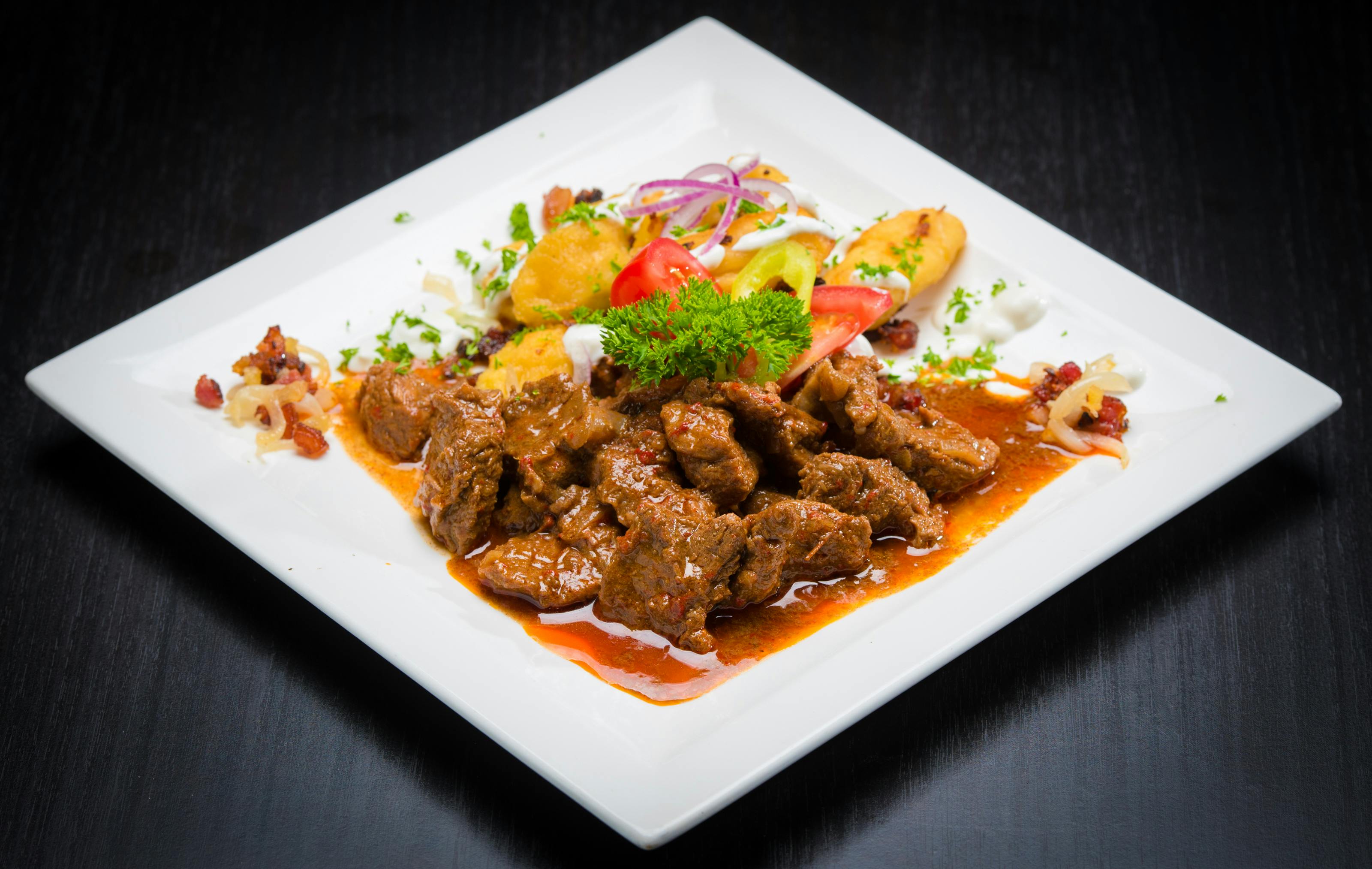
Photo: Novkov Visuals / Pexels
The diets react (see scores below)
Common Ingredients
- pork
- sausage
- garlic
- tomato paste
- white wine
- polenta
- eggs
- cheese
Specific recipes may vary.
Incompatible with 9 of 11 diets
Diet Ratings
Tochitura is a traditional Romanian pork stew that is fundamentally incompatible with keto in its standard form due to polenta (cornmeal mush), which is a high-glycemic grain-based side dish delivering a large carb load. While many individual ingredients — pork, sausage, garlic, eggs, and cheese — are keto-friendly, and tomato paste and white wine are manageable in small amounts with portion control, polenta is the defining and inseparable component of this dish as traditionally served. A single cup of polenta can contain 30-40g of net carbs, easily exceeding the daily keto limit on its own. The dish as a whole cannot be considered keto without a fundamental substitution that would make it a different dish entirely.
Tochitura is a traditional Romanian meat stew that is fundamentally incompatible with a vegan diet. The dish contains multiple animal products: pork (meat), sausage (meat product), eggs, and cheese (dairy). These are core, non-optional ingredients that define the dish. There is no ambiguity here — this dish is built almost entirely around animal-derived ingredients.
Tochitura contains multiple non-paleo ingredients that disqualify it from approval. Polenta is made from corn, a grain that is strictly excluded from the paleo diet. Cheese is dairy, which is excluded. Sausage is typically a processed meat containing added salt, fillers, and preservatives. White wine, while debated, adds to the concerns. The base ingredients of pork and garlic are paleo-compliant, and tomato paste and eggs are generally acceptable, but the combination of polenta (corn/grain), cheese (dairy), and processed sausage makes this dish firmly non-paleo.
Tochitura is a traditional Romanian pork stew that fundamentally conflicts with Mediterranean diet principles. The dish centers on pork and sausage as primary proteins — red and processed meats that Mediterranean guidelines limit to a few times per month and actively discourage respectively. Processed sausage is particularly problematic due to high saturated fat, sodium, and preservatives. The combination of pork, sausage, eggs, and cheese stacks multiple high-saturated-fat ingredients in a single meal. While garlic, tomato paste, and white wine are Mediterranean-friendly components, they are minor supporting elements. Polenta (cornmeal) is a refined grain with limited fiber compared to whole grains. The dish's core identity is built around exactly the animal protein profile the Mediterranean diet minimizes.
Tochitura is a traditional Romanian pork stew that contains multiple plant-derived and processed ingredients that disqualify it from the carnivore diet. While the base of pork is carnivore-approved, the dish includes garlic (plant), tomato paste (plant), white wine (plant/fermented), and most critically polenta (cornmeal — a grain and one of the most strictly excluded foods on carnivore). The eggs and cheese have some carnivore standing, but they cannot redeem a dish so fundamentally built around plant ingredients and grains. This is not a borderline case — polenta alone is a clear disqualifier across all tiers of carnivore eating.
Tochitura contains multiple excluded ingredients that make it incompatible with Whole30. Polenta is made from cornmeal, which is a grain and explicitly excluded. Cheese is dairy, which is excluded (only ghee/clarified butter are the dairy exceptions). Sausage commonly contains added sugar, fillers, or non-compliant additives. White wine is alcohol, which is excluded. These are not edge cases — grains, dairy, and alcohol are all clearly prohibited by the official Whole30 program.
Tochitura contains garlic as a core ingredient, which is high-FODMAP due to fructans at any standard culinary amount. Garlic is one of the highest-FODMAP foods tested by Monash University and is essentially impossible to use in traditional amounts safely during elimination. Additionally, sausages frequently contain garlic and onion as additives or flavoring, compounding the fructan load. The cheese component may also be problematic if it is a soft or fresh cheese (e.g., fresh cow's milk cheese) high in lactose, though hard aged cheeses are low-FODMAP. Tomato paste can be borderline — Monash rates it as low-FODMAP at small servings (2 tablespoons / 28g) but high-FODMAP at larger amounts. White wine in small quantities is generally low-FODMAP. Pork itself, polenta (cornmeal), and eggs are all low-FODMAP. However, the garlic alone makes this dish a clear avoid during the elimination phase, and commercial sausages with hidden garlic/onion powder make this doubly problematic. The dish cannot be safely consumed in its traditional form without significant modification.
Tochitura is a traditional Romanian pork stew that combines multiple high-fat, high-sodium ingredients that conflict directly with DASH diet principles. The dish centers on fatty pork cuts and sausage — processed/cured meats that are typically very high in sodium and saturated fat, both of which DASH explicitly limits. Cheese adds additional saturated fat and sodium. Eggs in this context are a lesser concern but compound the saturated fat load. While garlic, tomato paste, and white wine are DASH-compatible components, and polenta (cornmeal) is a whole grain that fits within DASH, the primary protein sources — fatty pork and especially sausage — make this dish fundamentally incompatible with DASH guidelines. The combined sodium from sausage, cheese, and tomato paste likely exceeds a significant portion of the daily DASH sodium limit in a single serving. The saturated fat from pork fat, sausage, and cheese further conflicts with DASH's emphasis on limiting saturated fat to protect cardiovascular health.
Tochitura is a traditional Romanian stew that presents several Zone Diet challenges. The dish combines pork (often fatty cuts) with sausage (typically high in saturated fat and sodium), served over polenta with eggs and cheese. The protein sources are problematic: pork and sausage tend to be fatty rather than lean, pushing the fat ratio well above the 30% Zone target and skewing it toward saturated rather than monounsaturated fat. The polenta (cornmeal) is a high-glycemic carbohydrate that Zone methodology classifies as 'unfavorable,' similar to white rice or bread — it causes rapid blood sugar elevation. Tomato paste and garlic are Zone-friendly polyphenol-rich ingredients, and white wine in cooking is minor. The eggs add some lean protein value. The primary issues are the combination of high-saturated-fat proteins (pork + sausage), the high-glycemic carb base (polenta), and the cheese adding more saturated fat. To make this more Zone-compatible, one would need to substitute leaner pork cuts, eliminate the sausage, drastically reduce the polenta portion, and increase vegetable content. As traditionally prepared, the macro balance is difficult to align with 40/30/30, likely landing closer to high fat, high carb, with protein as a secondary macronutrient.
Some Zone practitioners note that eggs are a favorable Zone protein, pork tenderloin (if used) is relatively lean, and tomato paste provides polyphenols aligned with Sears' anti-inflammatory principles. In later writings, Sears acknowledged that the overall hormonal response matters more than rigid block counting, and a small polenta portion with a larger pork-and-egg protein base could approximate Zone ratios. The dish is not categorically disqualifying — it depends heavily on the specific cut of pork used and the polenta-to-protein ratio in the serving.
Tochitura is a traditional Romanian stew built around pork and sausage, served with polenta, eggs, and cheese — a hearty but nutritionally mixed dish from an anti-inflammatory standpoint. On the positive side, garlic is a well-established anti-inflammatory ingredient with allicin-based benefits, tomato paste is rich in lycopene (a potent antioxidant, especially bioavailable when cooked), white wine contributes small amounts of polyphenols, and polenta (whole corn) is a relatively neutral whole-grain base. However, the core protein sources — pork and sausage — are the main concerns. Pork is a red meat and sausage is a processed meat, and both are generally limited or avoided in anti-inflammatory frameworks due to saturated fat content, arachidonic acid, and in the case of processed sausage, additives, nitrates, and high sodium. Cheese (typically a full-fat variety in this dish) adds further saturated fat. Eggs are a moderate ingredient — acceptable but not strongly anti-inflammatory. The dish lacks meaningful omega-3s, polyphenol-rich vegetables, or fiber-dense legumes that would push it into approved territory. The combination of red and processed meat with full-fat dairy places it firmly in the caution zone — not a dish to avoid entirely given its beneficial components (garlic, tomato, polenta), but not one suited for regular consumption on an anti-inflammatory eating pattern.
Some anti-inflammatory practitioners, particularly those emphasizing whole-food ancestral diets, would argue that unprocessed pork fat and eggs from pasture-raised animals have a less concerning fatty acid profile than conventional versions, and that the garlic and tomato paste provide meaningful anti-inflammatory offset. However, the sausage component is broadly agreed upon as problematic across anti-inflammatory frameworks due to processing, additives, and saturated fat load — making a full approval difficult to defend under mainstream anti-inflammatory guidance including Dr. Weil's pyramid.
Tochitura is a traditional Romanian stew centered on fatty pork cuts and cured sausage, typically cooked in lard or rendered fat, served alongside polenta, fried eggs, and aged cheese. This combination creates a high-fat, calorie-dense meal that is poorly suited for GLP-1 patients. Fatty pork and sausage are among the worst-tolerated protein sources on GLP-1 medications — the high saturated fat content dramatically worsens nausea, bloating, reflux, and gastroparesis-like symptoms caused by slowed gastric emptying. Sausage also typically contains fillers, preservatives, and low protein density per calorie relative to lean meats. The fried egg preparation and cheese add further saturated fat. White wine contributes alcohol, which the prompt flags as an avoid due to empty calories. Polenta on its own would be a caution (moderate glycemic load, low protein), but in this context it adds refined carbohydrate volume to an already problematic dish. Garlic and tomato paste are positives — both are nutrient-dense and well-tolerated — but they do not meaningfully offset the overall profile. The dish is not small-portion friendly and would require significant modification (lean pork loin substituted, sausage removed, eggs poached not fried, cheese minimized, wine omitted) to become acceptable, at which point it would no longer be recognizable as tochitura.
Some GLP-1-aware dietitians note that pork dishes with moderate fat content can be tolerated by patients earlier in their dose titration when side effects are milder, and that the egg and cheese components do contribute meaningful protein. However, the sausage and alcohol components represent near-universal concerns regardless of individual tolerance, and most obesity medicine RDs would recommend avoiding this dish in its traditional preparation.
*See how scores were generated at our methodology page.
Nutritional profile
Six traits that cut across every diet.
Fiber & Plants
How much whole-plant food and fiber it delivers.
Healthy Fats
The quality of its fats (unsaturated, omega-3).
Whole / Unprocessed
How close it is to its natural, unprocessed form.
Gut Gentle
How easy it is on digestion (low FODMAP, few irritants).
Low Glycemic
How little it spikes your blood sugar.
Protein Density
How much protein it packs per calorie.
Controversy Index
Higher controversy = more disagreement between diets.
Diet-Specific Tips
 Zone — 4/10
View tips
- Polenta is a high-glycemic 'unfavorable' carbohydrate in Zone methodology — raises blood sugar rapidly
- Sausage is high in saturated fat and processed ingredients, a poor Zone protein choice
- Pork cut matters greatly — fatty pork shoulder vs. lean tenderloin changes the Zone compatibility significantly
- Cheese adds additional saturated fat, pushing fat ratio above Zone target and in the wrong fat type
- Eggs are a Zone-favorable protein source and partially redeem the dish's protein quality
- Tomato paste and garlic provide polyphenols consistent with Sears' anti-inflammatory focus
- As traditionally served, the dish lacks sufficient low-glycemic vegetables to balance the polenta carbohydrates
- Overall macro profile skews toward high saturated fat and high-glycemic carbs — difficult to fit into Zone blocks without significant modification
 Anti-Inflammatory — 4/10
View tips
- Pork and sausage are red/processed meats — limited or avoided in anti-inflammatory frameworks
- Processed sausage likely contains nitrates, additives, and high sodium — pro-inflammatory
- Full-fat cheese adds saturated fat burden
- Garlic provides allicin with documented anti-inflammatory properties
- Tomato paste is rich in bioavailable lycopene — anti-inflammatory antioxidant
- Polenta is a neutral whole-grain base — acceptable
- Eggs are moderate — not strongly pro- or anti-inflammatory
- Dish lacks omega-3s, legumes, or colorful antioxidant-rich vegetables
- Not suitable for regular consumption on an anti-inflammatory diet