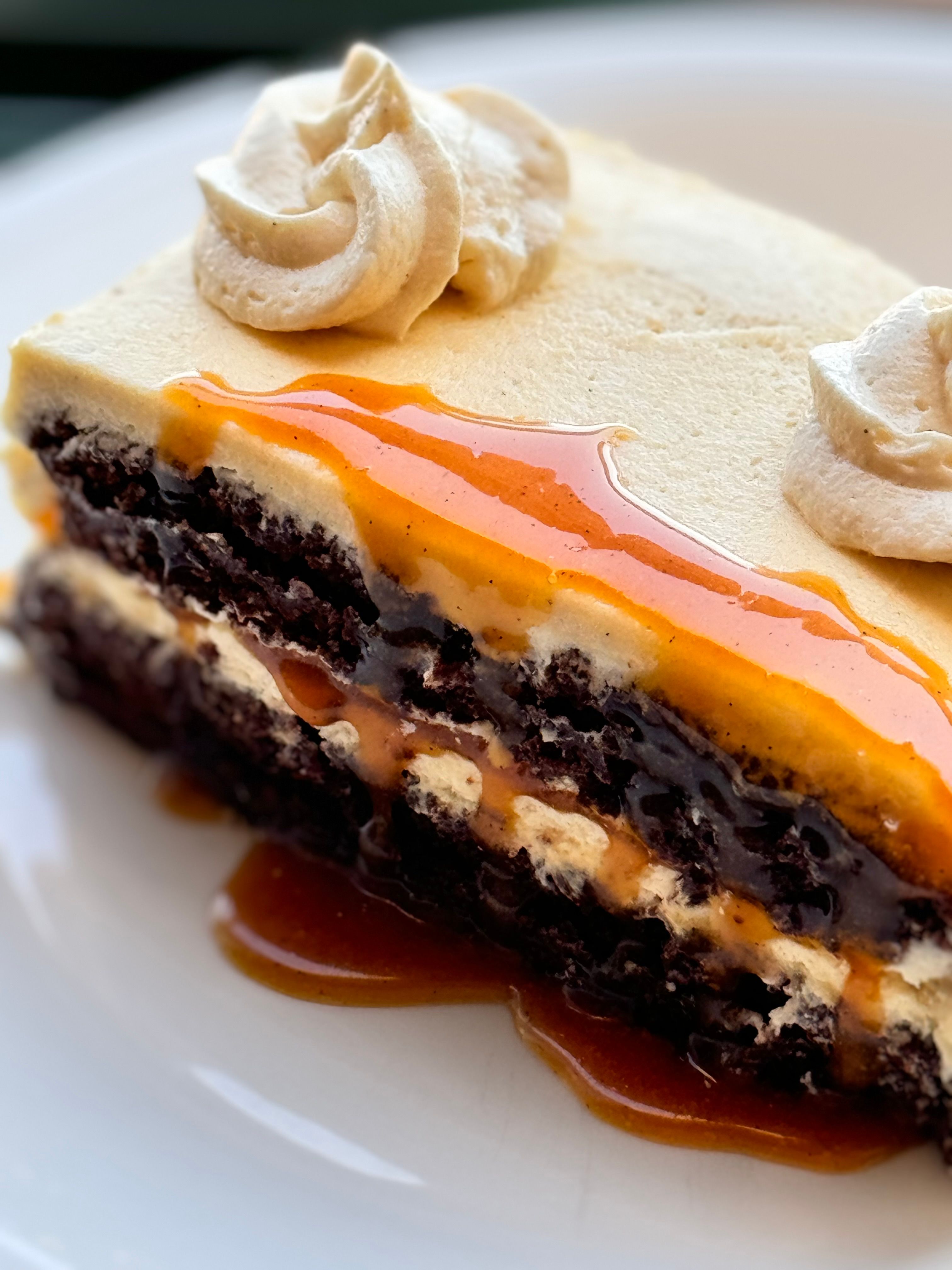
Photo: Taimana Malulani / Pexels
American
Salted Caramel
The diets react (see scores below)
Common Ingredients
- sugar
- butter
- heavy cream
- sea salt
- vanilla extract
Specific recipes may vary.
Incompatible with 11 of 11 diets
Diet Ratings
Salted caramel is fundamentally built on sugar as its primary ingredient, making it completely incompatible with a ketogenic diet. A standard serving contains an overwhelming amount of net carbs from sucrose, which would instantly spike blood glucose and terminate ketosis. While butter and heavy cream are keto-friendly ingredients, the sugar content is so dominant that it renders this dish a hard avoid. There is no portion size small enough to make traditional salted caramel workable within a 20-50g daily net carb limit.
Salted caramel in this recipe contains butter and heavy cream, both of which are dairy products derived from cows. These are unambiguously animal-derived ingredients, making this dish incompatible with a vegan diet. Sugar and vanilla extract are plant-based, and sea salt is a mineral, but the presence of butter and heavy cream is disqualifying. Vegan versions of salted caramel can be made by substituting coconut cream or full-fat oat milk for heavy cream and using vegan butter (e.g., coconut oil or plant-based margarine), but the dish as described is not vegan.
Salted Caramel is built on multiple non-paleo foundations. Refined sugar is the primary ingredient and is explicitly excluded from the paleo diet as a processed, modern food with no place in a hunter-gatherer diet. Butter and heavy cream are dairy products, which are excluded under strict paleo guidelines. Sea salt, while natural, is considered an 'added salt' and discouraged. Vanilla extract may contain trace alcohol and additives depending on processing, but is the least problematic ingredient. No single core ingredient of this dish is paleo-compliant, making it a clear avoid.
Salted caramel is almost entirely composed of ingredients that contradict Mediterranean diet principles. Sugar is the primary ingredient, representing a significant added sugar load. Butter and heavy cream are high-saturated-fat dairy products used in large quantities, far beyond the moderate dairy allowance. This is a confection with no plant-forward nutrition, no fiber, no whole grains, no legumes, and no olive oil. It is a processed American dessert/snack with no meaningful place in Mediterranean eating patterns.
Salted caramel is fundamentally incompatible with the carnivore diet. The primary ingredient is sugar, which is a processed plant-derived sweetener and the antithesis of carnivore principles. Vanilla extract is a plant-derived flavoring. While butter and heavy cream are animal-derived dairy products, and sea salt is acceptable, these cannot redeem a dish whose defining characteristic is sugar. There is no animal protein, and the dish is essentially a confection built around refined sugar. Even the most liberal carnivore or 'animal-based' practitioners do not include refined sugar.
Salted caramel contains multiple excluded ingredients. Sugar is explicitly prohibited on Whole30 as an added sugar. Butter (regular, not ghee or clarified butter) is excluded as a dairy product — the program's only dairy exception is ghee/clarified butter. Heavy cream is also excluded dairy. These are foundational, non-negotiable exclusions under official Whole30 rules, making this dish clearly incompatible regardless of the sea salt and vanilla extract, which are individually compliant.
Salted caramel is made from sugar, butter, heavy cream, sea salt, and vanilla extract — none of which are inherently high-FODMAP ingredients in isolation. Sugar (sucrose) is low-FODMAP, butter is low-FODMAP (very low lactose fat), sea salt and vanilla extract are low-FODMAP, and heavy cream is low-FODMAP at small servings (around 2 tablespoons per Monash). The primary concern is the heavy cream: at larger servings it becomes moderate-to-high in lactose. Additionally, salted caramel is typically consumed as a sauce, topping, or candy — and portions can vary widely. At a standard condiment serving (1-2 tablespoons), this is likely low-FODMAP. However, as a snack eaten in greater quantities or drizzled generously, the lactose load from heavy cream can accumulate. The practical serving ambiguity and common tendency to consume more than a minimal portion warrants caution rather than full approval.
Monash University rates heavy cream (thickened cream) as low-FODMAP at up to 1/2 cup (125ml), which is a generous serving — some FODMAP practitioners consider this a reliable low-FODMAP ingredient. However, clinical practitioners often caution that individual lactose tolerance varies during elimination, and combined lactose sources across a meal can push totals over threshold even if each item appears safe individually.
Salted caramel is composed almost entirely of ingredients that DASH guidelines explicitly limit or discourage: sugar (high added sugar), butter (high in saturated fat), and heavy cream (high in saturated fat and full-fat dairy). The sea salt adds significant sodium on top of an already problematic nutritional profile. This snack provides no beneficial nutrients emphasized by DASH — no potassium, magnesium, calcium, fiber, or lean protein. It is the opposite of a DASH-recommended food, combining high added sugar, high saturated fat, and added sodium in a single item with negligible nutritional value.
Salted caramel is essentially pure sugar combined with saturated fat (butter and heavy cream), with no protein and no meaningful nutritional value in Zone terms. Sugar is the primary ingredient and is the archetypal high-glycemic carbohydrate that Sears explicitly identifies as one of the worst foods for hormonal balance — it triggers a rapid insulin spike with no fiber, no micronutrients, and no Zone-favorable offset. The fat component is entirely saturated (butter, heavy cream), which Sears limited significantly in his original Zone framework. There is zero protein, making it impossible to construct any semblance of a 40/30/30 ratio from this food alone. As a snack, it provides nothing but glycemic disruption. Even with strict portion control, a meaningful serving delivers almost exclusively sugar calories with no balancing macronutrients. This is one of the rare cases where the Zone's ratio-based flexibility cannot rescue the food — you would need so little caramel (a few grams) that it contributes nothing functional, making it effectively a nutritional non-food in Zone terms.
Salted caramel is essentially pure concentrated inflammatory ingredients with no redeeming anti-inflammatory properties. Sugar is the primary ingredient, and added sugar is one of the most consistently identified drivers of inflammation across anti-inflammatory nutrition research — it directly elevates CRP and IL-6, feeds advanced glycation end-products (AGEs), and drives insulin spikes that promote inflammatory signaling. Butter and heavy cream contribute substantial saturated fat, which anti-inflammatory frameworks consistently place in the 'limit to avoid' category. There is no fiber, no omega-3s, no antioxidants, no polyphenols, and no phytonutrients. The sea salt and vanilla extract are present in negligible amounts and confer no meaningful anti-inflammatory benefit. While small quantities as an occasional treat may be acceptable in the broader context of an otherwise anti-inflammatory diet, the dish itself — by composition — is squarely pro-inflammatory.
Salted caramel is essentially pure sugar, saturated fat (butter and heavy cream), and empty calories with zero protein, zero fiber, and negligible micronutrients. Every ingredient runs counter to GLP-1 dietary priorities: the high sugar content spikes blood glucose and contributes empty calories at a time when every calorie must count nutritionally; the butter and heavy cream deliver concentrated saturated fat that worsens nausea, bloating, and reflux — the most common GLP-1 side effects; and slowed gastric emptying means this rich, fatty, sugary preparation will sit heavily in the stomach. There is no redeeming nutritional value for a GLP-1 patient.
*See how scores were generated at our methodology page.
Nutritional profile
Six traits that cut across every diet.
Fiber & Plants
How much whole-plant food and fiber it delivers.
Healthy Fats
The quality of its fats (unsaturated, omega-3).
Whole / Unprocessed
How close it is to its natural, unprocessed form.
Gut Gentle
How easy it is on digestion (low FODMAP, few irritants).
Low Glycemic
How little it spikes your blood sugar.
Protein Density
How much protein it packs per calorie.
Controversy Index
Higher controversy = more disagreement between diets.