Photo: Lieve Sonke / Pexels
The diets react (see scores below)
Common Ingredients
- cabbage
- carrots
- onion
- oregano
- vinegar
- salt
Specific recipes may vary.
Incompatible with 3 of 11 diets
Diet Ratings
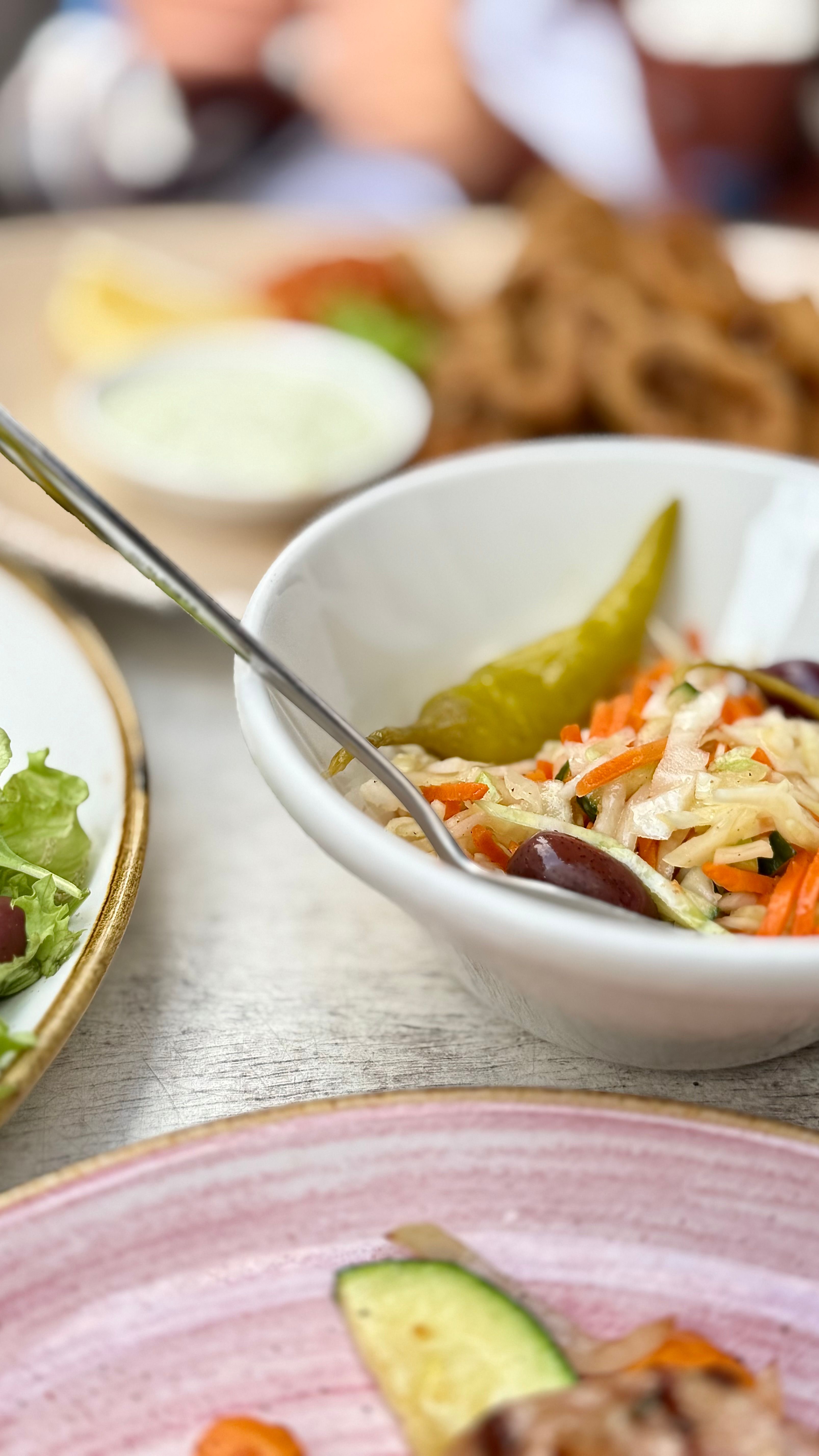
Curtido is a lightly fermented cabbage slaw with carrots, onion, oregano, vinegar, and salt. Cabbage is keto-friendly with low net carbs, but carrots and onion add meaningful carbohydrates. A standard serving (about 1/2 cup) likely contains 5-8g net carbs, which is manageable within a keto budget if portions are controlled. However, the carrots are the main concern — they contain roughly 6g net carbs per 100g — and depending on the ratio used in the recipe, a generous serving could push carb intake up noticeably. In small portions alongside a keto meal, curtido can fit; larger servings or frequent consumption could threaten ketosis.
Some strict keto practitioners would flag the carrots entirely, arguing that even small amounts of higher-glycemic vegetables should be eliminated to maintain tight ketosis, particularly for therapeutic or clinical keto protocols. Others following a more relaxed lazy-keto approach would approve it freely, viewing the fiber content and small serving size as negligible.
Curtido is a traditional Salvadoran fermented cabbage slaw made entirely from whole plant foods. Every ingredient — cabbage, carrots, onion, oregano, vinegar, and salt — is unambiguously plant-derived with no animal products or animal-derived additives. It is minimally processed, relying on simple fermentation/pickling, which aligns well with whole-food plant-based principles. There are no contested ingredients and no animal products of any kind.
Curtido is a lightly fermented Salvadoran cabbage slaw made with cabbage, carrots, onion, oregano, and vinegar — most of which are paleo-compliant vegetables and herbs. However, salt is a listed ingredient and is explicitly excluded under paleo rules as an added/processed mineral not consumed in meaningful quantities by Paleolithic humans. Vinegar occupies a mild gray area (it is a processed, fermented product), but salt is the clearer disqualifier here. Without salt, this dish would rate as an approve; with salt as a deliberate added ingredient, it falls into avoid territory per strict paleo guidelines.
Curtido is a lightly fermented or pickled cabbage slaw made entirely from vegetables — cabbage, carrots, and onion — seasoned with oregano, vinegar, and salt. Every ingredient aligns perfectly with Mediterranean diet principles. Cruciferous and root vegetables are emphasized staples, vinegar is a traditional Mediterranean condiment, and oregano is a canonical Mediterranean herb. There is no added sugar, no refined grains, no saturated fat, and no processed ingredients. This dish is virtually identical in spirit to many Mediterranean pickled vegetable preparations and would be a model side dish under these guidelines.
Curtido is a Salvadoran fermented cabbage slaw made entirely from plant-based ingredients: cabbage, carrots, onion, oregano, and vinegar. There is not a single animal-derived ingredient in this dish. Every component is explicitly excluded on the carnivore diet — vegetables (cabbage, carrots, onion), plant-based spices (oregano), and plant-derived acidic agents (vinegar). This is one of the clearest possible avoid cases on the carnivore diet, with unanimous consensus across all carnivore authorities and protocols, from the strictest Lion Diet to more flexible animal-based approaches.
Curtido is a traditional Salvadoran fermented/pickled cabbage slaw made with entirely Whole30-compliant ingredients. Cabbage, carrots, and onion are all vegetables explicitly allowed on the program. Oregano is an approved herb, vinegar is explicitly permitted (most types are allowed, and standard white or apple cider vinegar used in curtido contains no gluten), and salt is allowed. There are no excluded ingredients whatsoever — no grains, dairy, legumes, added sugar, or alcohol. This is a clean, whole-food side dish that aligns perfectly with the spirit and letter of the Whole30 program.
Curtido contains onion as a primary ingredient, which is high in fructans and must be avoided during the FODMAP elimination phase at any standard serving. Cabbage is low-FODMAP at 75g (common cup serving) but can become moderate-to-high at larger portions due to fructans and polyols. Carrots, oregano, vinegar, and salt are all low-FODMAP and pose no concern. The dish hinges on onion, which is one of the most significant FODMAP offenders and cannot be safely consumed even in small amounts during elimination. Unless onion is omitted or replaced with the green tops of spring onions, this dish is not suitable during the elimination phase.
Monash University clearly flags onion as high-FODMAP at any serving size, making this a straightforward avoid. However, some clinical FODMAP practitioners note that if onion is present in very small quantities primarily for flavor and then removed before serving (as sometimes occurs in cooked dishes), residual FODMAP load may be lower — though this is not standard guidance and most practitioners advise strict avoidance of onion in any form during elimination.
Curtido is a lightly fermented cabbage slaw made primarily from DASH-friendly vegetables (cabbage, carrots, onion) that are rich in fiber, potassium, and beneficial phytonutrients. The base ingredients are excellent for DASH. However, the addition of salt during preparation is the primary concern — traditional curtido recipes can use a significant amount of salt for the pickling/fermentation process, which conflicts with DASH sodium limits (<2,300mg/day standard, <1,500mg/day low-sodium). The amount of salt varies widely by recipe and whether it is rinsed before serving. Vinegar and oregano are DASH-neutral. As a side dish served in small portions alongside pupusas, sodium intake per serving may be moderate, but cumulative sodium across a meal is a consideration. The vegetable base earns strong marks, but salt content pulls the score into caution territory.
NIH DASH guidelines would approve the vegetable base unconditionally but flag the salted preparation. Updated clinical interpretation by some DASH-oriented dietitians allows curtido if prepared with minimal salt or rinsed, noting that the fiber and potassium from cabbage and carrots actively support the DASH goals of blood pressure reduction.
Curtido is a lightly fermented Salvadoran slaw made entirely from Zone-favorable vegetables: cabbage and carrots are low-glycemic, high-fiber carbohydrate sources that count as excellent Zone carb blocks (net carbs are modest after fiber subtraction). Onion adds flavor with minimal glycemic impact. Oregano contributes polyphenols, which Sears explicitly values for anti-inflammatory purposes. Vinegar is essentially calorie-free and may modestly blunt glycemic response. There is no fat, no protein, and no added sugar — making this an almost pure low-glycemic carbohydrate side that pairs cleanly with a lean protein and a monounsaturated fat source to complete a Zone meal. The vegetable-forward, minimally processed nature of this dish aligns perfectly with Sears' emphasis on colorful, high-fiber vegetables as the preferred carbohydrate source.
Curtido is a lightly fermented or pickled Salvadoran cabbage slaw with a strong anti-inflammatory profile. Cabbage is a cruciferous vegetable rich in vitamin C, vitamin K, glucosinolates, and polyphenols that have documented anti-inflammatory effects. Carrots contribute beta-carotene and other carotenoids, which are potent antioxidants associated with reduced inflammatory markers. Onion provides quercetin, a well-studied anti-inflammatory flavonoid. Oregano is a herb high in rosmarinic acid and other polyphenols with notable antioxidant capacity. Vinegar (typically apple cider or white) is neutral-to-beneficial in this context and, when curtido undergoes light fermentation, may support gut microbiome diversity — a key modulator of systemic inflammation. Salt is present in typical culinary amounts and not a concern at normal serving sizes. There are no pro-inflammatory ingredients: no seed oils, no refined sugars, no processed additives, no trans fats. The dish is essentially a colorful, fiber-rich, polyphenol-dense vegetable preparation, which aligns directly with the core principles of the anti-inflammatory diet.
Curtido is a lightly fermented Salvadoran cabbage slaw made from cabbage, carrots, onion, oregano, vinegar, and salt — all low-calorie, low-fat, high-fiber vegetables. It is an excellent GLP-1 companion side dish. Cabbage and carrots provide meaningful dietary fiber and micronutrients (vitamin C, vitamin K, beta-carotene) in a very small calorie footprint, directly addressing the nutrient density priority. The vinegar-based preparation means essentially zero fat, which avoids worsening nausea or reflux. Portions are naturally small and the dish is easy to digest in moderate amounts. The fermentation process (if allowed to develop) may also support gut microbiome health, which can be beneficial given GLP-1-related GI side effects. The one minor consideration is sodium from salt — patients managing blood pressure or on a sodium-restricted diet should be mindful of portion size. No protein is present, so it must be paired with a protein source to constitute a complete meal contribution.
*See how scores were generated at our methodology page.
Nutritional profile
Six traits that cut across every diet.
Fiber & Plants
How much whole-plant food and fiber it delivers.
Healthy Fats
The quality of its fats (unsaturated, omega-3).
Whole / Unprocessed
How close it is to its natural, unprocessed form.
Gut Gentle
How easy it is on digestion (low FODMAP, few irritants).
Low Glycemic
How little it spikes your blood sugar.
Protein Density
How much protein it packs per calorie.
Controversy Index
Higher controversy = more disagreement between diets.
Diet-Specific Tips
 Keto — 5/10
View tips
- Cabbage is very low net carb and keto-friendly
- Carrots contribute the most carbs (~6g net per 100g) and are the limiting factor
- Onion adds moderate carbs and should be used sparingly
- Vinegar, oregano, and salt are keto-neutral
- Portion control is essential — small servings (~1/4 cup) are safer
- No added sugar in the traditional recipe, which is favorable
- Fermentation process may slightly lower carb content
 Vegan — 9/10
View tips
- All ingredients are whole plant foods
- No animal products or animal-derived ingredients present
- Minimal processing — fermented/pickled using vinegar and salt
- Nutritionally valuable: fiber-rich vegetables with probiotic potential
- No contested ingredients such as honey or gelatin
- Fully compliant with all major vegan organization standards
 Mediterranean — 9/10
View tips
- All ingredients are whole, unprocessed vegetables
- No added sugars, refined grains, or unhealthy fats
- Vinegar is a traditional Mediterranean preserving and flavoring agent
- Oregano is a core Mediterranean herb
- Fermented/pickled vegetables align with Mediterranean culinary traditions
- No protein source needed — purely plant-based side dish
- Low calorie density, high fiber content
 Whole30 — 9/10
View tips
- All vegetables (cabbage, carrots, onion) are fully Whole30-compliant
- Vinegar is explicitly allowed by Whole30 guidelines (most types)
- Oregano and salt are permitted herbs/seasonings
- No added sugar, grains, dairy, or legumes present
- Fermented/pickled preparation is compatible with Whole30
- Whole-food, minimally processed dish aligns with program spirit
 DASH — 6/10
View tips
- Cabbage, carrots, and onion are core DASH vegetables rich in fiber and potassium
- Salt used in preparation introduces variable but potentially significant sodium
- Portion size as a condiment-style side limits overall sodium exposure per serving
- No saturated fat, added sugar, or processed ingredients
- Vinegar-based preparation is DASH-neutral
- Low-sodium versions prepared with reduced salt would score 8-9 and qualify as 'approve'
- Fermentation/pickling process may concentrate sodium relative to fresh vegetables
 Zone — 8/10
View tips
- Cabbage and carrots are low-glycemic, high-fiber Zone-favorable carb sources
- Vinegar may further blunt glycemic response — a minor Zone bonus
- No added sugar, no refined carbohydrates, no unfavorable fats
- High polyphenol contribution from oregano and colorful vegetables aligns with Sears' anti-inflammatory emphasis
- No protein or fat — must be paired with lean protein and monounsaturated fat to form a complete Zone meal
- Carrot glycemic load is manageable in typical serving sizes used in curtido
 Anti-Inflammatory — 8/10
View tips
- Cabbage provides glucosinolates, vitamin C, and anti-inflammatory polyphenols
- Carrots deliver beta-carotene and carotenoids linked to reduced CRP
- Onion is a rich source of quercetin, a potent anti-inflammatory flavonoid
- Oregano is high in rosmarinic acid and antioxidant polyphenols
- Light fermentation process may offer probiotic and gut-health benefits
- No pro-inflammatory ingredients: no seed oils, refined sugar, additives, or trans fats
- High fiber content from multiple vegetables supports gut microbiome health
 GLP-1 Friendly — 8/10
View tips
- High fiber from cabbage and carrots supports digestion and constipation prevention
- Near-zero fat — will not worsen nausea, bloating, or reflux
- Very low calorie with strong micronutrient density per serving
- Small-portion friendly and easy to digest
- Vinegar base may support blood sugar stabilization
- No protein — must be paired with a protein source
- Sodium content warrants mindfulness for blood pressure-sensitive patients