Photo: Christian Bolaños / Pexels
Salvadoran
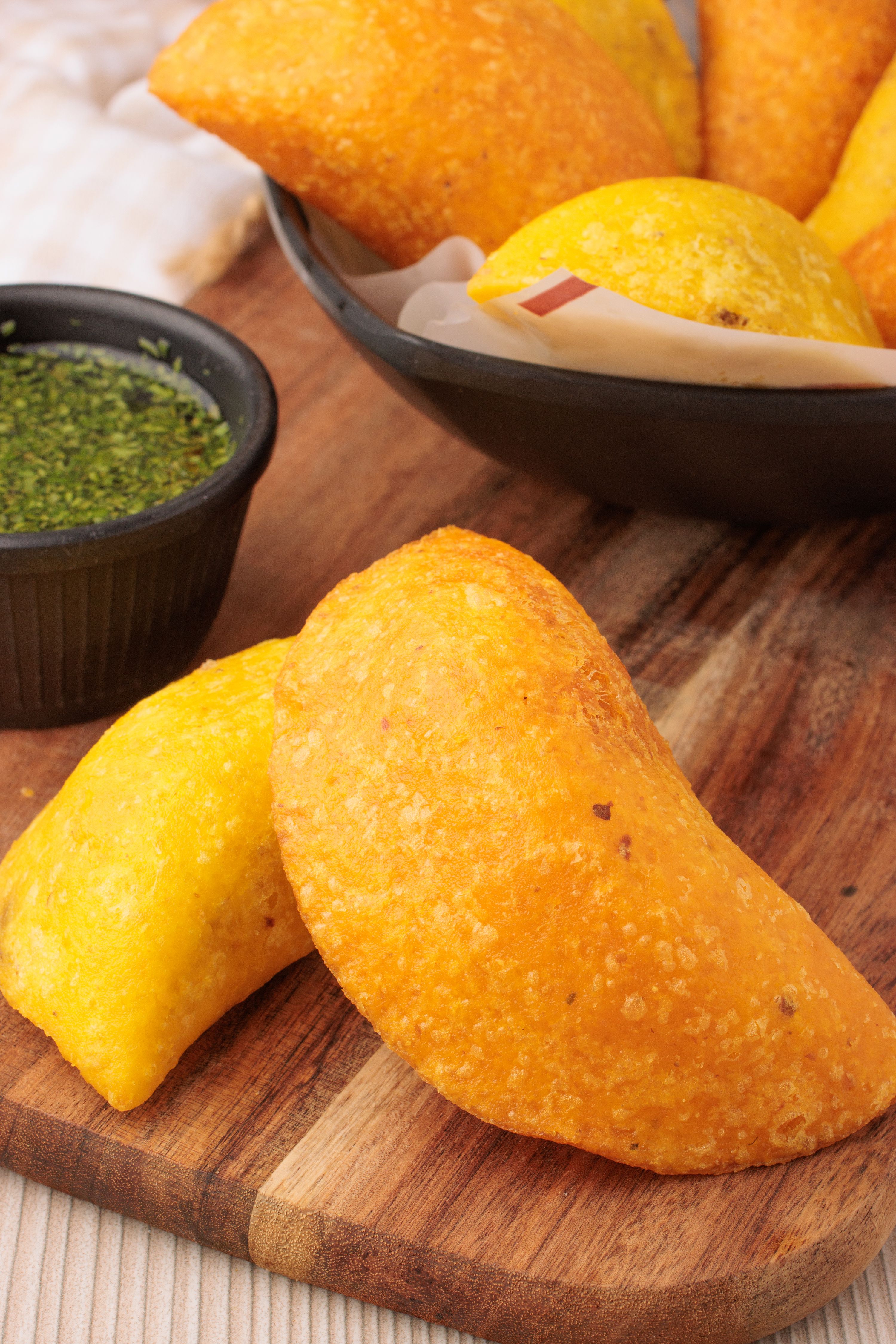
Empanadas de Platano
The diets react (see scores below)
Common Ingredients
- ripe plantains
- milk
- cornstarch
- sugar
- vanilla
- cinnamon
- oil
Specific recipes may vary.
Incompatible with 9 of 11 diets
Diet Ratings
Empanadas de Platano are fundamentally incompatible with a ketogenic diet. The dough/shell is made from ripe plantains, which are extremely high in net carbs (a single ripe plantain contains roughly 50-55g of net carbs). Added sugar further compounds the carbohydrate load. Cornstarch is a high-glycemic starch that spikes blood sugar. Ripe plantains (as opposed to green) have even higher sugar content due to starch-to-sugar conversion during ripening. A single serving of this snack could easily contain 60-80g of net carbs, which exceeds the entire daily carb allowance for ketosis. The combination of ripe plantains + sugar + cornstarch represents a triple threat of keto-incompatible ingredients with zero viable substitution in this traditional form.
Empanadas de Platano contains milk, which is a dairy product and therefore a clear animal-derived ingredient that disqualifies this dish from being vegan. All other ingredients — ripe plantains, cornstarch, sugar, vanilla, cinnamon, and oil — are fully plant-based. A vegan version of this dish is easily achievable by substituting the milk with a plant-based alternative such as coconut milk or almond milk, which would actually be quite traditional in some regional variants.
Empanadas de Platano contains multiple non-paleo ingredients that disqualify it clearly. Milk is a dairy product, excluded from paleo. Cornstarch is derived from corn, a grain, and is excluded. Sugar is refined sugar, excluded. The unspecified 'oil' is most likely a seed oil (canola, vegetable, sunflower), also excluded. While ripe plantains, vanilla, and cinnamon are paleo-friendly, the combination of dairy, a grain-derived starch, refined sugar, and likely seed oil makes this dish firmly non-compliant. This is not a gray-area case — the majority of non-compliant ingredients are clearly excluded by all major paleo frameworks.
Empanadas de Platano are a sweet fried snack built around added sugar and oil for frying, with a cornstarch-thickened milk filling. While ripe plantains are a whole fruit and cinnamon/vanilla are benign, the dish is fundamentally a dessert-style fried pastry high in added sugar and refined starch. It contains no olive oil (generic frying oil is used), no vegetables, legumes, or whole grains, and the added sugar and frying method directly contradict Mediterranean diet principles emphasizing minimal added sugars and minimal processed/fried snacks. The milk is a minor moderate-dairy element but insufficient to redeem the overall profile.
Some Mediterranean diet interpreters note that plantains are a whole-food fruit with fiber and potassium, and small portions of naturally sweetened fruit-based treats using plant ingredients are not categorically forbidden — traditional Mediterranean cuisines do include occasional fruit-forward sweets. However, the added sugar, cornstarch, and deep-frying method push this well outside even permissive interpretations.
Empanadas de Platano are entirely plant-based with no animal products whatsoever. The dish is made from ripe plantains (fruit), cornstarch (grain derivative), sugar (processed plant product), vanilla (plant extract), cinnamon (plant spice), and oil (plant-derived fat). The only potential animal-derived ingredient is milk, but even that is present in a minor role within an otherwise completely plant-based dish. This violates virtually every core principle of the carnivore diet simultaneously: it contains fruit, starch, sugar, plant oils, and plant spices. There is universal consensus in the carnivore community that this dish is incompatible with the diet.
Empanadas de Platano contain multiple Whole30-excluded ingredients. Sugar is explicitly prohibited as an added sweetener. Milk is dairy and therefore excluded. Cornstarch is also on the excluded ingredients list. Beyond the individual ingredients, this dish is a sweet, dough-wrapped pastry that falls squarely into the 'no recreating baked goods/junk food' rule — it is structurally analogous to a dessert pastry/dumpling. Even if the excluded ingredients were substituted, the dish would likely still violate the spirit of the program.
Empanadas de Platano are a Salvadoran sweet snack made from ripe plantain dough filled with a milk-based custard (leche). The main FODMAP concerns are: (1) Ripe plantains — Monash rates ripe plantain as low-FODMAP at 1/3 medium plantain (~75g) but high-FODMAP in larger servings due to excess fructose accumulation as the fruit ripens. A standard empanada uses a substantial amount of plantain dough, likely pushing toward or over this threshold. (2) Milk — the custard filling is made with regular cow's milk, which contains lactose. Monash rates milk as high-FODMAP at standard serving sizes (250ml), and even smaller amounts in a cooked filling may contribute meaningful lactose depending on quantity. (3) Cornstarch, sugar, vanilla, cinnamon, and oil are all low-FODMAP. The combination of a higher-than-safe plantain serving and lactose-containing milk in the filling makes this dish risky during the elimination phase, though not definitively 'avoid' territory if portions are carefully controlled and milk quantity is small.
Monash University rates ripe plantain as low-FODMAP only at restricted portions (~75g), and many clinical FODMAP practitioners would flag this dish as likely problematic during elimination due to both the plantain quantity in a full empanada and the lactose in the milk-based filling. The dish could be made lower-FODMAP by using lactose-free milk, but as traditionally prepared it warrants caution rather than approval.
Empanadas de Platano are fried plantain pastries filled with a sweetened milk custard (essentially a natilla filling made with milk, cornstarch, sugar, and vanilla), seasoned with cinnamon. From a DASH perspective, there are mixed signals. Plantains are a DASH-positive ingredient — they are rich in potassium and fiber, consistent with DASH's emphasis on fruits and vegetables. Milk contributes calcium and magnesium. Cinnamon and vanilla are benign. However, the dish is fried in oil (adding significant fat and calories), contains added sugar in notable amounts (the custard filling is sweet), and is categorized as a snack rather than a nutrient-dense staple. The added sugar and frying method are concerns under DASH, which limits sweets and emphasizes unsaturated fats used in moderation. Sodium is low, which is a positive. Overall, this is an occasional treat that uses some DASH-friendly ingredients but is undermined by frying and added sugar. Baking instead of frying and reducing sugar would significantly improve the DASH score.
NIH DASH guidelines explicitly limit sweets and fried foods, placing this snack in the 'limit' category due to added sugar and frying oil. However, some DASH-oriented dietitians note that when made with a modest amount of unsaturated oil (e.g., sunflower or canola), the potassium-rich plantain base and low sodium profile make this a reasonable occasional snack within a DASH pattern, particularly if portion size is controlled to one piece.
Empanadas de Platano are a dessert-style snack built almost entirely around high-glycemic, high-sugar carbohydrates with virtually no protein and minimal fat. Ripe plantains are one of the highest-glycemic fruits in Zone terminology — Dr. Sears explicitly categorizes bananas and plantains as 'unfavorable' carbs due to their high sugar content and glycemic load. Ripe plantains are even higher on the glycemic scale than green plantains. The dough/coating adds cornstarch (pure high-glycemic starch) and added sugar, compounding the glycemic problem. The filling is milk-based custard sweetened with sugar and vanilla — contributing more simple carbohydrates. There is no meaningful lean protein source (listed as 'none'), making the 40/30/30 ratio impossible to achieve even with careful portioning. The frying oil provides fat, but without protein, the macronutrient balance is catastrophically off. This dish is essentially a sugar-and-starch delivery system with no Zone-friendly structural components. Unlike many snacks that can be partially redeemed by portioning, the complete absence of protein and the triple-stacking of high-glycemic carbs (plantain + cornstarch + sugar) make Zone integration essentially impossible as a standalone item.
Empanadas de Plátano are a Salvadoran sweet snack made from ripe plantains filled with a custard-like mixture of milk, cornstarch, sugar, and vanilla, flavored with cinnamon, then fried in oil. The profile is mixed from an anti-inflammatory standpoint. On the positive side, ripe plantains offer potassium, vitamin B6, and resistant starch (which supports gut microbiome diversity and may reduce systemic inflammation). Cinnamon is a recognized anti-inflammatory spice. Vanilla contains small amounts of antioxidants. However, the dish is meaningfully pro-inflammatory in other respects: added sugar is a direct driver of inflammatory markers (CRP, IL-6), refined cornstarch is a high-glycemic refined carbohydrate, and frying introduces the concern of oxidized fats depending on the oil used — if a refined seed oil (corn, sunflower, soybean) is used, the omega-6 load and oxidation potential add further inflammatory burden. Milk adds saturated fat in moderate amounts. As an occasional treat the anti-inflammatory concern is limited, but the combination of added sugar, refined starch, and frying makes this a food to consume only in moderation within an anti-inflammatory dietary pattern.
Some whole-foods-oriented anti-inflammatory practitioners would rate this more harshly given the double hit of added sugar and high-glycemic refined starch, both of which have consistent research links to elevated inflammatory markers. Conversely, in the context of an otherwise anti-inflammatory diet, a small portion of a whole-food-based fried plantain snack with cinnamon may be viewed as relatively benign compared to ultra-processed snack foods, particularly if fried in a higher-quality oil such as coconut or avocado oil.
Empanadas de Platano are a dessert-style fried snack made primarily from ripe plantains, sugar, and cornstarch, with a sweet milk-based filling. This dish fails on nearly every GLP-1 dietary criterion. It provides virtually no protein (listed as none), minimal fiber despite the plantain base (the starch and sugar dominate), and is fried in oil — a combination that worsens nausea, bloating, and reflux, which are already heightened on GLP-1 medications. The high sugar content from ripe plantains plus added sugar spikes blood glucose with no protein or fiber buffer to slow absorption. The cornstarch base is a refined carbohydrate with negligible nutritional density. Frying adds significant fat with no redeeming nutrient value. For a patient eating significantly reduced calorie volumes, this snack delivers empty calories, no protein toward the 100-120g daily target, and is a known GI irritant category (fried + high sugar). There is no meaningful way to portion-adjust this into a GLP-1-friendly choice without fundamentally changing the dish.
*See how scores were generated at our methodology page.
Nutritional profile
Six traits that cut across every diet.
Fiber & Plants
How much whole-plant food and fiber it delivers.
Healthy Fats
The quality of its fats (unsaturated, omega-3).
Whole / Unprocessed
How close it is to its natural, unprocessed form.
Gut Gentle
How easy it is on digestion (low FODMAP, few irritants).
Low Glycemic
How little it spikes your blood sugar.
Protein Density
How much protein it packs per calorie.
Controversy Index
Higher controversy = more disagreement between diets.
Diet-Specific Tips
 DASH — 5/10
View tips
- Ripe plantains are rich in potassium and fiber — DASH-positive
- Low sodium content — aligns well with DASH sodium limits
- Added sugar in custard filling — DASH limits sweets
- Fried preparation adds fat and calories — DASH discourages fried snacks
- Milk contributes calcium and magnesium — DASH-positive nutrients
- No lean protein component — missed opportunity for DASH balance
- Baking instead of frying would meaningfully improve DASH compatibility
 Anti-Inflammatory — 4/10
View tips
- Ripe plantains provide potassium, B6, and fiber with some anti-inflammatory potential
- Cinnamon is a recognized anti-inflammatory spice
- Added sugar is directly linked to elevated CRP and IL-6 in research
- Cornstarch is a refined, high-glycemic carbohydrate with no beneficial nutrients
- Frying introduces risk of oxidized fats and increased caloric density; oil type matters significantly
- Milk contributes modest saturated fat
- Overall glycemic load of the dish is high due to ripe plantains + sugar + cornstarch combination