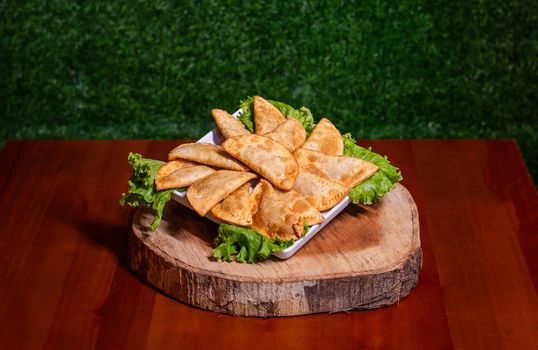
Photo: Jeferson santos / Pexels
Salvadoran
Pastelitos
The diets react (see scores below)
Common Ingredients
- corn masa
- ground beef
- potatoes
- tomatoes
- onion
- garlic
- annatto
- oil
Specific recipes may vary.
Incompatible with 8 of 11 diets
Diet Ratings
Pastelitos are fundamentally incompatible with a ketogenic diet. The two primary carbohydrate sources — corn masa (the dough shell) and potatoes (in the filling) — are both high-net-carb ingredients that would easily exceed the daily 20-50g net carb limit in a single serving. Corn masa is a starchy grain-based dough with roughly 20-25g net carbs per small pastry shell alone, and potatoes add additional starch. Combined, even one or two pastelitos could consume or exceed an entire day's keto carb budget. The ground beef filling is keto-friendly, as are the aromatics (onion, garlic, tomatoes in small amounts), but the structural components of this dish make it entirely incompatible with ketosis without a complete reconstruction using keto-friendly dough alternatives.
Pastelitos in this Salvadoran preparation contain ground beef as the primary protein, which is an animal product and therefore incompatible with a vegan diet. The dish cannot be considered vegan in any interpretation. While the masa, vegetables, and seasonings (tomatoes, onion, garlic, annatto, oil) are all plant-based, the inclusion of ground beef is a clear disqualifier.
Pastelitos are fundamentally incompatible with the paleo diet. The primary wrapper is corn masa (ground corn dough), which is a grain and a clear paleo exclusion with no debate. The filling contains potatoes, which are debated but secondary to the disqualifying corn masa. The unspecified 'oil' is also a concern, as it likely refers to a seed oil (e.g., vegetable or corn oil) commonly used in Salvadoran cooking. Annatto, tomatoes, onion, and garlic are paleo-approved, and ground beef is an excellent paleo protein, but the corn masa shell alone is sufficient to place this dish firmly in the avoid category.
Pastelitos are fried corn masa turnovers filled with ground beef and potatoes. The primary protein is red meat (ground beef), which the Mediterranean diet limits to a few times per month. The dish is also fried in oil (likely refined vegetable oil rather than extra virgin olive oil), adding processed fat. Corn masa is a refined grain product with minimal fiber compared to whole grains. While the tomatoes, onion, and garlic are positive Mediterranean-compatible ingredients, they play a minor role. The overall profile — red meat, fried preparation, refined grain shell — places this firmly in the 'avoid' category.
Pastelitos are fundamentally incompatible with the carnivore diet. The dish is built on corn masa, a plant-based grain dough that forms the entire structural shell of the snack. The filling, while containing ground beef, is heavily diluted with potatoes, tomatoes, onion, and garlic — all plant foods explicitly excluded from carnivore. Annatto is a plant-derived spice/colorant, and the frying oil is likely a plant-based oil. The only carnivore-compliant ingredient is the ground beef itself, which is buried within multiple layers of excluded plant foods. This dish cannot be modified into a carnivore-compatible form without fundamentally deconstructing it into a different dish entirely.
Pastelitos are made with corn masa, which is a corn-based grain product. Corn is explicitly excluded on the Whole30 program. Regardless of the other ingredients (ground beef, potatoes, tomatoes, onion, garlic, annatto, and oil — all of which are compliant), the corn masa alone disqualifies this dish. Additionally, pastelitos are a fried stuffed pastry/dumpling, which falls into the category of foods that 'recreate baked goods or junk food' even if compliant ingredients were substituted, making them doubly non-compliant with the program's spirit.
Pastelitos contain two clear high-FODMAP ingredients that make this dish unsuitable during the elimination phase: onion and garlic. Both are among the highest-fructan foods in the Monash University database and are problematic at virtually any culinary quantity. Onion is high-FODMAP even at 1g serving, and garlic is high-FODMAP at just one small clove. Since these are cooked into the filling as flavoring agents, their FODMAPs leach into the entire dish. The remaining ingredients are largely low-FODMAP: corn masa (maize) is low-FODMAP, ground beef is low-FODMAP, potatoes are low-FODMAP at standard servings, tomatoes are low-FODMAP at up to 65g, annatto is a spice used in small amounts and is low-FODMAP, and oil is low-FODMAP. However, the onion and garlic alone disqualify this dish entirely during elimination. There is no realistic way to consume a standard serving of pastelitos without significant fructan exposure from these two ingredients.
Salvadoran pastelitos are fried corn masa turnovers filled with ground beef and potatoes. While the ingredient list includes several DASH-friendly components — corn masa (whole grain), tomatoes, onion, garlic, potatoes, and annatto (a natural colorant) — the dish presents notable DASH concerns. Ground beef is a red meat that DASH limits due to saturated fat content, and the frying process adds significant oil and calories. The overall fat profile depends heavily on the fat percentage of the beef used and the amount of frying oil absorbed. The masa and vegetable components are positive, and sodium from these ingredients is moderate (no added processed sodium sources listed), which is a relative plus. However, the combination of red meat, deep-frying, and portion density makes this a 'caution' food rather than a DASH staple. If made with leaner ground beef (93%+ lean), baked instead of fried, and consumed in small portions, it could fit occasionally into a DASH eating plan.
NIH DASH guidelines explicitly limit red meat and fried foods due to saturated fat and caloric density concerns. However, some updated DASH-oriented clinicians note that lean ground beef in small quantities and the absence of high-sodium processed ingredients may allow occasional inclusion, especially when the dish is baked rather than fried — aligning more closely with DASH's moderate red meat allowance of ≤6 oz lean meat per day.
Pastelitos are fried corn masa pockets filled with ground beef, potatoes, and aromatics — a combination that presents multiple Zone challenges. The corn masa shell is a starchy, moderate-to-high glycemic carbohydrate that, combined with the potato filling, creates a carbohydrate-heavy and relatively high-glycemic load. Potatoes specifically are flagged as 'unfavorable' in Zone terminology due to their glycemic impact. The double-starch combination (masa + potato) makes it very difficult to hit the 40/30/30 ratio without the carbs dominating heavily. Ground beef provides protein but is typically fattier than Zone-preferred lean proteins, adding saturated fat rather than the preferred monounsaturated fat. Deep frying in oil — likely a seed oil — further pushes the fat profile toward omega-6-heavy, pro-inflammatory territory, which directly conflicts with Sears' anti-inflammatory emphasis. Positive factors include the tomatoes, onion, and garlic (low-glycemic polyphenol sources) and the protein from ground beef. However, portion-controlling pastelitos to achieve Zone balance would require eating very small quantities, undermining their function as a snack. The overall macro profile skews carbohydrate- and fat-heavy with insufficient lean protein relative to Zone targets.
Some Zone practitioners would argue that a single small pastelito, consumed as part of a carefully constructed snack alongside a lean protein source and leafy vegetables, could be worked into a Zone framework — treating the masa as the carbohydrate block and the beef as the protein block, with tomatoes and onion as favorable carb contributors. Dr. Sears' later writing acknowledges that no food is completely off-limits as long as the overall block ratio is maintained. On this reading, the dish rates as a manageable 'unfavorable' carb snack rather than something to fully avoid.
Salvadoran pastelitos are fried corn masa turnovers stuffed with ground beef, potatoes, tomatoes, onion, garlic, and annatto. The dish has a mixed inflammatory profile. On the positive side, corn masa provides whole grain fiber and resistant starch; tomatoes contribute lycopene and antioxidants; onion and garlic are well-established anti-inflammatory alliums; annatto (achiote) contains bixin, a carotenoid with antioxidant properties. These vegetable and spice components are genuinely beneficial. However, the dish is fried — likely in a seed or vegetable oil high in omega-6 fatty acids — which is a meaningful concern under anti-inflammatory principles. Ground beef is a red meat with saturated fat content, placing it in the 'limit' category. Potatoes are neutral to mildly beneficial. The frying method is the primary downside: it introduces oxidized oils and potentially high omega-6 loads, and significantly increases caloric density and saturated/trans fat risk depending on oil type and reuse. The beef, while not catastrophic in small amounts, nudges the profile toward caution. If baked or air-fried, the score would be higher. As a snack (smaller portion), the inflammatory impact is moderated compared to a main course serving.
Some anti-inflammatory practitioners would score this lower (toward 'avoid') due to the frying method and red meat combination, particularly those following stricter protocols like AIP or the IF Rating system, which penalize fried foods and red meat heavily regardless of portion size. Conversely, more moderate interpretations aligned with Dr. Weil's pyramid — which permits occasional red meat and does not absolutely prohibit frying — would accept this as an occasional food, especially given the antioxidant-rich garlic, onion, and tomato content.
Salvadoran pastelitos are deep-fried corn masa turnovers filled with a ground beef and potato mixture. The frying process is the primary disqualifying factor for GLP-1 patients: high fat content from frying worsens nausea, bloating, and reflux — the most common GLP-1 side effects. The filling is protein-containing but the protein density per calorie is low once the masa and frying oil are factored in. Ground beef is a moderate-to-high saturated fat protein source, and the potato-heavy filling adds starchy carbohydrates with minimal fiber. The corn masa provides some whole-grain character but is refined enough to offer little fiber benefit. Portions tend to be calorie-dense relative to their nutritional yield, which conflicts with the nutrient-density-per-calorie priority. The tomato, onion, and garlic are nutritionally positive but present in small quantities insufficient to offset the overall profile.
Some GLP-1-aware dietitians note that homemade or baked versions of pastelitos — using leaner ground beef or turkey, more vegetables in the filling, and baking rather than frying — could shift this into a caution rating, as the underlying ingredients are not inherently problematic. Individual GI tolerance to fried foods varies, and patients further along in their GLP-1 journey with stabilized side effects may tolerate occasional small portions better than newly starting patients.
*See how scores were generated at our methodology page.
Nutritional profile
Six traits that cut across every diet.
Fiber & Plants
How much whole-plant food and fiber it delivers.
Healthy Fats
The quality of its fats (unsaturated, omega-3).
Whole / Unprocessed
How close it is to its natural, unprocessed form.
Gut Gentle
How easy it is on digestion (low FODMAP, few irritants).
Low Glycemic
How little it spikes your blood sugar.
Protein Density
How much protein it packs per calorie.
Controversy Index
Higher controversy = more disagreement between diets.
Diet-Specific Tips
 DASH — 4/10
View tips
- Ground beef is a red meat — DASH recommends limiting red meat intake
- Traditional preparation involves deep-frying, increasing saturated fat and total caloric load
- Corn masa provides whole grain carbohydrate, a DASH-positive element
- Vegetables (tomatoes, onion, garlic, potatoes) are DASH-friendly ingredients
- No high-sodium processed ingredients listed, moderate sodium profile
- Annatto is a natural spice/colorant with no DASH concerns
- Baked version with lean beef would score higher (5-6); fried with regular ground beef scores lower (3-4)
 Zone — 4/10
View tips
- Corn masa is a moderate-to-high glycemic starch — classified 'unfavorable' in Zone
- Potato filling compounds the high-glycemic carbohydrate load; potatoes are explicitly unfavorable in Zone
- Double starch (masa + potato) makes 40/30/30 ratio very difficult to achieve
- Ground beef is higher in saturated fat than Zone-preferred lean proteins (skinless chicken, fish)
- Frying in oil (likely omega-6-heavy seed oil) is anti-inflammatory concern per Sears' framework
- Tomatoes, onion, and garlic are favorable Zone carbohydrate contributors with polyphenols
- Very small portions would be required to stay within Zone blocks, limiting practical utility as a snack
 Anti-Inflammatory — 4/10
View tips
- Fried preparation introduces omega-6-heavy oils and oxidized fats — primary inflammatory concern
- Ground beef is a red meat high in saturated fat — recommended to limit on anti-inflammatory diets
- Garlic and onion are potent anti-inflammatory alliums with organosulfur compounds
- Tomatoes provide lycopene, a well-studied anti-inflammatory carotenoid
- Annatto (achiote) contains bixin, a carotenoid with antioxidant properties
- Corn masa offers fiber and whole grain benefits, modest glycemic impact when paired with protein/fat
- Small snack portion size moderates overall inflammatory load relative to a main dish