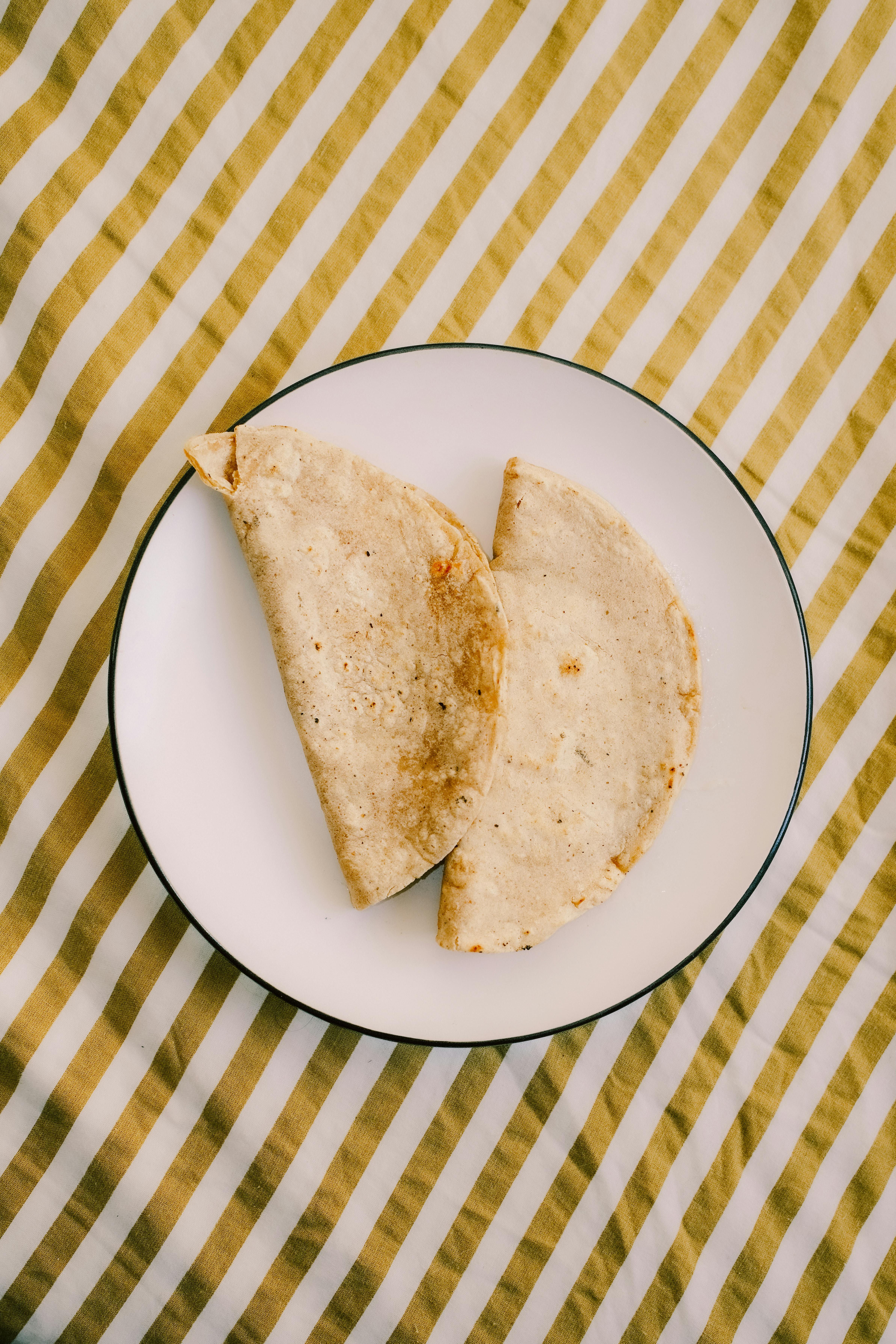
The diets react (see scores below)
Common Ingredients
- fresh corn
- sugar
- salt
- butter
- corn husks
Specific recipes may vary.
Incompatible with 6 of 11 diets
Diet Ratings
Riguas are a traditional Salvadoran snack made primarily from fresh corn, which is a high-starch grain with very high net carbs. A single rigua can contain 30-45g of net carbs from the corn alone, far exceeding the keto daily limit. Added sugar compounds the problem further. Butter is the only keto-friendly ingredient here, but it cannot offset the massive carbohydrate load from fresh corn and sugar. This dish is fundamentally incompatible with ketosis.
Riguas contain butter, which is a dairy product derived from cow's milk and is therefore not vegan. The dish is otherwise plant-based — fresh corn, sugar, salt, and corn husks are all fully vegan-compliant. However, butter is a clear animal-derived ingredient that disqualifies the traditional preparation. A vegan version could easily be made by substituting butter with a plant-based alternative such as vegan margarine or coconut oil.
Riguas are a traditional Salvadoran snack made from fresh corn paste wrapped in corn husks. Despite using fresh/whole corn rather than processed grain flour, corn is a grain and is explicitly excluded from the paleo diet. Additionally, this dish contains added sugar (refined sweetener), added salt, and butter (dairy) — three further paleo violations. The combination of a grain base with multiple other excluded ingredients makes this dish firmly non-paleo with no meaningful gray area.
Riguas are griddled corn cakes made from fresh corn, salt, sugar, and butter, wrapped in corn husks. Fresh corn is a whole grain vegetable that aligns reasonably well with Mediterranean principles. However, butter is the primary fat rather than olive oil, which contradicts a core Mediterranean tenet. The added sugar, while modest in traditional recipes, is also a minor negative. The dish is minimally processed and plant-based in character, which is positive, but the butter-based fat and added sugar prevent a full approval. It is acceptable occasionally but not a Mediterranean staple.
Some Mediterranean diet interpreters allow small amounts of butter, particularly in traditional regional cuisines (e.g., certain Southern European and Middle Eastern preparations), and would view a lightly sweetened, whole-corn snack as a reasonable plant-forward option in moderation. Substituting olive oil for butter would elevate this dish considerably.
Riguas are a traditional Salvadoran snack made almost entirely of plant-based ingredients: fresh corn (a grain/starch), sugar (processed plant-derived sweetener), and corn husks (used as wrapping). The only potentially carnivore-compatible ingredient is butter, which is a dairy derivative and itself debated in strict carnivore circles. However, butter is a minor component here and does not redeem a dish whose primary base is corn — a grain that is completely excluded on the carnivore diet. There is no animal protein present. This dish is fundamentally incompatible with carnivore principles.
Riguas are traditional Salvadoran corn cakes made with fresh corn, sugar, salt, butter, and wrapped in corn husks for grilling or steaming. This dish contains multiple excluded ingredients. First, sugar is explicitly banned on Whole30 as an added sweetener. Second, butter (regular, non-clarified) is excluded — only ghee or clarified butter is permitted as the dairy exception. Third, corn itself is an excluded grain on Whole30. With three separate excluded ingredients (sugar, butter, and corn), this dish is clearly non-compliant.
Riguas are traditional Salvadoran grilled corn cakes made from fresh (sweet) corn, sugar, salt, butter, and wrapped in corn husks. The key FODMAP concern is fresh sweet corn. Monash University rates canned sweet corn as low-FODMAP at 1/2 cup (75g) but high-FODMAP at larger servings due to fructans and sorbitol. Fresh sweet corn on the cob is rated as low-FODMAP at half a cob (~38g) but becomes high-FODMAP beyond that. A standard rigua serving uses a significant amount of fresh corn, likely exceeding the safe Monash threshold, making portion control essential. Butter is low-FODMAP (fat, no lactose concern at normal amounts). Sugar and salt are FODMAP-free. Corn husks are used only for wrapping and not consumed. The dish itself is not inherently high-FODMAP in concept, but the realistic serving size of fresh corn used per rigua pushes it into caution territory.
Monash University technically approves small servings of fresh sweet corn (around half a cob or ~38g), but clinical FODMAP practitioners often advise caution with fresh corn dishes during elimination because the corn content in a typical rigua likely exceeds this threshold and the fructan and sorbitol load accumulates quickly with standard portions.
Riguas are a traditional Salvadoran corn cake made from fresh corn ground with sugar, salt, and butter, then wrapped and grilled in corn husks. Fresh corn is a whole grain vegetable that aligns well with DASH principles, providing fiber, potassium, and magnesium. However, the inclusion of butter (saturated fat) and added sugar reduces the DASH compatibility. The salt content adds sodium, though the amount in a single rigua is likely modest. As a snack, the butter and sugar content make this a 'caution' rather than an approved food — it's not a heavily processed or high-sodium item, but it is not as nutrient-dense or heart-healthy as DASH-ideal snacks like plain fruit or unsalted nuts. Portion control and frequency of consumption are key considerations.
NIH DASH guidelines emphasize limiting saturated fat and added sugars, which the butter and sugar in riguas contribute to. However, some updated DASH-oriented clinicians note that a small amount of butter used in traditional whole-food preparations alongside a predominantly plant-based ingredient like fresh corn can be accommodated within DASH's overall dietary pattern, particularly if daily saturated fat limits are otherwise met.
Riguas are grilled fresh corn cakes made from fresh ground corn, sugar, salt, and butter, wrapped in corn husks. From a Zone Diet perspective, this snack is heavily carbohydrate-dominant with essentially no meaningful protein and minimal fat relative to the carb load. Fresh corn itself is considered an 'unfavorable' carbohydrate in Zone terminology — it has a moderate-to-high glycemic index and is specifically listed by Sears alongside potatoes and other starchy vegetables to limit. Added sugar compounds the glycemic burden further. Butter contributes saturated fat rather than the preferred monounsaturated fats. The complete absence of lean protein means there is no mechanism to balance these into a Zone-compliant 40/30/30 block structure as a standalone snack. A Zone snack should include at minimum 1 protein block (~7g protein) alongside carbs and fat. As consumed traditionally, riguas cannot be configured into Zone balance without adding a significant protein source alongside, and even then the high-glycemic corn-plus-sugar base makes this a poor carbohydrate choice. The score is 3 rather than 1-2 because fresh corn does provide some fiber and nutrients, and theoretically small portions could be paired with lean protein and monounsaturated fat to partially offset the imbalance — but the food as presented is very hard to fit into Zone methodology.
Some Zone practitioners in later Sears writings allow fresh corn in very small amounts (1/3 cup per carb block) as an occasional 'unfavorable' carb rather than a categorical avoid, arguing that the Zone is ratio-based. If a single small rigua is consumed alongside a protein source (e.g., eggs or lean meat), the meal could be partially balanced — though the added sugar and butter still undermine ideal Zone ratios.
Riguas are traditional Salvadoran corn cakes made from fresh corn ground into a paste, wrapped in corn husks, and grilled. The base ingredient — fresh whole corn — is a whole grain that provides fiber, B vitamins, carotenoids (lutein, zeaxanthin), and some antioxidants, giving it a mildly favorable anti-inflammatory foundation. However, the addition of sugar (added sugar is pro-inflammatory) and butter (saturated fat, a food to limit in anti-inflammatory eating) tempers the overall profile meaningfully. The amounts of sugar and butter used are typically modest in traditional recipes — primarily for flavor — rather than dominant ingredients, so this is not as concerning as a heavily sweetened or butter-laden baked good. Salt is nutritionally neutral. The grilling method in corn husks is a clean, minimally processed preparation with no refined oils or additives. Overall, riguas occupy a mixed middle ground: a traditional whole-food snack with some beneficial properties undermined by added sugar and saturated fat. Acceptable occasionally but not ideal as a regular anti-inflammatory staple.
Some anti-inflammatory practitioners would flag corn itself as a moderate concern due to its higher glycemic index and omega-6 fatty acid content relative to other vegetables, though whole fresh corn is generally considered acceptable by mainstream anti-inflammatory frameworks like Dr. Weil's pyramid. Conversely, a more lenient reading would emphasize the whole-food, minimally processed character of riguas and the modest quantities of sugar and butter, placing it closer to a 'caution with approval lean' — particularly when compared to processed snack foods.
Riguas are traditional Salvadoran grilled corn cakes made from fresh corn, sugar, butter, and salt, wrapped and cooked in corn husks. As a snack, they are primarily carbohydrate-based with minimal protein and modest fiber from the whole corn. The addition of butter adds saturated fat, which can worsen GLP-1 side effects like nausea and bloating. The sugar content, while not extreme in a traditional recipe, adds empty calories without nutritional benefit — a significant concern for GLP-1 patients who need every calorie to count. On the positive side, fresh whole corn provides some natural fiber (roughly 2-3g per serving) and is more nutritious than refined grain snacks. The food is not fried, is relatively easy to digest when consumed in small portions, and is not spicy. However, the near-zero protein content is a major drawback — GLP-1 patients should prioritize protein at every eating occasion, and riguas offer essentially none. A single small rigua as an occasional side alongside a high-protein meal is the most defensible use case.
Some GLP-1-focused dietitians may be more permissive with whole-corn-based traditional foods given their natural fiber content and moderate glycemic impact compared to refined snack foods, particularly when consumed in small portions. Others would flag the butter and added sugar as reasons to avoid this entirely, especially in patients experiencing active GI side effects or those struggling to meet protein targets.
*See how scores were generated at our methodology page.
Nutritional profile
Six traits that cut across every diet.
Fiber & Plants
How much whole-plant food and fiber it delivers.
Healthy Fats
The quality of its fats (unsaturated, omega-3).
Whole / Unprocessed
How close it is to its natural, unprocessed form.
Gut Gentle
How easy it is on digestion (low FODMAP, few irritants).
Low Glycemic
How little it spikes your blood sugar.
Protein Density
How much protein it packs per calorie.
Controversy Index
Higher controversy = more disagreement between diets.
Diet-Specific Tips
 Mediterranean — 5/10
View tips
- Fresh whole corn is a plant-based, minimally processed ingredient consistent with Mediterranean principles
- Butter as the primary fat conflicts with olive oil emphasis central to the Mediterranean diet
- Added sugar, though likely small in quantity, is a minor negative
- No protein, red meat, or highly refined grains present
- Minimally processed preparation (griddled, corn husk-wrapped) is a positive factor
- Not a traditional Mediterranean dish, but plant-forward character is compatible in moderation
 DASH — 5/10
View tips
- Fresh corn is a DASH-friendly whole grain vegetable with fiber, potassium, and magnesium
- Butter adds saturated fat, which DASH limits
- Added sugar is present, reducing DASH alignment
- Salt contributes sodium, though quantity per serving is likely modest
- No high-sodium processed ingredients; not a heavily processed food
- Portion size matters — one rigua as an occasional snack is more acceptable than frequent consumption
 Zone — 5/10
View tips
- Fresh corn is classified as an 'unfavorable' carbohydrate in Zone terminology due to moderate-to-high glycemic index
- Added sugar increases the glycemic load further, compounding the insulin response problem
- Zero protein content — no ability to achieve 40/30/30 ratio as a standalone snack
- Butter provides saturated fat rather than preferred monounsaturated fats (olive oil, avocado, almonds)
- Heavily carbohydrate-dominant macro profile is fundamentally at odds with Zone block balance
- No lean protein block present — a Zone snack requires at least 1 protein block (~7g protein)
 Anti-Inflammatory — 4/10
View tips
- Fresh whole corn provides fiber, carotenoids (lutein, zeaxanthin), and antioxidants — mildly anti-inflammatory
- Added sugar is pro-inflammatory and should be limited in an anti-inflammatory diet
- Butter (saturated fat) is a food to moderate — present here but likely in small amounts
- No processed ingredients, seed oils, trans fats, or artificial additives
- Traditional grilling preparation is clean and minimally processed
- Corn has a moderate glycemic index and some omega-6 content, making it less ideal than other vegetables
 GLP-1 Friendly — 4/10
View tips
- Negligible protein content — fails the #1 GLP-1 dietary priority
- Added sugar increases empty calorie load with no nutritional benefit
- Butter adds saturated fat, which may worsen nausea and bloating
- Whole corn provides modest natural fiber (~2-3g per serving) — a mild positive
- Not fried and not spicy — less likely to trigger acute GI side effects
- Small portion possible, but even small portions deliver carbs and fat without protein
- Should not be consumed as a standalone snack — if eaten, pair with a high-protein food