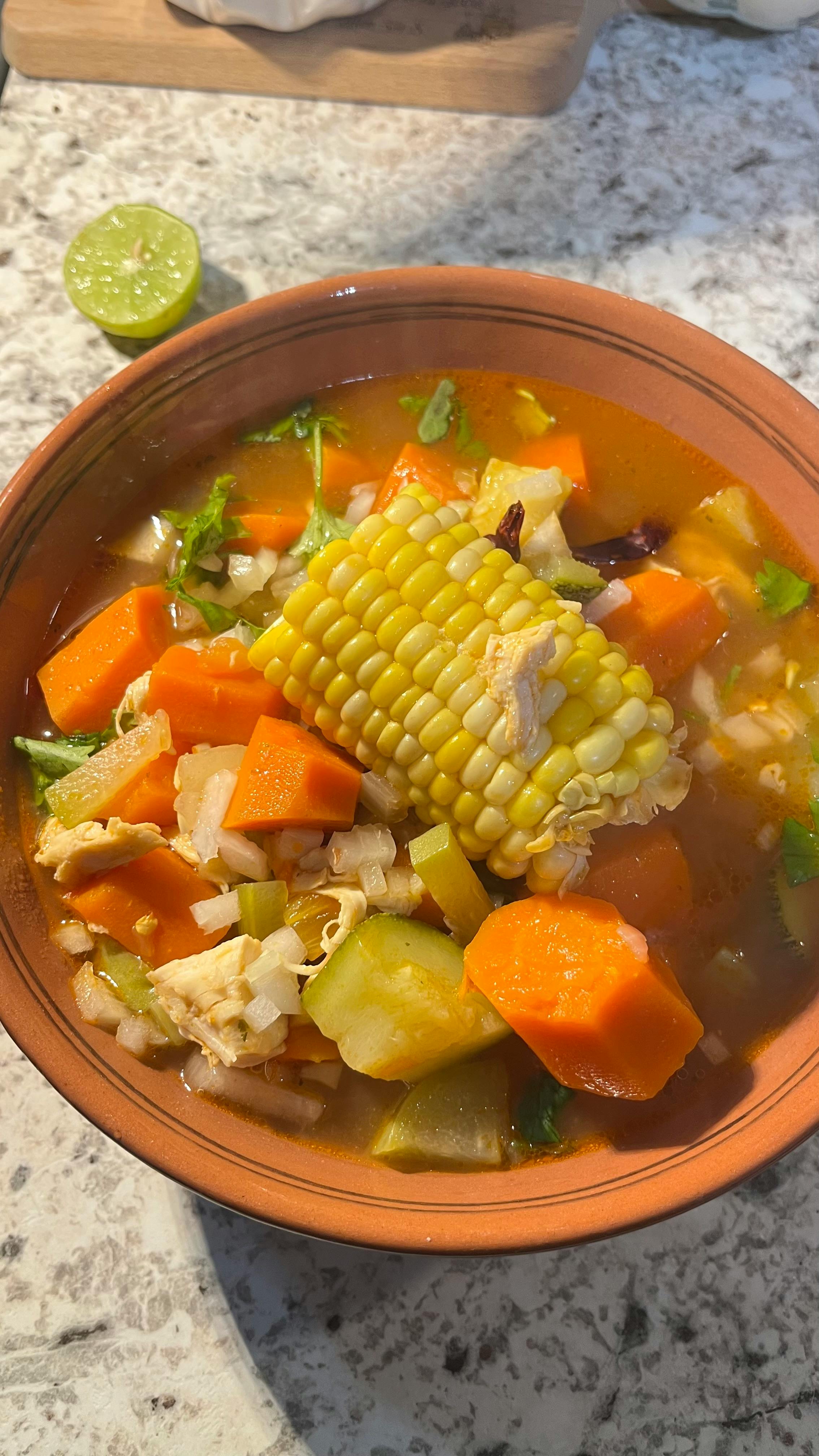
Photo: lucia photography in progress cano / Pexels
Salvadoran
Sopa de Pata
The diets react (see scores below)
Common Ingredients
- cow foot
- tripe
- cassava
- plantains
- corn
- cabbage
- tomatoes
- garlic
- cilantro
Specific recipes may vary.
Incompatible with 7 of 11 diets
Diet Ratings
Sopa de Pata is fundamentally incompatible with a ketogenic diet due to multiple high-carbohydrate ingredients that together would far exceed the daily 20-50g net carb limit in a single serving. Cassava (yuca) is extremely starchy, containing roughly 35-38g net carbs per 100g. Plantains (especially when ripe) contribute 25-30g net carbs per 100g. Corn adds additional significant starch and sugar. While cow foot and tripe are actually keto-friendly proteins rich in collagen, and the aromatics (garlic, cilantro, tomatoes, cabbage) are low-carb in typical quantities, the starchy vegetable base of this dish makes it impossible to consume without completely destroying ketosis. A standard bowl could easily contain 80-150g of net carbs from the cassava, plantains, and corn alone.
Sopa de Pata is a traditional Salvadoran soup built entirely around animal products as its primary components. Cow foot and tripe are both bovine-derived ingredients — cow foot provides collagen-rich connective tissue and bone, while tripe is the stomach lining of a cow. Both are unambiguously animal products and are the defining, structural elements of this dish. While the soup does include plant-based vegetables such as cassava, plantains, corn, cabbage, tomatoes, garlic, and cilantro, these serve as accompaniments and cannot be separated from the animal ingredients in the dish as prepared. There is no meaningful vegan debate here: beef-derived organ meats and extremities are clearly excluded under every interpretation of veganism.
Sopa de Pata is disqualified from a paleo perspective primarily because of corn, which is a grain and a clear paleo exclusion with broad consensus. The dish is otherwise a mixed bag: cow foot and tripe are excellent nose-to-tail paleo proteins, cassava (yuca) is a paleo-approved tuber, plantains are paleo-friendly fruits, and cabbage, tomatoes, garlic, and cilantro are all approved vegetables and herbs. However, corn is a non-negotiable grain exclusion in virtually all paleo frameworks — it contains anti-nutrients, lectins, and was not a meaningful food source for most Paleolithic hunter-gatherers. Because corn is a structural ingredient in this soup rather than a minor garnish, the dish as traditionally prepared cannot be approved. Removing the corn would elevate the dish significantly, likely to an approve rating around 8/10.
Sopa de Pata is centered on cow foot and tripe — both organ/offal cuts of red meat — which places it firmly in the 'avoid' category under Mediterranean diet principles. Red meat, especially in these fatty, collagen-heavy cuts, is meant to be consumed only a few times per month. While the dish does include an impressive array of Mediterranean-friendly vegetables (cassava, plantains, corn, cabbage, tomatoes, garlic, cilantro), these vegetables are secondary to the dominant red meat proteins. The vegetable content partially redeems the dish nutritionally, but the primary protein source contradicts core Mediterranean guidelines. There is no olive oil as the fat base, and the collagen-rich animal parts contribute significant saturated fat.
Sopa de Pata contains several carnivore-approved animal ingredients — cow foot (collagen-rich connective tissue) and tripe (organ meat) are both excellent carnivore foods. However, the dish is heavily loaded with plant-based ingredients that are strictly excluded from the carnivore diet: cassava, plantains, and corn are starchy carbohydrate sources; cabbage, tomatoes, garlic, and cilantro are vegetables/aromatics entirely off-limits. The plant ingredients are not minor seasonings but core structural components of the dish, making the overall dish incompatible with carnivore principles. A carnivore practitioner would need to completely deconstruct this dish, consuming only the cow foot and tripe in isolation.
Sopa de Pata contains corn, which is an explicitly excluded grain on the Whole30 program. All other ingredients — cow foot, tripe, cassava, plantains, cabbage, tomatoes, garlic, and cilantro — are individually Whole30-compliant whole foods. However, the presence of corn kernels (a grain) disqualifies this dish as written. If corn were omitted, this soup would be a strong Whole30-compliant meal.
Sopa de Pata contains garlic as a direct ingredient, which is high-FODMAP due to fructans and must be avoided during the elimination phase regardless of quantity. Additionally, plantains can be high-FODMAP depending on ripeness and serving size (ripe plantains are higher FODMAP), and corn is moderate-to-high FODMAP at typical serving sizes (Monash rates sweetcorn as high-FODMAP at amounts commonly consumed in soups). Cassava (yuca) is also high-FODMAP per Monash testing. The cow foot and tripe themselves are protein sources that are FODMAP-free, and tomatoes, cabbage (at small servings), and cilantro are generally low-FODMAP. However, the combination of garlic, cassava, corn, and potentially ripe plantains makes this dish high-FODMAP overall during the elimination phase. The presence of garlic alone is disqualifying — it cannot be removed from a slow-cooked broth without FODMAP contamination of the entire soup.
Sopa de Pata presents a mixed DASH profile. On the positive side, it contains an abundance of DASH-friendly vegetables and starches: cassava, plantains, corn, cabbage, tomatoes, garlic, and cilantro all contribute fiber, potassium, magnesium, and vitamins consistent with DASH principles. However, the primary proteins — cow foot and tripe — are organ/connective tissue meats high in cholesterol and saturated fat, which DASH guidelines recommend limiting. Cow foot in particular contains significant amounts of collagen and fat, and tripe, while relatively lean, is still a processed organ meat. Traditional preparation of this soup often involves prolonged boiling that renders fat into the broth, and sodium levels can be high depending on seasoning. The dish is not heavily processed and lacks added sugars, but the fatty cuts of beef place it outside DASH's preference for lean proteins. Consumed occasionally with the fat skimmed from the broth and moderate sodium seasoning, it can be a borderline acceptable choice given its strong vegetable content.
NIH DASH guidelines clearly recommend lean meats and limiting saturated fat, which would flag cow foot and tripe as poor protein choices. However, some DASH-oriented clinicians note that traditional whole-food soups with a high vegetable-to-meat ratio and no processed ingredients may be acceptable in moderation — particularly if broth fat is skimmed — and that collagen-rich cuts are not equivalent in cardiovascular risk to fatty processed red meats.
Sopa de Pata is a rich Salvadoran soup that presents a mixed Zone Diet profile. On the positive side, it contains several Zone-favorable vegetables — cabbage, tomatoes, garlic, and cilantro — which are excellent low-glycemic carbohydrate sources with anti-inflammatory polyphenols. The protein sources (cow foot and tripe) are whole-food animal proteins, but both are problematic for Zone: cow foot is high in collagen/gelatin and relatively low in complete usable protein per block, while tripe has a moderate fat profile that leans toward saturated fat rather than monounsaturated. More critically, the carbohydrate sources are a significant Zone concern. Cassava (yuca) is high-glycemic with minimal fiber, plantains are higher-sugar and 'unfavorable' in Zone terminology (similar to bananas), and corn is an 'unfavorable' starchy carbohydrate that Sears consistently flags. This combination of high-glycemic carbs effectively breaks the Zone's low-GI carbohydrate preference. The dish could be brought closer to Zone compliance by reducing or eliminating cassava, plantains, and corn, emphasizing the cabbage and tomato base, and adding a leaner protein source. As served traditionally, it skews toward unfavorable carbohydrates and higher saturated fat, making Zone block balancing difficult without significant modification.
Some Zone practitioners following Sears' block-based flexibility would argue that a small, carefully portioned serving of this soup — emphasizing the broth, cabbage, tomatoes, and tripe while minimizing cassava, plantain, and corn — could be worked into a Zone meal with adjusted blocks. The collagen from cow foot also aligns with Sears' later anti-inflammatory writings emphasizing whole-food animal sources. In that interpretation, the dish earns a 5 rather than a 4, treated as a manageable 'unfavorable' carb situation rather than a disqualifying one.
Sopa de Pata is a traditional Salvadoran soup built around cow foot (trotters) and tripe — both of which are organ/connective tissue cuts high in saturated fat and collagen. The collagen angle is genuinely mixed: some anti-inflammatory researchers note that gelatin and glycine from collagen-rich cuts may support gut integrity and have modest anti-inflammatory effects, while the overall saturated fat load from beef offal and the high omega-6:omega-3 ratio of grain-fed cattle cuts lean pro-inflammatory by mainstream anti-inflammatory standards. Tripe in particular can be fatty and is classified as red/organ meat, which anti-inflammatory guidelines recommend limiting. On the positive side, the vegetable base is genuinely strong: cassava and plantains provide resistant starch and fiber; corn contributes antioxidants; cabbage is a cruciferous vegetable with glucosinolates; tomatoes deliver lycopene; and garlic and cilantro add meaningful anti-inflammatory polyphenols. This is not a processed food — it is a whole-ingredient, traditionally prepared dish with no refined oils, trans fats, or additives. However, the dominant protein sources (cow foot, tripe) tip the balance toward 'caution' for regular consumption under anti-inflammatory principles, particularly for individuals managing inflammatory conditions or cardiovascular risk.
A glycine-forward reading of this dish — emphasized by researchers like Dr. Paul Saladino and ancestral health advocates — would argue that nose-to-tail eating including collagen-rich cuts and organ meats provides unique anti-inflammatory amino acid profiles (glycine, proline) and micronutrients (zinc, B12) absent from muscle meat alone. From this perspective, the gelatin-rich broth could be seen as gut-supportive rather than inflammatory. Conversely, strict anti-inflammatory authorities like Dr. Weil's pyramid and the IF Rating system would place regular red/organ meat consumption firmly in the 'limit' category regardless of preparation method.
Sopa de Pata is a traditional Salvadoran soup built on cow foot and tripe, which creates a genuinely mixed nutritional profile for GLP-1 patients. On the positive side, it is a broth-based soup (high hydration, easy digestibility relative to solid meals, and good portion friendliness), and it contains meaningful vegetables — cabbage, tomatoes, garlic, and cilantro — plus cassava, plantains, and corn contributing some fiber. Tripe is actually a relatively lean protein source with decent protein density. However, cow foot is very high in saturated fat and collagen-heavy connective tissue, and the fat content of the broth can be substantial depending on preparation — fatty broth is a known trigger for nausea, bloating, and reflux in GLP-1 patients due to slowed gastric emptying. The starchy load from cassava, plantains, and corn in combination is significant, and the dish is low in the kind of lean, high-density protein that GLP-1 patients need to prioritize. A standard serving is unlikely to deliver 15–30g of high-quality protein without also delivering a high fat and starch burden. The dish is not fried or heavily processed, which keeps it out of the avoid category, but it is not well-optimized for GLP-1 dietary needs without significant modification (e.g., defatting the broth, reducing starch volume, adding a lean protein source).
Some GLP-1-focused dietitians may view broth-based traditional soups more favorably regardless of fat source, as the high water content, warm temperature, and slow eating pace tend to reduce overall intake and GI distress compared to solid meals. Others specifically flag high-fat bone broths and organ-meat soups as problematic for patients experiencing nausea, citing fat content as a primary GLP-1 side-effect driver that outweighs the hydration benefit.
*See how scores were generated at our methodology page.
Nutritional profile
Six traits that cut across every diet.
Fiber & Plants
How much whole-plant food and fiber it delivers.
Healthy Fats
The quality of its fats (unsaturated, omega-3).
Whole / Unprocessed
How close it is to its natural, unprocessed form.
Gut Gentle
How easy it is on digestion (low FODMAP, few irritants).
Low Glycemic
How little it spikes your blood sugar.
Protein Density
How much protein it packs per calorie.
Controversy Index
Higher controversy = more disagreement between diets.
Diet-Specific Tips
 DASH — 4/10
View tips
- Cow foot and tripe are high in saturated fat and cholesterol, inconsistent with DASH lean protein guidelines
- Strong vegetable base (cabbage, tomatoes, cassava, plantains, corn) contributes fiber, potassium, and magnesium aligned with DASH
- Prolonged boiling renders animal fat into broth, increasing saturated fat content of the dish
- No processed ingredients, added sugars, or tropical oils — a positive for DASH
- Sodium content can be high depending on seasoning; low-sodium preparation would improve score
- Skimming broth fat before serving would meaningfully reduce saturated fat intake
- Portion control recommended — the vegetable-rich components are DASH-friendly, the meat portions should be limited
 Zone — 4/10
View tips
- Cassava (yuca) is high-glycemic with minimal fiber — classified as 'unfavorable' carb in Zone
- Plantains are higher-sugar, Zone-unfavorable (comparable to bananas which Sears explicitly flags)
- Corn is a starchy, higher-glycemic carb that Sears consistently lists as unfavorable
- Cow foot and tripe are fatty, collagen-heavy proteins — not lean Zone-preferred proteins; higher in saturated fat
- Cabbage, tomatoes, garlic, and cilantro are excellent Zone-favorable, low-glycemic, polyphenol-rich vegetables
- The carbohydrate block composition is dominated by unfavorable high-GI sources, making 40/30/30 ratio difficult to achieve cleanly
- Anti-inflammatory polyphenols from vegetables and garlic are a Zone positive
- Traditional preparation would require significant ingredient ratio modification to approach Zone compliance
 Anti-Inflammatory — 4/10
View tips
- Cow foot and tripe are high-saturated-fat red/organ meats — anti-inflammatory guidelines recommend limiting these
- Collagen-rich cuts provide glycine, which has some documented anti-inflammatory properties, creating genuine ambiguity
- Strong anti-inflammatory vegetable base: cabbage (cruciferous), tomatoes (lycopene), garlic, cilantro
- Plantains and cassava contribute fiber and resistant starch with favorable gut microbiome effects
- No processed ingredients, refined oils, trans fats, or added sugars — whole-food preparation is a positive
- Corn adds antioxidants (lutein, zeaxanthin) though omega-6 content is a minor consideration
- Grain-fed beef offal carries unfavorable omega-6:omega-3 ratio compared to grass-fed
- Suitable occasionally but not as a dietary staple under anti-inflammatory principles
 GLP-1 Friendly — 4/10
View tips
- Cow foot is high in saturated fat — fatty broth worsens GLP-1 nausea, bloating, and reflux
- Tripe is relatively lean and provides some protein, but overall protein density per serving is moderate
- High combined starch load from cassava, plantains, and corn limits nutrient density per calorie
- Broth base is hydrating and easy to digest in small portions — a genuine positive for GLP-1 patients
- Vegetables (cabbage, tomatoes, garlic, cilantro) contribute fiber and micronutrients
- No frying, no added sugar, no carbonation — avoids the worst GLP-1 triggers
- Fat content of the broth is highly preparation-dependent; defatting the broth significantly improves the profile
- Not a high-protein-density meal — unlikely to meet the 15–30g per meal protein target without modification