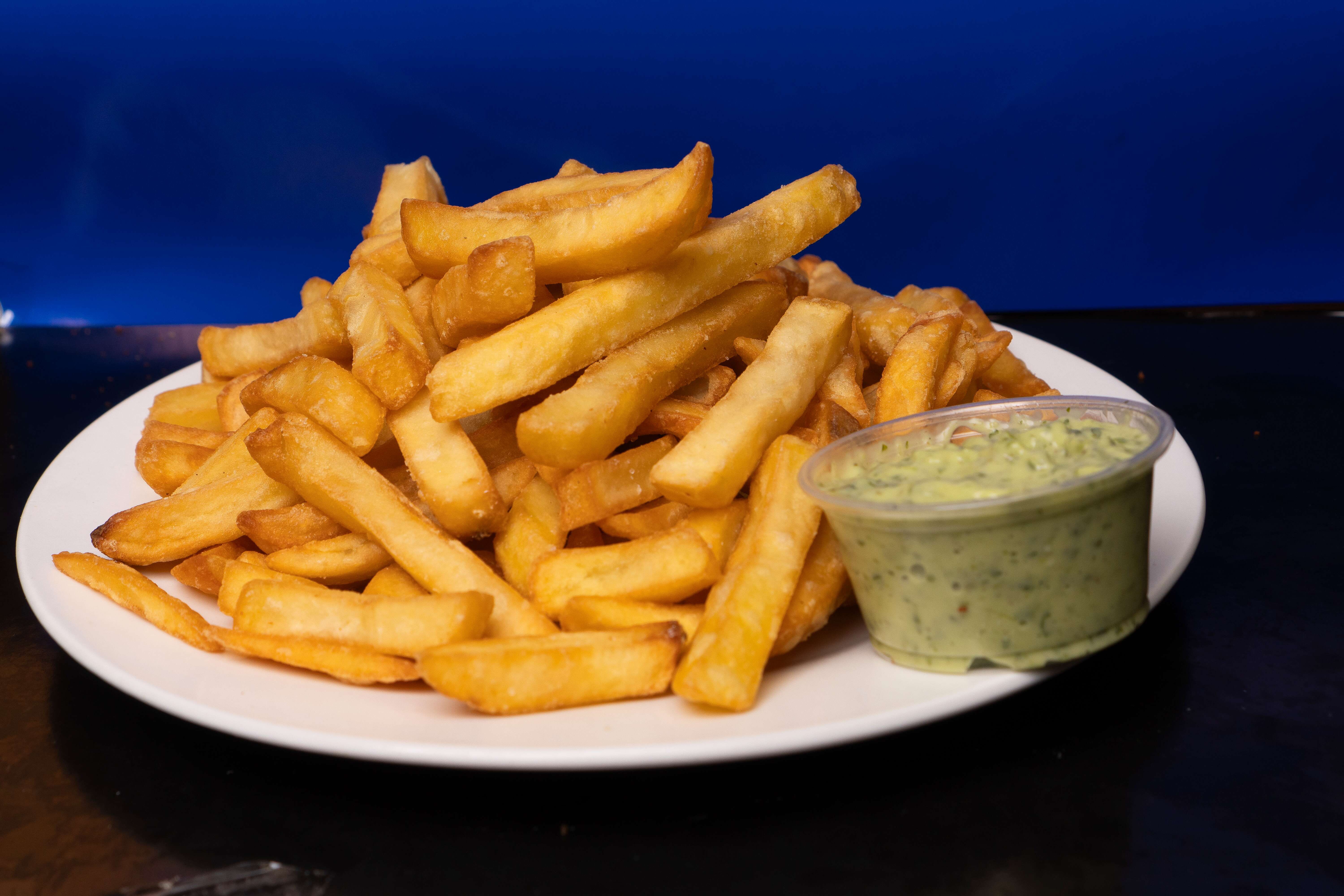
Photo: jean Trinidad / Pexels
Salvadoran
Yuca Frita
The diets react (see scores below)
Common Ingredients
- cassava
- oil
- salt
- curtido
- tomato sauce
Specific recipes may vary.
Incompatible with 5 of 11 diets
Diet Ratings
Yuca Frita (fried cassava/yuca) is fundamentally incompatible with a ketogenic diet. Cassava is one of the highest-carb root vegetables available, containing approximately 78g of net carbs per 100g serving. A typical serving of Yuca Frita would contain well over 50g of net carbs on its own, blowing the entire daily keto carb budget in a single side dish. The frying oil is keto-friendly, and curtido (fermented cabbage slaw) is relatively low-carb, but the dominant ingredient — cassava — makes this dish completely unsuitable regardless of portion size. Even a very small taste would consume a significant portion of the daily carb allowance.
Yuca Frita is a Salvadoran fried cassava dish with all plant-based ingredients. Cassava (yuca) is a starchy root vegetable, fried in vegetable oil and salted. Curtido is a traditional Salvadoran fermented cabbage slaw made from cabbage, carrots, onions, oregano, and vinegar — fully plant-based. Tomato sauce in this context is a simple cooked tomato condiment with no animal ingredients. Every component of this dish is derived entirely from plants with no animal products or derivatives present.
Yuca Frita has several paleo compliance issues. Cassava (yuca) itself is a paleo-approved tuber, but the preparation introduces multiple problematic elements. The 'oil' used for frying is almost certainly a seed or vegetable oil (canola, sunflower, or soybean oil are standard in Salvadoran cooking), which is explicitly excluded from paleo. Added salt is also excluded under strict paleo rules. Curtido is a fermented cabbage slaw that, while vegetable-based, typically contains added salt and sometimes sugar or vinegar — making it at least borderline. The tomato sauce in restaurant/traditional preparation almost always contains added salt, sugar, and preservatives. Even if the cassava base is paleo-friendly, the combination of a likely seed oil for frying, added salt, and processed condiments pushes this dish firmly into avoid territory as typically prepared.
A strict purist at home could theoretically prepare a paleo-compliant version using coconut or avocado oil, no added salt, and a homemade tomato sauce — in which case cassava itself is an approved tuber and cabbage-based curtido without additives would be acceptable. Some modern paleo practitioners (following Sisson or Whole30-adjacent frameworks) would allow this dish with those substitutions.
Yuca Frita is deep-fried cassava, which presents a mixed profile for the Mediterranean diet. Cassava itself is a starchy root vegetable — whole and minimally processed — but deep-frying significantly increases fat content and caloric density, moving it away from Mediterranean principles. The type of oil used is unspecified; if fried in extra virgin olive oil it aligns better, but industrial frying oils (common in Salvadoran cooking) are not Mediterranean staples. Curtido (fermented cabbage slaw) is a genuine positive — it mirrors the role of fermented vegetables and is plant-forward. Tomato sauce adds further vegetable value. However, the predominant cooking method (deep frying) and refined starch base make this a caution-level dish rather than an approved one. It is not inherently harmful in moderation but is not a Mediterranean staple.
Some Mediterranean diet interpretations, particularly those grounded in traditional Greek and Middle Eastern practices, allow for occasional fried vegetables and root vegetables as part of a plant-forward meal, arguing that the overall dietary pattern matters more than any single preparation method. In this view, if fried in olive oil and paired with fermented vegetables and tomato, the dish could be seen as acceptable more regularly.
Yuca Frita is entirely plant-based and fundamentally incompatible with the carnivore diet. Cassava (yuca) is a starchy root vegetable — a plant carbohydrate with no animal-derived components. It is accompanied by curtido (a fermented cabbage slaw), tomato sauce (plant-based), and cooked in plant oil. Every single ingredient in this dish is excluded on a carnivore diet. There is no animal product present whatsoever, no protein source, and the dish is high in plant carbohydrates and antinutrients. This is one of the clearest possible 'avoid' cases.
Yuca Frita (fried cassava) is a dish where the base ingredients — cassava, oil, and salt — are fully Whole30 compliant. Cassava is a starchy root vegetable, and frying it in compliant oil with salt is fine. However, this dish falls into a gray area because it is essentially a fried starchy side in the spirit of french fries or tots, which are explicitly called out by Whole30 Rule 4 as not allowed ('french fries' and 'tots' are named). Curtido (a fermented cabbage slaw) is generally compliant if made without added sugar or non-compliant vinegar, but store-bought or restaurant versions often contain sugar. Similarly, tomato sauce must be scrutinized for added sugar, sulfites (no longer excluded per 2024 rules), or other non-compliant additives. The dish's core concern is the spirit-of-the-program issue: fried cassava directly mimics the experience of french fries or tots, which Whole30 explicitly discourages.
The official Whole30 program explicitly names 'french fries' and 'tots' as prohibited even when made with compliant ingredients, suggesting fried cassava sticks/fries could be similarly flagged under Rule 4. However, some community members and coaches argue that cassava prepared as a whole root vegetable (rather than in a processed, shaped form) is meaningfully different from a potato tot or fry, and that the prohibition targets recreating junk food textures rather than simply roasting or frying a whole vegetable.
Yuca Frita (fried cassava) has several components to evaluate. Cassava/yuca itself is low-FODMAP at a standard serving (around 100g), as Monash University has tested it and found it safe at that portion. Oil and salt are FODMAP-free. However, the two accompaniments create concern: curtido is a Salvadoran fermented cabbage slaw that traditionally contains cabbage (low-FODMAP in small amounts), carrots (low-FODMAP), oregano, and often white onion — the onion content is a significant fructan source and makes curtido high-FODMAP as typically prepared. Tomato sauce can range from low to high-FODMAP depending on whether it contains onion or garlic (very common in commercial and homemade versions), and whether concentrated tomato paste is used (higher fructose concentration). The base cassava fries themselves would be approvable, but the standard accompaniments — particularly curtido with onion and garlic-containing tomato sauce — push this dish into caution territory. A modified version without onion in the curtido and using a safe tomato sauce would be safer.
Monash University rates cassava as low-FODMAP at ~100g, but clinical FODMAP practitioners would flag the traditional curtido (containing white onion) and standard tomato sauces (often with garlic/onion) as high-FODMAP triggers; the dish as authentically served is likely not safe during strict elimination without ingredient modifications.
Yuca Frita (fried cassava) presents a mixed DASH profile. Cassava itself is a starchy root vegetable with some potassium and fiber, which aligns broadly with DASH principles favoring vegetables. However, deep-frying substantially increases total fat content and caloric density, which DASH discourages. The added salt raises sodium concerns. The accompaniments — curtido (a fermented/pickled cabbage slaw) adds some vegetable value but also contributes sodium from its brine, while the tomato sauce can vary widely in sodium content. The dish lacks lean protein, low-fat dairy, or significant micronutrients emphasized by DASH (calcium, magnesium). Overall, the frying method and sodium load from salt, curtido brine, and tomato sauce push this into caution territory despite the vegetable base. Baked or boiled yuca with low-sodium curtido would score meaningfully higher.
NIH DASH guidelines emphasize limiting fried foods and excess sodium, clearly placing this dish in caution. However, some DASH-oriented nutritionists note that cassava's resistant starch and potassium content, combined with the probiotic and fiber benefits of curtido (fermented cabbage), could be acceptable in moderate portions within an otherwise DASH-compliant diet — particularly if prepared with minimal added salt and a low-sodium tomato sauce.
Yuca Frita (fried cassava) is a highly problematic food for the Zone Diet. Cassava is an extremely high-glycemic, starchy root vegetable with a glycemic index comparable to white potatoes — a food Dr. Sears explicitly lists as unfavorable. A typical serving of fried cassava (100-150g) contains roughly 35-50g of net carbs, creating a massive carbohydrate block imbalance with virtually no protein to balance it. Deep frying adds significant fat, but from cooking oils that are often omega-6-heavy (not monounsaturated), compounding the anti-inflammatory concerns. The curtido (fermented cabbage slaw) is a genuinely favorable Zone component — low-glycemic, high in polyphenols and fiber — and the tomato sauce adds modest polyphenol benefit. However, these accompaniments cannot rescue the dish's fundamental problem: the cassava base is calorically dominated by high-glycemic carbohydrates with no protein anchor. As a side dish with no protein component, it would throw any meal's 40/30/30 ratio severely out of balance. Even with strict portion control, the glycemic load of cassava makes it very difficult to incorporate into a Zone-compliant meal without essentially eliminating the cassava portion entirely.
Yuca Frita (fried cassava) presents a mixed anti-inflammatory profile. Cassava itself is a starchy root vegetable with some fiber and resistant starch, but it is high-glycemic and nutritionally modest compared to colorful, antioxidant-rich vegetables. The frying process is a significant concern: deep-frying in refined oils (likely vegetable or seed oil) introduces oxidized omega-6 fatty acids, which are pro-inflammatory under standard anti-inflammatory guidance. However, the dish is partially redeemed by its accompaniments — curtido (a fermented cabbage slaw) is a genuine anti-inflammatory asset, providing probiotics, fiber, and cruciferous phytonutrients that reduce inflammatory markers. Tomato sauce contributes lycopene, a beneficial carotenoid antioxidant. Salt alone is neutral in moderate quantities. Overall, the deep-frying method and high glycemic load of cassava pull the score down, while the fermented curtido and tomato sauce provide meaningful uplift. This is an acceptable occasional dish rather than a dietary staple.
The verdict hinges heavily on the type of frying oil used. If fried in extra virgin olive oil or avocado oil (less common but possible), the inflammatory burden drops considerably. Mainstream nutrition science (AHA) is more permissive about seed and vegetable oils than anti-inflammatory frameworks like Dr. Weil's pyramid, which would lower concern about the frying component for those following standard dietary guidelines.
Yuca Frita is deep-fried cassava, making it a poor fit for GLP-1 patients on nearly every priority axis. Cassava is a starchy root vegetable that is high in refined carbohydrates and low in protein, and frying it adds significant fat while degrading digestibility. The dish provides essentially no protein (listed as none), minimal fiber relative to its calorie density, and the frying process makes it heavy, greasy, and slow to digest — directly worsening the nausea, bloating, and reflux that are already common GLP-1 side effects due to slowed gastric emptying. Curtido (fermented cabbage slaw) is the one redeeming element, contributing some fiber and probiotics, and the tomato sauce adds minimal nutrients, but neither rescues the dish from its core problems. The dish is also portion-sensitive in the wrong direction — it delivers high calories with low nutritional return, violating the nutrient-density-per-calorie principle that is critical for patients eating significantly less. As a side with no protein anchor, it occupies stomach space that should be reserved for protein and fiber-rich foods.
*See how scores were generated at our methodology page.
Nutritional profile
Six traits that cut across every diet.
Fiber & Plants
How much whole-plant food and fiber it delivers.
Healthy Fats
The quality of its fats (unsaturated, omega-3).
Whole / Unprocessed
How close it is to its natural, unprocessed form.
Gut Gentle
How easy it is on digestion (low FODMAP, few irritants).
Low Glycemic
How little it spikes your blood sugar.
Protein Density
How much protein it packs per calorie.
Controversy Index
Higher controversy = more disagreement between diets.
Diet-Specific Tips
 Vegan — 8/10
View tips
- Cassava is a whole-food plant-based root vegetable
- Curtido is a fermented cabbage slaw with no animal ingredients
- Tomato sauce is plant-based in its traditional Salvadoran preparation
- Frying oil is vegetable-based
- No animal products, dairy, eggs, or animal-derived ingredients in any component
- Dish scores high due to whole-food primary ingredient (cassava), though frying reduces nutritional score slightly
 Mediterranean — 4/10
View tips
- Cassava is a whole, unprocessed root vegetable — plant-based positive
- Deep-frying method significantly increases fat content and departs from Mediterranean preparation norms
- Oil type unspecified — non-olive frying oils are not aligned with Mediterranean principles
- Curtido (fermented cabbage slaw) is a plant-forward, gut-healthy accompaniment
- Tomato sauce adds vegetable value
- No protein source; dish is carbohydrate-heavy with limited nutritional breadth
- Acceptable occasionally but not a Mediterranean dietary staple
 Whole30 — 5/10
View tips
- Cassava itself is a compliant root vegetable on Whole30
- Frying cassava mimics french fries/tots, which are explicitly excluded by Rule 4 (spirit of program)
- Curtido must be verified as free from added sugar and made with compliant vinegar
- Tomato sauce requires label-checking for added sugar or non-compliant additives
- Oil and salt are compliant base ingredients
- Restaurant/traditional versions of curtido and tomato sauce frequently contain added sugar
 Low-FODMAP — 5/10
View tips
- Cassava/yuca is low-FODMAP at standard ~100g serving per Monash University
- Curtido traditionally contains white onion, a significant fructan source — high-FODMAP
- Tomato sauce frequently contains onion and/or garlic, both high-FODMAP fructan sources
- Oil and salt are FODMAP-free
- Dish could be made low-FODMAP with modified curtido (no onion) and garlic/onion-free tomato sauce
- As traditionally prepared and served, accompaniments contain high-FODMAP ingredients
 DASH — 4/10
View tips
- Deep-frying significantly increases total fat content, inconsistent with DASH emphasis on limiting fat
- Added salt and sodium from curtido brine and tomato sauce elevate overall sodium load
- Cassava provides some potassium and fiber, partially aligning with DASH vegetable goals
- No lean protein or low-fat dairy component emphasized by DASH
- Curtido adds vegetable servings and some probiotic benefit but contributes sodium
- Baked or boiled preparation would substantially improve DASH compatibility
- Tomato sauce sodium varies widely — commercial versions can be high in sodium
 Anti-Inflammatory — 4/10
View tips
- Cassava is high-glycemic and starchy with limited antioxidant content
- Deep-frying introduces oxidized omega-6 fatty acids from likely refined oil use
- Curtido (fermented cabbage slaw) is a strong anti-inflammatory component — probiotic, fibrous, cruciferous
- Tomato sauce contributes lycopene, a beneficial anti-inflammatory carotenoid
- No protein source; dish is predominantly refined starch and fat
- Occasional consumption acceptable; problematic as a dietary staple