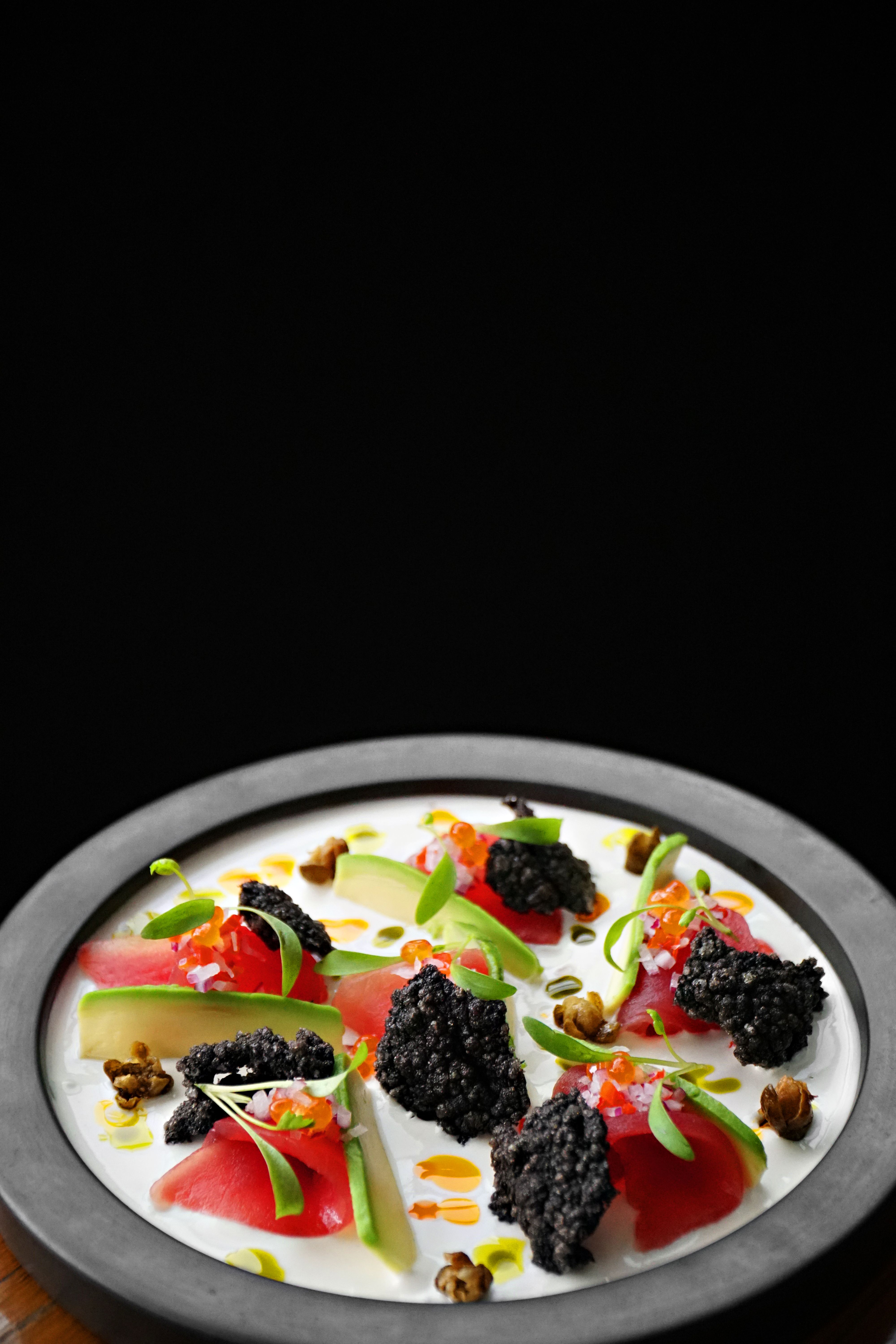
Photo: DΛVΞ GΛRCIΛ / Pexels
The diets react (see scores below)
Common Ingredients
- raw fish
- lime juice
- coconut cream
- tomato
- cucumber
- onion
- chili
- salt
Specific recipes may vary.
Incompatible with 4 of 11 diets
Diet Ratings
Oka is a Samoan raw fish salad (similar to ceviche) that is highly compatible with ketogenic eating. The primary protein is raw fish (zero carbs), marinated in lime juice and enriched with coconut cream — a high-fat, keto-friendly ingredient. The vegetables (tomato, cucumber, onion, chili) add minimal net carbs in typical serving portions. A standard serving likely contains 5-10g net carbs, well within keto limits. The dish is whole, unprocessed, naturally low in carbohydrates, and provides healthy fats from coconut cream along with quality protein from the fish. The main carb contributors are onion and tomato, which should be monitored in large portions but are generally fine in a standard serving.
Some strict keto practitioners flag coconut cream as a concern due to its moderate carb content (approximately 3-4g net carbs per 100ml) and may recommend using coconut milk with caution in larger quantities. Additionally, purists note that tomato and onion together can push carb counts higher, making portion discipline essential.
Oka is a traditional Samoan raw fish salad. The primary protein is raw fish, which is an animal product and strictly excluded under vegan dietary rules. No version of this dish, as defined, can be considered vegan. The remaining ingredients (lime juice, coconut cream, tomato, cucumber, onion, chili, salt) are all plant-based, but the inclusion of fish makes the dish non-compliant regardless.
Oka is a Samoan raw fish salad that is largely paleo-compatible — raw fish, lime juice, tomato, cucumber, onion, and chili are all whole, unprocessed ingredients fully approved under paleo guidelines. However, two ingredients disqualify the dish as-is: salt (added salt is excluded under paleo rules as a processed/refined additive) and coconut cream (while coconut flesh and coconut milk from whole coconuts are paleo-friendly, commercially prepared coconut cream is typically a processed product that may contain additives, stabilizers, or preservatives). Salt is the clearest violation — it is explicitly listed as an avoided ingredient. The dish scores low as a result, though the underlying concept is very close to paleo and could be made compliant with simple substitutions.
Oka is a Samoan raw fish salad with strong Mediterranean-compatible elements: fish as the primary protein is excellent, and vegetables like tomato, cucumber, onion, and chili are all plant-forward staples. However, the defining feature is coconut cream, which is a saturated fat source not part of traditional Mediterranean cuisine where extra virgin olive oil is the canonical fat. The dish is otherwise wholesome and minimally processed, but coconut cream's high saturated fat content conflicts with Mediterranean fat principles even though it is a plant-based ingredient.
Some modern Mediterranean diet interpreters apply a broader 'whole food, plant-forward' lens and would note that coconut cream is unprocessed and traditional in Pacific cuisine. Additionally, traditional Mediterranean coastal cuisines do include rich, fatty preparations of fish, and a few contemporary researchers argue that the saturated fat in coconut is metabolically distinct from animal saturated fats, making cautious inclusion defensible.
Oka is a Samoan raw fish dish that, while centered on fish (a carnivore-approved protein), is heavily laden with plant-based ingredients. Coconut cream, tomato, cucumber, onion, chili, and lime juice are all plant-derived and explicitly excluded from the carnivore diet. The dish is essentially a plant-forward preparation that uses fish as one component among many non-compliant ingredients. Even practitioners who are lenient about certain foods (e.g., coffee or spices) would draw the line at multiple vegetables and coconut cream as core structural ingredients. The only carnivore-compatible elements are the raw fish and salt.
Oka is a traditional Samoan raw fish salad (similar to a Pacific ceviche) made entirely from Whole30-compliant ingredients. Raw fish is an excellent protein source, lime juice is a natural fruit juice, coconut cream (pure, unsweetened) is a compliant natural fat, and tomato, cucumber, onion, and chili are all compliant vegetables. Salt is explicitly allowed on Whole30. There are no excluded ingredients — no grains, legumes, dairy, added sugars, or other prohibited substances. This is a whole-food dish in the truest sense, aligning perfectly with the spirit and rules of the Whole30 program.
Oka (Samoan raw fish salad) contains two significant FODMAP concerns: onion and coconut cream. Onion is one of the highest-fructan foods and must be strictly avoided during the elimination phase at any reasonable serving. Coconut cream is high-FODMAP at standard servings (Monash rates coconut cream as high-FODMAP at portions above approximately 60ml due to high polyol content — sorbitol — and becomes problematic at the amounts typically used in a dish like Oka). The remaining ingredients are generally low-FODMAP: raw fish (protein, no FODMAPs), lime juice (low-FODMAP in typical amounts), tomato (low-FODMAP at standard serving), cucumber (low-FODMAP), chili (low-FODMAP in small amounts), and salt (no FODMAPs). The combination of onion (unavoidable high-FODMAP) and likely high-FODMAP quantities of coconut cream makes this dish unsuitable during elimination. With substitutions (green onion tops only, coconut cream capped at ~60ml per serve), a modified version could potentially be made low-FODMAP.
Monash University rates coconut cream as high-FODMAP above 60ml per serve, but some clinical FODMAP practitioners allow small amounts of coconut cream with strict portion control; however, the onion content is non-negotiable during elimination and most practitioners would flag this dish regardless of coconut cream quantity. A standard Oka recipe uses enough onion that no portion adjustment makes it safe.
Oka (Samoan raw fish salad) contains several DASH-friendly ingredients — raw fish (lean protein, omega-3s), lime juice, tomato, cucumber, onion, and chili are all excellent DASH foods. However, coconut cream is a significant concern: it is high in saturated fat from a tropical oil source, which DASH explicitly limits. The added salt is also a flag, as sodium content can be substantial depending on the amount used. The dish is not categorically avoid-worthy because the base is lean fish with vegetables, but the coconut cream meaningfully undermines its DASH compatibility. A modified version using light coconut milk or substituting low-fat yogurt or coconut water would score considerably higher. As commonly prepared, the saturated fat from full coconut cream is the primary limiting factor.
NIH DASH guidelines explicitly recommend avoiding tropical oils (including coconut) due to high saturated fat content, placing coconut cream firmly in the 'limit' category. However, some updated clinical interpretations note that coconut cream also provides MCTs and that the overall dish's lean protein and vegetable content may offset concerns in the context of a broader DASH pattern — particularly if portion size is modest.
Oka is a Samoan raw fish salad that has several Zone-favorable elements but is held back primarily by the coconut cream component. The raw fish (typically tuna or mahi-mahi) is an excellent lean protein source rich in omega-3s, perfectly aligned with Zone protein blocks. The vegetables — tomato, cucumber, onion, and chili — are all low-glycemic, polyphenol-rich carbohydrates that Dr. Sears would classify as 'favorable' carbs. Lime juice adds negligible carbs. The problem is coconut cream, which is high in saturated fat rather than the monounsaturated fat Zone prefers, and is calorie-dense, making it difficult to hit the 30% fat target without overshooting. Coconut cream also contributes very little protein or favorable carbs. To Zone-balance this dish, a practitioner would need to significantly reduce the coconut cream portion, which is central to the dish's character. With careful portioning, Oka can fit into a Zone meal — the fish and vegetables create a solid foundation — but the coconut cream requires active management. The dish lacks a starchy carb component, which is actually a positive for Zone, and the overall macro profile without the coconut cream would be quite favorable.
Some Zone practitioners following Dr. Sears' later anti-inflammatory writings (Toxic Fat, The Mediterranean Zone) note that medium-chain triglycerides (MCTs) in coconut fat have a different metabolic profile than long-chain saturated fats, and that small amounts of coconut cream in an otherwise fish-and-vegetable dish may be acceptable. Sears' early Zone books (Enter the Zone) strictly categorized saturated fat sources as unfavorable, but his later work softened this stance in contexts where omega-3-rich protein and polyphenol-rich vegetables dominate the meal.
Oka is a Samoan raw fish salad (similar to ceviche) with a genuinely mixed anti-inflammatory profile. On the positive side, raw fish (typically tuna or snapper) provides omega-3 fatty acids (EPA/DHA), which are among the most potent anti-inflammatory nutrients known. Lime juice adds vitamin C and flavonoids. Tomato contributes lycopene and antioxidants. Cucumber, onion, and chili pepper all provide polyphenols and anti-inflammatory compounds — chili in particular contains capsaicin, a well-documented anti-inflammatory agent. These ingredients collectively align well with anti-inflammatory principles. The significant concern is coconut cream, which is high in saturated fat (predominantly lauric acid from medium-chain triglycerides). Coconut fat sits in a genuinely contested zone: traditional anti-inflammatory frameworks including Dr. Weil's caution against high saturated fat intake and would flag coconut cream as a food to limit, while a growing body of research and some practitioners argue that lauric acid and MCTs in coconut products behave differently from long-chain saturated fats and may not drive inflammation in the same way. The quantity of coconut cream in Oka is meaningful — it's not a garnish — which brings the score down from what would otherwise be a strong approve. Overall, this is a nutritionally interesting dish with excellent components undermined somewhat by the saturated fat load from coconut cream. Suitable in moderation.
Mainstream anti-inflammatory guidance (Dr. Weil's pyramid, IF Rating system) recommends limiting saturated fats including coconut cream, which would push this dish toward a lower score. However, a growing number of researchers and functional medicine practitioners argue that coconut's medium-chain triglycerides (MCTs) and lauric acid are metabolized differently and may not raise inflammatory markers the way animal saturated fats do — some even cite coconut products as neutral or beneficial in the context of an otherwise anti-inflammatory diet.
Oka is a Samoan raw fish salad where the primary tension is between its genuinely positive attributes and one significant drawback: coconut cream. The raw fish (typically tuna or another lean fish) provides high-quality protein and omega-3 fatty acids — both strongly aligned with GLP-1 dietary goals. The vegetable components (tomato, cucumber, onion) add fiber, micronutrients, and hydration support. Lime juice aids in flavor without calories. However, coconut cream is high in saturated fat, and traditional preparations use it generously, which can worsen GLP-1 side effects including nausea, bloating, and reflux. The chili component adds mild concern for patients prone to GLP-1-related reflux or GI sensitivity, though at typical Samoan recipe quantities it is usually modest. Portion size is meaningful here: a small serving with light coconut cream is acceptable and even nutritionally favorable; a generous traditional serving with full coconut cream tilts toward problematic. The dish is not fried or processed, is easy to digest in moderate amounts, and the protein and hydration profile are genuine positives. The saturated fat from coconut cream is the primary limiting factor preventing an 'approve' rating.
Some GLP-1-focused dietitians would rate this higher, arguing that coconut cream in a typical single serving of oka delivers moderate — not excessive — saturated fat, and that the lean fish protein and anti-inflammatory omega-3s outweigh this concern; others flag that GLP-1 patients are particularly sensitive to high-fat foods due to slowed gastric emptying, making even moderate saturated fat from coconut cream a meaningful GI risk that warrants caution over approval.
*See how scores were generated at our methodology page.
Nutritional profile
Six traits that cut across every diet.
Fiber & Plants
How much whole-plant food and fiber it delivers.
Healthy Fats
The quality of its fats (unsaturated, omega-3).
Whole / Unprocessed
How close it is to its natural, unprocessed form.
Gut Gentle
How easy it is on digestion (low FODMAP, few irritants).
Low Glycemic
How little it spikes your blood sugar.
Protein Density
How much protein it packs per calorie.
Controversy Index
Higher controversy = more disagreement between diets.
Diet-Specific Tips
 Keto — 8/10
View tips
- Raw fish is zero-carb, high-quality protein — ideal for keto
- Coconut cream provides healthy saturated fats, supporting the high-fat keto macro target
- Lime juice adds negligible carbs at typical quantities used for marinating
- Tomato and onion are the primary carb contributors but remain within limits at standard serving sizes
- No grains, added sugars, or starchy ingredients present
- Whole, unprocessed ingredients align with keto food quality standards
- Portion size matters — a large serving could approach or exceed the lower daily carb threshold
 Mediterranean — 5/10
View tips
- Fish is the primary protein — strongly aligned with Mediterranean principles (2-3x/week recommendation)
- Coconut cream is the main fat source, high in saturated fat, not a Mediterranean-traditional ingredient
- Vegetables (tomato, cucumber, onion, chili) are core Mediterranean staples
- Lime juice adds acidity similar to Mediterranean citrus use
- No red meat, refined grains, or added sugars
- Minimally processed, whole-food preparation
- Coconut cream displaces olive oil as the fat source, which is a meaningful deviation
 Whole30 — 9/10
View tips
- Raw fish is a fully compliant Whole30 protein
- Lime juice is a compliant fruit juice — allowed in any context per 2024 Whole30 guidelines
- Coconut cream is a compliant natural fat (ensure no added sugars or gums in packaged versions)
- All vegetables (tomato, cucumber, onion, chili) are explicitly allowed
- Salt is explicitly permitted on Whole30
- No grains, legumes, dairy, or added sugars present
- Dish honors the whole-food spirit of the program — no junk food recreation
 DASH — 5/10
View tips
- Raw fish is an excellent lean protein and DASH-approved
- Coconut cream is high in saturated fat from a tropical oil, explicitly limited by DASH
- Added salt increases sodium load; amount is preparation-dependent
- Vegetables (tomato, cucumber, onion, chili) and lime juice are strongly DASH-compatible
- Dish could be made more DASH-friendly with light coconut milk and reduced salt
- Portion size of coconut cream is critical — small amounts are less concerning
 Zone — 6/10
View tips
- Raw fish is an excellent Zone lean protein source, rich in omega-3 fatty acids — highly favorable
- Coconut cream is high in saturated fat, conflicting with Zone's preference for monounsaturated fats
- Tomato, cucumber, onion, and chili are all low-glycemic, Zone-favorable 'favorable' carbohydrates
- No high-glycemic carbohydrates present — no grains, starchy vegetables, or added sugars
- Lime juice contributes negligible carbs and adds beneficial polyphenols
- Coconut cream makes macro balancing difficult without reducing a core ingredient
- Overall dish skews toward favorable Zone components but fat quality is a concern
 Anti-Inflammatory — 6/10
View tips
- Raw fish provides omega-3 fatty acids (EPA/DHA) — strongly anti-inflammatory
- Chili pepper contains capsaicin, a well-documented anti-inflammatory compound
- Tomato contributes lycopene and antioxidants
- Onion provides quercetin, a potent flavonoid
- Coconut cream is high in saturated fat — a concern under standard anti-inflammatory guidelines
- Lime juice adds vitamin C and flavonoids with antioxidant properties
- No refined carbohydrates, added sugars, seed oils, or processed additives
- Minimal processing — whole, fresh ingredients throughout
 GLP-1 Friendly — 5/10
View tips
- High-quality lean fish protein supports the 100-120g daily protein target
- Omega-3 fatty acids from fish are strongly preferred unsaturated fats for GLP-1 patients
- Coconut cream is high in saturated fat and may worsen nausea, bloating, and reflux due to slowed gastric emptying
- Vegetable ingredients (cucumber, tomato) provide hydration support and micronutrients
- Chili may trigger reflux or GI discomfort in sensitive GLP-1 patients
- No frying, no refined grains, no added sugar — positives for digestibility and nutrient density
- Portion-sensitive: smaller servings with restrained coconut cream shift toward approve; generous traditional portions shift toward avoid
- Not a high-fiber dish overall — beans or legumes absent, so fiber contribution is modest