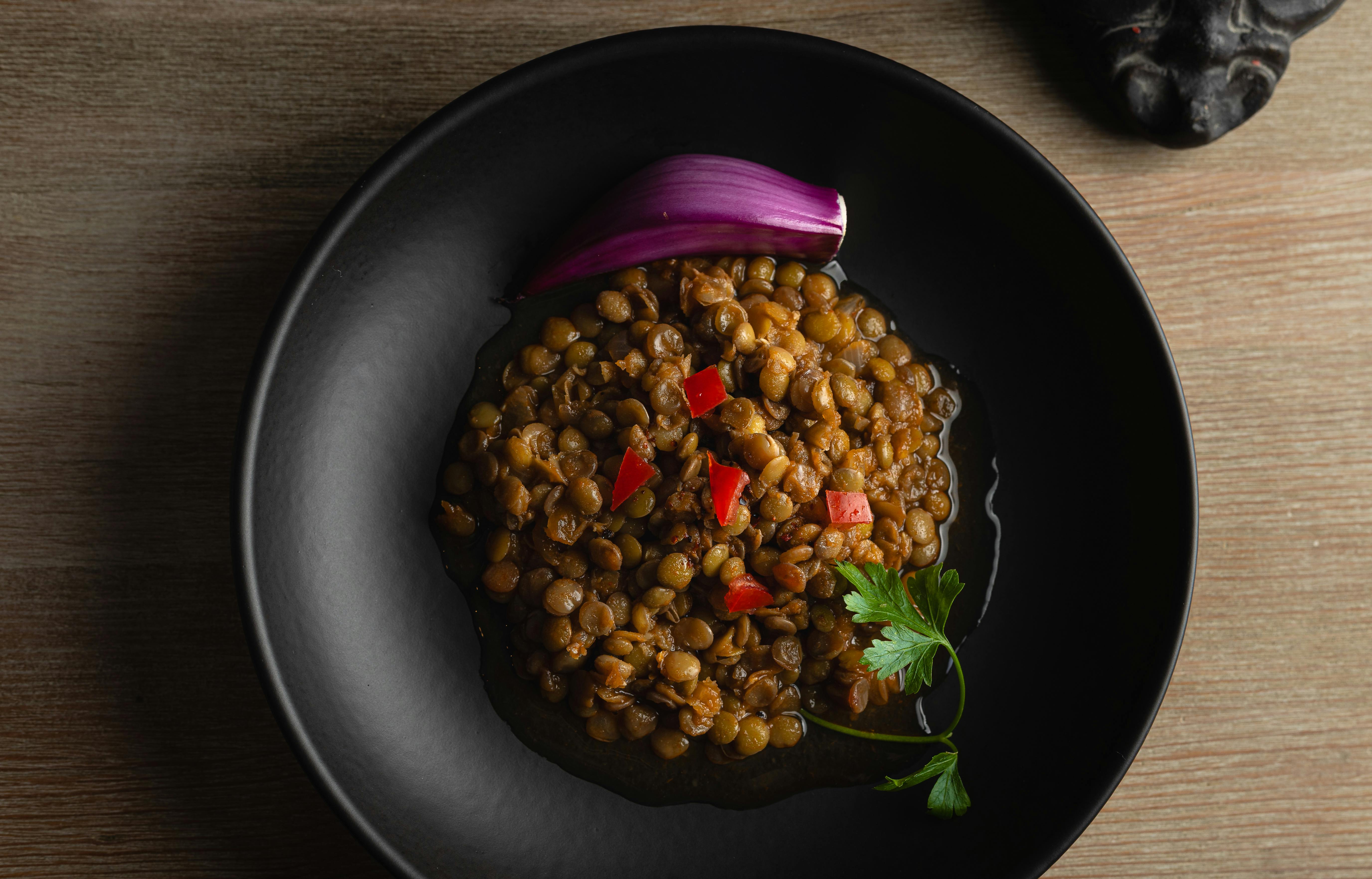
Photo: Vural Yavas / Pexels
The diets react (see scores below)
Common Ingredients
- black-eyed peas
- tomatoes
- onion
- garlic
- palm oil
- scotch bonnet peppers
- bay leaves
- mustard
Specific recipes may vary.
Incompatible with 5 of 11 diets
Diet Ratings
Ndambe is centered on black-eyed peas, which are a legume with very high net carbs. A single cup of cooked black-eyed peas contains approximately 25-30g of net carbs, making even a small serving capable of exceeding the daily keto carb limit. While the other ingredients (tomatoes, onion, garlic, palm oil, peppers, bay leaves, mustard) are largely keto-compatible or used in small amounts, they cannot offset the fundamental problem: the primary ingredient is a starchy legume that is incompatible with ketosis. Palm oil is an excellent keto fat source, but it cannot rescue a dish built around high-carb beans. There is no practical portion size of this dish that would keep net carbs within keto limits while still constituting a meal.
Ndambe is a traditional Senegalese black-eyed pea stew with entirely plant-based ingredients. All components — black-eyed peas, tomatoes, onion, garlic, scotch bonnet peppers, bay leaves, and mustard — are unambiguously vegan. The dish is protein-rich, fiber-dense, and built around whole legumes, which is ideal from a plant-based nutrition standpoint. However, palm oil is a notable ethical sticking point within the vegan community: while it is botanically a plant-derived fat with no animal ingredients, its production is widely linked to tropical deforestation and orangutan habitat destruction. Many ethically-motivated vegans actively avoid palm oil and consider environmental harm to be within the scope of vegan ethics. This concern pulls the score down from the 'approve' high range despite the dish being fully compliant by the strict animal-ingredient definition of veganism.
Some ethical vegans and vegan organizations argue that palm oil's role in large-scale deforestation and wildlife destruction — particularly of endangered orangutans — makes it incompatible with vegan values, which extend beyond the animal-product rule to minimizing harm broadly. Conversely, strict ingredient-based vegans hold that palm oil is fully plant-derived and unambiguously vegan, placing full responsibility on consumer advocacy rather than dietary exclusion.
Ndambe is fundamentally incompatible with the paleo diet. Its primary ingredient, black-eyed peas, is a legume — explicitly excluded from paleo due to high lectin and phytic acid content that Paleolithic humans would not have consumed in significant quantities. Palm oil is a debated fat: while it is a natural, minimally processed oil not on the seed oil exclusion list, it is not a preferred paleo fat. The remaining ingredients — tomatoes, onion, garlic, scotch bonnet peppers, bay leaves, and mustard (in its whole/seed form) — are all paleo-compatible. However, the dish's core protein source being a legume makes it unavoidably non-paleo regardless of the other ingredients.
Ndambe is a legume-forward dish built around black-eyed peas, tomatoes, onion, and garlic — all strongly aligned with Mediterranean diet principles. The plant-based protein base and vegetable aromatics are excellent. However, the primary fat is palm oil rather than extra virgin olive oil, which is the canonical fat of the Mediterranean diet. Palm oil is high in saturated fat and is not a traditional Mediterranean ingredient, which meaningfully reduces compatibility. The remaining ingredients (scotch bonnet, bay leaves, mustard) are neutral to mildly positive. The dish is whole-food and minimally processed, which is a strong positive, but the fat source is the key limiting factor.
Some modern Mediterranean diet interpreters focus on the overall dietary pattern (legume-heavy, plant-forward, whole foods) rather than strict ingredient-by-ingredient adherence, and would view palm oil as an acceptable substitution in the context of a dish this nutritionally sound. Others note that traditional West African culinary patterns share meaningful overlap with Mediterranean principles in their emphasis on legumes and vegetables, and argue the dish merits a higher approval rating on those grounds.
Ndambe is entirely plant-based with zero animal-derived ingredients. The primary protein source is black-eyed peas (a legume), which is explicitly excluded from the carnivore diet. Every single ingredient — black-eyed peas, tomatoes, onion, garlic, palm oil, scotch bonnet peppers, bay leaves, and mustard — is plant-derived. Legumes are among the most incompatible foods with carnivore principles due to their carbohydrate content, antinutrients (lectins, phytates), and plant origin. This dish fundamentally contradicts the core rule of eating exclusively animal products.
Ndambe's primary protein is black-eyed peas, which are legumes. Unlike green beans, sugar snap peas, and snow peas — which are explicitly excepted from the legume exclusion — black-eyed peas are true legumes with no Whole30 exception. All other ingredients (tomatoes, onion, garlic, palm oil, scotch bonnet peppers, bay leaves, mustard) are individually Whole30-compliant, but the dish cannot be salvaged while retaining its defining ingredient. The primary protein and structural component of the dish is excluded.
Ndambe contains multiple high-FODMAP ingredients that make it unsuitable during the elimination phase. Black-eyed peas are high in GOS (galacto-oligosaccharides) and are rated high-FODMAP by Monash University — even a small serving of 42g (about 1/4 cup canned) can trigger symptoms. Onion is one of the highest fructan-containing foods and is rated high-FODMAP at any culinary amount. Garlic is similarly high in fructans and must be avoided entirely during elimination. Together, these three ingredients make Ndambe clearly off-limits during the elimination phase. The remaining ingredients — tomatoes (low-FODMAP at standard serve), palm oil (fat, FODMAP-free), scotch bonnet peppers (low-FODMAP in small amounts), bay leaves (low-FODMAP), and mustard (low-FODMAP) — are generally safe, but they cannot offset the core high-FODMAP ingredients that define this dish.
Ndambe is a Senegalese black-eyed pea stew with a largely DASH-friendly base: black-eyed peas are an excellent source of plant protein, fiber, potassium, and magnesium — squarely in the DASH legume category. Tomatoes, onion, garlic, and scotch bonnet peppers add vitamins and antioxidants with negligible sodium. Bay leaves and mustard are minimal concerns. The significant issue is palm oil, a tropical oil explicitly limited by DASH guidelines due to its high saturated fat content (roughly 50% saturated fat), which raises LDL cholesterol. NIH/NHLBI DASH guidelines specifically call out tropical oils including palm oil as foods to limit. However, the quantity of palm oil used varies considerably — traditional recipes may use 2-4 tablespoons per pot (moderate per serving) versus some preparations using much more. If palm oil is used sparingly or substituted with a vegetable oil like olive or canola oil, this dish would likely score 7-8 and approach an approve verdict. As traditionally prepared with palm oil, a caution rating is appropriate.
NIH DASH guidelines explicitly limit tropical oils like palm oil due to saturated fat content, recommending vegetable oils instead. However, some updated clinical interpretations note that red palm oil contains tocotrienols and carotenoids with potential cardioprotective properties, and that the saturated fat in palm oil may behave differently than animal saturated fat — though mainstream cardiovascular nutrition organizations including the AHA have not endorsed this view and continue to recommend limiting palm oil.
Ndambe is a Senegalese black-eyed pea stew that presents a mixed Zone profile. Black-eyed peas are the central ingredient and serve as both the primary protein and carbohydrate source — a common challenge in Zone meal planning. As legumes, they provide vegetarian protein (requiring larger fat blocks per Zone rules: 3g fat per block rather than 1.5g) but also carry a significant carbohydrate load (net carbs moderate-to-high), making macro balancing tricky. The tomatoes, onion, garlic, and scotch bonnet peppers are all Zone-favorable low-glycemic vegetables rich in polyphenols, which aligns well with Sears' anti-inflammatory emphasis. Bay leaves and mustard are essentially macro-neutral flavor enhancers. The primary concern is palm oil: it is high in saturated fat (palmitic acid), which Zone — especially early Sears writings — discouraged in favor of monounsaturated fats like olive oil. Palm oil is not a Zone-recommended fat source. However, if used in a small quantity, it does not disqualify the dish outright. The dish lacks a lean animal protein to cleanly hit the 30% protein target, and the dual role of black-eyed peas as both carb and protein source makes precise Zone blocking difficult but not impossible. A Zone practitioner could adjust by reducing the bean portion to control carbs, adding egg whites or lean protein on the side, and substituting olive oil for palm oil.
Some Zone practitioners and later Sears anti-inflammatory writings take a more nuanced view of legumes, recognizing black-eyed peas as a favorable, low-glycemic carbohydrate source with decent fiber content (reducing net carbs). In this framing, Ndambe's polyphenol-rich vegetable base (tomatoes, peppers, garlic, onion) is highly Zone-compatible and anti-inflammatory. The palm oil concern is real, but if portions are small, some practitioners argue total saturated fat load remains manageable within a Zone-balanced day.
Ndambe is a traditional Senegalese black-eyed pea stew with a genuinely mixed anti-inflammatory profile. On the positive side, black-eyed peas are an excellent source of fiber, plant protein, and polyphenols associated with reduced inflammatory markers. Tomatoes provide lycopene and vitamin C, both potent antioxidants. Garlic, scotch bonnet peppers (capsaicin), bay leaves, and mustard all contribute anti-inflammatory phytochemicals — capsaicin in particular is well-documented for its anti-inflammatory effects. The overall legume-forward, vegetable-rich base is strongly aligned with anti-inflammatory principles. However, the critical limiting factor is palm oil (distinct from palm kernel oil). Red palm oil, traditionally used in West African cooking, contains significant saturated fat (roughly 50%) and while it does provide beta-carotene and tocotrienols with some antioxidant value, most anti-inflammatory frameworks — including Dr. Weil's — place it in the 'limit' category alongside other high-saturated-fat cooking fats. The quantity of palm oil used is pivotal: a modest amount used as a flavor base is less concerning than using it as the primary cooking medium. The dish is not a clear avoid, as the pro-inflammatory signal from palm oil is offset by the strongly anti-inflammatory bean-and-vegetable base, but it cannot be fully approved without modification (e.g., substituting extra virgin olive oil or reducing palm oil quantity).
Some whole-foods and traditional diet advocates argue that minimally processed red palm oil — rich in beta-carotene, vitamin E tocotrienols, and CoQ10 — is not inherently pro-inflammatory and may have been unfairly grouped with refined palm kernel oil. Proponents like Dr. Bruce Fife distinguish red palm oil's micronutrient density from processed equivalents, while mainstream anti-inflammatory protocols (Dr. Weil, IF Rating system) continue to flag its high saturated fat content as a reason for caution or limitation.
Ndambe is a Senegalese black-eyed pea stew with a genuinely mixed GLP-1 profile. Black-eyed peas are excellent on two key dimensions — they deliver meaningful fiber (~8g per cooked cup) and moderate plant protein (~13g per cup), supporting both GLP-1 priorities #1 and #2. Tomatoes, onion, and garlic add micronutrients and are easy to digest. However, palm oil is high in saturated fat and is typically used in quantities that push total fat per serving into a range that can worsen GLP-1 GI side effects (nausea, reflux, bloating) — this is the primary concern. Scotch bonnet peppers are among the hottest commonly used culinary chilies and pose a real risk of worsening reflux and nausea in GLP-1 patients, particularly those already experiencing GI side effects. Mustard and bay leaves are benign in typical amounts. The dish is not fried and is not empty-calorie, which keeps it out of the avoid category. With palm oil reduced significantly and scotch bonnet used sparingly or substituted, this dish could score higher. As typically prepared in a traditional Senegalese household, the fat and spice load warrant a caution rating.
Some GLP-1-focused dietitians would be more permissive here, noting that bean-based stews are among the most protein- and fiber-efficient meals available and that palm oil quantities vary widely by cook. Others would flag scotch bonnet more severely, particularly for patients in early weeks on GLP-1 therapy when nausea sensitivity is highest, and recommend avoiding the dish entirely until GI side effects stabilize.
*See how scores were generated at our methodology page.
Nutritional profile
Six traits that cut across every diet.
Fiber & Plants
How much whole-plant food and fiber it delivers.
Healthy Fats
The quality of its fats (unsaturated, omega-3).
Whole / Unprocessed
How close it is to its natural, unprocessed form.
Gut Gentle
How easy it is on digestion (low FODMAP, few irritants).
Low Glycemic
How little it spikes your blood sugar.
Protein Density
How much protein it packs per calorie.
Controversy Index
Higher controversy = more disagreement between diets.
Diet-Specific Tips
 Vegan — 6/10
View tips
- Black-eyed peas provide plant-based protein and are unambiguously vegan
- All vegetables, aromatics, and spices are fully plant-based
- Palm oil is plant-derived but ethically contested within vegan community due to deforestation and wildlife impact
- No animal products or animal-derived ingredients present
- Whole-food, legume-forward dish aligns well with whole-food plant-based dietary principles
 Mediterranean — 5/10
View tips
- Black-eyed peas are an excellent legume protein source, strongly encouraged on the Mediterranean diet
- Tomatoes, onion, garlic, and peppers are core Mediterranean vegetables
- Palm oil replaces extra virgin olive oil as the primary fat — high in saturated fat and not a Mediterranean staple
- No refined grains, added sugars, or processed ingredients
- Whole-food, plant-forward preparation method aligns well with Mediterranean principles overall
 DASH — 5/10
View tips
- Black-eyed peas are an ideal DASH legume: high fiber, protein, potassium, and magnesium
- Palm oil is a tropical oil explicitly limited by DASH/NIH guidelines due to ~50% saturated fat content
- Tomatoes, onion, garlic, and peppers are all DASH-approved vegetables
- No added salt in ingredient list — sodium content depends on preparation
- Substituting palm oil with olive or canola oil would significantly improve DASH compatibility
- Portion size of palm oil per serving is a critical variable in overall assessment
 Zone — 5/10
View tips
- Black-eyed peas serve dual role as both protein and carbohydrate source, complicating Zone block balancing
- Palm oil is high in saturated fat — not a Zone-approved fat; olive oil or avocado oil would be preferred substitutes
- Tomatoes, onion, garlic, and scotch bonnet peppers are Zone-favorable, polyphenol-rich, low-glycemic vegetables
- No lean animal protein present; dish relies solely on legume protein, requiring larger fat blocks per vegetarian Zone rules
- Mustard and bay leaves are macro-neutral and Zone-compatible flavor enhancers
- Dish can be Zone-adapted by reducing bean portion, substituting olive oil, and pairing with a lean protein source
 Anti-Inflammatory — 5/10
View tips
- Black-eyed peas: high fiber, plant protein, polyphenols — strongly anti-inflammatory
- Palm oil: ~50% saturated fat, flagged for limitation in most anti-inflammatory frameworks
- Red palm oil contains beta-carotene and tocotrienols — partial offsetting benefit
- Garlic and scotch bonnet (capsaicin): well-documented anti-inflammatory compounds
- Tomatoes and onions: antioxidants (lycopene, quercetin), anti-inflammatory
- Mustard and bay leaves: minor anti-inflammatory phytochemical contributions
- No processed ingredients, trans fats, refined sugars, or artificial additives
- Overall dish is legume-centered and vegetable-forward — aligned with anti-inflammatory principles absent the palm oil concern
 GLP-1 Friendly — 5/10
View tips
- Black-eyed peas provide good fiber (~8g/cup) and moderate plant protein (~13g/cup) — supports GLP-1 priorities #1 and #2
- Palm oil is high in saturated fat; quantity used in traditional preparation likely pushes per-serving fat into a range that worsens GLP-1 GI side effects
- Scotch bonnet peppers are very high on the Scoville scale and a meaningful risk for worsening nausea and reflux in GLP-1 patients
- Dish is not fried and not ultra-processed — inherently more digestible than many alternatives
- Plant-only protein source means protein per serving is moderate but not high; pairing with another protein source may be needed to meet 15-30g per meal target
- Tomatoes, onion, garlic contribute micronutrients and water content — positive hydration and nutrient density factors
- Score could rise to 7 with palm oil reduced and scotch bonnet moderated or omitted