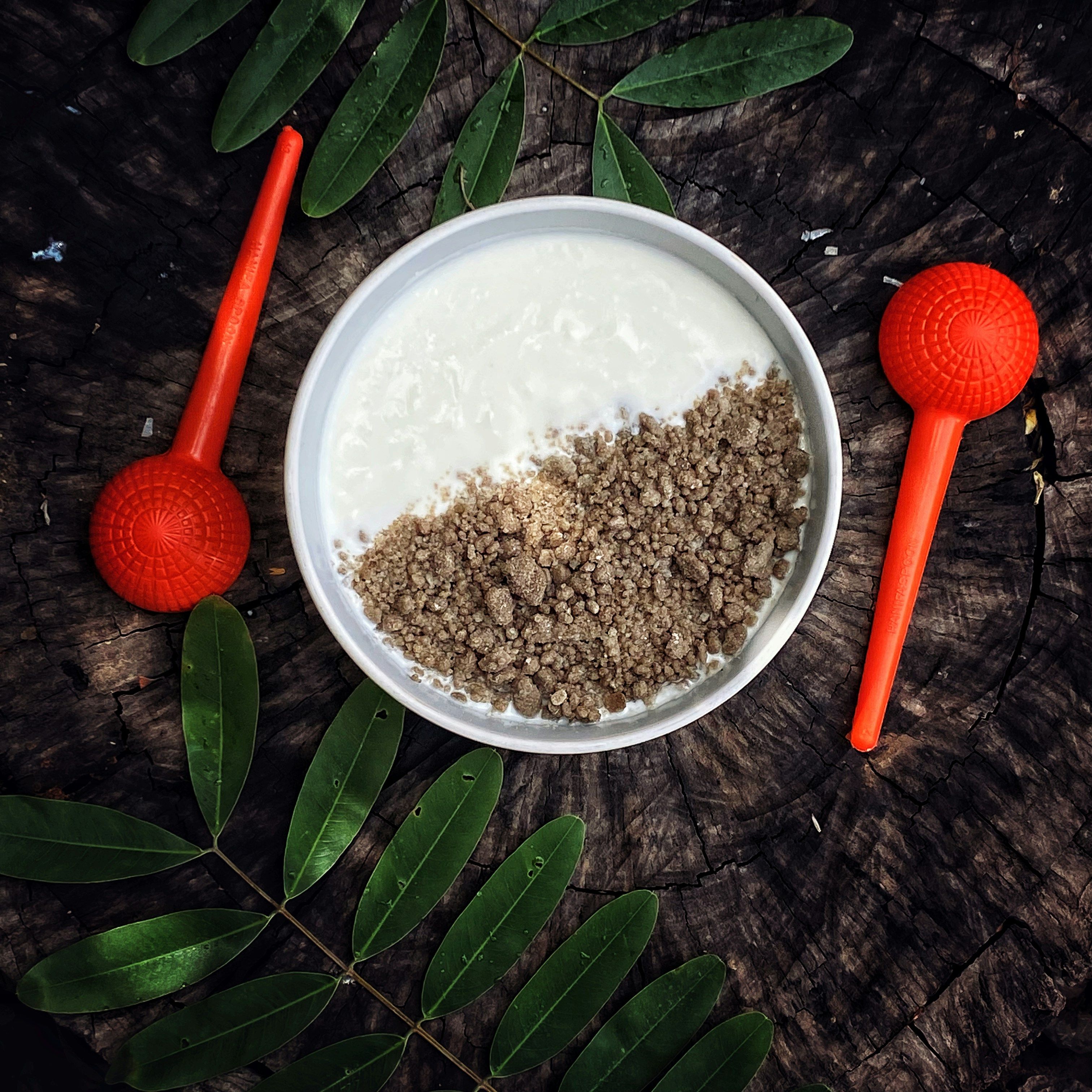
Photo: HisArt Studios / Pexels
The diets react (see scores below)
Common Ingredients
- millet couscous
- yogurt
- sour cream
- sugar
- vanilla
- nutmeg
- raisins
Specific recipes may vary.
Incompatible with 7 of 11 diets
Diet Ratings
Thiakry is fundamentally incompatible with a ketogenic diet. Its base ingredient, millet couscous, is a high-carb grain that alone can easily exceed the entire daily net carb budget. Added sugar and raisins compound the problem significantly, introducing both refined and concentrated fruit sugars. Even in small portions, the combination of grain carbs, added sugar, and raisin sugars makes ketosis virtually impossible to maintain. The yogurt and sour cream are the only keto-friendly components, but they cannot offset the overwhelming carbohydrate load of the other ingredients.
Thiakry contains yogurt and sour cream, both of which are dairy products derived from cow's milk — clear animal products excluded under all vegan frameworks. The remaining ingredients (millet couscous, sugar, vanilla, nutmeg, raisins) are plant-based, but the dairy components make this dish non-vegan as traditionally prepared. A vegan adaptation is possible by substituting coconut yogurt and cashew-based sour cream, but the default recipe is not vegan-compliant.
Thiakry is fundamentally incompatible with the paleo diet. The dish is built on millet couscous, a grain that is explicitly excluded from paleo eating. Yogurt and sour cream are dairy products, also excluded. Sugar is refined and forbidden. These are not minor or debatable ingredients — they are the core structural components of this dish, and every one of them falls into a clearly prohibited paleo category. Vanilla, nutmeg, and raisins would be acceptable, but they cannot redeem a dish whose foundation is entirely non-paleo.
Thiakry is a Senegalese millet couscous dessert/snack with a mixed Mediterranean diet profile. Millet is a whole grain and a positive element, but it is not a traditional Mediterranean grain. Yogurt is acceptable in moderation per Mediterranean principles. However, the combination of sour cream (higher in saturated fat), added sugar, and the overall dessert-like, sweetened nature of the dish raises concerns. The added sugar is the most problematic element, as Mediterranean diet guidelines minimize added sugars. Raisins provide some fruit-based sweetness and nutrients, but they amplify the sugar content here. Vanilla and nutmeg are neutral spices. Overall, the dish has redeeming qualities (whole grain millet, yogurt) but is undermined by added sugar and sour cream, placing it in the caution zone.
Some Mediterranean diet interpreters would note that small portions of naturally sweetened whole grain desserts with dairy are consistent with traditional Mediterranean eating patterns, where modest sweet treats made from whole ingredients are culturally acceptable. Others might argue millet's whole grain status and the use of fermented dairy (yogurt) make this an acceptable occasional snack if sugar is minimized.
Thiakry is fundamentally incompatible with the carnivore diet. The dish is built around millet couscous, a grain that is entirely plant-derived and strictly excluded from carnivore eating. Beyond the primary grain base, it contains multiple additional disqualifying ingredients: sugar (a processed sweetener), vanilla (a plant extract), nutmeg (a plant spice), and raisins (a fruit). The only animal-derived components are yogurt and sour cream, which are themselves debated within the carnivore community. With the overwhelming majority of ingredients being plant-based, grain-based, or sugar-based, this dish scores at the very bottom of carnivore compatibility. There is no meaningful way to adapt this dish within carnivore principles — it would need to be entirely reconstructed.
Thiakry contains multiple Whole30-excluded ingredients. Millet is a grain and is explicitly excluded from the Whole30 program. Yogurt and sour cream are dairy products, both of which are excluded (only ghee/clarified butter is the dairy exception). Sugar is an added sweetener, which is explicitly prohibited. Raisins, while technically dried fruit, are often consumed here as part of a sweet, dessert-like dish — but more critically, the grain and dairy violations alone make this firmly non-compliant. This dish cannot be made Whole30-compatible without fundamentally changing its identity.
Thiakry contains multiple high-FODMAP ingredients that make it problematic during the elimination phase. Yogurt is high in lactose and must be avoided or used only in very small quantities (Monash rates plain yogurt as high-FODMAP at a standard 200g serve; low-FODMAP only at ~23g). Sour cream similarly contains lactose and is only low-FODMAP at very small servings (about 40g). Raisins are high-FODMAP due to excess fructose and fructans — Monash rates them as high-FODMAP at standard snack servings (safe only at ~13g, roughly 1 tablespoon). Millet couscous (dehulled millet) itself appears low-FODMAP per Monash. Sugar, vanilla, and nutmeg in typical culinary quantities are low-FODMAP. However, the combination of yogurt, sour cream, and raisins — all present in meaningful quantities in a traditional Thiakry recipe — creates a cumulative FODMAP load (lactose from two dairy sources plus fructose/fructans from raisins) that makes this dish high-FODMAP at any realistic serving size during the elimination phase.
Monash University rates lactose-free yogurt and lactose-free sour cream as low-FODMAP, so some clinical FODMAP practitioners would permit this dish if dairy substitutions are made and raisins are omitted or limited to ~1 tablespoon; the dish could theoretically be adapted to low-FODMAP, but as traditionally prepared it is not elimination-phase safe.
Thiakry is a Senegalese millet-based dessert/snack with a mixed DASH profile. On the positive side, millet couscous is a whole grain rich in magnesium and fiber, and raisins contribute potassium and natural sweetness. Yogurt provides calcium and is aligned with DASH's low-fat dairy recommendation — however, the inclusion of sour cream adds saturated fat, which DASH limits. The added sugar is a concern, as DASH advises limiting sweets and added sugars. Nutmeg and vanilla are fine as flavorings. The dish is low in sodium, which is favorable. The main issues are the sour cream (saturated fat), added sugar, and the overall dessert character of the dish. A modified version using low-fat or non-fat yogurt, eliminating or reducing sour cream, and cutting sugar significantly would score higher. As commonly prepared, this is acceptable occasionally but not a DASH staple.
NIH DASH guidelines specify low-fat dairy and limited sweets, placing this dish in the caution zone due to sour cream and added sugar. However, some updated DASH-oriented clinicians note that the whole-grain millet base, probiotic yogurt, and fruit (raisins) make this a reasonable occasional snack if portion-controlled and sugar is minimized, citing emerging research on full-fat fermented dairy having a neutral cardiovascular impact.
Thiakry is a Senegalese sweet dessert/snack that is extremely problematic from a Zone Diet perspective. The dish is built almost entirely on high-glycemic, high-sugar carbohydrates with virtually no lean protein and minimal favorable fat. Millet couscous is a moderate-to-high glycemic grain carb, sugar is added directly, and raisins are explicitly listed among Zone's 'unfavorable' high-sugar carbohydrate sources that Dr. Sears advises avoiding. The yogurt and sour cream provide minimal protein and the sour cream adds saturated fat rather than preferred monounsaturated fat. The macro profile is heavily skewed toward carbohydrates — likely 70-80% of calories from carbs — with added sugar further spiking glycemic load, negligible lean protein, and the wrong type of fat. There is no meaningful way to portion-control this dish into Zone compliance because its fundamental composition is anti-Zone: it lacks lean protein blocks, the carbohydrate sources are unfavorable, and added sugar directly violates Zone principles. This is one of the rare cases where a dish genuinely cannot be balanced into Zone ratios without being fundamentally altered into a different dish.
Thiakry is a traditional Senegalese fermented millet dessert with a mixed anti-inflammatory profile. On the positive side, millet is a whole grain with decent fiber content and some antioxidant activity, and fermented dairy (yogurt) provides beneficial probiotics that support gut health and may reduce systemic inflammation. Nutmeg and vanilla offer minor antioxidant contributions. However, the dish is problematic in several respects: added sugar is a primary concern and a known driver of inflammatory markers; sour cream introduces full-fat dairy with saturated fat, which the anti-inflammatory framework recommends limiting; and raisins, while containing some antioxidants and iron, are a concentrated source of sugar. The combination of added sugar plus full-fat dairy tips this otherwise grain-and-fermented-dairy dish toward a cautious rating. If sugar were significantly reduced or replaced with a lower-glycemic alternative, and sour cream swapped for plain low-fat yogurt, the profile would improve considerably. As a small, occasional snack rather than a dietary staple, it falls in the acceptable-in-moderation range.
Some anti-inflammatory practitioners would rate this more favorably, emphasizing the probiotic benefits of yogurt and the whole-grain fiber of millet as meaningful anti-inflammatory contributors — particularly given the relatively small serving size typical of a snack. Others, especially those following stricter low-sugar or autoimmune protocols (AIP), would rate it lower given the added sugar and full-fat dairy, viewing these as clear inflammatory triggers that outweigh any grain or probiotic benefit.
Thiakry is a traditional Senegalese sweet millet couscous dessert/snack made with fermented dairy, sugar, and dried fruit. It has some redeeming qualities — millet couscous provides modest fiber and whole grain carbohydrates, and yogurt contributes some protein and probiotics — but the overall profile is problematic for GLP-1 patients. The dish is categorized as having no primary protein source, and the macronutrient balance skews heavily toward carbohydrates and sugar. Added sugar, raisins (high glycemic dried fruit), and sour cream (high in saturated fat) are all flagged concerns. The sour cream in particular adds saturated fat that can worsen GLP-1 GI side effects like nausea and reflux. The sugar content makes this a low-nutrient-density choice for patients eating significantly reduced calories. Yogurt is a positive element providing protein and probiotics, but it is outweighed by the other ingredients. This dish is not inherently dangerous but is not a good use of limited caloric real estate for GLP-1 patients. It could be modified — replacing sour cream with plain Greek yogurt, eliminating added sugar, and reducing raisins — to improve its profile substantially.
Some GLP-1-focused dietitians may view the yogurt and millet components as worthwhile — millet has a lower glycemic index than refined grains and provides magnesium and B vitamins, and the probiotic content of fermented dairy may help with GI side effects like constipation. However, most clinical guidance would flag the added sugar and sour cream as obstacles that outweigh these benefits in a reduced-calorie context.
*See how scores were generated at our methodology page.
Nutritional profile
Six traits that cut across every diet.
Fiber & Plants
How much whole-plant food and fiber it delivers.
Healthy Fats
The quality of its fats (unsaturated, omega-3).
Whole / Unprocessed
How close it is to its natural, unprocessed form.
Gut Gentle
How easy it is on digestion (low FODMAP, few irritants).
Low Glycemic
How little it spikes your blood sugar.
Protein Density
How much protein it packs per calorie.
Controversy Index
Higher controversy = more disagreement between diets.
Diet-Specific Tips
 Mediterranean — 4/10
View tips
- Millet couscous is a whole grain, which is a positive Mediterranean element
- Added sugar directly contradicts Mediterranean diet principles of minimizing refined sugars
- Sour cream contributes saturated fat beyond what Mediterranean dairy guidelines recommend
- Yogurt is an accepted moderate dairy component in the Mediterranean diet
- Raisins add natural fruit nutrients but also increase overall sugar load
- No olive oil, vegetables, legumes, or other Mediterranean staples present
- Dessert/snack format with sweetened profile is not core to Mediterranean eating
 DASH — 5/10
View tips
- Millet couscous is a DASH-friendly whole grain rich in fiber and magnesium
- Yogurt aligns with DASH low-fat dairy guidelines (if low-fat version used)
- Sour cream adds saturated fat, which DASH limits
- Added sugar is a DASH concern and should be minimized
- Raisins provide natural sweetness, potassium, and fiber
- Low sodium content is favorable for DASH
- Overall dessert profile limits its frequency within a DASH eating plan
 Anti-Inflammatory — 5/10
View tips
- Millet couscous provides whole grain fiber and moderate antioxidant activity
- Yogurt contributes probiotics that support gut health and may reduce inflammatory markers
- Added sugar is a significant pro-inflammatory concern
- Sour cream introduces saturated fat from full-fat dairy, which anti-inflammatory guidelines recommend limiting
- Raisins add concentrated natural sugars on top of added sugar
- Nutmeg has minor anti-inflammatory properties
- Dish is dessert-style; sugar load is inherent to the recipe, not incidental
 GLP-1 Friendly — 4/10
View tips
- No meaningful protein source — fails the #1 GLP-1 dietary priority
- Added sugar contributes empty calories in a reduced-appetite context
- Sour cream adds saturated fat that may worsen nausea, bloating, and reflux
- Raisins are high-glycemic and calorie-dense relative to their volume
- Millet couscous provides modest fiber — a partial positive
- Yogurt contributes some protein and probiotics — a partial positive
- Small-portion friendly in form, but nutritional payoff per serving is low
- High carbohydrate load without balancing protein blunts satiety