Serbian
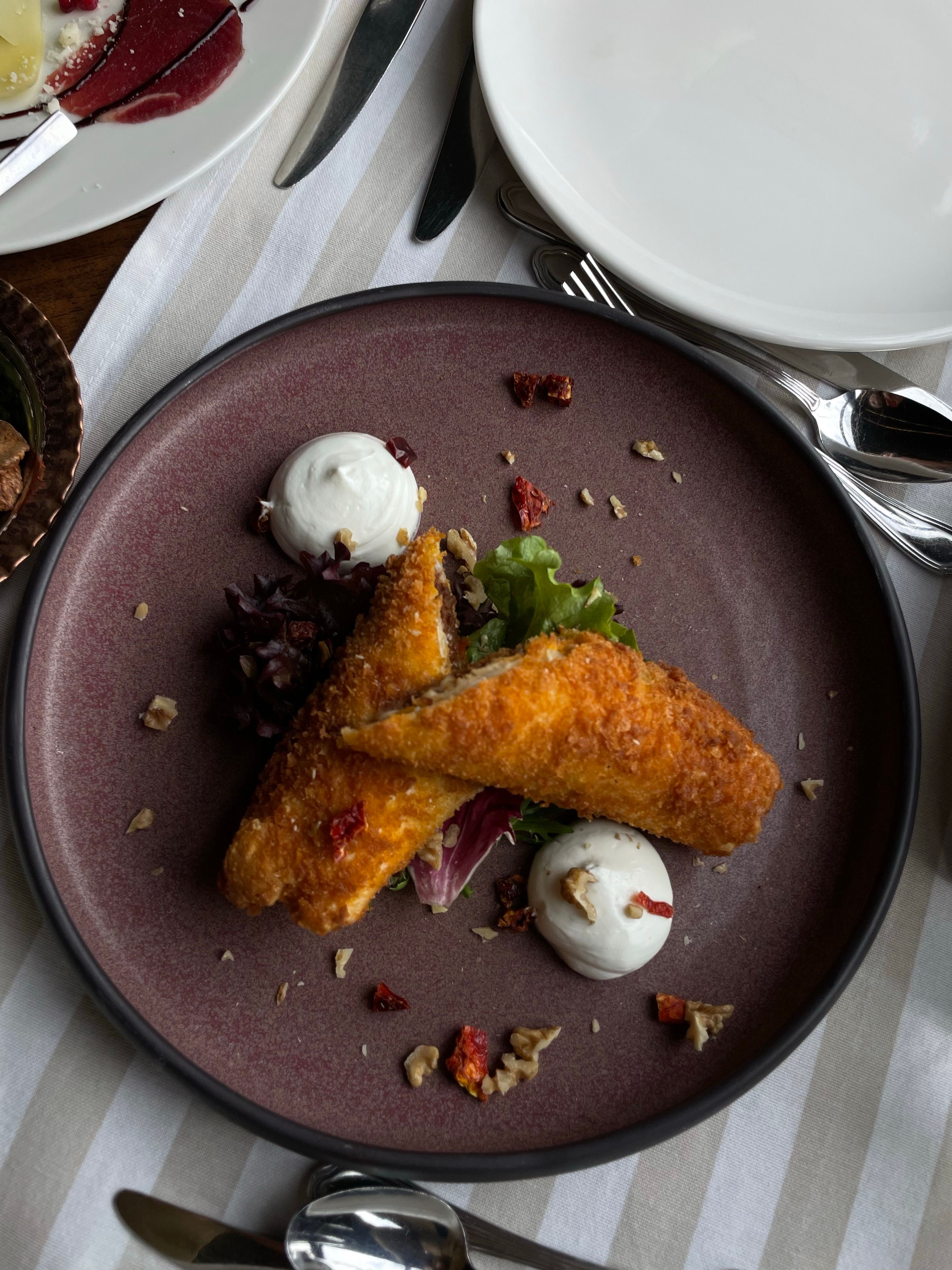
Karadjordjeva Snicla
The diets react (see scores below)
Common Ingredients
- pork loin
- kajmak
- eggs
- breadcrumbs
- flour
- salt
- black pepper
- oil
Specific recipes may vary.
Incompatible with 10 of 11 diets
Diet Ratings
Karadjordjeva Snicla is a Serbian rolled pork cutlet stuffed with kajmak (a fatty dairy spread), breaded with flour and breadcrumbs, then deep-fried. While the pork loin and kajmak filling are keto-friendly, the breading process is fundamentally incompatible with ketogenic eating. The combination of wheat flour and breadcrumbs forms a substantial carbohydrate coating around each serving. A standard portion would easily contribute 20-35g of net carbs from the breading alone — potentially consuming or exceeding the entire daily carb allowance. The frying oil absorbs into this high-carb coating, making the dish a carb-dense preparation despite having keto-friendly core ingredients.
Karadjordjeva Snicla is a Serbian breaded and rolled cutlet that is fundamentally incompatible with a vegan diet. It contains multiple animal-derived ingredients: pork loin (meat), kajmak (a dairy product made from skimmed cream, traditional to Balkan cuisine), and eggs (used in the breading process). There is no plant-based version of this dish by default — the animal products are not incidental but are the core components of the recipe. No substitution or reinterpretation would leave the dish recognizable as Karadjordjeva Snicla.
Karadjordjeva Snicla is a Serbian rolled pork schnitzel stuffed with kajmak (a dairy product similar to clotted cream) and coated in flour and breadcrumbs before frying. This dish has multiple non-paleo violations: breadcrumbs are made from wheat (a grain), flour is a refined grain product, kajmak is a dairy product excluded under paleo rules, and salt is listed as an added ingredient. The frying oil is also unspecified and likely a seed or vegetable oil. While the pork loin and eggs are paleo-approved, the overall dish is fundamentally built around grain-based coatings and dairy, making it incompatible with the paleo diet.
Karadjordjeva Snicla is a breaded, deep-fried pork loin roll stuffed with kajmak (a high-fat dairy product similar to clotted cream). This dish contradicts Mediterranean diet principles on multiple levels: pork is a red/processed meat that should be consumed only a few times per month; kajmak is a high saturated fat dairy product far outside Mediterranean dietary traditions; the dish is breaded with refined flour and breadcrumbs and deep-fried in oil (not olive oil). The combination of red meat, high-fat dairy filling, refined grain coating, and deep-frying makes this dish fundamentally incompatible with Mediterranean diet guidelines.
Karadjordjeva Snicla is a Serbian breaded and stuffed pork schnitzel that is fundamentally incompatible with the carnivore diet. While the pork loin and kajmak (a dairy cream) are animal-derived, the dish is coated in breadcrumbs and flour — both grain-based plant foods that are strictly excluded from any tier of the carnivore diet. Black pepper is a plant-derived spice, and the frying oil is likely a plant-based oil. The breading alone disqualifies this dish outright. This is not a borderline case; grains and plant-derived coatings are universally rejected across all carnivore protocols.
Karadjordjeva Snicla contains multiple Whole30-excluded ingredients. Kajmak is a traditional Serbian dairy product (a type of clotted cream/soft cheese), which is excluded as dairy. Breadcrumbs are made from wheat/grain, which is excluded. Flour (wheat) is also an excluded grain. Additionally, this dish is a breaded, fried schnitzel-style preparation, which falls into the 'recreating comfort/junk food' category even if individual ingredients were compliant. The combination of dairy (kajmak), grains (breadcrumbs, flour), and the breaded preparation style make this dish clearly non-compliant on multiple grounds.
Karadjordjeva Snicla is a Serbian rolled schnitzel filled with kajmak (a high-fat dairy cream cheese) and breaded with wheat flour and breadcrumbs. Two significant FODMAP concerns exist: (1) Wheat-based breadcrumbs and flour coating are high in fructans — this is the primary disqualifier during elimination phase. Standard breading uses a non-trivial amount of wheat flour and breadcrumbs that would deliver a meaningful fructan load. (2) Kajmak is a fermented clotted cream/dairy product. While it is very high-fat and relatively low in lactose compared to soft fresh cheeses, its lactose content is uncertain and not well-tested by Monash. The pork loin itself is low-FODMAP, as are eggs, salt, pepper, and oil. However, the wheat-based breading alone is sufficient to classify this dish as high-FODMAP during the elimination phase.
Monash University has not specifically tested kajmak; being a high-fat aged cream product, some FODMAP practitioners consider high-fat dairy relatively low in lactose and acceptable in small amounts, but this is not confirmed. More critically, some elimination-phase protocols permit very light wheat coatings (under 1/4 cup per serve), though most clinical FODMAP dietitians advise avoiding all wheat-based breadings entirely during elimination to prevent inadvertent fructan exposure.
Karadjordjeva Snicla is a Serbian rolled pork cutlet stuffed with kajmak (a high-fat dairy product similar to clotted cream) and deep-fried after being coated in flour, eggs, and breadcrumbs. This dish conflicts with DASH diet principles on multiple fronts. Kajmak is extremely high in saturated fat, directly opposing DASH's emphasis on low-fat or fat-free dairy and its strict limits on saturated fat intake. Pork loin itself can be acceptable on DASH in lean, unprocessed form, but the deep-frying in oil dramatically increases total fat content and caloric density. The breading process (flour, eggs, breadcrumbs) adds refined carbohydrates with minimal fiber. The preparation also typically involves substantial salt, elevating sodium well above DASH thresholds. Deep-frying is not a cooking method endorsed by DASH guidelines. The combination of high saturated fat from kajmak, frying oil, sodium from seasoning and breading, and refined coating makes this dish fundamentally incompatible with the DASH eating plan.
Karadjordjeva Snicla is a Serbian breaded and fried pork roll stuffed with kajmak (a rich Balkan dairy cream with very high saturated fat content), coated in flour, eggs, and breadcrumbs, then deep-fried in oil. From a Zone perspective, this dish presents multiple challenges. First, the protein source (pork loin) is acceptable but the kajmak stuffing adds significant saturated fat far beyond Zone-favorable fat levels. Second, the breaded coating (flour + breadcrumbs) is a high-glycemic carbohydrate that rapidly spikes insulin — exactly what the Zone seeks to minimize. Third, the frying oil introduces substantial omega-6-heavy fat (typically sunflower oil in Serbian cooking), which Dr. Sears strongly discourages due to its pro-inflammatory eicosanoid profile. Fourth, the dish completely lacks a vegetable-based carbohydrate component, which is central to Zone meal construction. The macro ratio is wildly imbalanced: high in fat (predominantly saturated), moderate-high in refined carbs from breading, and only moderate in protein relative to the total caloric load. While pork loin itself could serve as a Zone protein block, the overall preparation makes this dish very difficult to incorporate into a Zone-balanced meal without radical modification. It earns a 4 (caution) rather than lower because the pork loin protein is legitimate and the dish could theoretically be modified — smaller portion, lighter breading, kajmak reduced — and paired with large vegetable sides to partially balance the macros.
Karadjordjeva Snicla is a Serbian rolled schnitzel that presents multiple anti-inflammatory concerns. The dish consists of pork loin stuffed with kajmak (a high-fat clotted cream dairy product), breaded with flour and breadcrumbs, then deep-fried in oil. From an anti-inflammatory standpoint, this is a strongly problematic combination: (1) Pork loin itself is a moderately lean red/white meat that falls in the 'limit' category, but the preparation method dramatically worsens its profile. (2) Kajmak is a full-fat, high-saturated-fat dairy product — among the most pro-inflammatory dairy forms, similar to butter or clotted cream — contributing significant saturated fat load. (3) The breading (refined flour + breadcrumbs) represents refined carbohydrates with minimal nutritional value and a high glycemic impact, which promotes inflammatory cytokines. (4) Deep-frying, typically in refined vegetable or seed oils (often sunflower or corn oil in Serbian cuisine), introduces oxidized omega-6 fatty acids and potentially acrylamides from the Maillard reaction at high heat — both pro-inflammatory. The dish contains virtually no anti-inflammatory components: no omega-3s, no colorful vegetables, no antioxidant-rich herbs (beyond black pepper, which is minimal), no fiber. It is high in saturated fat, refined carbohydrates, and pro-inflammatory cooking byproducts. This is a classic indulgent fried comfort food that runs contrary to nearly every anti-inflammatory dietary principle.
Karadjordjeva Snicla is a Serbian stuffed and breaded pork cutlet — pork loin rolled around kajmak (a rich, high-fat Balkan clotted cream), then coated in flour, egg, and breadcrumbs, and deep-fried in oil. This preparation hits nearly every avoid trigger for GLP-1 patients: it is deep-fried (high fat, difficult to digest, worsens nausea and reflux), stuffed with kajmak which is extremely high in saturated fat, coated in refined breadcrumbs (low fiber, empty carbohydrates), and consumed in a portion that delivers a heavy fat and calorie load per bite. GLP-1 medications slow gastric emptying significantly, meaning a heavy, greasy, fried meal like this will sit in the stomach for an extended period, greatly increasing the risk of nausea, vomiting, bloating, and reflux. While pork loin itself is a lean protein source, the preparation method completely negates that advantage — the fat content of the finished dish far exceeds what is appropriate. Nutrient density per calorie is poor, fiber is essentially zero, and the saturated fat load from kajmak alone is problematic. This dish is not appropriate for GLP-1 patients in its traditional form.
*See how scores were generated at our methodology page.
Nutritional profile
Six traits that cut across every diet.
Fiber & Plants
How much whole-plant food and fiber it delivers.
Healthy Fats
The quality of its fats (unsaturated, omega-3).
Whole / Unprocessed
How close it is to its natural, unprocessed form.
Gut Gentle
How easy it is on digestion (low FODMAP, few irritants).
Low Glycemic
How little it spikes your blood sugar.
Protein Density
How much protein it packs per calorie.
Controversy Index
Higher controversy = more disagreement between diets.
Diet-Specific Tips
 Zone — 4/10
View tips
- Kajmak stuffing is extremely high in saturated fat — far exceeding Zone-favorable fat guidelines
- Breaded coating (flour + breadcrumbs) is a high-glycemic carbohydrate that spikes insulin
- Frying oil is likely omega-6-heavy (sunflower/vegetable oil), pro-inflammatory per Sears' anti-inflammatory framework
- No vegetable-based carbohydrate present — missing the core low-glycemic carb component of a Zone meal
- Macro ratio is heavily skewed toward fat and refined carbs, not the 40/30/30 Zone balance
- Pork loin itself is a reasonably lean protein, which is the only Zone-favorable element
- Eggs in the coating add minimal nutritional disruption but contribute to overall caloric density