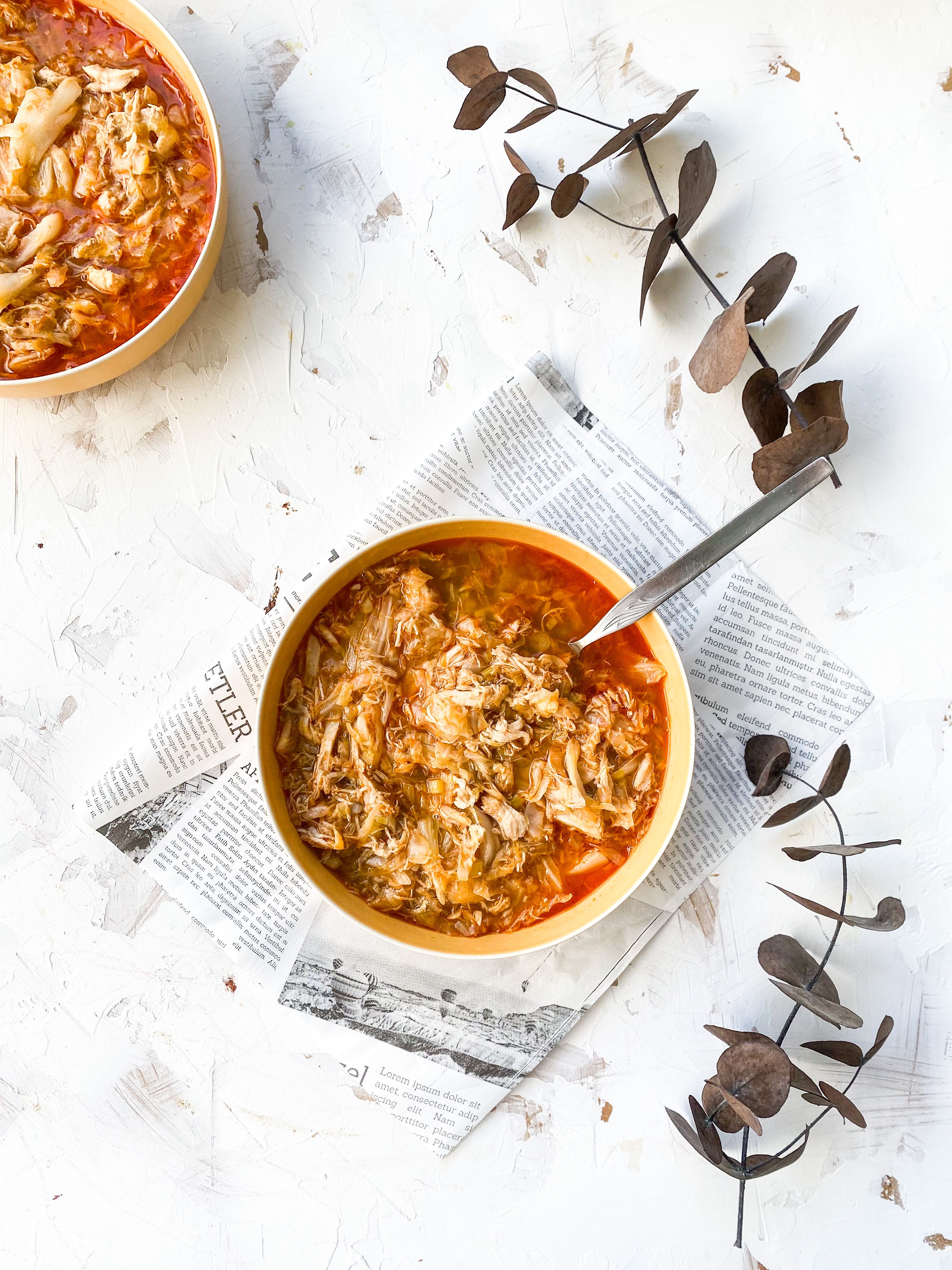
Photo: Pexels User / Pexels
The diets react (see scores below)
Common Ingredients
- sauerkraut
- smoked pork
- onion
- paprika
- bay leaf
- oil
- black pepper
Specific recipes may vary.
Incompatible with 7 of 11 diets
Diet Ratings
Podvarak is a Serbian braised sauerkraut dish with smoked pork that aligns well with ketogenic principles. Sauerkraut is fermented cabbage with very low net carbs (roughly 1-2g net carbs per 100g after fiber) and is probiotic-rich. Smoked pork provides high fat and moderate protein — ideal keto macros. Onion adds a small amount of carbs but in typical cooking quantities is manageable. Paprika, bay leaf, and black pepper are negligible carb contributors. The dish is naturally high-fat, moderate-protein, and low net-carb in standard servings, making it a solid keto-compatible side dish. The main caution is portion size of onion and ensuring no added sugars or starchy thickeners are used in preparation.
Some strict keto practitioners flag smoked/cured meats due to potential added sugars in the smoking process or nitrate concerns, and may caution against onion as even small amounts can accumulate carbs when combined with other borderline vegetables throughout the day.
Podvarak contains smoked pork, a direct animal product, making it entirely incompatible with a vegan diet. The dish is defined by its pork component — removing it would fundamentally alter the dish into something else entirely. There is no ambiguity here: pork is animal flesh and is categorically excluded under all definitions of veganism.
Podvarak contains multiple paleo-incompatible ingredients. Smoked pork is a processed meat that typically contains added salt and preservatives, making it non-compliant. Sauerkraut, while fermented cabbage itself is paleo-friendly, is traditionally made with added salt. The ingredient listed simply as 'oil' is ambiguous but in Serbian cuisine most commonly refers to refined sunflower oil, a seed oil explicitly excluded from paleo. These three strikes — processed meat, added salt, and likely seed oil — collectively push this dish firmly into avoid territory regardless of the otherwise paleo-compatible ingredients (onion, paprika, bay leaf, black pepper).
Podvarak is centered on smoked pork, which is red/processed meat — a category the Mediterranean diet restricts to a few times per month at most. Smoked pork is also a processed meat, which Mediterranean diet guidelines specifically minimize due to high sodium, saturated fat, and preservatives. While sauerkraut (fermented cabbage) and aromatics like onion, paprika, and bay leaf are plant-based positives, they play a supporting role here. The fat source is generic oil rather than olive oil, adding another departure from Mediterranean principles. The dish is a traditional Balkan preparation with no strong alignment to Mediterranean dietary patterns.
Podvarak is fundamentally incompatible with the carnivore diet. While it contains smoked pork as its primary protein, the dish is predominantly a plant-based side: sauerkraut (fermented cabbage) forms the bulk of the dish, with onion, paprika, bay leaf, and plant-based oil as additional plant-derived ingredients. The carnivore diet excludes all plant foods without exception — vegetables, spices, and plant oils are all prohibited. The smoked pork component is the only carnivore-compatible ingredient, but it is secondary in this preparation. Even the most lenient carnivore practitioners who tolerate spices or coffee would not accept a dish where cabbage and onion are the dominant ingredients.
Podvarak is a Serbian braised sauerkraut dish with smoked pork that is largely Whole30-compatible in concept. The core ingredients — sauerkraut, onion, paprika, bay leaf, oil, and black pepper — are all compliant. The critical concern is the smoked pork: commercially smoked pork products (ribs, hocks, smoked sausage) very commonly contain added sugars, nitrates, sulfites, or other non-compliant additives in their curing/smoking process. Per Whole30 rules, the common version of cured/smoked pork likely contains added sugar, making it technically non-compliant. Additionally, sauerkraut must be label-checked to ensure it contains only cabbage and salt, with no added sugars or non-compliant preservatives. If made with a verified sugar-free smoked pork and clean sauerkraut, this dish is compliant.
The official Whole30 program does not prohibit smoked or cured meats outright, but Melissa Urban and official guidelines caution that most commercial smoked/cured products contain added sugar or non-compliant ingredients, requiring careful label-reading. Some community members argue that relying heavily on processed cured meats like smoked pork undermines the whole-food spirit of the program even when a technically compliant version is found.
Podvarak contains two major high-FODMAP ingredients that make it unsuitable during the elimination phase. Onion is one of the highest-FODMAP foods tested by Monash University, containing significant fructans even in small amounts — it is a core ingredient in this dish, not a trace flavoring. Sauerkraut, while fermented, is also high-FODMAP at typical serving sizes (Monash rates sauerkraut as high-FODMAP at a 75g serve due to fructans from the fermented cabbage). Smoked pork itself is low-FODMAP, and paprika, bay leaf, oil, and black pepper are all low-FODMAP at standard culinary amounts. However, the combination of onion and sauerkraut in meaningful quantities makes this dish a clear avoid during the FODMAP elimination phase. The dish cannot be easily adapted without fundamentally changing its character, as onion is structurally integral to the recipe.
Podvarak is a Serbian braised dish combining sauerkraut and smoked pork — two ingredients that are individually high in sodium and together make this dish incompatible with DASH diet principles. Sauerkraut is fermented cabbage preserved with salt, typically containing 700–900mg sodium per half-cup serving. Smoked pork (such as smoked ribs, hock, or bacon) is a cured, processed red meat that is simultaneously high in sodium (often 600–1,000mg per serving), saturated fat, and cholesterol — hitting three of DASH's major 'limit' categories at once. The combination of these two primary ingredients can easily push a single serving well above 1,500–2,000mg of sodium, exceeding the entire daily sodium budget for the low-sodium DASH protocol and a significant portion of the standard DASH limit. Additionally, smoked pork is a processed red meat, which DASH explicitly advises limiting. While onion, paprika, bay leaf, and black pepper are DASH-friendly aromatics, they do not offset the core problems. Oil adds some fat but is a minor concern relative to sodium and saturated fat issues.
Podvarak is a Serbian braised dish of sauerkraut and smoked pork, and it presents a mixed Zone Diet profile. On the positive side, sauerkraut (fermented cabbage) is a low-glycemic, high-fiber vegetable that fits well into Zone carbohydrate blocks — it's also rich in polyphenols and probiotics, aligning with Sears' anti-inflammatory principles. Onion and spices (paprika, bay leaf, black pepper) are Zone-favorable additions. However, the protein source — smoked pork — is problematic. It is a fatty, processed meat with significant saturated fat and sodium, neither of which is ideal in Zone methodology. Smoked/cured pork lacks the lean protein profile Zone favors (skinless chicken, fish, egg whites). The fat content from both the pork and added oil is likely to skew the fat block toward saturated rather than monounsaturated sources. As a side dish, it lacks a lean protein component entirely, making it difficult to treat as a Zone-balanced unit. If served as a component alongside a lean protein (like grilled chicken or fish), with oil portioned carefully, it can be incorporated — but the smoked pork component makes it a 'caution' rather than an 'approve.' Reducing or replacing the smoked pork with leaner cuts would improve its Zone compatibility significantly.
Some Zone practitioners following Sears' later anti-inflammatory writings (e.g., 'The OmegaRx Zone') may be more lenient about moderate saturated fat from whole-food animal sources like pork, especially when paired with the anti-inflammatory benefits of fermented vegetables (sauerkraut). From this perspective, a small portion of podvarak could serve as a flavorful, low-glycemic carbohydrate-and-protein side with acceptable fat content, particularly if the oil used is olive oil (monounsaturated). The fermentation of the sauerkraut may also lower its effective glycemic impact further.
Podvarak is a traditional Serbian braised dish of sauerkraut with smoked pork. It presents a genuinely mixed anti-inflammatory profile. On the positive side, sauerkraut is a fermented food with probiotic properties that can support gut health and reduce systemic inflammation — it also retains some of the anti-inflammatory glucosinolates from cabbage. Onion provides quercetin, a notable anti-inflammatory flavonoid. Paprika and black pepper contribute polyphenols and piperine respectively, both with documented anti-inflammatory activity. Bay leaf contains parthenolide and other anti-inflammatory compounds. However, the dominant protein source — smoked pork — is a significant concern from an anti-inflammatory standpoint. Smoked and cured meats are processed red meats high in saturated fat and sodium, and the smoking process generates polycyclic aromatic hydrocarbons (PAHs) and N-nitroso compounds, which are associated with increased inflammatory markers and oxidative stress. Red and processed meat consumption is consistently linked to elevated CRP and IL-6. The type of oil is unspecified, which introduces uncertainty — extra virgin olive oil would be the most favorable choice, while refined seed oils would be less ideal. Overall, the fermented vegetable base and spice profile have genuine anti-inflammatory merit, but the smoked processed pork is a meaningful pro-inflammatory factor that prevents a positive verdict.
Some traditional food advocates argue that fermented foods like sauerkraut are so beneficial for the gut microbiome and systemic inflammation that the dish has net benefit, particularly when consumed as a side in modest portions. However, mainstream anti-inflammatory nutrition science (including Dr. Weil's framework) consistently flags processed and smoked red meats as pro-inflammatory, and this is relatively well-established — the main uncertainty lies in how much the fermentation-positive factors offset the smoked meat negatives.
Podvarak is a traditional Serbian braised dish of sauerkraut slow-cooked with smoked pork and oil. While it contains some redeeming qualities — sauerkraut provides fiber and probiotics, and pork contributes some protein — the overall profile is poorly suited for GLP-1 patients. Smoked pork (typically fatty cuts such as ribs, belly, or smoked neck) is high in saturated fat, sodium, and often nitrates, all of which are problematic on GLP-1 medications. The high fat content is the primary concern: fatty meats are known to worsen nausea, bloating, and reflux by further slowing gastric emptying beyond what the medication already causes. The dish is also heavily salted through both the sauerkraut and smoked meat, raising sodium load which can contribute to water retention and cardiovascular stress. Oil is added during braising, increasing the fat burden further. As a side dish, it provides minimal lean protein per serving relative to its fat and sodium content, making it a poor use of limited caloric and stomach capacity. The fermented sauerkraut and fiber are genuinely positive elements, but they do not offset the high-fat, high-sodium, processed-meat profile that makes this dish a poor choice for GLP-1 patients.
Some GLP-1-focused dietitians acknowledge that sauerkraut's probiotic and fiber content may support gut health and constipation relief — a genuine GLP-1 side effect concern — and might accept a small portion of podvarak if prepared with a lean smoked pork loin rather than fatty cuts. However, most obesity medicine practitioners would flag the smoked processed meat and high fat content as too risky for GI side effect management, particularly in the early weeks of GLP-1 titration.
*See how scores were generated at our methodology page.
Nutritional profile
Six traits that cut across every diet.
Fiber & Plants
How much whole-plant food and fiber it delivers.
Healthy Fats
The quality of its fats (unsaturated, omega-3).
Whole / Unprocessed
How close it is to its natural, unprocessed form.
Gut Gentle
How easy it is on digestion (low FODMAP, few irritants).
Low Glycemic
How little it spikes your blood sugar.
Protein Density
How much protein it packs per calorie.
Controversy Index
Higher controversy = more disagreement between diets.
Diet-Specific Tips
 Keto — 8/10
View tips
- Sauerkraut is very low in net carbs (~1-2g per 100g) and keto-friendly
- Smoked pork is high-fat, moderate-protein — ideal keto macronutrient profile
- Onion contributes moderate carbs; portion control recommended
- No grains, added sugars, or starchy ingredients in base recipe
- Fermented sauerkraut may support gut health on keto
- Smoked meats may occasionally contain added sugar in cure — label check advised
 Whole30 — 5/10
View tips
- Smoked pork commonly contains added sugar, nitrates, or other non-compliant curing agents — label verification is essential
- Compliant sugar-free, additive-free smoked pork exists but requires careful sourcing
- Sauerkraut must be verified as containing only cabbage and salt with no added sugars or non-compliant preservatives
- All other ingredients (onion, paprika, bay leaf, oil, black pepper) are fully Whole30-compliant
- Dish is otherwise a whole-food, unprocessed preparation consistent with Whole30 principles
 Zone — 5/10
View tips
- Sauerkraut is a Zone-favorable low-glycemic, high-fiber vegetable carbohydrate source
- Smoked pork is fatty and processed — not a lean Zone protein; higher in saturated fat and sodium
- As a side dish, it lacks independent Zone block balance (no lean protein centerpiece)
- Spices and onion are Zone-neutral to Zone-positive additions
- Oil type is unspecified — olive oil would be preferred for monounsaturated fat alignment
- Fermented vegetables (sauerkraut) offer polyphenol and probiotic benefits consistent with Sears' anti-inflammatory focus
- Can fit Zone meals as a small side component but not as a standalone balanced dish
 Anti-Inflammatory — 4/10
View tips
- Smoked pork is a processed red meat with high saturated fat, sodium, and smoking-related carcinogens — clearly pro-inflammatory
- Sauerkraut provides probiotics and fermentation-derived benefits supporting gut health and reducing systemic inflammation
- Onion contributes quercetin, a well-studied anti-inflammatory flavonoid
- Paprika and black pepper provide polyphenols and piperine with documented anti-inflammatory effects
- Bay leaf contains parthenolide and other bioactive anti-inflammatory compounds
- Oil type is unspecified — EVOO would be ideal, refined seed oils less so
- Net profile is mixed: beneficial vegetable and spice base undermined by processed smoked meat as the primary protein