Serbian
Prebranac
The diets react (see scores below)
Common Ingredients
- white beans
- onion
- paprika
- bay leaf
- sunflower oil
- garlic
- salt
Specific recipes may vary.
Incompatible with 5 of 11 diets
Diet Ratings
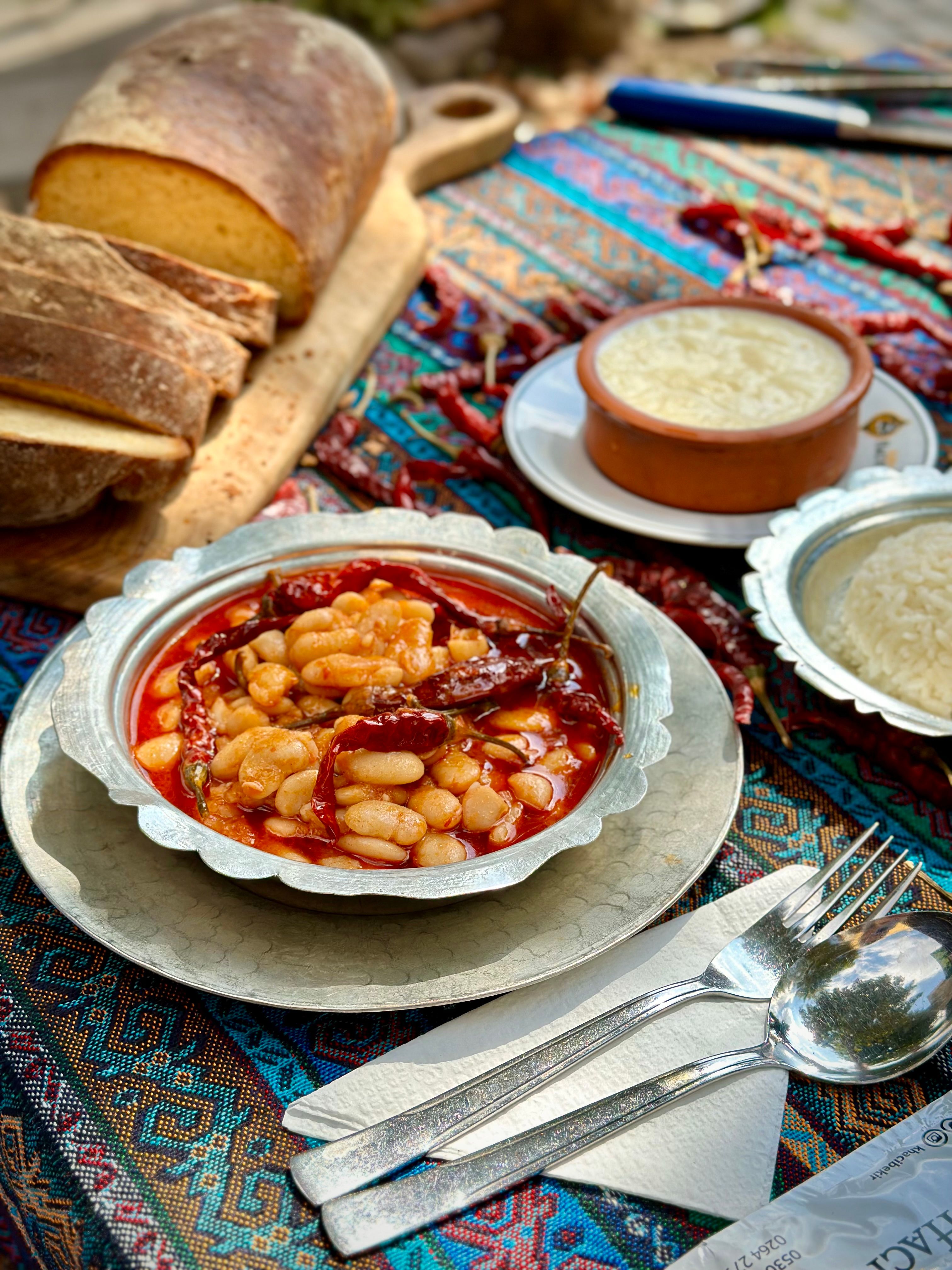
Prebranac is a traditional Serbian baked bean dish where white beans are the primary ingredient. White beans are extremely high in net carbohydrates — a single cup of cooked white beans contains approximately 40-45g of net carbs, which alone can exceed the entire daily keto carb budget. This dish is fundamentally incompatible with ketosis regardless of portion size, as even a small serving would deliver a significant carb load. The other ingredients (onion, garlic, paprika, sunflower oil) are relatively minor concerns, but the white beans make this dish a definitive keto avoid.
Prebranac is a traditional Serbian baked bean dish made entirely from whole plant foods. All listed ingredients — white beans, onion, paprika, bay leaf, sunflower oil, garlic, and salt — are fully plant-based with no animal-derived components. The dish is centered on legumes as the primary protein source, making it highly compatible with a whole-food plant-based diet. The only minor consideration is the use of sunflower oil (a refined fat), which slightly lowers the score from a perfect 10 under strict whole-food plant-based standards, but does not affect vegan compliance.
Prebranac is a traditional Serbian baked bean dish that contains multiple non-paleo ingredients. White beans are legumes — explicitly excluded from the paleo diet due to their lectin and phytate content. Sunflower oil is a seed oil, also explicitly excluded in paleo guidelines. Salt is added and discouraged. These are not edge cases or debated items; legumes and seed oils are among the clearest exclusions in paleo across all major authorities (Cordain, Sisson, Wolf). Even if the dish were made without the problematic oils and salt, the white beans alone would disqualify it entirely.
Prebranac is a traditional Serbian baked bean dish built around white beans, onions, garlic, and aromatics — a strongly plant-forward, legume-based preparation that aligns closely with Mediterranean diet principles. White beans are a staple legume encouraged daily. Onion, garlic, paprika, and bay leaf are all Mediterranean-friendly aromatics. The primary concern is the use of sunflower oil rather than extra virgin olive oil, which is the canonical fat in the Mediterranean diet. Sunflower oil is a refined vegetable oil not native to Mediterranean culinary tradition, but it is a common substitute in Balkan cuisines. Setting aside the oil substitution, the dish's overall nutritional profile — high fiber, plant protein, minimal processing, no added sugars or refined grains — is excellent and warrants a strong approval.
Some Mediterranean diet purists would lower this dish's rating because sunflower oil, while unsaturated, lacks the polyphenols and oleic acid profile of extra virgin olive oil that are central to Mediterranean diet health benefits. A simple swap to EVOO would make this dish a near-ideal Mediterranean staple.
Prebranac is a traditional Serbian baked bean dish that is entirely plant-based. Every single ingredient — white beans, onion, paprika, bay leaf, sunflower oil, and garlic — is either a plant food or a plant-derived oil. There is not a single animal product in this dish. Legumes like white beans are among the most explicitly excluded foods on the carnivore diet due to their high carbohydrate content, antinutrients (lectins, phytates), and plant origin. Sunflower oil is a seed oil universally condemned by carnivore practitioners. This dish has zero compatibility with the carnivore diet in any of its variations, including the most lenient 'animal-based' approaches.
Prebranac is a Serbian baked bean dish whose primary ingredient is white beans. White beans are legumes, and legumes are explicitly excluded from the Whole30 program. Unlike green beans, sugar snap peas, and snow peas — which are specifically excepted — white beans (and legumes broadly) are firmly on the excluded list. All other ingredients (onion, paprika, bay leaf, sunflower oil, garlic, salt) are fully Whole30-compliant, but the white beans alone disqualify this dish entirely.
Prebranac is a traditional Serbian baked bean dish that contains multiple high-FODMAP ingredients at standard serving sizes. White beans are high in GOS (galacto-oligosaccharides) and fructans — even canned and rinsed white beans are only low-FODMAP at very small portions (around 40g per Monash), and a standard side-dish serving of prebranac would far exceed this threshold. Onion is one of the highest-FODMAP foods known, containing significant fructans even in small amounts — it is a clear 'avoid' during elimination. Garlic cloves are similarly high in fructans and must be avoided during elimination (garlic-infused oil would be acceptable, but whole garlic cooked into this dish is not). The combination of white beans, onion, and garlic makes this dish very high in FODMAPs at any realistic serving size. Paprika, bay leaf, sunflower oil, and salt are all low-FODMAP and not concerns.
Prebranac is a traditional Serbian baked bean dish with a strong nutritional foundation for DASH: white beans are an excellent source of potassium, magnesium, fiber, and plant-based protein — all core DASH nutrients explicitly emphasized by NIH/NHLBI guidelines. Onion, garlic, paprika, and bay leaf add flavor with negligible sodium naturally. Sunflower oil is an unsaturated vegetable oil, which DASH permits. The primary concern is salt: traditional Prebranac recipes add a significant amount of salt during cooking and baking, which can push the dish into moderate-to-high sodium territory depending on preparation. The dish also typically uses a generous amount of sunflower oil, contributing to higher total fat, though this is unsaturated fat. The bean base itself is exemplary for DASH, but the preparation method — particularly salt quantity — is the deciding factor. As commonly prepared in Serbian cuisine, the sodium content warrants a 'caution' rating. Prepared with minimal added salt, this dish would easily score 8-9 and merit 'approve.'
NIH DASH guidelines strongly endorse legumes and beans as a core food group (4-5 servings/week), suggesting the bean base of Prebranac is ideal. However, traditional preparation methods vary widely in salt usage — some DASH-oriented dietitians would approve this dish outright if salt is reduced, arguing the overall nutritional profile (high fiber, potassium, magnesium, plant protein, unsaturated fat) aligns closely with DASH principles even in standard form.
Prebranac is a Serbian baked bean dish that presents a mixed Zone Diet profile. White beans are a dual macro source — they contribute both protein and carbohydrates, which complicates Zone block balancing. Their glycemic index is moderate (GI ~40-50), which is acceptable, but they are classified as 'unfavorable' carbohydrates in Zone terminology due to their starch content and the relatively higher net carb load per serving. The protein content of beans is incomplete and lower-density than lean animal proteins, meaning more volume is needed to hit a protein block target, which simultaneously drives up the carbohydrate load — a classic Zone challenge with legumes. The use of sunflower oil is a notable concern: it is high in omega-6 polyunsaturated fats, which Dr. Sears explicitly discourages due to its pro-inflammatory eicosanoid pathway effects. Olive oil would be the Zone-preferred substitute. On the positive side, the dish includes onions, garlic, and paprika — all polyphenol-rich, low-glycemic vegetables that Sears actively promotes for their anti-inflammatory properties. As a side dish (not a standalone meal), prebranac can be portioned carefully alongside a lean protein source to approximate Zone ratios, but the sunflower oil and the starchy bean base make it a food requiring careful management rather than a favorable Zone staple.
Some Zone practitioners, particularly those following Sears' later anti-inflammatory writings, treat legumes more favorably than the original Enter the Zone books suggested, noting their low glycemic index, high fiber content (reducing net carbs), and polyphenol content. In this view, white beans — especially in moderate portions — can serve as a reasonable carbohydrate block source. The dissent centers on whether beans are treated as 'unfavorable starches' (original Zone) or as 'acceptable low-GI carbs with fiber benefit' (later Sears anti-inflammatory framework).
Prebranac is a traditional Serbian baked bean dish with a genuinely strong anti-inflammatory foundation. White beans are an excellent source of fiber, plant protein, polyphenols, and magnesium — all associated with reduced inflammatory markers. Onion and garlic contribute quercetin, allicin, and other anti-inflammatory sulfur compounds. Paprika provides carotenoids and vitamin C. Bay leaf and garlic add modest anti-inflammatory phytochemicals. The dish is whole-food, plant-forward, and legume-based, which aligns closely with anti-inflammatory principles. The primary concern is sunflower oil: anti-inflammatory frameworks generally recommend limiting or avoiding regular (refined) sunflower oil due to its very high omega-6 content and oxidation potential during the slow baking process that prebranac typically undergoes. If extra virgin olive oil were substituted — as some modern adaptations use — this dish would score significantly higher (8-9). The salt is a neutral factor at typical culinary doses. Overall, the dish is fundamentally anti-inflammatory in character but is held back by the use of sunflower oil as the fat base.
Mainstream nutritional science (including AHA guidelines) considers sunflower oil acceptable as part of a heart-healthy diet, citing its high unsaturated fat content. Some anti-inflammatory researchers draw a distinction between cold-pressed/high-oleic sunflower oil and refined versions, with high-oleic variants showing a more favorable fatty acid profile. Under this view, prebranac with sunflower oil would warrant a higher score closer to 7-8.
Prebranac is a Serbian baked white bean dish that aligns well with GLP-1 dietary priorities. White beans are an excellent source of both plant-based protein (~15g per cup cooked) and dietary fiber (~11-13g per cup), directly supporting the top two nutritional priorities for GLP-1 patients. The dish is low in saturated fat — sunflower oil is an unsaturated fat used in moderate amounts for cooking — and is nutrient-dense per calorie. Beans are generally easy to digest when well-cooked, and the slow-baked preparation of prebranac produces a soft texture that is gentle on a slowed gastric system. Paprika, garlic, bay leaf, and onion are mild aromatics that add micronutrients without significant GI risk for most patients. The main considerations are portion sensitivity (beans are calorie-dense by volume and filling, which is actually advantageous in small servings) and the fact that as a side dish it contributes meaningful protein but should be paired with a lean protein source to reach the 15-30g per meal target. Sunflower oil quantity matters — if the dish is heavily oiled, fat content rises and digestibility may decrease slightly.
Some GLP-1-focused dietitians caution that legumes can cause gas and bloating in patients who are not accustomed to high-fiber diets, and GLP-1-slowed gastric emptying may amplify this discomfort for sensitive individuals. Others note that the combination of moderate fat from oil plus high fiber plus slowed motility can occasionally worsen GI side effects, particularly in early weeks of medication titration, and recommend introducing bean dishes gradually rather than as a daily staple.
*See how scores were generated at our methodology page.
Nutritional profile
Six traits that cut across every diet.
Fiber & Plants
How much whole-plant food and fiber it delivers.
Healthy Fats
The quality of its fats (unsaturated, omega-3).
Whole / Unprocessed
How close it is to its natural, unprocessed form.
Gut Gentle
How easy it is on digestion (low FODMAP, few irritants).
Low Glycemic
How little it spikes your blood sugar.
Protein Density
How much protein it packs per calorie.
Controversy Index
Higher controversy = more disagreement between diets.
Diet-Specific Tips
 Vegan — 9/10
View tips
- White beans are an excellent whole-food plant protein and fiber source
- All ingredients are unambiguously plant-derived
- No animal products, dairy, eggs, or animal-derived additives present
- Sunflower oil is refined but plant-based; minor concern only for WFPB purists
- Traditional preparation aligns well with vegan dietary principles
 Mediterranean — 8/10
View tips
- White beans are a core Mediterranean legume — high fiber, plant protein, encouraged daily
- Garlic and onion are staple Mediterranean aromatics with established health benefits
- Sunflower oil used instead of extra virgin olive oil — a Balkan regional substitution that deviates from Mediterranean dietary guidelines
- No added sugars, refined grains, or processed ingredients
- Minimally processed, whole-food preparation
- Paprika reflects Balkan rather than Mediterranean culinary tradition, but does not conflict with dietary principles
 DASH — 6/10
View tips
- White beans are a DASH-core food: high in potassium, magnesium, fiber, and plant protein
- Traditional preparation includes added salt which raises sodium concerns
- Sunflower oil is an approved unsaturated vegetable oil for DASH
- No saturated fat, no red meat, no full-fat dairy — all positives
- Garlic, onion, paprika add flavor without sodium
- Sodium content highly variable by recipe; low-salt versions would score 8-9
- Portion size matters — beans are calorie-dense and DASH recommends 4-5 servings/week of legumes
 Zone — 5/10
View tips
- White beans are a dual carb/protein source — difficult to block-balance cleanly in Zone
- Beans classified as 'unfavorable' carbohydrates in original Zone due to starch content
- Sunflower oil is omega-6-heavy — pro-inflammatory and discouraged by Dr. Sears
- Onion, garlic, and paprika are polyphenol-rich, Zone-favorable vegetables
- Moderate glycemic index (~40-50) for white beans is acceptable
- High fiber content reduces net carbs, partially mitigating the starch concern
- As a side dish, portion control can allow incorporation into a Zone-balanced plate
- No lean animal protein in dish — must be paired with one to achieve Zone ratios
 Anti-Inflammatory — 6/10
View tips
- White beans are a strongly anti-inflammatory legume — high in fiber, polyphenols, and plant protein
- Garlic and onion provide quercetin, allicin, and anti-inflammatory sulfur compounds
- Paprika adds carotenoids and antioxidants
- Sunflower oil is high in omega-6 linoleic acid and is typically discouraged in anti-inflammatory protocols, especially under prolonged heat
- No refined carbohydrates, added sugars, or processed additives
- Would score significantly higher with extra virgin olive oil substitution
 GLP-1 Friendly — 7/10
View tips
- High fiber content from white beans supports digestion and constipation prevention
- Good plant-based protein source but may need supplementing with lean animal protein to hit per-meal targets
- Unsaturated fat from sunflower oil is preferred over saturated fat — portion of oil used is a key variable
- Soft, well-cooked texture is easy on a slowed digestive system
- Mild spice profile unlikely to worsen nausea or reflux
- Nutrient-dense per calorie — fits the GLP-1 requirement for every bite to count
- Legumes may cause gas and bloating in some GLP-1 patients, especially early in treatment