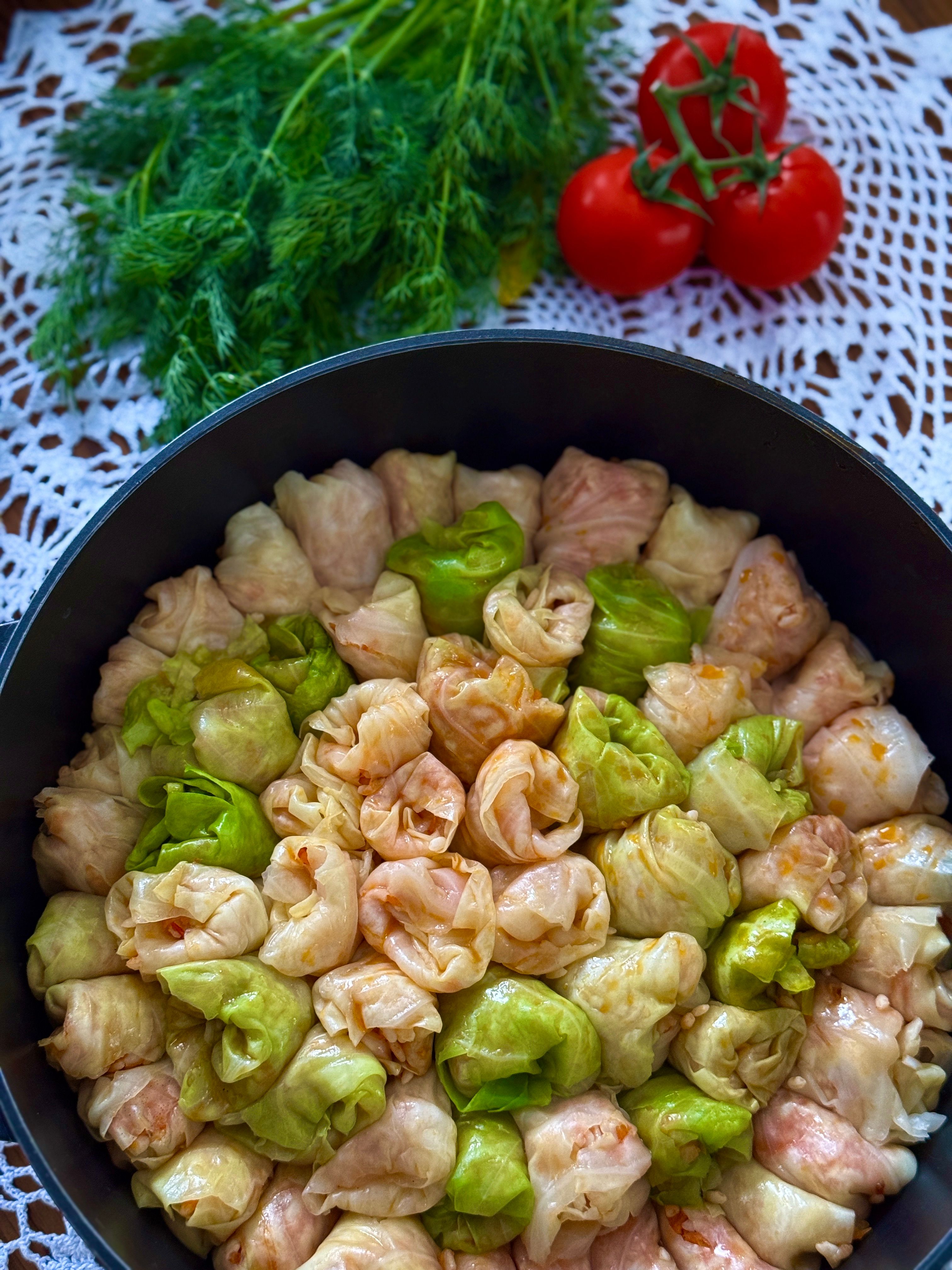
Photo: Vadim Malitskii / Pexels
The diets react (see scores below)
Common Ingredients
- sauerkraut leaves
- ground pork
- rice
- onion
- smoked meat
- paprika
- bay leaf
- garlic
Specific recipes may vary.
Incompatible with 9 of 11 diets
Diet Ratings
Sarma contains rice as a core ingredient mixed directly into the ground pork filling, making it fundamentally incompatible with ketogenic eating. Rice is a high-glycemic grain that contributes significant net carbs — a standard serving of sarma (2-3 rolls) can easily deliver 30-50g of net carbs from the rice alone, blowing through the entire daily keto carb budget. The sauerkraut leaves are actually keto-friendly (fermented, low-carb), and the ground pork and smoked meat are excellent keto proteins and fats, but the rice cannot be reduced to a trace amount — it is structurally integral to the dish. The onion and paprika add minor additional carbs. Without rice, a deconstructed or modified version could work, but traditional sarma as prepared cannot fit keto.
Serbian Sarma contains multiple animal products that are strictly excluded from a vegan diet. Ground pork and smoked meat are both animal flesh, making this dish fundamentally incompatible with veganism. There is no ambiguity here — this is a meat-centered dish by definition.
Sarma contains two clear paleo violations: rice (a grain, explicitly excluded from the paleo diet) and smoked meat (a processed food that typically contains added salt, nitrates, and preservatives). Sauerkraut, while fermented, is also made with added salt, which is excluded under strict paleo rules. The remaining ingredients — ground pork, onion, paprika, bay leaf, and garlic — are all paleo-compliant. However, rice is a non-negotiable grain exclusion with strong consensus across all major paleo authorities, and smoked/processed meat is a processed food. These two violations are significant enough to push the dish firmly into 'avoid' territory.
Sarma as prepared in this Serbian recipe is dominated by ground pork and smoked meat — both red/processed meats that sit at the bottom of the Mediterranean diet pyramid. Red meat is restricted to a few times per month, and processed/smoked meats are generally discouraged entirely due to high saturated fat, sodium, and preservative content. While some ingredients (sauerkraut/fermented cabbage, onion, garlic, rice, paprika, bay leaf) are plant-based and compatible, they are overwhelmed by the dual protein sources of ground pork and smoked meat. The combination of red meat plus processed smoked meat in a single dish is a clear conflict with Mediterranean principles. White rice is also a refined grain, adding a minor further concern. This dish is not compatible with Mediterranean dietary patterns as a regular food.
Sarma is fundamentally incompatible with the carnivore diet. While it contains carnivore-approved ingredients like ground pork and smoked meat, it is built around multiple plant-based components that are entirely excluded: sauerkraut leaves (fermented cabbage), rice (a grain), onion, paprika (a spice/plant), bay leaf (a plant herb), and garlic. Rice alone is a high-carbohydrate grain that is strictly forbidden. The dish cannot be modified within its traditional form — the sauerkraut leaf wrapping and rice filling are structural to the dish, not optional garnishes. The presence of so many plant ingredients makes this a clear avoid with high confidence across all carnivore tiers.
Sarma contains rice, which is a grain explicitly excluded on the Whole30 program. Rice is used as a filler in the ground pork filling, making this dish non-compliant as traditionally prepared. All other ingredients — sauerkraut leaves, ground pork, onion, smoked meat (check for compliant curing), paprika, bay leaf, and garlic — are generally Whole30-compatible, but the inclusion of rice disqualifies the dish entirely. Note that smoked meat should also be checked for added sugars or sulfites, though sulfites are no longer excluded per 2024 rule changes.
Sarma contains multiple high-FODMAP ingredients that make it unsuitable during the elimination phase. Onion is one of the highest-fructan foods tested by Monash University and is high-FODMAP at any meaningful quantity — it is a core ingredient in the filling and cannot be considered a trace amount. Garlic is similarly high in fructans and high-FODMAP at even 1/4 clove. These two ingredients alone disqualify the dish. Sauerkraut (fermented cabbage leaves) is actually low-FODMAP in small servings (~75g) per Monash, as fermentation reduces FODMAPs, so the wrapper itself is less problematic. Ground pork and rice are low-FODMAP. Smoked meat is generally low-FODMAP if it contains no FODMAP-heavy additives. Paprika and bay leaf are low-FODMAP as used in cooking quantities. However, the combination of onion and garlic as structurally integral ingredients — not incidental seasonings — makes this dish firmly high-FODMAP. There is no practical way to modify traditional Sarma to eliminate these without fundamentally changing the dish.
Serbian Sarma is fundamentally incompatible with DASH diet principles. The dish combines two major sodium sources: sauerkraut leaves (fermented cabbage with very high sodium content, often 700-900mg per cup) and smoked meat (a cured, processed product extremely high in sodium and saturated fat). Ground pork, while a protein source, is higher in saturated fat than DASH-recommended lean proteins like poultry breast or fish. The combination of sauerkraut brine, smoked/cured meat, and fatty pork makes a single serving likely to contain 1,000-1,500mg+ of sodium, representing 65-100% of the low-sodium DASH daily limit in one dish. This conflicts directly with NIH/NHLBI DASH guidelines, which explicitly limit sodium, processed/cured meats, and high saturated fat sources. The rice, onion, garlic, paprika, and bay leaf are DASH-compatible ingredients, but they are insufficient to offset the core problematic components.
Sarma is a traditional Serbian stuffed cabbage dish with a mixed Zone profile. The sauerkraut leaves (fermented cabbage) are actually a Zone-favorable carbohydrate — low-glycemic, high in fiber, and rich in polyphenols and probiotics that align with Sears' anti-inflammatory emphasis. However, the dish has several Zone challenges. Ground pork is a less lean protein compared to Zone ideals like chicken breast or fish — it carries higher saturated fat content. The smoked meat component compounds this issue, adding both saturated fat and likely sodium/preservatives that conflict with the anti-inflammatory focus. White rice is an 'unfavorable' Zone carbohydrate — high glycemic index and nutritionally sparse — and is embedded within the rolls, making it impossible to simply portion away. The combination of fatty pork, smoked meat, and white rice in a single dish creates a macro imbalance tilted toward saturated fat and high-GI carbs relative to Zone targets. Onion, garlic, paprika, and bay leaf are Zone-positive additions (polyphenols, anti-inflammatory compounds). Overall, the dish could be adapted (leaner pork, less or no rice, controlled portions) but as traditionally prepared, it requires significant caution.
Some Zone practitioners would argue that sarma, eaten in a controlled portion (2-3 rolls), can approximate Zone ratios reasonably well — the sauerkraut wrapping is an excellent low-GI carb vehicle, the pork provides complete protein, and the dish is not processed or sugar-laden. Sears' later writings (The Mediterranean Zone) increasingly emphasized fermented foods and anti-inflammatory polyphenols, which sauerkraut and paprika/garlic provide abundantly. A Zone-friendly modification with leaner pork and cauliflower rice could make this a solid Zone meal.
Sarma is a traditional Serbian dish of ground pork and rice rolled in sauerkraut leaves, typically slow-cooked with smoked meat, onion, garlic, paprika, and bay leaf. The anti-inflammatory profile is genuinely mixed. On the positive side: sauerkraut leaves (fermented cabbage) provide probiotics and glucosinolates that support gut health and reduce inflammatory markers; garlic contains allicin with well-documented anti-inflammatory properties; paprika offers antioxidant carotenoids and capsaicinoids; bay leaf and the slow-cooking process may help extract polyphenols. The onion adds quercetin, a potent anti-inflammatory flavonoid. On the negative side: ground pork and smoked meat are the dominant protein sources — both fall into the 'limit' category. Ground pork contains saturated fat and arachidonic acid (a precursor to pro-inflammatory eicosanoids), and smoked meats introduce sodium, nitrates/nitrites, and advanced glycation end-products (AGEs) from the smoking process, all of which are linked to increased inflammatory burden. The refined white rice contributes to glycemic load without meaningful anti-inflammatory benefit. The dish is not built around anti-inflammatory principles and the red/processed meat content is a meaningful concern, but the fermented base, alliums, and spices provide genuine offsets. Acceptable occasionally for healthy individuals, but not a regular anti-inflammatory meal choice.
Some traditional food researchers and fermented-food advocates would rate Sarma more favorably, citing the substantial probiotic and prebiotic benefits of sauerkraut as primary drivers of systemic inflammation reduction — Dr. David Perlmutter and fermentation-forward practitioners emphasize gut-inflammation links that could partially offset the pork burden. Conversely, stricter anti-inflammatory practitioners (aligned with AIP or Weil's pyramid emphasis on limiting red meat) would score this lower, pointing to the smoked processed meat as a clear avoid-category ingredient that should disqualify the dish from a 'caution' rating.
Serbian sarma is a combination of ground pork and smoked meat rolled in sauerkraut leaves with rice, and it presents several significant problems for GLP-1 patients. The dual pork components — ground pork and smoked meat — create a high saturated fat load per serving, and smoked/cured meats are also high in sodium, which can worsen bloating and water retention. The fat content is the primary disqualifier: GLP-1 medications slow gastric emptying, meaning a fatty, dense dish like sarma will sit in the stomach for an extended period, substantially increasing the risk of nausea, reflux, and bloating. The rice adds refined carbohydrate with minimal fiber contribution at typical proportions. On the positive side, sauerkraut offers some fiber and probiotics, and the dish does contain meaningful protein — but the protein comes packaged with a high saturated fat burden that undermines its value. Paprika, garlic, and bay leaf are fine as seasonings. The smoked meat component is an additional concern beyond fat: processed/cured meats are categorically discouraged for GLP-1 patients due to high sodium and processed fat content. This is not a dish that works in small portions either — the flavor and nutritional profile don't improve at reduced volume. A GLP-1-friendly adaptation would require substituting lean ground turkey or chicken for the pork and eliminating the smoked meat, which would fundamentally change the dish.
Some GLP-1-focused dietitians may note that fermented sauerkraut provides probiotic benefit and fiber that can partially offset GI side effects, and that a small portion of a pork-based dish is not categorically forbidden if it fits within a patient's overall daily fat and protein targets. The disagreement centers on individual tolerance — patients further along in treatment with stabilized GI side effects may tolerate moderate fat loads better than newly initiated patients, and rigid food avoidance lists are not universally endorsed in clinical practice.
*See how scores were generated at our methodology page.
Nutritional profile
Six traits that cut across every diet.
Fiber & Plants
How much whole-plant food and fiber it delivers.
Healthy Fats
The quality of its fats (unsaturated, omega-3).
Whole / Unprocessed
How close it is to its natural, unprocessed form.
Gut Gentle
How easy it is on digestion (low FODMAP, few irritants).
Low Glycemic
How little it spikes your blood sugar.
Protein Density
How much protein it packs per calorie.
Controversy Index
Higher controversy = more disagreement between diets.
Diet-Specific Tips
 Zone — 4/10
View tips
- Sauerkraut leaves are a Zone-favorable, low-glycemic, fermented carbohydrate with probiotic and polyphenol benefits
- Ground pork is a higher saturated fat protein — less ideal than Zone preferred lean proteins
- Smoked meat adds additional saturated fat and processed/preserved meat concerns counter to anti-inflammatory principles
- White rice is an 'unfavorable' Zone carbohydrate — high glycemic index, embedded in the rolls and hard to separate out
- Onion, garlic, and paprika contribute beneficial polyphenols aligned with Sears' anti-inflammatory focus
- Macro ratio as traditionally prepared skews toward saturated fat and high-GI carbs, requiring careful portion control to approach 40/30/30
 Anti-Inflammatory — 4/10
View tips
- Sauerkraut leaves: fermented cabbage provides probiotics and glucosinolates — anti-inflammatory benefit
- Ground pork: saturated fat and arachidonic acid — pro-inflammatory, in 'limit' category
- Smoked meat: processed/cured, contains nitrates and AGEs — pro-inflammatory concern
- Garlic: allicin with strong anti-inflammatory and antimicrobial properties
- Paprika: carotenoid antioxidants (capsanthin, beta-carotene) — anti-inflammatory
- Onion: quercetin and flavonoids — anti-inflammatory
- Bay leaf: contains linalool and other anti-inflammatory compounds
- White rice: high glycemic index, minimal anti-inflammatory contribution
- Overall pattern: red/processed meat dominates the protein, limiting the dish's anti-inflammatory ceiling