Photo: Polina Tankilevitch / Pexels
The diets react (see scores below)
Common Ingredients
- feta cheese
- hot chili peppers
- garlic
- paprika
- sunflower oil
- salt
Specific recipes may vary.
Incompatible with 7 of 11 diets
Diet Ratings
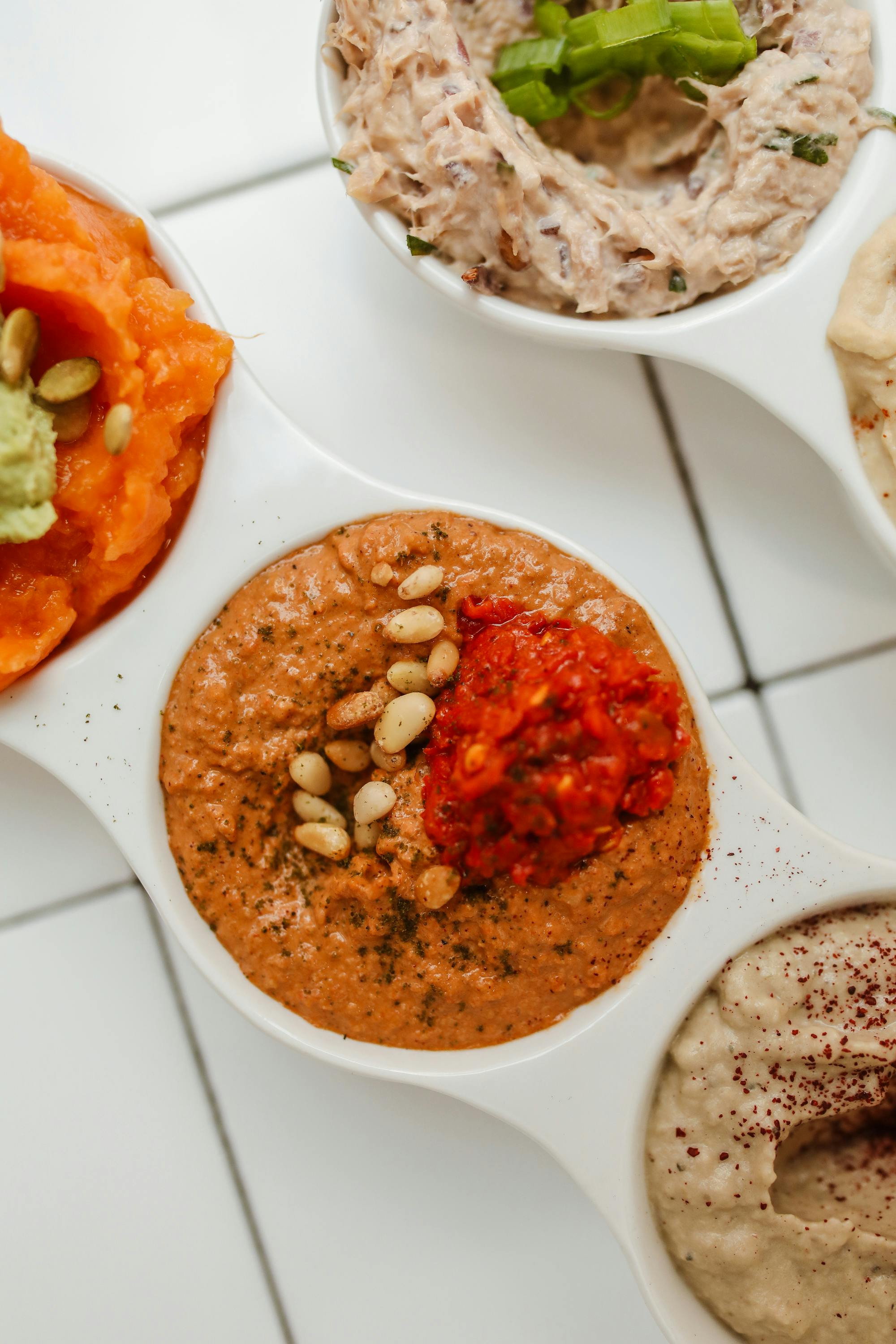
Urnebes is a Serbian spicy cheese spread made primarily from feta cheese, hot chili peppers, garlic, paprika, sunflower oil, and salt. The macronutrient profile is strongly keto-friendly: feta cheese is high in fat and protein with minimal carbs (~1-2g net carbs per 100g), and the other ingredients contribute negligible carbohydrates in condiment-sized portions. The addition of sunflower oil boosts fat content further, aligning well with keto's 70-80% fat target. Hot peppers and garlic add trace carbs but are used in small amounts. Net carbs per serving are very low, and the dish is whole and unprocessed. The main concern is sunflower oil, which is a seed oil high in omega-6 polyunsaturated fats — accepted by most keto practitioners but flagged by some stricter adherents who prefer saturated or monounsaturated fats.
Strict or 'clean keto' advocates may caution against sunflower oil due to its high omega-6 content and pro-inflammatory potential, recommending substitution with olive oil, avocado oil, or butter instead. Some also flag feta for its lactose content, though the amount is small.
Urnebes is a Serbian spicy cheese spread whose primary and defining ingredient is feta cheese, a dairy product made from sheep's or goat's milk. Dairy is an animal product categorically excluded from a vegan diet. There is no plant-based ambiguity here — the dish cannot exist without cheese. The remaining ingredients (hot chili peppers, garlic, paprika, sunflower oil, salt) are all plant-based, but the foundational ingredient disqualifies the dish entirely.
Urnebes contains multiple non-paleo ingredients that disqualify it outright. Feta cheese is dairy and explicitly excluded from the paleo diet by all major paleo authorities. Sunflower oil is a seed oil, also firmly on the avoid list. Salt (added) is excluded as well. While hot chili peppers, garlic, and paprika are paleo-approved, the core components of this condiment — its protein source (cheese) and its fat base (sunflower oil) — are both clear violations. There is no version of this dish that could be considered paleo without fundamentally changing the recipe.
Urnebes is a Serbian spiced cheese condiment made primarily from feta-style cheese mixed with hot peppers, garlic, paprika, and sunflower oil. Several elements align reasonably well with Mediterranean principles: feta cheese is a traditional Mediterranean dairy product consumed in moderation, garlic and chili peppers are plant-based and encouraged, and paprika adds flavor without harm. However, the use of sunflower oil rather than extra virgin olive oil is a notable departure from core Mediterranean fat principles. Dairy (cheese) is permitted but in moderation, placing this in the 'caution' category. As a condiment used in small amounts, the overall impact is moderate. The substitution of sunflower oil for olive oil is the primary concern.
Some Mediterranean diet practitioners, particularly those drawing from broader Balkan or Eastern Mediterranean traditions, might view this more favorably given its fermented/aged dairy base, heavy use of vegetables and spices, and its role as a small-portion condiment — arguing that the cheese and spice profile aligns with regional dairy traditions. Others following stricter modern clinical guidelines (e.g., PREDIMED-based protocols) would penalize the sunflower oil more heavily and recommend substituting olive oil before considering this compatible.
Urnebes is a Serbian condiment that, while containing feta cheese as its primary protein, is heavily loaded with plant-derived ingredients that are strictly excluded from the carnivore diet. Hot chili peppers, garlic, and paprika are all plant foods, and sunflower oil is a plant-based seed oil — one of the most problematic ingredients in any carnivore or ancestral health context due to its high polyunsaturated fat content and inflammatory omega-6 profile. Even setting aside the dairy debate around feta cheese, the combination of multiple plant ingredients and a plant-based oil makes this dish fundamentally incompatible with carnivore principles. This is not a borderline case; the majority of the dish by ingredient count consists of excluded plant foods.
Urnebes contains feta cheese, which is dairy — a clearly excluded category on Whole30. Feta is a brined dairy cheese and does not fall under any exception (only ghee and clarified butter are permitted dairy products). All other ingredients — hot chili peppers, garlic, paprika, sunflower oil, and salt — are fully compliant, but the feta alone disqualifies this dish entirely.
Urnebes contains two major high-FODMAP ingredients that make it unsuitable during the elimination phase. Garlic is one of the highest-FODMAP foods known, rich in fructans, and even small amounts used in a condiment paste are problematic. Feta cheese, while lower in lactose than soft fresh cheeses, is still a moderate-lactose cheese that Monash rates as low-FODMAP only at a 40g serving — when used as the primary base of a condiment spread, the lactose load can become significant. Hot chili peppers are generally low-FODMAP in small amounts, paprika is low-FODMAP, sunflower oil is low-FODMAP, and salt is fine. However, the presence of garlic as a core structural ingredient — not merely a trace flavoring — makes this dish a clear avoid during the elimination phase regardless of portion size.
Urnebes is a Serbian cheese-based condiment made primarily from feta cheese, which is very high in sodium (typically 300-400mg per ounce) and saturated fat. Combined with added salt, the sodium content of even a small serving can be substantial — easily exceeding 500-800mg for a typical condiment portion. DASH guidelines explicitly limit sodium to under 2,300mg/day (or 1,500mg/day for the stricter version) and emphasize low-fat or fat-free dairy. Feta is a full-fat cheese, directly conflicting with DASH's dairy recommendations. The sunflower oil adds unsaturated fat, which is acceptable, and chili peppers and garlic are DASH-friendly ingredients, but they cannot offset the dominant sodium and saturated fat load from feta plus added salt. As a condiment, it is likely used as a spread or dip, meaning portion control is difficult in practice. This dish conflicts with multiple core DASH principles simultaneously.
Urnebes is a Serbian spiced cheese condiment made primarily from feta cheese blended with hot chili peppers, garlic, paprika, sunflower oil, and salt. From a Zone perspective, it presents a mixed profile. The feta cheese provides protein but is relatively high in saturated fat, making it a less ideal protein source compared to lean options like chicken or egg whites. The hot chili peppers, garlic, and paprika are actually Zone-favorable additions — they are low-glycemic, anti-inflammatory, and rich in polyphenols, which aligns well with Sears' later anti-inflammatory emphasis. However, the use of sunflower oil is a significant Zone concern: sunflower oil is high in omega-6 fatty acids, which Sears specifically discourages due to its pro-inflammatory arachidonic acid cascade. It is not a monounsaturated fat like olive oil or avocado oil. As a condiment, portion sizes are typically small, which limits damage — but the saturated fat from feta combined with omega-6-heavy sunflower oil makes this a food requiring careful portioning. It can technically fit into a Zone meal in small quantities (as part of a fat block), but it is not a recommended building block. Substituting olive oil for sunflower oil would substantially improve its Zone profile.
Some Zone practitioners following Sears' later writings (e.g., 'The OmegaRx Zone') may be more lenient about feta in moderation, noting that full-fat dairy contains some conjugated linoleic acid (CLA) with anti-inflammatory properties, and that small condiment portions limit macro disruption. The real issue is sunflower oil specifically — if made with olive oil instead, this dish would score noticeably higher (likely 5-6) as the polyphenol-rich peppers and garlic would then align well with Zone anti-inflammatory principles.
Urnebes is a Serbian spicy cheese condiment with a genuinely mixed anti-inflammatory profile. On the positive side, hot chili peppers contain capsaicin, a well-documented anti-inflammatory compound that inhibits substance P and NF-κB pathways. Garlic provides allicin and organosulfur compounds with established anti-inflammatory and immune-modulating properties. Paprika adds carotenoids including capsanthin and beta-carotene. These three ingredients together represent meaningful anti-inflammatory contributors. However, feta cheese is a full-fat dairy product high in saturated fat, which the anti-inflammatory framework limits — it is not in the 'avoid' category like butter or cream, but it is not emphasized either. The more problematic ingredient is sunflower oil, which is high in omega-6 linoleic acid (approximately 65-70%) and is specifically called out in anti-inflammatory protocols as a oil to avoid using regularly. As a condiment, portion sizes are typically small, which mitigates concern somewhat — a tablespoon of urnebes delivers far less sunflower oil than using it as a cooking oil. The net result is a dish with genuinely beneficial spice components undermined by full-fat dairy and a pro-inflammatory seed oil base.
Mainstream nutrition science (AHA guidelines) considers sunflower oil acceptable or even heart-healthy due to its unsaturated fat content, and would not penalize this dish heavily for it. Some anti-inflammatory researchers also distinguish between high-oleic sunflower oil (lower omega-6) and standard sunflower oil, and note that in small condiment portions, the omega-6 load is unlikely to be clinically significant. From this perspective, the capsaicin, garlic, and paprika content could push this dish toward a more favorable rating.
Urnebes is a Serbian condiment made primarily from feta cheese blended with hot chili peppers, garlic, paprika, and sunflower oil. As a condiment, it is evaluated on its typical serving-size contribution and composition. Feta cheese is high in saturated fat and sodium, and the addition of sunflower oil increases the total fat load further. Hot chili peppers are a known GLP-1 side-effect trigger — they can worsen nausea, acid reflux, and GI irritation, which are already heightened on these medications due to slowed gastric emptying. The dish offers minimal protein per typical condiment serving (a tablespoon or two of a cheese-based spread delivers perhaps 2-3g protein), low fiber, and contributes mostly fat and sodium. It is not nutrient-dense per calorie in the way GLP-1 patients require. The spice content alone is enough to push this toward avoid for most GLP-1 patients, compounded by the high saturated fat from feta and added oil.
Some GLP-1-focused dietitians may note that feta cheese, used sparingly as a flavor-dense condiment on a high-protein base (e.g., grilled chicken), could be tolerated by patients with low spice sensitivity and no active GI side effects — the protein and fat combination can support satiety in very small amounts. However, the hot pepper content makes individual tolerance highly variable, and most clinical guidance would recommend avoiding spicy, high-fat condiments especially in early treatment phases.
*See how scores were generated at our methodology page.
Nutritional profile
Six traits that cut across every diet.
Fiber & Plants
How much whole-plant food and fiber it delivers.
Healthy Fats
The quality of its fats (unsaturated, omega-3).
Whole / Unprocessed
How close it is to its natural, unprocessed form.
Gut Gentle
How easy it is on digestion (low FODMAP, few irritants).
Low Glycemic
How little it spikes your blood sugar.
Protein Density
How much protein it packs per calorie.
Controversy Index
Higher controversy = more disagreement between diets.
Diet-Specific Tips
 Keto — 8/10
View tips
- Feta cheese is low net carb (~1-2g/100g) and high in fat and protein
- Sunflower oil adds fat but is high in omega-6 — a concern for strict keto adherents
- Hot peppers, garlic, and paprika contribute minimal net carbs in condiment portions
- No added sugars, grains, or starchy ingredients
- Whole, unprocessed ingredients align with keto principles
- Portion control not critical — reasonable serving sizes remain well within carb limits
 Mediterranean — 5/10
View tips
- Feta cheese is traditional Mediterranean dairy — acceptable in moderation
- Sunflower oil used instead of extra virgin olive oil — a clear deviation from core Mediterranean fat guidelines
- Garlic, hot peppers, and paprika are plant-based and encouraged
- Used as a condiment in small portions, limiting overall dietary impact
- No refined grains, added sugars, or heavily processed ingredients
- Dairy-forward dish places it in the moderation/caution tier by default
 Zone — 4/10
View tips
- Feta cheese is a moderate protein source but higher in saturated fat than Zone-ideal lean proteins
- Sunflower oil is high in omega-6 fatty acids — specifically discouraged by Sears for its pro-inflammatory potential
- Chili peppers, garlic, and paprika are Zone-favorable: low-glycemic, anti-inflammatory, polyphenol-rich
- As a condiment, small serving sizes limit macro impact but also limit protein contribution
- No carbohydrate concern — very low glycemic load overall
- Replacing sunflower oil with olive oil or avocado oil would meaningfully improve Zone compatibility
 Anti-Inflammatory — 4/10
View tips
- Chili peppers: capsaicin has well-documented anti-inflammatory mechanisms (NF-κB inhibition, substance P reduction)
- Garlic: allicin and organosulfur compounds are established anti-inflammatory agents
- Paprika: provides carotenoids (capsanthin, beta-carotene) with antioxidant properties
- Feta cheese: full-fat dairy with saturated fat — limited but not strictly avoided in anti-inflammatory frameworks
- Sunflower oil: high omega-6 (linoleic acid ~65-70%), specifically flagged in anti-inflammatory protocols as a seed oil to avoid regularly
- Condiment context: small portions reduce overall inflammatory load from sunflower oil and saturated fat