Photo: RDNE Stock project / Pexels
Chinese
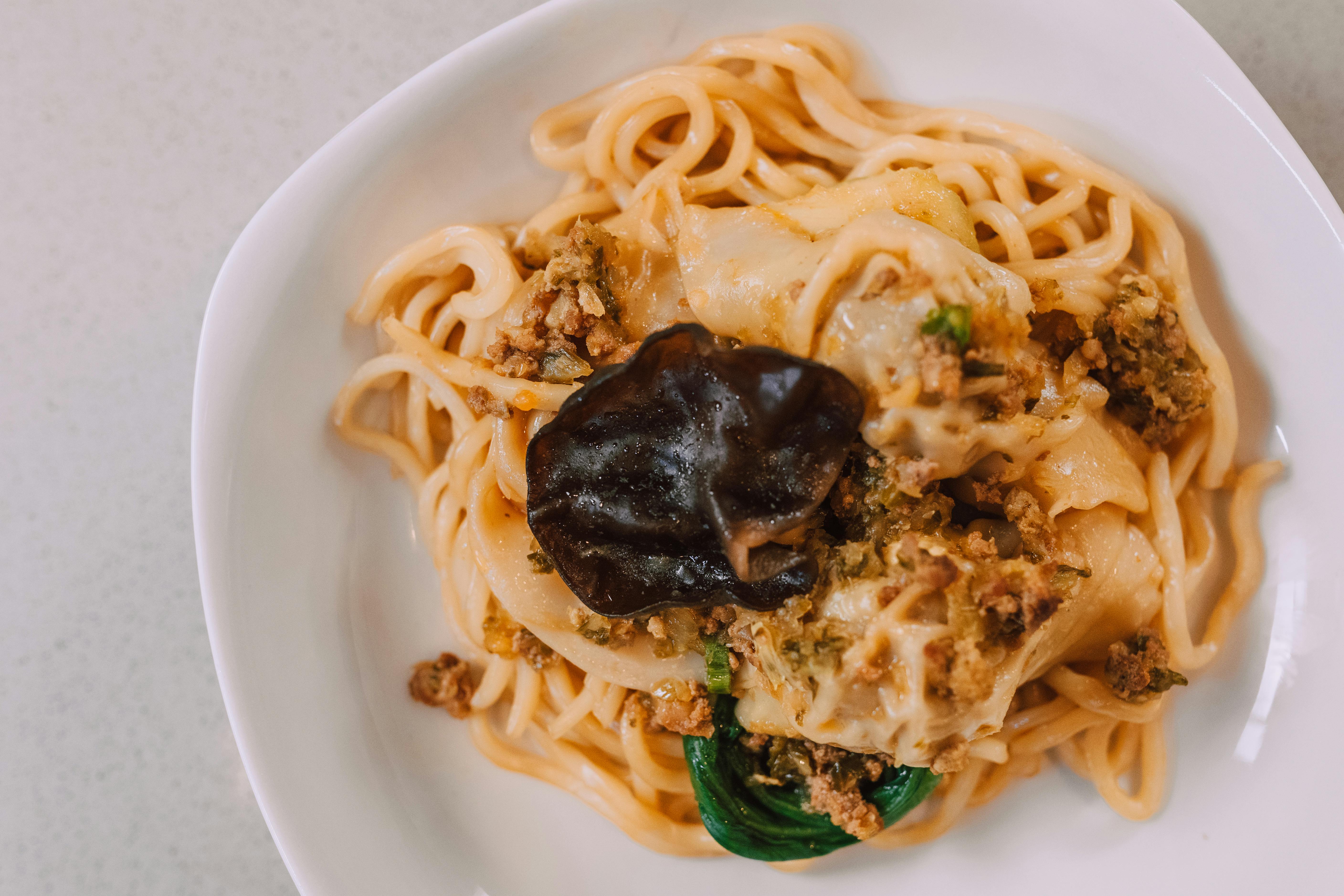
Cong You Ban Mian
The diets react (see scores below)
Common Ingredients
- noodles
- scallions
- vegetable oil
- soy sauce
- dark soy sauce
- sugar
- dried shrimp
Specific recipes may vary.
Incompatible with 10 of 11 diets
Diet Ratings
Cong You Ban Mian (scallion oil noodles) is fundamentally incompatible with a ketogenic diet. The primary ingredient is wheat noodles, which are a grain-based, high-carbohydrate food delivering approximately 40-60g of net carbs per serving — far exceeding the entire daily keto limit in a single dish. Compounding this, the recipe explicitly includes added sugar, and soy sauce contributes additional carbohydrates. There is no meaningful protein source or significant fat content to offset the carb load. Every core ingredient except the vegetable oil and scallions directly violates ketogenic principles.
Cong You Ban Mian (scallion oil noodles) is otherwise a plant-based dish, but the inclusion of dried shrimp — a seafood/animal product — makes it non-vegan. Dried shrimp are commonly used in this dish as an umami-boosting ingredient and are unambiguously derived from animals. The remaining ingredients (noodles, scallions, vegetable oil, soy sauce, dark soy sauce, sugar) are all plant-based and vegan-friendly. A vegan version of this dish is easily achievable by omitting the dried shrimp or substituting with nori flakes, dried shiitake mushroom, or other plant-based umami sources.
Cong You Ban Mian (scallion oil noodles) is fundamentally incompatible with the paleo diet. The dish's base ingredient — noodles — is made from wheat flour, a grain explicitly excluded from paleo. Beyond the noodles, multiple other ingredients are non-compliant: soy sauce contains both wheat and soy (a legume), dark soy sauce has the same issues plus added sugar and preservatives, vegetable oil is a seed oil (likely soybean or another excluded oil), and refined sugar is directly prohibited. The only paleo-compliant ingredients in the entire dish are scallions and dried shrimp. This is not a borderline case — the dish is structurally built around grains, legumes, seed oils, and refined sugar, all of which are core exclusions with strong consensus across all paleo authorities.
Cong You Ban Mian (scallion oil noodles) is a Chinese dish that conflicts with several core Mediterranean diet principles. The noodles are refined white wheat noodles, not whole grain, representing a low-fiber, high-glycemic carbohydrate source. The primary fat is generic vegetable oil (likely soybean or canola), not extra virgin olive oil, which is the cornerstone fat of the Mediterranean diet. The dish is seasoned with soy sauce and dark soy sauce, both high in sodium, and includes added sugar — a component the Mediterranean diet minimizes. The dried shrimp provides a small amount of seafood protein, which is a positive note, but it is a minor ingredient rather than a meaningful protein source. Scallions are a beneficial vegetable element. Overall, the dish is dominated by refined carbohydrates, non-olive oil fat, added sugar, and high sodium, making it a poor fit for Mediterranean diet principles.
Some Mediterranean diet interpreters might view this dish more charitably as a predominantly plant-based meal with a seafood element and allium vegetables. The dried shrimp, while small in quantity, does contribute to the encouraged seafood component, and noodles in moderate portions can fit within flexible interpretations that allow occasional refined grains as practiced in some traditional Mediterranean coastal cuisines.
Cong You Ban Mian (scallion oil noodles) is fundamentally incompatible with the carnivore diet. The dish is almost entirely plant-based: wheat noodles are a grain product, scallions are a vegetable, vegetable oil is a plant-derived fat, soy sauce and dark soy sauce are fermented soy (legume) and wheat products, and sugar is a processed carbohydrate. The only marginally animal-derived ingredient is dried shrimp, which appears as a minor garnish rather than a primary component. There is no meaningful animal protein or fat in this dish. Every core ingredient violates carnivore principles.
Cong You Ban Mian (scallion oil noodles) contains multiple excluded ingredients that make it clearly non-compliant with Whole30. First and most fundamentally, noodles are explicitly listed as a prohibited food on Whole30 — pasta and noodles are called out by name in the program's 'no recreating' rule. Second, soy sauce and dark soy sauce are soy-based condiments, and soy is an excluded legume on Whole30 (coconut aminos would be the compliant substitute). Third, sugar is an added sweetener, which is excluded. This dish fails on at least three independent grounds.
Cong You Ban Mian (scallion oil noodles) contains several high-FODMAP ingredients that make it unsuitable during the elimination phase. The primary concern is the noodles: traditional Chinese wheat noodles are high in fructans and should be avoided. Scallions (green onions) present a nuanced situation — the green tops are low-FODMAP but the white bulb portions are high in fructans. In this dish, scallions are a dominant flavoring ingredient, and the white parts are typically used, making this a significant FODMAP source. Soy sauce in small amounts (1 tablespoon) is generally considered low-FODMAP, and plain vegetable oil and sugar are safe. Dried shrimp in small quantities are likely low-FODMAP (pure protein/shellfish), though Monash has limited specific data on dried shrimp. The combination of wheat noodles plus scallion whites makes this dish high-FODMAP at any standard serving.
If wheat noodles are substituted with a gluten-free or rice noodle alternative, and only scallion green tops are used, the dish could potentially be made low-FODMAP. Some FODMAP-adapted recipes do exactly this, making the verdict heavily dependent on specific ingredient choices and preparation method.
Cong You Ban Mian (scallion oil noodles) is a sodium-dense dish that conflicts with core DASH principles on multiple fronts. The combination of regular soy sauce and dark soy sauce is the primary concern — a single tablespoon of regular soy sauce contains approximately 900–1,000mg of sodium, and this dish typically uses 2–3 tablespoons total across both soy sauces, potentially delivering 1,500–2,500mg of sodium in a single serving, which alone may exceed the standard DASH daily limit of 2,300mg or the low-sodium DASH target of 1,500mg. Dried shrimp, while a source of protein, are heavily salted and add additional sodium. The noodles are typically refined white flour noodles, not whole grain, offering minimal fiber. The vegetable oil used for frying the scallions adds fat without significant DASH-friendly micronutrients. Sugar is present as a minor ingredient. The dish lacks vegetables, low-fat dairy, or meaningful fiber sources. While scallions are DASH-friendly, they are used in small quantities and do not offset the overall nutritional profile. This dish would require substantial reformulation — low-sodium soy sauce, whole grain noodles, reduced quantity of soy sauce, omission of dried shrimp — to approach DASH compatibility.
Cong You Ban Mian (scallion oil noodles) is fundamentally incompatible with Zone Diet principles in its traditional form. The dish is built almost entirely on high-glycemic refined wheat noodles with virtually no lean protein and minimal favorable fat. The macronutrient profile is severely imbalanced: predominantly high-GI carbohydrates from refined noodles, negligible protein (dried shrimp provides a trace amount but nowhere near the 25g/meal target), and the fat comes from vegetable oil which is likely omega-6-heavy (unfavorable in Zone's anti-inflammatory framework). Added sugar further worsens the glycemic load. There is no meaningful protein block to anchor a Zone meal, and the carbohydrate source is explicitly the type Zone discourages — refined grains rather than low-GI vegetables. Scallions are Zone-favorable but are a garnish here, not a meaningful carbohydrate source. This dish cannot be portion-adjusted into Zone compliance without fundamentally restructuring it — you would essentially need to replace most of the noodles with vegetables and add a substantial lean protein, at which point it is no longer recognizable as this dish.
Cong You Ban Mian (scallion oil noodles) is a simple Shanghai dish with a mixed anti-inflammatory profile. Scallions are a genuine positive — they contain quercetin and other flavonoids with documented anti-inflammatory properties, and they're used in generous quantities in this dish. Dried shrimp contributes a small amount of protein and some omega-3s. However, the dish is built around refined wheat noodles, which are a refined carbohydrate with a moderate-to-high glycemic index and no significant fiber — not ideal from an anti-inflammatory standpoint. The vegetable oil is a concern: in traditional recipes this is typically a neutral seed oil (soybean or rapeseed), which most anti-inflammatory frameworks flag for high omega-6 content and potential oxidation during the high-heat cooking needed to crisp the scallions. Added sugar, while a small amount, contributes to the refined sugar load. Soy sauce and dark soy sauce add sodium and some fermented compounds; in moderation, fermented soy is acceptable, but high sodium is a mild inflammatory concern. The dish lacks meaningful fiber, antioxidants beyond the scallions, omega-3s, or other anti-inflammatory stars. It is a comfort food that is not aggressively inflammatory but offers little protective benefit. Upgrading to whole wheat or buckwheat noodles and extra virgin olive oil would substantially improve its profile.
The choice of cooking oil is debated: mainstream nutrition (AHA guidelines) considers refined vegetable oils like soybean or rapeseed acceptable or even heart-healthy due to their unsaturated fat profile, while most anti-inflammatory protocols (Dr. Weil, IF Rating system) flag their high omega-6 content and oxidation potential as pro-inflammatory, especially when heated. Using cold-pressed rapeseed or olive oil would shift this dish toward a more favorable verdict under either framework.
Cong You Ban Mian (scallion oil noodles) is a poor fit for GLP-1 patients. The dish is built around refined wheat noodles (low fiber, high glycemic), vegetable oil as a primary flavor vehicle (high fat, low nutrient density), and soy sauce with sugar (sodium and added sugar with negligible nutritional value). Dried shrimp contribute a small amount of protein but far too little to meaningfully support the 15–30g per meal target — the listed primary protein is 'none,' which reflects the dish's practical reality. The combination of refined carbohydrates, oil-heavy preparation, and near-zero fiber or substantive protein makes this dish counterproductive for GLP-1 patients, who need every calorie to deliver nutrients. The oil content also risks worsening nausea, reflux, and bloating — common GLP-1 side effects exacerbated by high-fat, low-fiber meals. As a standalone dish it offers empty calories and fails on protein, fiber, and fat quality simultaneously.
*See how scores were generated at our methodology page.
Nutritional profile
Six traits that cut across every diet.
Fiber & Plants
How much whole-plant food and fiber it delivers.
Healthy Fats
The quality of its fats (unsaturated, omega-3).
Whole / Unprocessed
How close it is to its natural, unprocessed form.
Gut Gentle
How easy it is on digestion (low FODMAP, few irritants).
Low Glycemic
How little it spikes your blood sugar.
Protein Density
How much protein it packs per calorie.
Controversy Index
Higher controversy = more disagreement between diets.
Diet-Specific Tips
 Anti-Inflammatory — 4/10
View tips
- Refined wheat noodles raise glycemic load with no significant fiber
- Scallions provide quercetin and flavonoids — a genuine anti-inflammatory positive
- Vegetable (seed) oil is high in omega-6 and subject to oxidation under high heat
- Added sugar, though small, contributes to refined sugar intake
- High sodium from soy sauce and dark soy sauce
- Dried shrimp provides trace omega-3s and protein but in small amounts
- Dish lacks diversity of antioxidants, fiber, or omega-3-rich ingredients