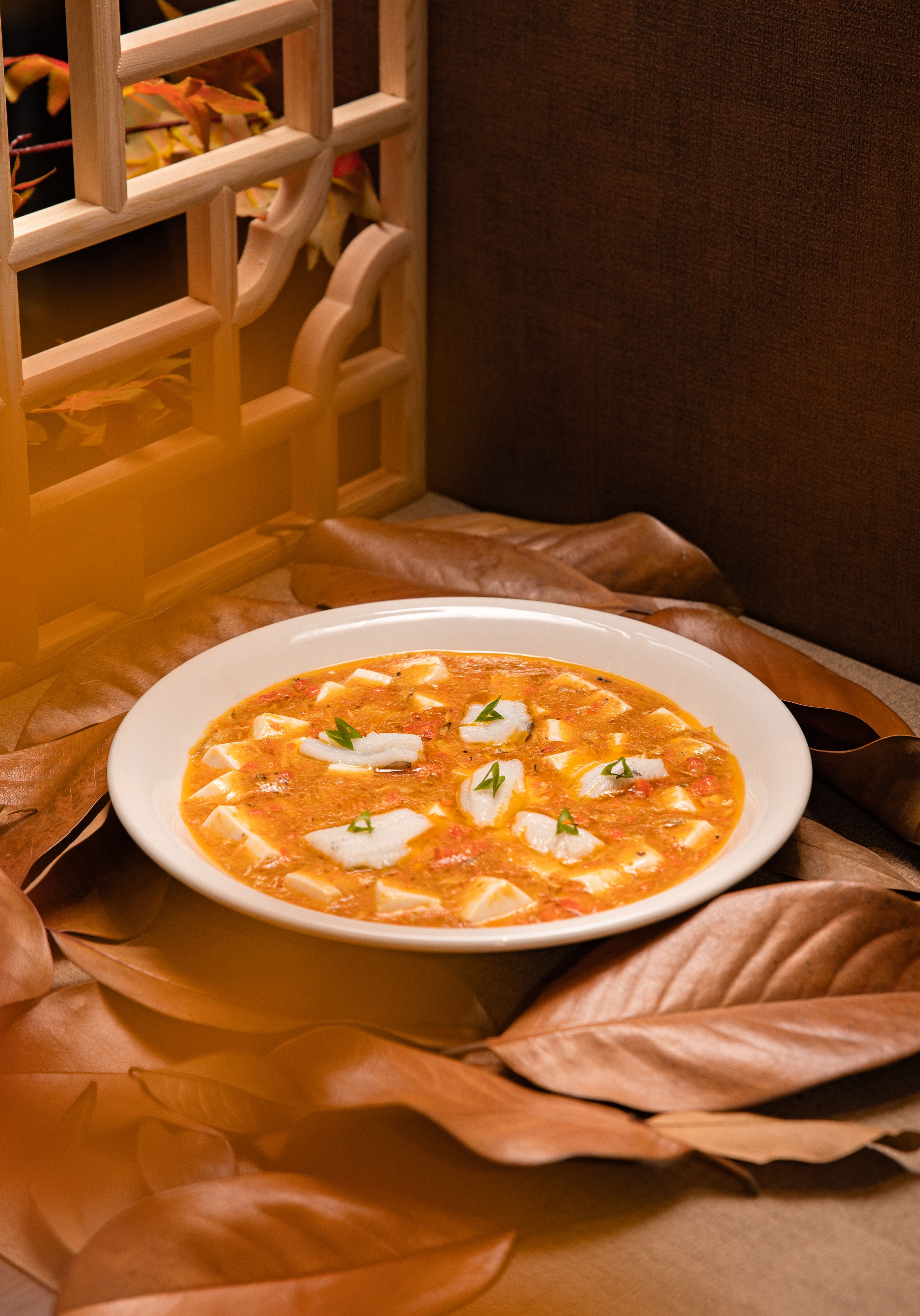
Photo: Change C.C / Pexels
Chinese
Crab Roe Tofu
The diets react (see scores below)
Common Ingredients
- tofu
- crab roe
- ginger
- scallions
- chicken stock
- shaoxing wine
- cornstarch
- salt
Specific recipes may vary.
Incompatible with 5 of 11 diets
Diet Ratings
Crab Roe Tofu has several keto-compatible components — tofu provides moderate protein with low net carbs, crab roe is rich in fat and protein with negligible carbs, and aromatics like ginger and scallions add minimal carbs in typical cooking quantities. The main concern is cornstarch, which is a high-glycemic starch used as a thickener and directly incompatible with strict keto. Even a small amount (1-2 tsp per serving) adds 4-8g net carbs and can impair ketosis. Shaoxing wine also contributes a small amount of carbohydrates. The dish could be made keto-friendly by substituting xanthan gum or omitting the thickener entirely. As prepared in a traditional Chinese restaurant, the cornstarch thickening is a meaningful concern, placing this dish in caution territory rather than a clear approval.
Strict keto practitioners would flag cornstarch as entirely off-limits regardless of the small quantity used, arguing that any grain-derived starch disrupts ketosis and should earn an avoid rating. Lazy keto adherents tracking only daily net carb totals may find the dish acceptable if portion-controlled within their daily budget.
Crab Roe Tofu contains multiple animal-derived ingredients that are clearly incompatible with a vegan diet. Crab roe is fish/crustacean eggs — unambiguously an animal product. Chicken stock is derived from poultry. While tofu, ginger, scallions, shaoxing wine, cornstarch, and salt are plant-based, the presence of both crab roe and chicken stock makes this dish doubly non-vegan with no meaningful debate within the vegan community.
Crab Roe Tofu contains multiple non-paleo ingredients that disqualify it outright. Tofu is a soy-based legume product — one of the clearest exclusions in paleo. Cornstarch is a processed grain/starch derivative. Salt is excluded as an added refined mineral. Shaoxing wine is a processed, grain-fermented alcohol. Even the paleo-compatible ingredients (crab roe, ginger, scallions, chicken stock) cannot redeem a dish whose primary protein and key structural ingredient are strictly off-limits.
Crab Roe Tofu is a reasonable fit for the Mediterranean diet with some caveats. Tofu (soy-based legume protein) is plant-forward and broadly consistent with Mediterranean principles, though not a traditional Mediterranean ingredient. Crab roe is a seafood product, aligning with the diet's encouragement of fish and seafood 2-3 times weekly; however, crab roe is notably high in cholesterol, which some Mediterranean diet authorities flag. Ginger and scallions are vegetables and fit well. Chicken stock and Shaoxing wine are minor ingredients used in small amounts and are generally acceptable. Cornstarch is a refined starch but used in minimal quantity as a thickener, not a primary ingredient. The dish lacks olive oil as the fat source, which is a core Mediterranean principle. Overall, it is a whole-food, minimally processed dish with strong plant and seafood elements, but its non-Mediterranean culinary context, absence of olive oil, and high-cholesterol roe temper the rating.
Some Mediterranean diet practitioners would rate this more favorably, noting that tofu provides excellent plant protein and crab roe qualifies as seafood, both encouraged categories; the small amounts of refined ingredients (cornstarch, Shaoxing wine) are unlikely to meaningfully undermine dietary quality. Conversely, stricter traditionalists might lower the score further given the complete absence of olive oil and the non-Mediterranean culinary framework.
Crab Roe Tofu is fundamentally incompatible with the carnivore diet. The primary protein and base of this dish is tofu, a soy-based plant product that is strictly excluded from all tiers of carnivore eating. Beyond tofu, the dish contains multiple additional plant-derived ingredients: ginger (plant spice), scallions (plant vegetable), cornstarch (grain-derived thickener), and Shaoxing wine (fermented grain alcohol). While crab roe is an animal product that would be approved on its own, and chicken stock is also carnivore-friendly, these ingredients are vastly outnumbered and overshadowed by the plant-based components. This dish cannot be modified to be carnivore-compliant without fundamentally changing its identity — removing tofu eliminates the dish entirely.
This dish contains multiple excluded ingredients. First, tofu is a soy product and soy is explicitly excluded on Whole30. Second, cornstarch is explicitly listed as an excluded ingredient. Third, Shaoxing wine is an alcohol, which is excluded. Any one of these three ingredients alone would disqualify the dish, making this a clear avoid.
Most ingredients in Crab Roe Tofu are individually low-FODMAP, but two components introduce meaningful concern. Tofu (firm or silken) is low-FODMAP at standard servings (~170g firm tofu per Monash), though silken tofu has a lower threshold (~170g). Crab roe itself is a seafood product with no significant FODMAPs. Ginger is low-FODMAP in culinary amounts. Cornstarch, salt, and Shaoxing wine (used in small cooking quantities) are low-FODMAP. The primary concern is scallions: the green tops of scallions are low-FODMAP (fructan-free), but the white bulb portion is high in fructans. Chinese recipes often use the full scallion including the white part, making this dish potentially problematic depending on preparation. Chicken stock is also a variable — homemade or commercial stocks may contain onion or garlic as ingredients, which would make them high-FODMAP. If green scallion tops only are used and the stock is confirmed onion/garlic-free (or a certified low-FODMAP stock), the dish would score higher. As typically prepared in Chinese cuisine — likely using whole scallions and standard chicken stock with onion/garlic — caution is warranted.
Monash University rates the green tops of scallions as low-FODMAP, but many clinical FODMAP practitioners advise avoiding whole scallions during the elimination phase due to the difficulty of separating green and white portions in restaurant or home cooking. Additionally, most commercial and restaurant chicken stocks contain onion or garlic, which are high-FODMAP; clinical practitioners often recommend patients treat stock as high-FODMAP unless verified otherwise.
Crab Roe Tofu has a mixed DASH profile. Tofu is an excellent DASH-friendly plant protein, rich in calcium, magnesium, and potassium with minimal saturated fat. Ginger and scallions are DASH-positive aromatics. However, crab roe is notably high in cholesterol and moderate in sodium, which raises concerns under traditional DASH guidelines. Chicken stock and Shaoxing wine both contribute sodium, and added salt further compounds this. The dish as commonly prepared in Chinese cuisine likely exceeds moderate sodium levels per serving. Cornstarch is neutral. The tofu base keeps saturated fat low, preventing an 'avoid' rating, but the sodium burden from multiple sources (stock, wine, salt, crab roe) and the cholesterol content of crab roe warrant a caution classification. Choosing low-sodium stock, limiting added salt, and controlling portion size would improve the DASH compatibility meaningfully.
NIH DASH guidelines historically flagged dietary cholesterol from roe/shellfish as problematic; however, the 2020-2025 Dietary Guidelines removed the 300mg/day cholesterol cap, and updated clinical interpretations increasingly allow moderate shellfish roe consumption when overall saturated fat and sodium are managed — some DASH-oriented dietitians would view this dish more favorably if prepared with low-sodium stock and no added salt.
Crab Roe Tofu is a reasonable Zone meal component but requires careful attention to several factors. Tofu serves as the primary protein and is a Zone-favorable vegetarian protein source, providing complete amino acids with minimal saturated fat. Crab roe adds richness along with omega-3 fatty acids and some cholesterol, and contributes additional protein. The dish is largely low-glycemic, with ginger, scallions, and chicken stock all being Zone-favorable aromatics and base. The main caution flags are: (1) Cornstarch is a high-glycemic thickener — even in small amounts used for sauce consistency, it adds unfavorable carbohydrate blocks; (2) Crab roe is relatively high in cholesterol and fat, including some saturated fat, which needs to be accounted for in the fat block calculation; (3) As a vegetarian-protein-dominant dish, fat block calculations shift (1 fat block = 3g fat rather than 1.5g), meaning the dish may need less added fat than an animal-protein meal; (4) Without additional low-glycemic vegetables on the side, this dish alone may be carbohydrate-light in Zone terms, requiring pairing with vegetables to hit the 40% carb target. Shaoxing wine contributes minimal sugar in typical quantities. Overall this is a workable Zone meal with appropriate portion control and vegetable pairing, but the cornstarch and crab roe fat content prevent a full approve.
Some Zone practitioners, particularly those following Sears' later anti-inflammatory writings, may rate this more favorably. Crab roe is rich in omega-3 fatty acids and marine-sourced nutrients that align well with Sears' anti-inflammatory protocol emphasized in works like 'The OmegaRx Zone.' In that context, the cholesterol concern is downplayed in favor of the omega-3 benefit. Additionally, the cornstarch quantity in a typical sauce application is small enough that strict Zone block counters might dismiss it as negligible. These practitioners might score this a 7.
Crab Roe Tofu is a dish with a generally favorable anti-inflammatory profile, anchored by two strong positives. Tofu is an emphasized whole soy food in anti-inflammatory frameworks (Dr. Weil's pyramid specifically highlights whole soy foods), providing plant protein, isoflavones, and minimal saturated fat. Crab roe is rich in omega-3 fatty acids and astaxanthin, both associated with reduced inflammatory markers, though it is also notably high in cholesterol and contains some omega-6 content. Ginger is a well-established anti-inflammatory spice with gingerols that inhibit NF-κB pathways. Scallions provide quercetin and antioxidant flavonoids. Shaoxing wine contributes a small amount of alcohol, which is a minor concern in the context of the overall dish. Chicken stock is neutral to mildly beneficial. Cornstarch is a refined carbohydrate used in small quantities as a thickener, which is negligible at typical cooking amounts. The dish is low in saturated fat, contains no trans fats, added sugars, or processed additives, and combines complementary anti-inflammatory ingredients. The main reservation is crab roe's high cholesterol content and the debate around dietary cholesterol and inflammation, though current evidence does not strongly implicate dietary cholesterol in systemic inflammation for most healthy individuals.
Some anti-inflammatory practitioners with a focus on cardiovascular or autoimmune health may flag crab roe's high cholesterol content as a concern, citing potential effects on oxidative stress pathways. Additionally, Shaoxing wine introduces alcohol, and updated anti-inflammatory guidelines increasingly recommend avoiding all alcohol, whereas Dr. Weil's original pyramid permits moderate amounts in culinary contexts.
Crab Roe Tofu is a moderately GLP-1-friendly dish with meaningful strengths and one notable concern. Tofu is an excellent plant-based protein source that is soft, easy to digest, and low in saturated fat — well-suited to slowed gastric emptying. Ginger actively supports GI comfort and may reduce nausea, a direct benefit for GLP-1 patients. Scallions add micronutrients. Chicken stock contributes to hydration and flavor with minimal caloric cost. Shaoxing wine and cornstarch are present in small enough quantities that they are unlikely to be clinically significant. The primary concern is crab roe: fish roe is relatively high in cholesterol and fat (including saturated fat), and while the quantities used in this dish are typically modest as a flavoring component rather than a bulk ingredient, the fat content is non-negligible and may worsen nausea or reflux in sensitive GLP-1 patients. Protein per serving is moderate but not high — tofu alone delivers roughly 8-10g per 100g serving, so portion size matters to hit the 15-30g per meal protein target. Fiber content is low. Overall this is a clean, lightly prepared dish that fits GLP-1 dietary principles reasonably well, but falls short of an approve rating due to the roe's fat content and the dish's modest protein and fiber density.
Some GLP-1-focused dietitians would rate this higher, noting that crab roe is used in small amounts as a flavoring and that the dish's overall fat load is likely modest compared to other Chinese restaurant preparations — making it a reasonable protein-forward choice when eating out. Others would flag that individual sensitivity to rich seafood-derived fats is highly variable on GLP-1 medications, particularly in the early weeks of treatment, warranting caution especially for patients still experiencing nausea.
*See how scores were generated at our methodology page.
Nutritional profile
Six traits that cut across every diet.
Fiber & Plants
How much whole-plant food and fiber it delivers.
Healthy Fats
The quality of its fats (unsaturated, omega-3).
Whole / Unprocessed
How close it is to its natural, unprocessed form.
Gut Gentle
How easy it is on digestion (low FODMAP, few irritants).
Low Glycemic
How little it spikes your blood sugar.
Protein Density
How much protein it packs per calorie.
Controversy Index
Higher controversy = more disagreement between diets.
Diet-Specific Tips
 Keto — 5/10
View tips
- Cornstarch thickener adds meaningful net carbs and is grain-derived — primary keto concern
- Tofu is low net carb and acceptable on keto in moderate portions
- Crab roe is high in fat and protein, strongly keto-compatible
- Shaoxing wine contributes minor carbohydrates
- Dish can be modified (xanthan gum substitution) to become more keto-friendly
- Standard restaurant preparation likely uses enough cornstarch to be a concern for strict keto adherents
 Mediterranean — 6/10
View tips
- Tofu is a plant-based legume protein, consistent with Mediterranean emphasis on plant foods
- Crab roe qualifies as seafood, aligned with 2-3x weekly seafood recommendation
- Crab roe is high in cholesterol, a point of caution in some Mediterranean diet guidelines
- No olive oil used; Mediterranean diet requires olive oil as primary fat source
- Cornstarch is a refined starch but used in negligible quantity as a thickener
- Minimally processed dish with whole-food ingredients overall
- Non-traditional Mediterranean cuisine, but ingredient quality matters more than culinary origin
 DASH — 5/10
View tips
- Tofu is a DASH-approved plant-based protein rich in calcium and magnesium
- Crab roe is high in dietary cholesterol, a concern under traditional DASH/cardiovascular guidelines
- Multiple sodium contributors: chicken stock, Shaoxing wine, and added salt create a cumulative sodium burden
- No saturated fat concerns from primary ingredients — tofu keeps fat profile lean
- Ginger and scallions are DASH-positive, nutrient-rich aromatics
- Low-sodium stock substitution and omitting added salt would significantly improve DASH score
- Portion control of crab roe is advisable given cholesterol content
 Zone — 6/10
View tips
- Tofu is a Zone-favorable vegetarian protein source supporting the 30% protein target
- Crab roe provides omega-3 fatty acids aligned with Sears' anti-inflammatory focus
- Cornstarch thickener is high-glycemic and adds unfavorable carbohydrate blocks
- Crab roe contains cholesterol and some saturated fat requiring fat block monitoring
- Vegetarian protein context shifts fat block calculation to 3g fat per block
- Dish needs vegetable pairing to meet 40% carbohydrate ratio from low-glycemic sources
- Ginger, scallions, and chicken stock are all Zone-favorable low-glycemic aromatics
 Anti-Inflammatory — 7/10
View tips
- Tofu is an emphasized whole soy food in anti-inflammatory diets, providing isoflavones and plant protein
- Crab roe is rich in omega-3 fatty acids and astaxanthin, which are anti-inflammatory
- Ginger contains gingerols with well-documented NF-κB inhibiting and anti-inflammatory properties
- Scallions provide quercetin and antioxidant flavonoids
- No trans fats, added sugars, seed oils, or artificial additives
- Crab roe is high in cholesterol, which may be a consideration for some individuals
- Shaoxing wine adds a small amount of alcohol, a minor concern in culinary quantities
- Cornstarch used as thickener is a refined carbohydrate but at negligible amounts
 GLP-1 Friendly — 6/10
View tips
- Tofu is a soft, easily digestible plant protein well-suited to GLP-1 slowed gastric emptying
- Ginger actively reduces nausea and supports GI comfort — a direct GLP-1 benefit
- Crab roe adds fat and cholesterol that may worsen nausea or reflux in sensitive patients
- Protein per serving is moderate; portion sizing is important to meet the 15-30g per meal target
- Fiber content is low — no significant vegetable or whole grain components
- Shaoxing wine and cornstarch are present in quantities unlikely to be clinically significant
- Overall fat load is moderate but not high — dish is lightly prepared without frying
- Hydration-supportive: chicken stock base adds fluid content