Chinese
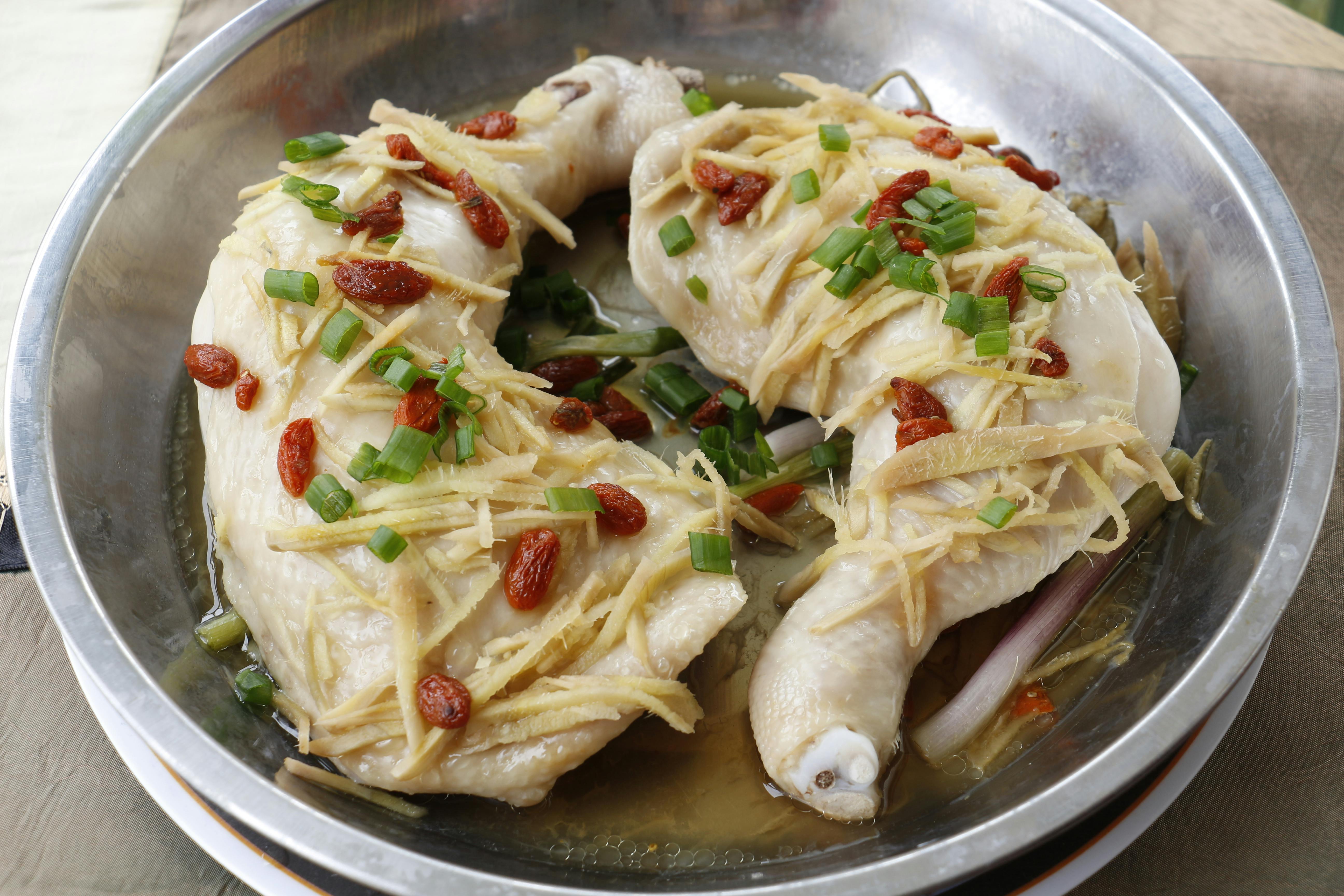
Drunken Chicken
The diets react (see scores below)
Common Ingredients
- chicken
- shaoxing wine
- ginger
- scallions
- salt
- goji berries
- chicken stock
- sesame oil
Specific recipes may vary.
Incompatible with 5 of 11 diets
Diet Ratings
Drunken Chicken is primarily a poached or steamed chicken dish, which is inherently keto-friendly as a protein source. However, two ingredients raise concerns: Shaoxing wine contains residual sugars and carbohydrates (roughly 5-8g carbs per 100ml, though much may cook off), and goji berries are relatively high in sugar and carbs (around 15g net carbs per 30g serving). Chicken stock is generally low-carb. Ginger, scallions, salt, and sesame oil are keto-compatible in typical amounts. The dish can fit keto if Shaoxing wine is used in moderation (most is used as a marinade/poaching liquid and not fully consumed) and goji berries are minimal or omitted. In a standard serving, the combined carb load from wine residue and goji berries likely keeps the dish in a caution zone rather than a clear avoid.
Strict keto practitioners would flag Shaoxing wine categorically, as any alcohol-based ingredient with residual sugars is discouraged in clinical or therapeutic keto protocols; they would also reject goji berries entirely as a high-glycemic fruit. These advocates would recommend substituting dry sherry or omitting wine altogether and skipping goji berries to make the dish approvable.
Drunken Chicken is fundamentally incompatible with a vegan diet. The dish contains multiple animal-derived ingredients: chicken (poultry/meat), chicken stock (animal broth), and sesame oil aside, the core protein and stock are unambiguously animal products. There is no plant-based interpretation of this dish that retains its name or identity without substitution. Every vegan organization and individual would unanimously reject this dish.
Drunken Chicken contains several non-paleo ingredients that disqualify it from approval. Salt is explicitly excluded under paleo rules as an added ingredient. Sesame oil is a seed oil, which is on the avoid list. Shaoxing wine is a grain-based alcohol (fermented from rice), making it doubly problematic — both a grain derivative and an alcoholic product. Chicken stock from commercial sources typically contains added salt, preservatives, and additives. The base protein (chicken), ginger, scallions, and goji berries are all paleo-approved, but the combination of salt, sesame oil, and grain-based rice wine creates multiple hard violations that collectively push this dish firmly into avoid territory.
Some lenient paleo practitioners and those following a Primal Blueprint approach argue that small amounts of alcohol used in cooking (where much evaporates) and traditional fermented products have a place in an ancestral diet. They might also overlook trace salt or substitute coconut aminos-based stock, effectively reconstructing a paleo-friendly version — but as standardly prepared, this dish does not qualify.
Drunken Chicken is a poached chicken dish marinated in Shaoxing wine, which aligns reasonably with Mediterranean diet principles at a moderate level. Chicken (poultry) is acceptable in moderation under Mediterranean guidelines — a few servings per week. The preparation is wholesome: no frying, no refined grains, no added sugars, and the dish is relatively lean. Ginger, scallions, and goji berries add plant-based nutritional value. However, several factors limit its compatibility: sesame oil, not olive oil, is the primary fat (non-traditional to Mediterranean diet); Shaoxing wine is used as a flavoring/marinade ingredient rather than a Mediterranean-style moderate red wine accompaniment; and the dish is not plant-forward. The overall profile is clean and minimally processed, which is positive, but it lacks the core Mediterranean staples (olive oil, legumes, whole grains, vegetables as primary components) and is built around an animal protein that is only moderately encouraged.
Some modern Mediterranean diet practitioners focus on the overall dietary pattern quality — lean poultry, minimal processing, anti-inflammatory aromatics like ginger, and antioxidant-rich goji berries could be seen as compatible with the diet's spirit. Traditional Mediterranean cooking also uses wine in cooking, and substituting olive oil for sesame oil would bring this dish closer to full compatibility.
Drunken Chicken contains multiple plant-derived ingredients that disqualify it from the carnivore diet. Shaoxing wine (fermented grain alcohol), ginger, scallions, goji berries, and sesame oil are all strictly plant-derived and excluded. While the base protein (chicken) and chicken stock are animal-derived, this dish is fundamentally incompatible with carnivore principles due to its extensive use of plant-based aromatics, a plant oil, a fruit (goji berries), and a grain-derived alcohol. The dish cannot be considered carnivore-compatible in any recognized tier of the diet.
Drunken Chicken contains Shaoxing wine, which is an alcoholic rice wine. Alcohol is explicitly excluded on the Whole30 for the full 30 days with no exceptions. Additionally, Shaoxing wine is grain-derived (rice), compounding the issue. The remaining ingredients — chicken, ginger, scallions, salt, goji berries, chicken stock (check for compliant versions), and sesame oil — are generally Whole30-compatible, but the Shaoxing wine is a disqualifying ingredient that cannot be swapped out while keeping this dish true to its 'Drunken' character. The dish is named for and defined by its alcohol content, making this a clear avoid.
Drunken Chicken contains several ingredients that require careful consideration. Chicken itself is low-FODMAP and safe. Ginger is low-FODMAP at standard culinary amounts (up to 1 tsp fresh). Sesame oil is low-FODMAP. Salt is fine. The problematic ingredients are: (1) Scallions — the green tops are low-FODMAP, but the white bulb portion is high in fructans and must be avoided during elimination; many recipes use both parts. (2) Shaoxing wine — while distilled alcohol is generally low-FODMAP, Shaoxing is a fermented rice wine with residual carbohydrates; Monash has not specifically tested it, but small culinary amounts used in cooking (especially if some alcohol cooks off) are generally considered acceptable by most practitioners. (3) Goji berries — Monash has tested goji berries and they are low-FODMAP at 1 tablespoon (13g) but become moderate-high at larger serves due to fructose and polyols. In a typical Drunken Chicken recipe, goji berries are used as garnish in small amounts, which may be acceptable, but this depends on the quantity used. (4) Chicken stock — commercial stocks often contain onion and garlic (high-FODMAP fructans), making them high-FODMAP unless specifically low-FODMAP certified. The dish can be made low-FODMAP with careful substitutions, but as typically prepared it poses meaningful FODMAP risk primarily from stock and scallion whites.
Monash University rates scallion greens as low-FODMAP and goji berries as safe at 1 tbsp, suggesting the dish could be approved with careful preparation. However, clinical FODMAP practitioners frequently flag commercial chicken stock as a hidden high-FODMAP ingredient due to onion/garlic content, and advise patients to treat the dish as 'caution' unless using certified low-FODMAP stock and only scallion green tops.
Drunken Chicken is a Chinese dish featuring poached chicken marinated in Shaoxing wine, ginger, scallions, and stock. The base protein (chicken) is DASH-friendly as a lean protein source, and ginger, scallions, and goji berries are all beneficial whole-food additions rich in antioxidants. However, several factors warrant caution: (1) Shaoxing wine adds alcohol, which DASH does not explicitly prohibit but cardiovascular guidelines generally recommend limiting; (2) salt and chicken stock together can contribute significant sodium — traditional preparations may easily exceed 400-600mg per serving, which must be carefully managed on DASH; (3) sesame oil is a heart-healthy unsaturated fat and acceptable on DASH, but adds caloric density. The dish is not inherently high in saturated fat or added sugars, and chicken is a DASH-approved lean protein. With low-sodium stock, reduced salt, and moderate portion control, this can fit within DASH. As commonly prepared in Chinese cuisine, however, sodium levels are the primary concern. It is not a core DASH food but is acceptable in moderation with mindful preparation.
NIH DASH guidelines do not specifically address alcohol-marinated dishes, and conservative DASH clinicians may flag Shaoxing wine and high-sodium stock as disqualifying for hypertensive individuals; however, updated clinical interpretations note that when sodium is controlled and alcohol largely evaporates during cooking, the dish's lean protein and whole-food profile aligns reasonably well with DASH principles.
Drunken Chicken is a Chinese cold dish featuring poached chicken marinated in Shaoxing wine and aromatics. From a Zone perspective, chicken is an ideal lean protein source, fitting cleanly into Zone protein blocks at approximately 7g protein per block. The dish is naturally low in carbohydrates — the main carb contributors are Shaoxing wine (modest sugar content that largely cooks off or is used in small quantities as a marinade) and goji berries (a higher-sugar dried fruit that warrants portion attention). Sesame oil is a fat source; while not monounsaturated-dominant (it contains a significant omega-6 polyunsaturated component), it is used in small quantities as a finishing oil, keeping the fat load modest. Ginger, scallions, and chicken stock are Zone-favorable: low-glycemic, polyphenol-rich aromatics and a lean broth base. As a snack, a small portion of this dish — lean chicken with minimal sauce — can function well as a 1-2 block protein-dominant Zone snack, potentially paired with vegetables to complete the carb block. The goji berries are the primary caution flag, as dried fruits are 'unfavorable' carbs in Zone terminology due to concentrated sugars, but in the small garnish quantities typical of this dish, the impact is limited.
Shaoxing wine contains residual sugars and Sears' later anti-inflammatory work emphasizes avoiding alcohol-derived ingredients in regular meals due to their effect on eicosanoids. Additionally, sesame oil's high omega-6 content (linoleic acid) conflicts with Sears' anti-inflammatory emphasis on balancing omega-6 to omega-3 ratios. Some Zone practitioners would flag this dish as a 'caution' rather than an 'approve' specifically because of these two ingredients, even in small quantities. Goji berries, while antioxidant-rich and polyphenol-dense (which Sears embraces in his later writings on polyphenols), are still a concentrated fruit sugar source that Zone practitioners typically use sparingly.
Drunken Chicken is a traditional Chinese preparation featuring poached chicken marinated in Shaoxing rice wine. The ingredient profile is largely favorable from an anti-inflammatory standpoint: ginger is a well-established anti-inflammatory agent (inhibits NF-κB and prostaglandin synthesis), scallions provide quercetin and sulfur compounds, and goji berries are rich in zeaxanthin, polysaccharides, and antioxidants with documented anti-inflammatory effects. Chicken stock adds collagen and glycine. Sesame oil, used in modest finishing quantities, contains sesamol and sesamin with antioxidant properties — though it has a higher omega-6 profile, the small amounts typical in this dish are not a concern. The primary tension is Shaoxing wine: it provides depth of flavor and trace polyphenols, but alcohol (even rice wine) is generally limited on anti-inflammatory protocols. Unlike red wine, which Dr. Weil's pyramid includes for resveratrol, Shaoxing wine lacks that specific justification. The alcohol content is significant — this dish is essentially marinated in wine rather than just lightly flavored — pushing it toward caution. Chicken itself is a lean protein, categorized as 'moderate' on anti-inflammatory frameworks. Overall, the dish has genuinely beneficial ingredients offset meaningfully by substantial alcohol exposure via the wine marinade.
Some anti-inflammatory practitioners, particularly those influenced by Traditional Chinese Medicine principles, might view Shaoxing wine as a warming, circulatory herb-adjunct ingredient in small culinary doses rather than a true alcohol concern — especially given the dish's ginger and goji berry content. Conversely, updated anti-inflammatory guidelines (e.g., newer interpretations post-2018 Lancet alcohol research) would argue any meaningful alcohol exposure, even in a marinade where some cooks for off partially, warrants stricter caution.
Drunken Chicken is a Chinese cold dish where chicken (typically bone-in thighs or a whole chicken with skin) is poached and then marinated in Shaoxing rice wine, often for 24-48 hours. The dominant concern is alcohol: Shaoxing wine is not merely a cooking splash — in this dish it is the primary marinade medium and a significant flavor/ingredient component. GLP-1 guidelines flag alcohol for empty calories, and dehydration effects that compound the reduced thirst sensation on these medications. The chicken itself is a positive — good lean protein — but the cut used in authentic Drunken Chicken is typically skin-on with higher fat content than breast meat, and the sesame oil adds additional fat. The dish also commonly uses chicken thighs, which are higher in saturated fat. The goji berries and ginger are minor positives (antioxidants, anti-nausea properties of ginger) but do not meaningfully offset the alcohol concern. As a snack category item, portion sizes may be small, but the alcohol is intrinsic to the dish rather than incidental, making it difficult to modify. The combination of meaningful alcohol content, skin-on higher-fat chicken, and fat from sesame oil places this firmly in avoid territory for GLP-1 patients.
Some GLP-1-focused dietitians note that the absolute amount of alcohol retained after a prolonged marinade (versus active cooking/reduction) is debated, and a very small portion might expose the patient to less alcohol than assumed — however, this dish is not cooked after marinating, meaning alcohol is not driven off by heat, making residual alcohol content higher than in stir-fried or braised wine dishes. There is no strong clinical voice recommending this dish for GLP-1 patients.
*See how scores were generated at our methodology page.
Nutritional profile
Six traits that cut across every diet.
Fiber & Plants
How much whole-plant food and fiber it delivers.
Healthy Fats
The quality of its fats (unsaturated, omega-3).
Whole / Unprocessed
How close it is to its natural, unprocessed form.
Gut Gentle
How easy it is on digestion (low FODMAP, few irritants).
Low Glycemic
How little it spikes your blood sugar.
Protein Density
How much protein it packs per calorie.
Controversy Index
Higher controversy = more disagreement between diets.
Diet-Specific Tips
 Keto — 5/10
View tips
- Chicken is an excellent keto-friendly lean protein
- Shaoxing wine adds residual sugars and carbs — portion and absorption matter
- Goji berries are the highest-carb ingredient and can push net carbs over limit if used generously
- Sesame oil and scallions/ginger are keto-compatible
- Dish can be made more keto-friendly by reducing or substituting wine and omitting goji berries
- Net carbs are serving-size dependent — small portions may fit within daily limits
 Mediterranean — 5/10
View tips
- Chicken (poultry) is acceptable in moderation — a few servings per week under Mediterranean guidelines
- Sesame oil replaces olive oil as primary fat — not Mediterranean-traditional
- Shaoxing wine used as marinade, not a traditional Mediterranean ingredient
- No refined grains, added sugars, or heavy processing — positive factors
- Goji berries, ginger, and scallions add beneficial plant-based components
- Dish is lean and wholesome but not plant-forward
- Lacks core Mediterranean staples such as legumes, whole grains, or abundant vegetables
 Low-FODMAP — 5/10
View tips
- Chicken is fully low-FODMAP — safe protein base
- Scallion green tops are low-FODMAP; white bulb portions are high in fructans and must be excluded
- Commercial chicken stock commonly contains onion and/or garlic — a significant hidden FODMAP risk
- Goji berries are low-FODMAP at ≤1 tbsp (13g) but higher amounts risk excess fructose and polyols
- Shaoxing wine lacks specific Monash testing; small culinary amounts generally tolerated but not confirmed
- Sesame oil and ginger are low-FODMAP at standard culinary doses
- Dish can be made low-FODMAP with certified stock and green scallion tops only, but as typically prepared poses caution-level risk
 DASH — 5/10
View tips
- Chicken is a DASH-approved lean protein source
- Shaoxing wine introduces alcohol, which is not emphasized in DASH guidelines
- Salt and chicken stock can contribute high sodium — the primary DASH concern here
- Sesame oil is an unsaturated fat acceptable on DASH
- Goji berries, ginger, and scallions are whole-food ingredients consistent with DASH
- Low-sodium stock and reduced salt would significantly improve DASH compatibility
- No saturated fat, trans fat, or added sugar concerns
- Portion control important given sodium accumulation
 Zone — 7/10
View tips
- Chicken is a lean, Zone-ideal protein source — fits cleanly into protein blocks
- Naturally low-carb preparation with no starchy fillers or high-glycemic bases
- Goji berries are a dried fruit — 'unfavorable' carb in Zone; quantity matters
- Sesame oil is high in omega-6 fatty acids, conflicting with Zone's anti-inflammatory fat priorities
- Shaoxing wine adds modest residual sugars and alcohol; typically used in small quantities
- Ginger and scallions are Zone-favorable polyphenol-rich, low-glycemic aromatics
- As a snack, small portions of lean chicken from this dish work well as a protein block component
- Dish lacks a Zone-balancing carb component if eaten alone as a snack — pairing with vegetables recommended
 Anti-Inflammatory — 5/10
View tips
- Ginger: potent anti-inflammatory compound, inhibits NF-κB and COX enzymes
- Goji berries: rich in zeaxanthin, polysaccharides, and antioxidants with anti-inflammatory activity
- Shaoxing wine: significant alcohol content, not aligned with anti-inflammatory alcohol guidance; unlike red wine, lacks resveratrol justification
- Chicken (lean): classified as 'moderate' on anti-inflammatory frameworks — acceptable, not beneficial
- Scallions: provide quercetin and organosulfur compounds with anti-inflammatory properties
- Sesame oil: modest omega-6 content, but used in small finishing quantities; sesamol has antioxidant benefit
- Chicken stock: collagen and glycine may be mildly anti-inflammatory
- Overall cooking method (poaching): minimal added fats, no high-heat oxidation concerns