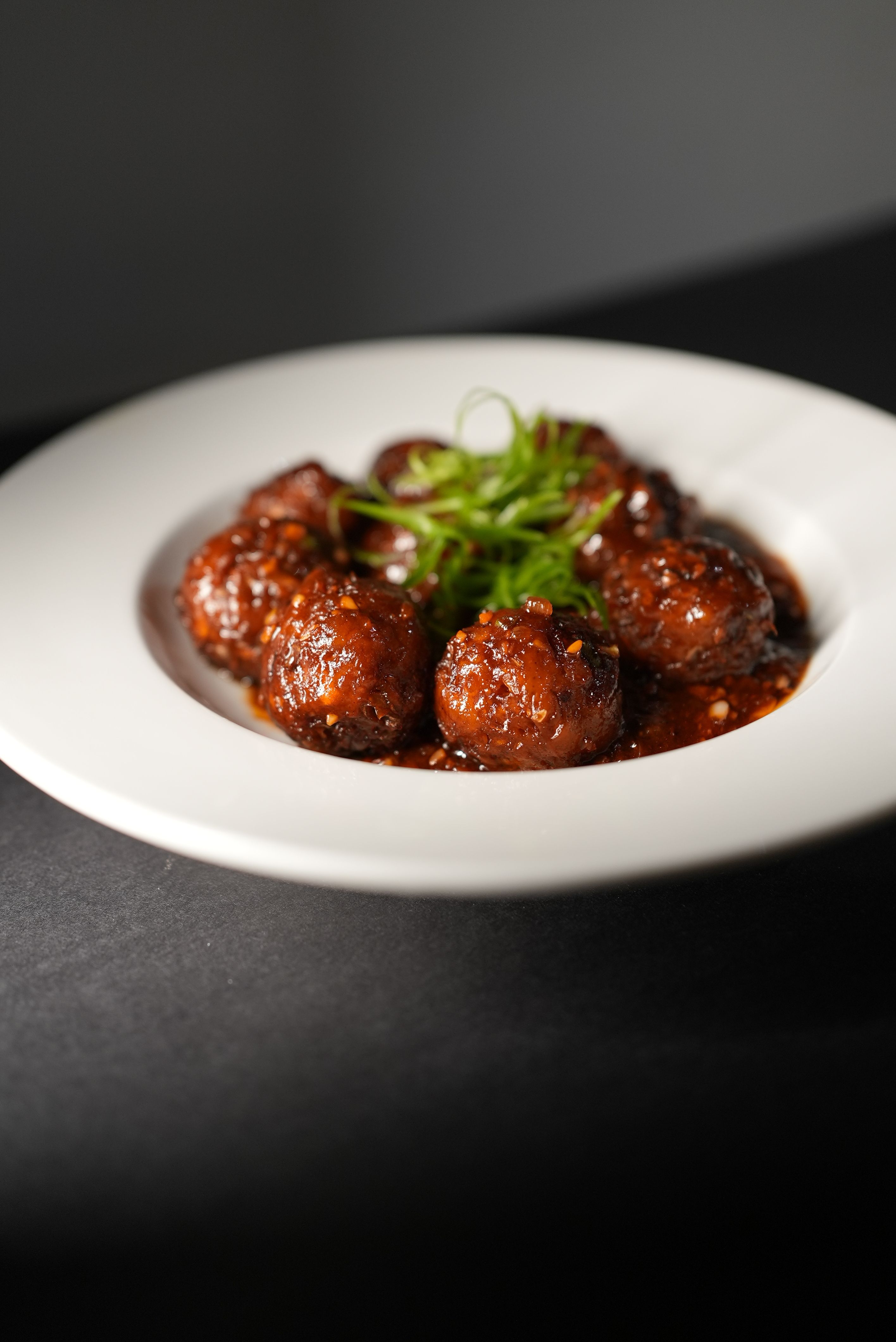
Photo: Kunal Lakhotia / Pexels
Chinese
Lion's Head Meatballs
The diets react (see scores below)
Common Ingredients
- ground pork
- napa cabbage
- ginger
- scallions
- soy sauce
- shaoxing wine
- egg
- cornstarch
Specific recipes may vary.
Incompatible with 6 of 11 diets
Diet Ratings
Lion's Head Meatballs are primarily ground pork, which is keto-friendly, but the traditional recipe includes cornstarch as a binder and Shaoxing wine, both of which add carbohydrates. Cornstarch is a concentrated starch (roughly 7g net carbs per tablespoon) and is incompatible with strict keto in any meaningful quantity. Shaoxing wine also contains residual sugars and carbs. Soy sauce adds minimal carbs. Napa cabbage, ginger, and scallions are low-carb vegetables acceptable in keto. The dish can be adapted by substituting cornstarch with a keto binder (e.g., almond flour, egg only, or pork rinds) and omitting or replacing Shaoxing wine with dry sherry in small amounts or broth. As traditionally prepared, it warrants caution due to the starch binder and wine, but with simple swaps it becomes keto-friendly.
Some lazy keto practitioners argue that the small amount of cornstarch and wine used per serving distributes to negligible carbs per meatball and is acceptable within a daily 50g net carb budget, especially if the rest of the day's meals are very low carb. Strict keto adherents, however, reject cornstarch categorically as a pure starch with no fiber offset.
Lion's Head Meatballs contain multiple animal products that are strictly excluded from a vegan diet. Ground pork is the primary protein and is a direct animal flesh product. Egg is used as a binder and is an animal-derived ingredient. There is no ambiguity here — this dish is fundamentally built on animal products and is incompatible with veganism in any form.
Lion's Head Meatballs contain multiple non-paleo ingredients that disqualify the dish. Soy sauce is a processed legume-based condiment containing soy and wheat — both excluded from paleo. Shaoxing wine is a processed grain-based alcohol made from fermented rice, making it non-paleo. Cornstarch is derived from corn, a grain, and is explicitly excluded. While the base ingredients — ground pork, napa cabbage, ginger, scallions, and egg — are all paleo-approved, the combination of three distinct non-paleo ingredients (soy sauce, shaoxing wine, cornstarch) makes this dish a clear avoid in its traditional form.
Lion's Head Meatballs are centered on ground pork as the primary protein, making them fundamentally incompatible with Mediterranean diet principles. Red meat (including pork) is limited to a few times per month at most. Ground pork is also a higher-fat cut, contributing significant saturated fat. The dish contains no olive oil, no legumes, and relies on refined cornstarch as a binder. While napa cabbage and aromatics like ginger and scallions are positive elements, they are minor supporting ingredients and do not redeem the dish's core protein. Shaoxing wine and soy sauce are incidental condiments. The dish is not plant-forward, does not feature fish or seafood, and the primary macronutrient driver directly contradicts Mediterranean dietary patterns.
Lion's Head Meatballs are fundamentally incompatible with the carnivore diet despite containing pork and egg as a base. The dish includes multiple plant-based ingredients that are strictly excluded: napa cabbage (vegetable), ginger (root spice), scallions (allium vegetable), soy sauce (fermented soybean product — a legume derivative), shaoxing wine (grain-fermented alcohol), and cornstarch (grain-derived thickener). This is not a borderline case — the majority of ingredients by count are plant-derived, and soy sauce alone is one of the most carnivore-incompatible condiments due to its legume and grain origins. The dish as prepared cannot be adapted to carnivore without being entirely reconstructed into a different recipe.
Lion's Head Meatballs contain three excluded ingredients: (1) soy sauce, which is soy-based and explicitly excluded on Whole30; (2) Shaoxing wine, which is alcohol and explicitly excluded; and (3) cornstarch, which is explicitly excluded on Whole30. Any one of these alone would disqualify the dish. The base ingredients — ground pork, napa cabbage, ginger, scallions, and egg — are all compliant, but the dish as traditionally prepared cannot be made Whole30-compatible without significant substitutions (coconut aminos for soy sauce, eliminating or substituting the wine, and replacing cornstarch with a compliant binder or omitting it).
Lion's Head Meatballs contain several ingredients that require careful evaluation. Ground pork, egg, cornstarch, ginger, and soy sauce (in small amounts) are all low-FODMAP. Shaoxing wine is generally considered low-FODMAP at culinary quantities. The two ingredients creating concern are scallions and napa cabbage. Scallions (green onions) are low-FODMAP when only the green tops are used, but the white bulb portions are high in fructans — traditional recipes often use the whole scallion. Napa cabbage is low-FODMAP at 75g per serving per Monash, but in a braised meatball dish the cabbage can be served in generous quantities that may exceed this threshold. If green tops of scallions only are used and napa cabbage is kept to a controlled portion (~75g), this dish can be tolerated during elimination. However, as traditionally prepared with whole scallions and generous cabbage, the fructan load becomes meaningful.
Monash University rates napa cabbage as low-FODMAP at 75g and green scallion tops as safe, which would make this dish approvable with careful preparation. However, clinical FODMAP practitioners often flag dishes with multiple moderate-FODMAP ingredients (scallion whites, larger cabbage portions) as risky during strict elimination, since the combined fructan load from two sources can stack even if each ingredient appears borderline-safe individually.
Lion's Head Meatballs present multiple significant concerns under DASH dietary guidelines. Ground pork is a red meat and typically high in saturated fat — both red meat and saturated fat are explicitly limited on DASH. Soy sauce is a high-sodium ingredient (one tablespoon contains approximately 900-1,000mg sodium), and as a primary seasoning in this dish, it likely pushes sodium well above DASH-compliant levels per serving. Shaoxing wine adds negligible nutritional benefit. While napa cabbage, ginger, and scallions are DASH-friendly vegetables, they are supporting ingredients that do not offset the core problems. The dish as traditionally prepared centers on a fatty red meat base with a high-sodium sauce — directly contrary to DASH's emphasis on lean proteins, sodium restriction (<2,300mg/day standard, <1,500mg/day low-sodium), and limiting red and fatty meats.
Lion's Head Meatballs present a mixed Zone profile. The dish's primary protein is ground pork, which is workable but not ideal — it tends to be higher in saturated fat than Zone-preferred lean proteins like skinless chicken, fish, or egg whites. The fat content will depend heavily on the fat percentage of the ground pork used (80/20 vs. 93/7 lean). Napa cabbage is an excellent Zone-favorable low-glycemic vegetable with strong polyphenol content, which is a genuine plus. Ginger and scallions add anti-inflammatory polyphenols consistent with Sears' later emphasis. The problematic elements are cornstarch (a high-glycemic refined starch used as a binder) and shaoxing wine (adds minor sugar/carbs). The egg helps bind and adds lean protein. As a whole dish, the protein-to-fat ratio in standard ground pork skews toward excess fat, and the cornstarch, while small in quantity, is an unfavorable carb. With lean ground pork (93%+ lean), controlled portions, and the napa cabbage serving as the primary carb block, this dish can be incorporated into a Zone meal. However, as typically prepared with fattier ground pork, the saturated fat content and ratio imbalance push it into caution territory.
Some Zone practitioners following Sears' later anti-inflammatory writings (Toxic Fat, The Mediterranean Zone) may be more lenient on moderate saturated fat from whole food sources like pork, particularly given the dish's strong polyphenol contributions from ginger, scallions, and napa cabbage. If made with lean ground pork and cornstarch minimized, stricter Zone adherents might rate this closer to a moderate approve, viewing the napa cabbage as a solid carb block and the overall dish as nutritionally dense whole food.
Lion's Head Meatballs present a mixed anti-inflammatory profile. On the positive side, ginger is a well-established anti-inflammatory ingredient with gingerols shown to reduce inflammatory markers. Napa cabbage is a cruciferous vegetable rich in vitamin C and antioxidants. Scallions provide quercetin and other flavonoids. Soy sauce (fermented) and Shaoxing wine add minimal but present polyphenols. However, the dish is anchored by ground pork, which is a red meat high in saturated fat and arachidonic acid — both pro-inflammatory. Anti-inflammatory frameworks (including Dr. Weil's pyramid) place red meat in the 'limit' category. The saturated fat content of ground pork elevates inflammatory markers like CRP in research. The egg adds some beneficial choline and selenium but also contributes arachidonic acid. Cornstarch is a refined carbohydrate, minimally problematic at small binding quantities. Shaoxing wine (rice wine/alcohol) falls outside the moderate red wine exception that some anti-inflammatory protocols permit. The dish's overall profile is pulled down primarily by its pork-forward composition, though it avoids the worst offenders (no seed oils, no processed additives, no trans fats). A lean pork loin or substituting with chicken or tofu would substantially improve the profile. As prepared, this is an occasional dish rather than a dietary staple within an anti-inflammatory framework.
Some anti-inflammatory researchers, including proponents of traditional Asian dietary patterns, argue that whole-food pork dishes prepared with aromatic anti-inflammatory spices like ginger are meaningfully different from Western-style processed red meat, and that the overall dietary context matters more than individual food labeling. Conversely, strict anti-inflammatory protocols (such as those informed by Dr. Weil's pyramid) would place this firmly in the limit-to-avoid category given the red meat foundation and non-wine alcohol.
Lion's Head Meatballs are traditionally made with ground pork, which is a moderate-to-high fat protein depending on the fat percentage used. Standard ground pork (80/20) is high in saturated fat, which worsens GLP-1 side effects like nausea, bloating, and reflux. The dish does provide meaningful protein and the napa cabbage adds fiber and water content, which are positives. The braised preparation (vs. fried) is easier to digest than deep-fried versions. However, the high saturated fat load from pork, the use of Shaoxing wine (alcohol, even in small cooking amounts), and cornstarch (refined carb, low nutritional value) reduce the overall score. The dish is portion-sensitive — a small serving of a lean-pork version could be acceptable, but a standard restaurant or traditional home portion is likely too fatty and heavy for GLP-1 patients, particularly in early weeks on medication.
Some GLP-1-focused dietitians accept braised pork dishes in small portions because the cooking method renders out some fat and the dish is relatively easy to digest compared to fried preparations — the key variable is the fat content of the ground pork used. Others flag any fatty red or pork-based dish as a consistent trigger for nausea and delayed gastric emptying symptoms and recommend substituting lean ground turkey or chicken to preserve the dish structure while improving the nutritional profile.
*See how scores were generated at our methodology page.
Nutritional profile
Six traits that cut across every diet.
Fiber & Plants
How much whole-plant food and fiber it delivers.
Healthy Fats
The quality of its fats (unsaturated, omega-3).
Whole / Unprocessed
How close it is to its natural, unprocessed form.
Gut Gentle
How easy it is on digestion (low FODMAP, few irritants).
Low Glycemic
How little it spikes your blood sugar.
Protein Density
How much protein it packs per calorie.
Controversy Index
Higher controversy = more disagreement between diets.
Diet-Specific Tips
 Keto — 5/10
View tips
- Ground pork is high-fat, keto-ideal protein source
- Cornstarch is a high-starch binder incompatible with strict keto
- Shaoxing wine adds residual sugars and carbs
- Napa cabbage and scallions are low net-carb vegetables
- Egg is a keto-friendly binder alternative
- Easy to adapt: replace cornstarch with almond flour or extra egg
- Soy sauce adds minimal carbs and is generally acceptable in small amounts
 Low-FODMAP — 5/10
View tips
- Scallion whites are high in fructans — only green tops are low-FODMAP
- Napa cabbage is low-FODMAP at ≤75g per serving; generous braised portions may exceed this
- Ground pork, egg, cornstarch, and ginger are all low-FODMAP and safe
- Soy sauce is low-FODMAP in typical culinary amounts (≤2 tbsp)
- Shaoxing wine is low-FODMAP at small culinary quantities
- FODMAP stacking risk from scallions + napa cabbage in combination
- Dish can be made safer by using only scallion green tops and controlling cabbage portion
 Zone — 5/10
View tips
- Ground pork is an 'unfavorable' Zone protein due to saturated fat content — fat percentage of pork is critical to the rating
- Napa cabbage is a Zone-favorable low-glycemic vegetable and excellent carb block contributor
- Cornstarch is a high-glycemic refined starch — unfavorable carb, though quantity used as binder is typically small
- Ginger and scallions contribute anti-inflammatory polyphenols consistent with Sears' wellness emphasis
- Shaoxing wine adds minimal but unfavorable sugars/carbs
- Egg contributes lean protein favorably
- Dish can be Zone-balanced with lean ground pork and portion control but requires careful macro management
 Anti-Inflammatory — 4/10
View tips
- Ground pork (red meat) is high in saturated fat and arachidonic acid — pro-inflammatory
- Ginger is a potent anti-inflammatory ingredient with well-documented benefits
- Napa cabbage provides cruciferous vegetable antioxidants and fiber
- Scallions contribute quercetin and flavonoids
- Shaoxing wine (rice wine) is alcohol outside the red wine exception
- No seed oils, trans fats, or artificial additives — clean ingredient list
- Cornstarch is minimal refined starch used as a binder
- Egg adds some beneficial nutrients but also contributes arachidonic acid
- Overall dish is home-cooked and minimally processed — a meaningful positive
 GLP-1 Friendly — 4/10
View tips
- Ground pork is high in saturated fat unless lean variety (93%+ lean) is specifically used
- Braised preparation is gentler on digestion than fried — a meaningful positive
- Napa cabbage contributes fiber and high water content, supporting hydration and digestion
- Shaoxing wine contains alcohol; small cooking quantities reduce but do not eliminate concern
- Cornstarch adds refined carbohydrate with low nutritional value
- Protein content is meaningful but fat-to-protein ratio is unfavorable compared to leaner proteins
- Portion-sensitive: small serving of a lean-pork version is more acceptable than a standard portion
- Ginger is a mild digestive aid and may slightly offset GI side effects