Chinese
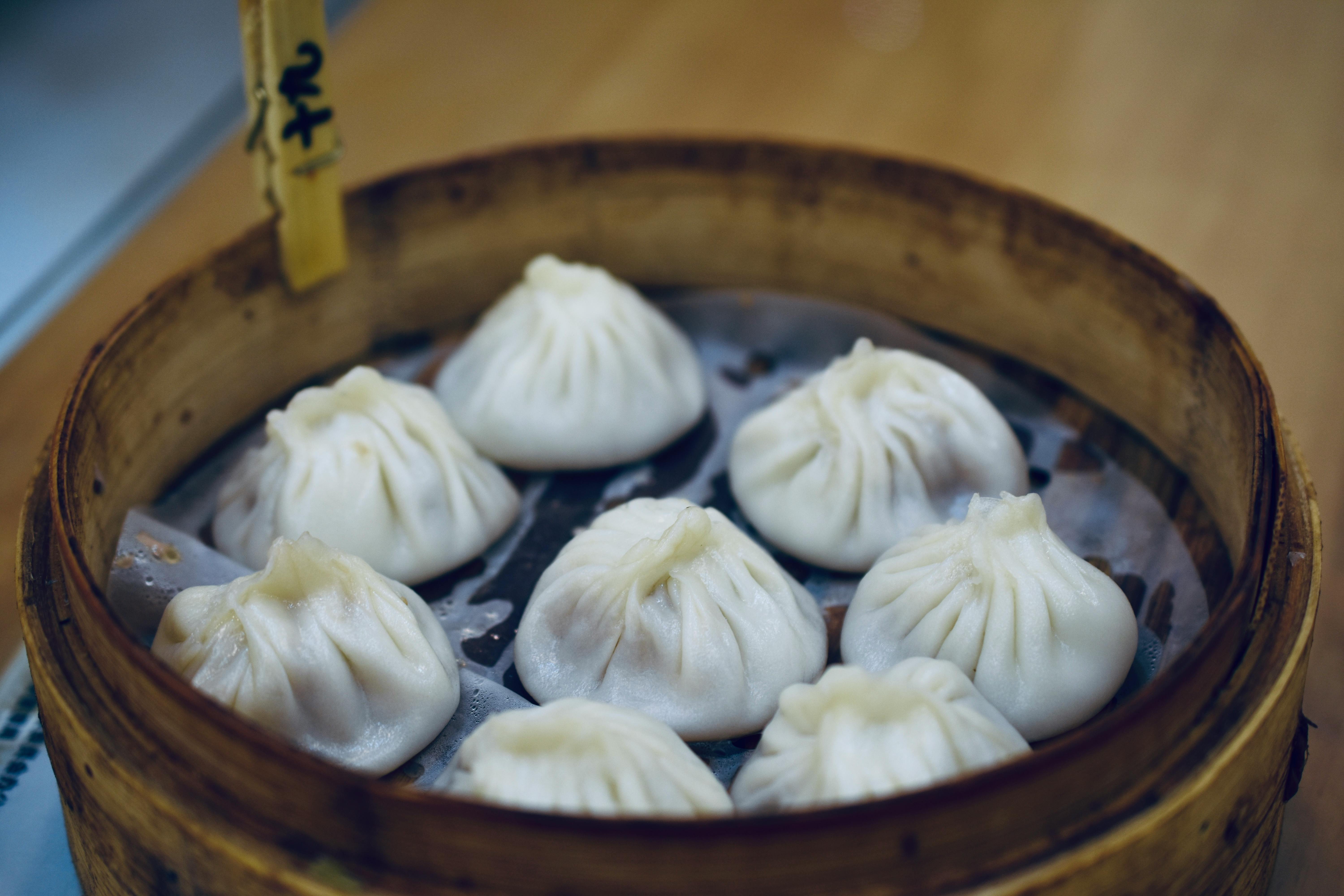
Sheng Jian Bao
The diets react (see scores below)
Common Ingredients
- pork
- flour
- yeast
- ginger
- scallions
- soy sauce
- sesame seeds
- gelatin stock
Specific recipes may vary.
Incompatible with 9 of 11 diets
Diet Ratings
Sheng Jian Bao are pan-fried soup dumplings with wheat flour dough as the primary wrapper, made with yeast — both fundamental keto violations. A standard serving of 4-6 pieces contains roughly 30-50g of net carbs from the flour-based wrapper alone, easily exceeding or maxing out an entire day's keto carb budget. While the pork filling with gelatin stock, ginger, and scallions is otherwise keto-friendly, the dish cannot be separated from its high-carb wheat dough shell in its traditional form. There is no meaningful portion size that makes this compatible with ketosis.
Sheng Jian Bao contains multiple animal-derived ingredients that make it entirely incompatible with a vegan diet. The primary protein is pork, a direct animal product. The gelatin stock (used to create the signature soup filling when the bao steams) is derived from boiled animal bones and connective tissue. These two ingredients alone are sufficient to disqualify this dish, and there is no ambiguity in the vegan community about either.
Sheng Jian Bao is fundamentally incompatible with the paleo diet. The dish is built around a wheat flour dough wrapper leavened with yeast — wheat flour being one of the most clearly excluded foods in paleo. Soy sauce introduces both soy (a legume) and typically added salt and preservatives, adding two more violations. Sesame seeds, while seeds, are borderline due to their use as a seed oil source, though whole sesame seeds are less problematic than sesame oil. The paleo-compliant ingredients — pork, ginger, scallions, and gelatin stock — are entirely acceptable, but they represent a minority of the dish's composition. The core structural elements (wheat dough, soy sauce) make this dish a clear avoid with no meaningful path to modification while retaining its identity as Sheng Jian Bao.
Sheng Jian Bao is a pan-fried pork dumpling that conflicts with Mediterranean diet principles on multiple fronts. The primary protein is pork (red meat), which should be limited to only a few times per month. The wrapper is made from refined white flour, a refined grain discouraged in favor of whole grains. The dish is pan-fried, typically in vegetable oil rather than olive oil, and the overall preparation style — processed filling, refined dough, high sodium soy sauce — is far removed from the plant-forward, minimally processed Mediterranean approach. There are virtually no vegetables, legumes, or whole food plant components. This dish is not part of any Mediterranean culinary tradition and contradicts the diet's core principles.
Sheng Jian Bao is a pan-fried pork dumpling that is fundamentally incompatible with the carnivore diet. The dish is built around a wheat flour dough wrapper leavened with yeast — both strictly plant-derived and excluded from carnivore. The filling, while containing pork and gelatin stock (animal-derived positives), is heavily seasoned with ginger, scallions, and soy sauce — all plant-based ingredients. Sesame seeds add further plant content. The ratio of animal to plant ingredients is poor, and the flour wrapper dominates the dish structurally. While the pork filling and gelatin stock are carnivore-compatible components, they cannot redeem a dish whose primary vehicle is a grain-based bread product.
Sheng Jian Bao are pan-fried soup dumplings — a classic bao bun made with wheat flour dough. Flour (wheat) is a grain and is explicitly excluded on Whole30. Additionally, soy sauce contains soy (a legume) and typically wheat, both of which are excluded. The dish is also a filled dumpling/bun, which falls squarely into the 'no recreating baked goods/bread/wraps' rule (Rule 4 explicitly prohibits biscuits, wraps, and similar dough-based items). There is no compliant workaround for this dish — the wheat flour dough is structurally essential and cannot be substituted while retaining the nature of the dish.
Sheng Jian Bao are pan-fried soup dumplings with multiple high-FODMAP ingredients that make them clearly unsuitable during the elimination phase. The primary issue is the wheat flour wrapper, which contains significant fructans — wheat is one of the most problematic FODMAP foods and cannot be mitigated by portion control at a standard serving of 3-4 buns. Scallion bulbs (white parts) are also high in fructans, and while scallion green tops are low-FODMAP, traditional recipes use the whole scallion or the white bulb for flavor. Soy sauce in small amounts is generally considered low-FODMAP, and ginger, pork, sesame seeds, and gelatin stock are all low-FODMAP. However, the wheat flour dough alone is sufficient to classify this dish as high-FODMAP at any standard serving size. This is not a borderline case — wheat-based dumplings are a clear avoid during elimination.
Sheng Jian Bao (pan-fried pork soup dumplings) are incompatible with DASH diet principles on multiple fronts. The primary protein is pork, typically fatty ground pork, which is high in saturated fat — a nutrient DASH explicitly limits. The gelatin stock (aspic) that creates the soup filling is commonly made from high-sodium broth. Soy sauce adds significant sodium, and a typical serving of 4-6 dumplings can easily contain 800-1,400mg of sodium, a substantial portion of even the standard DASH daily limit of 2,300mg. The dough is made from refined white flour, not a whole grain. The pan-frying method adds additional fat. Collectively, the high saturated fat from fatty pork, high sodium from soy sauce and gelatin stock, refined carbohydrate wrapper, and frying method make this dish poorly aligned with DASH guidelines.
Sheng Jian Bao (pan-fried pork dumplings) present several Zone Diet challenges. The wrapper is made from refined white flour dough (leavened with yeast), which is a high-glycemic carbohydrate — classified as 'unfavorable' in Zone terminology. The pork filling, while providing protein, is typically ground fatty pork rather than lean protein, increasing saturated fat content beyond Zone ideals. The gelatin stock (aspic) adds minimal macronutrient concern but contributes to the rich, savory profile. The pan-frying process adds additional fat, likely from oils that may not be monounsaturated. On the positive side, ginger and scallions provide polyphenols aligned with Sears' anti-inflammatory focus, and soy sauce adds flavor with minimal caloric impact. As a snack or meal component, 1-2 pieces could technically be portioned into a Zone block framework, but the carb-to-protein ratio skews heavily toward carbohydrates (flour-heavy wrapper vs. modest meat filling), making Zone balance difficult without significant dietary adjustment. The high-glycemic flour wrapper and fatty pork are the primary obstacles.
Sheng Jian Bao (pan-fried pork soup dumplings) presents a mixed anti-inflammatory profile. On the positive side, ginger is a well-established anti-inflammatory spice with gingerol compounds, scallions provide quercetin and organosulfur compounds, and sesame seeds offer some lignans and minerals. Soy sauce in small quantities is not particularly problematic. However, the dominant concerns are: (1) Pork as the primary protein — red meat in anti-inflammatory frameworks is in the 'limit' category due to arachidonic acid and saturated fat content, especially in pork belly or fattier cuts typically used in Sheng Jian Bao filling. (2) Refined white flour bun wrapper — a refined carbohydrate with minimal fiber or nutritional benefit, contributing to glycemic load. (3) Pan-frying method — typically uses significant oil (often in vegetable/seed oils), adding potential omega-6 load from cooking. (4) High sodium content from soy sauce and gelatin stock. The dish is not inherently terrible — ginger and scallions provide some benefit — but it's fundamentally a refined carb wrapped around fatty red meat and fried, placing it squarely in the 'caution' zone rather than outright avoidance. Occasional consumption is acceptable; regular consumption is not aligned with anti-inflammatory principles.
Sheng Jian Bao are pan-fried pork soup dumplings — a combination of several problematic elements for GLP-1 patients. The pork filling is typically fatty (ground pork with significant fat content to create the juicy interior), the dough wrapper is made from refined white flour with low fiber and nutrient density, and the pan-frying cooking method adds a substantial grease load. The gelatin stock (which melts into soup inside the dumpling) further increases fat content from pork-based broth. GLP-1 patients already experience slowed gastric emptying, and a fatty, doughy, pan-fried food like this is likely to worsen nausea, bloating, and reflux. Protein yield per serving is modest relative to the fat and refined carbohydrate load — a typical serving of 4-6 pieces delivers meaningful fat and simple carbs before meaningful protein. The sesame seeds, ginger, and scallions are fine, but they don't meaningfully offset the core nutritional concerns. This is a calorie-dense, fat-heavy, low-fiber snack that offers poor nutrient density per calorie — exactly what GLP-1 patients should minimize.
Some GLP-1 nutrition practitioners note that pork does provide complete protein and that small-portion enjoyment of culturally meaningful foods can support long-term adherence; a 2-piece tasting portion might be tolerated by patients without significant GI sensitivity. However, the pan-fried preparation and fatty pork filling make this harder to defend clinically compared to steamed dumplings with leaner fillings.
*See how scores were generated at our methodology page.
Nutritional profile
Six traits that cut across every diet.
Fiber & Plants
How much whole-plant food and fiber it delivers.
Healthy Fats
The quality of its fats (unsaturated, omega-3).
Whole / Unprocessed
How close it is to its natural, unprocessed form.
Gut Gentle
How easy it is on digestion (low FODMAP, few irritants).
Low Glycemic
How little it spikes your blood sugar.
Protein Density
How much protein it packs per calorie.
Controversy Index
Higher controversy = more disagreement between diets.
Diet-Specific Tips
 Zone — 4/10
View tips
- Refined white flour wrapper is high-glycemic — an 'unfavorable' carbohydrate in Zone terminology
- Ground pork filling is typically fatty, not lean protein — suboptimal for Zone's 30% protein-from-lean-sources goal
- Pan-frying adds saturated or potentially omega-6-heavy cooking fat
- Carb-to-protein ratio in the dumpling skews heavily toward carbohydrates, making Zone balance difficult
- Ginger and scallions offer polyphenol benefit aligned with Sears' anti-inflammatory principles
- Small portion (1-2 pieces) could be incorporated cautiously into a Zone snack with careful block accounting
 Anti-Inflammatory — 4/10
View tips
- Pork filling: red meat in 'limit' category — fatty cuts high in saturated fat and arachidonic acid
- Refined white flour wrapper: pro-inflammatory refined carbohydrate, low fiber
- Pan-frying: adds omega-6 load depending on cooking oil used
- Ginger: well-supported anti-inflammatory spice (gingerols)
- Scallions: quercetin and organosulfur compounds offer mild anti-inflammatory benefit
- Sesame seeds: small anti-inflammatory contribution via lignans
- High sodium: not directly inflammatory but a dietary concern
- Gelatin stock: collagen-rich, neutral to mildly beneficial