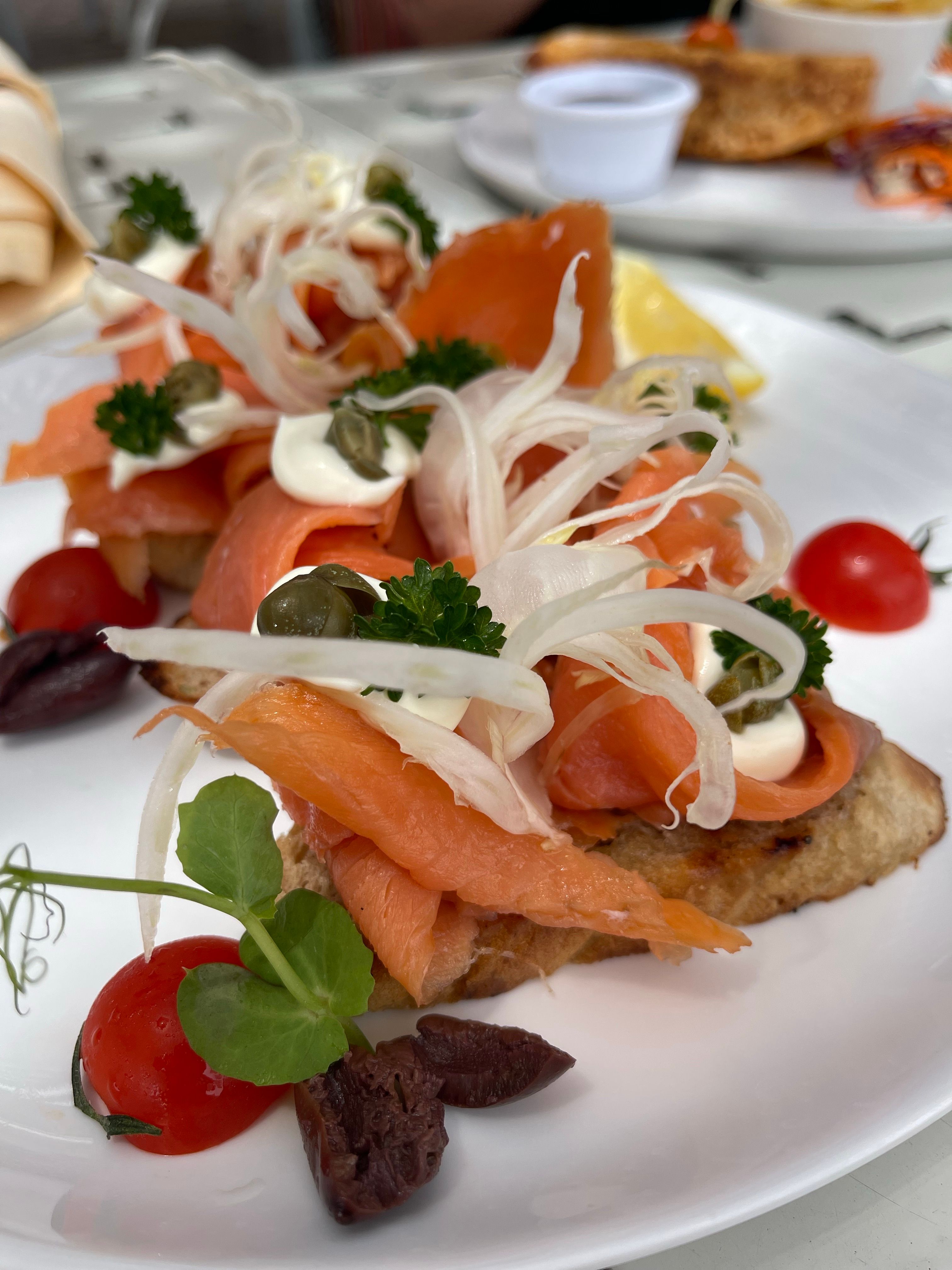
Photo: Jhed Bayos-Lopez / Pexels
The diets react (see scores below)
Common Ingredients
- fish
- soy sauce
- sugar
- shaoxing wine
- ginger
- scallions
- star anise
- five spice
Specific recipes may vary.
Incompatible with 6 of 11 diets
Diet Ratings
Chinese Smoked Fish is fundamentally incompatible with ketogenic diet principles due to its marinade/sauce composition. Sugar is a primary ingredient used in significant quantities to create the characteristic glaze and flavor profile, directly adding high-glycemic carbohydrates. Soy sauce contributes additional carbs, and Shaoxing wine adds fermentable sugars. While the fish itself is an excellent keto protein source, the combined marinade ingredients likely push a standard serving well above acceptable net carb thresholds. This is not a portion-control situation — the sugar is integral to the dish's identity and cannot be reduced without fundamentally changing it.
Smoked Fish contains fish as its primary protein, which is an animal product and therefore unequivocally excluded from a vegan diet. All other ingredients (soy sauce, sugar, shaoxing wine, ginger, scallions, star anise, five spice) are plant-based, but the presence of fish makes this dish entirely incompatible with veganism. There is no meaningful debate within the vegan community about whether fish is acceptable.
While fish itself is a cornerstone paleo food, this dish contains multiple non-paleo ingredients that disqualify it. Soy sauce is a soy-based, heavily processed product (a legume derivative) and is explicitly excluded from paleo. Sugar is refined and excluded. Shaoxing wine is a grain-based alcohol (fermented rice/wheat), making it a processed grain product. The remaining ingredients — ginger, scallions, star anise, and five spice — are paleo-friendly herbs and spices, but the three non-compliant ingredients (soy sauce, sugar, Shaoxing wine) are foundational to the dish's flavor profile and cannot simply be omitted without fundamentally changing the recipe.
Fish is a Mediterranean diet staple, strongly encouraged 2-3 times weekly. However, this Chinese preparation introduces several non-Mediterranean elements: soy sauce adds significant sodium and is not a traditional Mediterranean ingredient; added sugar directly contradicts Mediterranean principles of minimal added sugars; Shaoxing wine, star anise, and five spice are outside the Mediterranean flavor profile. The cooking method (smoking/frying then braising) and the high sugar-soy glaze push this away from the simple, olive oil-based preparations typical of Mediterranean fish dishes. The core ingredient (fish) is excellent, but the preparation significantly modifies its Mediterranean compatibility, particularly due to added sugar and high sodium content.
Some Mediterranean diet interpreters focus primarily on food categories rather than preparation methods, arguing that fish — regardless of seasoning — fulfills the important omega-3 and lean protein role central to the diet. From this perspective, the fish itself could be viewed more favorably, with the non-Mediterranean spices and sauces considered minor deviations rather than disqualifying factors.
While the base ingredient (fish) is carnivore-approved, this Chinese smoked fish dish is heavily laden with non-carnivore ingredients that disqualify it entirely. Soy sauce is a fermented plant-based product (soybeans and wheat), sugar is a processed plant-derived sweetener, Shaoxing wine is a grain-based alcohol, and ginger, scallions, star anise, and five spice are all plant-derived seasonings. The fish itself represents only a fraction of the overall ingredient profile, and the dish as prepared is fundamentally incompatible with carnivore principles. Even the most lenient carnivore practitioners who allow spices and coffee would draw the line at soy sauce and sugar as deliberate, substantial ingredients rather than incidental additions.
This dish contains multiple excluded ingredients. Soy sauce is a soy product (legume-derived) and is explicitly excluded from Whole30. Sugar is an added sugar, which is explicitly excluded. Shaoxing wine is an alcoholic beverage, which is also excluded. The fish, ginger, scallions, star anise, and five spice are all compliant, but the combination of three excluded ingredients (soy sauce, sugar, and Shaoxing wine) makes this dish clearly non-compliant.
Chinese smoked fish contains several ingredients that require careful consideration. Fish itself is low-FODMAP and protein-safe. However, the marinade/sauce combines multiple potentially problematic ingredients: soy sauce is generally low-FODMAP in small amounts (2 tablespoons) but adds up; sugar is low-FODMAP; Shaoxing wine is typically low-FODMAP in cooking amounts; ginger is low-FODMAP at standard doses (1 teaspoon fresh); scallions (green tops only) are low-FODMAP but white parts are high in fructans; star anise is low-FODMAP in small culinary amounts; and five spice powder often contains high-FODMAP ingredients. Five spice is the main concern — it typically contains star anise, cloves, cinnamon, Sichuan pepper, and fennel seeds, with some blends adding garlic or onion powder, which are high-FODMAP. Even without added garlic/onion, five spice is used in concentrated amounts in marinades. The cumulative effect of multiple moderate-FODMAP ingredients in a marinade that the fish absorbs is a practical concern. Additionally, scallion white parts are almost certainly used in preparation even if green parts are intended. The dish is likely manageable in small portions but warrants caution due to ingredient stacking and variability in five spice blends.
Monash University rates individual spices like star anise as low-FODMAP in typical culinary amounts, but clinical FODMAP practitioners often advise caution with complex spice blends like five spice during elimination due to unknown FODMAP contributions from blend variations and cumulative ingredient loading. The use of scallion whites versus greens in preparation also varies by recipe and is rarely controlled in restaurant settings.
Chinese smoked fish (熏鱼) is a dish where fish is marinated in soy sauce, sugar, and Shaoxing wine, then deep-fried and soaked in a sweetened soy-based sauce. While fish itself is a DASH-approved lean protein, this preparation creates multiple DASH conflicts: soy sauce is extremely high in sodium (one tablespoon contains ~900-1,000mg), making this dish likely to deliver 800-1,500mg of sodium per serving — a significant portion of or exceeding the daily DASH sodium limit in a single snack. Additionally, the added sugar contributes to sweets/added sugar intake that DASH limits, and the deep-frying method (typical for this dish) adds unhealthy fat. The combination of very high sodium from soy sauce, added sugar, and a high-fat cooking method makes this incompatible with DASH dietary goals despite its fish base.
Chinese smoked fish offers a solid Zone-friendly protein base (fish is lean, omega-3 rich, and highly favorable in Zone methodology), but the preparation introduces meaningful concerns. Sugar is a direct ingredient used in the marinade/glaze, raising the glycemic load and displacing the carbohydrate blocks with nutritionally empty, high-GI content rather than favorable low-GI vegetables or fruits. Soy sauce adds sodium and small amounts of carbohydrate. Shaoxing wine contributes a modest sugar/carb load. The spices (ginger, scallions, star anise, five spice) are Zone-neutral or mildly positive due to anti-inflammatory polyphenol content. The core issue is that the sugar in the preparation makes it difficult to fit cleanly into a Zone snack without pushing the carb block toward unfavorable territory. As a snack component, portions would need to be small to limit sugar intake. If paired with low-GI vegetables and a small amount of monounsaturated fat, it can work within Zone ratios — but it requires careful portioning and awareness of the added sugar. The fish itself would score 9; the preparation drags it down to the caution range.
Some Zone practitioners would treat this more leniently, noting that in small snack portions the absolute sugar content from the marinade may be modest (marinade is not fully absorbed), and that the omega-3-rich fish protein is such a high-value Zone food that it outweighs the preparation concerns. Dr. Sears' anti-inflammatory framework strongly favors fatty fish for EPA/DHA content, which could tip some assessments toward a soft approve at score 6 if portion control is maintained.
Chinese smoked fish (熏鱼) presents a mixed anti-inflammatory profile. On the positive side, the dish is built around fish — an excellent source of omega-3 fatty acids with well-documented anti-inflammatory effects — and features several strongly anti-inflammatory spices: ginger (gingerols), star anise (anethole), and five spice blend (cloves, cinnamon, fennel, star anise, Sichuan pepper all carry antioxidant and anti-inflammatory compounds). Scallions and ginger add polyphenols and bioactive compounds. However, the preparation introduces meaningful concerns. Sugar is a primary ingredient in the marinade/glaze, often used in significant quantities to create the characteristic caramelized coating — added sugar is a clear pro-inflammatory factor. Soy sauce contributes high sodium, and while traditionally fermented soy has some beneficial properties, the sodium load is a concern for systemic inflammation. Shaoxing wine adds alcohol, which is on the 'limit' list outside of red wine. The smoking process itself, while traditional, can produce polycyclic aromatic hydrocarbons (PAHs), which are associated with oxidative stress. The fish base and spice profile pull this dish toward anti-inflammatory territory, but the added sugar, high sodium, alcohol, and smoking method temper that significantly. Best consumed occasionally rather than regularly.
Some anti-inflammatory practitioners would rate this more favorably, arguing the omega-3-rich fish base and potent spice blend dominate the profile, and that small amounts of sugar and alcohol in a marinade are clinically insignificant — Dr. Weil's framework generally allows moderate sugar and alcohol in culinary contexts. Conversely, stricter anti-inflammatory protocols (particularly those addressing autoimmune or metabolic conditions) would flag the added sugar and smoking-derived compounds more severely, potentially pushing this toward 'avoid.'
Chinese smoked fish (熏鱼) is typically made from firm white fish or carp that is first marinated in soy sauce, sugar, Shaoxing wine, and aromatics, then shallow- or deep-fried before being soaked in a sweet-savory braising liquid. The fish itself provides solid lean protein and omega-3 fatty acids, which are GLP-1 positives. However, two significant concerns arise: (1) the dish typically involves frying as a cooking step, adding fat and making it harder to digest for GLP-1 patients with slowed gastric emptying; and (2) the sugar content in both the marinade and finishing sauce is meaningful, contributing empty calories and a glycemic load that works against the metabolic goals of GLP-1 therapy. Sodium from soy sauce is also high, which matters for fluid retention and blood pressure. The spice profile (ginger, star anise, five spice) is generally well-tolerated and may even support digestion. As a small snack portion the fish protein is a genuine benefit, but the frying method and sugar load prevent a full approval.
Some GLP-1-focused dietitians may rate this more favorably if the fish is steamed or baked rather than fried, arguing the protein and omega-3 content justify inclusion as an occasional snack in small portions; others will flag the frying step and added sugar as categorically problematic given the medication's GI sensitivity and the need for nutrient-dense, low-empty-calorie foods.
*See how scores were generated at our methodology page.
Nutritional profile
Six traits that cut across every diet.
Fiber & Plants
How much whole-plant food and fiber it delivers.
Healthy Fats
The quality of its fats (unsaturated, omega-3).
Whole / Unprocessed
How close it is to its natural, unprocessed form.
Gut Gentle
How easy it is on digestion (low FODMAP, few irritants).
Low Glycemic
How little it spikes your blood sugar.
Protein Density
How much protein it packs per calorie.
Controversy Index
Higher controversy = more disagreement between diets.
Diet-Specific Tips
 Mediterranean — 5/10
View tips
- Fish is a Mediterranean diet staple — core ingredient is positive
- Added sugar in the marinade/glaze contradicts Mediterranean principles
- Soy sauce is high in sodium and not a traditional Mediterranean ingredient
- No olive oil; preparation style is entirely non-Mediterranean
- Ginger and scallions are vegetables and broadly acceptable
- Star anise and five spice are flavor-neutral from a health standpoint but non-traditional
- Served as a snack — portion size may mitigate sugar/sodium concerns
 Low-FODMAP — 5/10
View tips
- Fish is inherently low-FODMAP and safe
- Five spice powder may contain garlic or onion powder depending on the blend — a significant FODMAP risk
- Scallion white parts (fructans) likely used in preparation alongside green parts
- Soy sauce is low-FODMAP at ≤2 tablespoons but marinade concentration is uncertain
- Shaoxing wine and ginger are generally safe at culinary doses
- Cumulative FODMAP stacking from multiple moderate-risk ingredients
- Portion size of the dish matters — a small serving is safer than a large one
 Zone — 5/10
View tips
- Fish is a top-tier Zone protein: lean, omega-3 rich, highly favorable
- Added sugar in marinade introduces unfavorable high-GI carbohydrates
- Soy sauce adds sodium and minor carbohydrate load
- Shaoxing wine contributes modest sugar/carb content
- Ginger and five spice provide anti-inflammatory polyphenols, aligning with Zone's anti-inflammatory focus
- As a snack, portion control is critical to keep sugar from dominating the carb block
- Must be paired with low-GI vegetables and monounsaturated fat to complete a balanced Zone snack
 Anti-Inflammatory — 5/10
View tips
- Fish provides omega-3 fatty acids with strong anti-inflammatory evidence
- Ginger, star anise, and five spice blend contribute antioxidant and anti-inflammatory polyphenols
- Added sugar in marinade/glaze is pro-inflammatory
- High sodium from soy sauce may contribute to inflammatory markers
- Shaoxing wine adds alcohol (not red wine — on the 'limit' list)
- Smoking process can generate PAHs linked to oxidative stress
- Overall: beneficial base ingredients undermined by pro-inflammatory preparation elements
 GLP-1 Friendly — 5/10
View tips
- Good lean protein source from fish supporting the 100-120g daily protein target
- Typically involves a frying step which increases fat content and worsens GI tolerability on GLP-1 medications
- Significant added sugar in marinade and braising liquid contributes empty calories and glycemic load
- High sodium from soy sauce warrants attention
- Aromatics (ginger, star anise, five spice) are generally GI-neutral or mildly beneficial
- Small snack portion limits total fat and sugar exposure but also limits protein yield
- Omega-3 fatty acids from fish are a dietary positive for GLP-1 patients