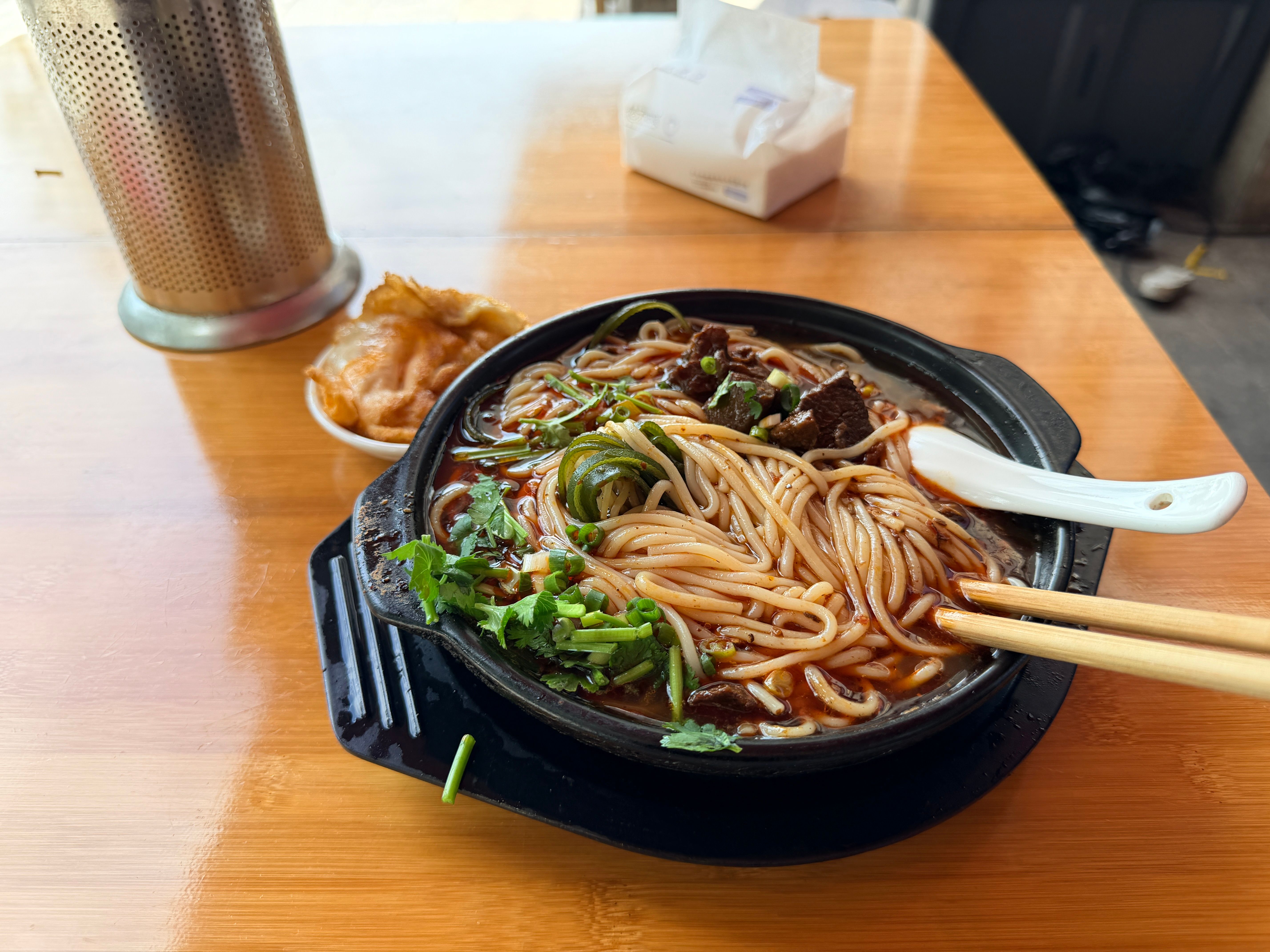
Photo: yachao liu / Pexels
Chinese
Chongqing Xiao Mian
The diets react (see scores below)
Common Ingredients
- wheat noodles
- chili oil
- sichuan peppercorns
- preserved vegetables
- garlic
- scallions
- peanuts
- soy sauce
- sesame paste
Specific recipes may vary.
Incompatible with 7 of 11 diets
Diet Ratings
Chongqing Xiao Mian is built on wheat noodles, which are a grain-based, high-carbohydrate food fundamentally incompatible with ketosis. A standard serving of wheat noodles (approximately 200g cooked) delivers roughly 40-55g of net carbs on its own, immediately exceeding or maxing out the entire daily keto carb budget. The remaining ingredients — chili oil, Sichuan peppercorns, garlic, peanuts, sesame paste — are largely keto-friendly or neutral, but they cannot redeem the dish because the noodle base is non-negotiable to the dish's identity. There is no realistic portion size of this dish that would keep a person in ketosis.
As listed, all ingredients in this Chongqing Xiao Mian are plant-based: wheat noodles, chili oil, Sichuan peppercorns, preserved vegetables, garlic, scallions, peanuts, soy sauce, and sesame paste are all derived from plants with no animal products present. The dish is relatively whole-food-forward with aromatic and fermented components. However, two caveats apply: (1) Traditional Chongqing Xiao Mian is very commonly served with a pork- or beef-based broth or topped with minced meat in restaurant settings — this listing specifies no broth or meat, so it is evaluated as given. (2) Preserved vegetables (ya cai or zha cai) are fermented plant-based ingredients and are vegan-compliant. Sesame paste is fully plant-derived. The score reflects a high-quality, flavorful plant-based dish with some processing involved in the chili oil and preserved vegetables.
Some whole-food plant-based advocates may flag refined chili oil and heavily salted preserved vegetables as nutritionally suboptimal processed ingredients, though these do not affect vegan compliance. Additionally, real-world versions of this dish almost universally include animal-derived broths or toppings, so diners ordering this dish should verify the plant-based preparation explicitly.
Chongqing Xiao Mian is fundamentally incompatible with the paleo diet. The dish is built on wheat noodles, a grain explicitly excluded from paleo. Beyond the primary ingredient, soy sauce contains both wheat and soy (a legume), adding a second grain and legume violation. Sesame paste is derived from sesame seeds pressed into an oil-like paste and sesame oil is a seed oil on the exclusion list. Preserved vegetables typically contain added salt and often preservatives or sugar. Peanuts are legumes, not nuts, and are excluded. The chili oil's base oil needs scrutiny — most commercial chili oils use soybean or other seed oils. The only paleo-compliant ingredients in this dish are Sichuan peppercorns, garlic, and scallions. With multiple core violations across grains, legumes, seed oils, and processed/preserved foods, this dish scores at the very bottom of the scale.
Chongqing Xiao Mian contains several elements that partially align with Mediterranean principles but also raises concerns. On the positive side, the dish includes plant-based ingredients like garlic, scallions, peanuts, and sesame paste (analogous to tahini, a Mediterranean staple), along with preserved vegetables. Chili oil functions similarly to olive oil as a flavor-forward fat, though it is not olive oil. The main concerns are the refined wheat noodles (not whole grain) and the high sodium content from soy sauce and preserved vegetables, both of which conflict with Mediterranean guidelines favoring whole grains and minimally processed ingredients. The absence of animal protein keeps it plant-forward, but the processed condiments and refined noodles prevent a full approval.
Some modern Mediterranean diet interpreters argue that noodle-based dishes with abundant plant ingredients, legumes, and nuts (peanuts, sesame) can fit within a flexible, globally-adapted Mediterranean pattern, especially given sesame paste's resemblance to tahini. However, stricter clinical guidelines would flag the refined noodles and high-sodium processed condiments as problematic.
Chongqing Xiao Mian is entirely plant-based and grain-based with zero animal-derived ingredients. Every single component — wheat noodles, chili oil, Sichuan peppercorns, preserved vegetables, garlic, scallions, peanuts, soy sauce, and sesame paste — is explicitly excluded on the carnivore diet. Wheat noodles are a grain product, peanuts are legumes, soy sauce is a fermented legume/grain product, sesame paste is a seed-based condiment, and all the aromatics and vegetables are plant foods. There is no animal protein, no animal fat, and no animal-derived ingredient of any kind. This dish is fundamentally incompatible with carnivore principles at every level.
Chongqing Xiao Mian contains multiple clearly excluded ingredients. Wheat noodles are a grain product and explicitly excluded from Whole30. Soy sauce is a soy-based product (legume) and also excluded. Peanuts are legumes and excluded. Sesame paste (tahini) may be compliant on its own, but preserved vegetables often contain added sugar or sulfites (though sulfites are now allowed per 2024 rules). The combination of wheat noodles, soy sauce, and peanuts alone makes this dish firmly non-compliant — three separate excluded categories are violated.
Chongqing Xiao Mian contains multiple high-FODMAP ingredients that make it incompatible with the elimination phase. Wheat noodles are the primary concern — wheat is high in fructans and a core FODMAP trigger. Garlic is one of the highest-FODMAP foods tested by Monash University, containing significant fructans even in very small amounts. Scallions (the green tops are low-FODMAP, but the white bulb portions commonly used in Chinese cooking are high in fructans). Preserved vegetables (ya cai or zha cai) often contain garlic and onion as part of their pickling base, adding further fructan load. The combination of wheat noodles plus garlic alone is sufficient to classify this dish as high-FODMAP. Sichuan peppercorns, chili oil, sesame paste, soy sauce, and peanuts are generally low-FODMAP in standard portions and are not the concern here.
Chongqing Xiao Mian is a high-sodium, high-fat dish that conflicts with core DASH principles on multiple fronts. Soy sauce is one of the saltiest condiments (roughly 900–1,000mg sodium per tablespoon), and preserved vegetables (ya cai/zha cai) are heavily salt-cured, together likely pushing a single serving well past the DASH daily sodium ceiling of 1,500–2,300mg. Chili oil adds significant saturated and/or refined fat, and sesame paste contributes additional fat and calories. The wheat noodles are typically refined (not whole grain), offering little fiber benefit. While garlic, scallions, and peanuts have DASH-friendly properties (potassium, magnesium, healthy fats), they are insufficient to offset the dominant sodium and fat load. This dish as commonly prepared is fundamentally incompatible with the DASH eating plan.
Chongqing Xiao Mian is a spicy noodle dish that presents significant Zone challenges but isn't categorically unredeemable. The primary macronutrient concern is the wheat noodle base: refined wheat noodles are a high-glycemic carbohydrate that Sears classifies as 'unfavorable,' spiking insulin and disrupting the Zone's eicosanoid balance. A typical serving carries a large carb block load with minimal protein offset, throwing the 40/30/30 ratio badly out of balance. The dish has no primary protein listed, meaning it lacks the lean protein anchor Zone meals require (~25g per meal). On the fat side, chili oil and sesame paste introduce omega-6-heavy fats rather than the preferred monounsaturated profile — though chili oil typically contains some beneficial polyphenols, and peanuts provide partial monounsaturated content. Soy sauce adds sodium but negligible macronutrient disruption. Preserved vegetables and scallions are low-glycemic positives. Garlic and Sichuan peppercorns contribute polyphenols aligned with Sears' anti-inflammatory emphasis. The dish could be salvaged for Zone purposes by reducing noodle portion significantly, adding a lean protein (tofu, egg whites, shrimp), and using a measured amount of the sauce components — but as traditionally served, the carb-to-protein imbalance and omega-6 fat profile make it a challenging Zone food requiring substantial modification.
Some Zone practitioners applying Sears' later writings (particularly 'The Mediterranean Zone') take a more generous view of dishes with strong polyphenol content — the chili oil, Sichuan peppercorns, garlic, and sesame paste all contribute meaningful polyphenols. Additionally, if whole wheat or lower-GI noodles are substituted and a protein source is added, the dish can be restructured into a reasonable Zone meal. The unfavorable carb classification of wheat noodles is not an absolute ban in Zone — it's a portioning challenge.
Chongqing Xiao Mian is a spicy noodle dish with a genuinely mixed anti-inflammatory profile. On the positive side, it contains several strongly anti-inflammatory ingredients: Sichuan peppercorns and chili oil provide capsaicin and piperine-related compounds with documented anti-inflammatory effects; garlic contains allicin and organosulfur compounds that reduce inflammatory markers; scallions offer quercetin and flavonoids; peanuts provide resveratrol, polyphenols, and monounsaturated fats; and sesame paste (tahini) delivers lignans, antioxidants, and anti-inflammatory fatty acids. The broth base is relatively light compared to cream-based soups. However, the dish has notable concerns: wheat noodles are refined carbohydrates with a moderate glycemic load and minimal fiber, which is a neutral-to-mild pro-inflammatory factor; chili oil is typically made with a seed oil base (often soybean or canola) which many anti-inflammatory protocols flag for high omega-6 content; preserved vegetables (ya cai or zha cai) are high in sodium and often contain additives, which can be mildly inflammatory at high intake; and soy sauce contributes significant sodium and is typically highly processed. The dish lacks any meaningful omega-3 source and has no protein listed. Overall, the anti-inflammatory spices partially offset the refined carbs and processed condiments, but this is not a dish that meaningfully advances anti-inflammatory goals — it's acceptable occasionally in a broader anti-inflammatory dietary pattern.
Some anti-inflammatory practitioners, particularly those following Dr. Weil's framework, would rate this more favorably given the concentration of anti-inflammatory spices (garlic, chili, Sichuan peppercorn) and the absence of red meat or saturated fat — the capsaicin and organosulfur content alone are notable. Conversely, stricter low-glycemic or autoimmune protocol (AIP) adherents would rate this more harshly, flagging the refined wheat noodles, seed oil-based chili oil, and high-sodium preserved vegetables as collectively pro-inflammatory.
Chongqing Xiao Mian is a problematic dish for GLP-1 patients on multiple fronts. The base is refined wheat noodles — high in refined carbohydrates, low in fiber, and low in protein, offering poor nutrient density per calorie. The dish has no meaningful protein source listed. The flavor profile is built on chili oil and Sichuan peppercorns, making it intensely spicy and high in fat from the oil — a combination likely to worsen GLP-1 side effects including nausea, reflux, and GI discomfort. Sesame paste adds additional fat. Peanuts contribute some protein and unsaturated fat but in quantities too small to meaningfully offset the dish's deficits. Preserved vegetables may contribute sodium and some fiber but not at clinically relevant levels. The overall profile is: refined carbs dominant, near-zero protein, high fat from chili oil and sesame paste, and aggressively spicy — hitting three of the four major 'avoid' triggers simultaneously.
Some GLP-1 nutrition practitioners may note that small portions of noodle dishes can fit within a reduced-calorie framework if appetite suppression is strong, and that peanuts and sesame paste do provide unsaturated fats. However, the spice intensity and fat load in the traditional preparation make individual GI tolerance the primary clinical concern, with most GLP-1 patients reporting worsened nausea and reflux with high-chili meals.
*See how scores were generated at our methodology page.
Nutritional profile
Six traits that cut across every diet.
Fiber & Plants
How much whole-plant food and fiber it delivers.
Healthy Fats
The quality of its fats (unsaturated, omega-3).
Whole / Unprocessed
How close it is to its natural, unprocessed form.
Gut Gentle
How easy it is on digestion (low FODMAP, few irritants).
Low Glycemic
How little it spikes your blood sugar.
Protein Density
How much protein it packs per calorie.
Controversy Index
Higher controversy = more disagreement between diets.
Diet-Specific Tips
 Vegan — 5/10
View tips
- All listed ingredients are fully plant-derived
- No animal products, dairy, eggs, or meat present
- Wheat noodles, sesame paste, soy sauce, and peanuts provide plant protein and fat
- Traditional restaurant versions frequently include pork broth or meat toppings — preparation must be verified
- Preserved vegetables (ya cai/zha cai) are fermented plant-based and vegan-compliant
- Chili oil is plant-based but processed; sesame paste is minimally processed whole food
 Mediterranean — 5/10
View tips
- Refined wheat noodles instead of whole grains — conflicts with Mediterranean whole grain preference
- Peanuts and sesame paste provide heart-healthy fats and plant protein, aligned with Mediterranean principles
- Garlic, scallions, and preserved vegetables add plant diversity
- Chili oil is not olive oil — a non-Mediterranean fat source
- High sodium from soy sauce and preserved vegetables conflicts with Mediterranean dietary patterns
- No animal protein keeps the dish plant-forward
- Overall dish is moderately processed due to condiment-heavy sauce base
 Zone — 4/10
View tips
- Refined wheat noodles are high-glycemic 'unfavorable' carbohydrates in Zone terminology
- No protein source listed — Zone requires ~25g lean protein per meal for macro balance
- Chili oil and sesame paste are omega-6-dominant fats, not preferred monounsaturated sources
- Peanuts offer partial monounsaturated fat credit
- Garlic, Sichuan peppercorns, and chili oil provide polyphenols aligned with Sears' anti-inflammatory focus
- Preserved vegetables and scallions are low-glycemic positives
- As traditionally served, carb-to-protein ratio is severely imbalanced for Zone compliance
- Dish is rescuable with portion reduction and added lean protein
 Anti-Inflammatory — 5/10
View tips
- POSITIVE: Sichuan peppercorns and chili oil contain capsaicinoids and anti-inflammatory bioactives
- POSITIVE: Garlic provides allicin and organosulfur compounds that suppress NF-κB inflammatory pathways
- POSITIVE: Peanuts offer resveratrol and monounsaturated fatty acids with mild anti-inflammatory properties
- POSITIVE: Sesame paste contains lignans (sesamin, sesamol) with antioxidant and anti-inflammatory activity
- POSITIVE: Scallions supply quercetin and flavonoids
- NEGATIVE: Wheat noodles are refined carbohydrates — moderate glycemic load, minimal fiber
- NEGATIVE: Chili oil typically uses soybean or other seed oils high in omega-6 fatty acids
- NEGATIVE: Preserved vegetables are high in sodium and often contain additives
- NEGATIVE: Soy sauce is highly processed and very high in sodium
- NEGATIVE: No omega-3 source present; no protein to moderate glycemic response