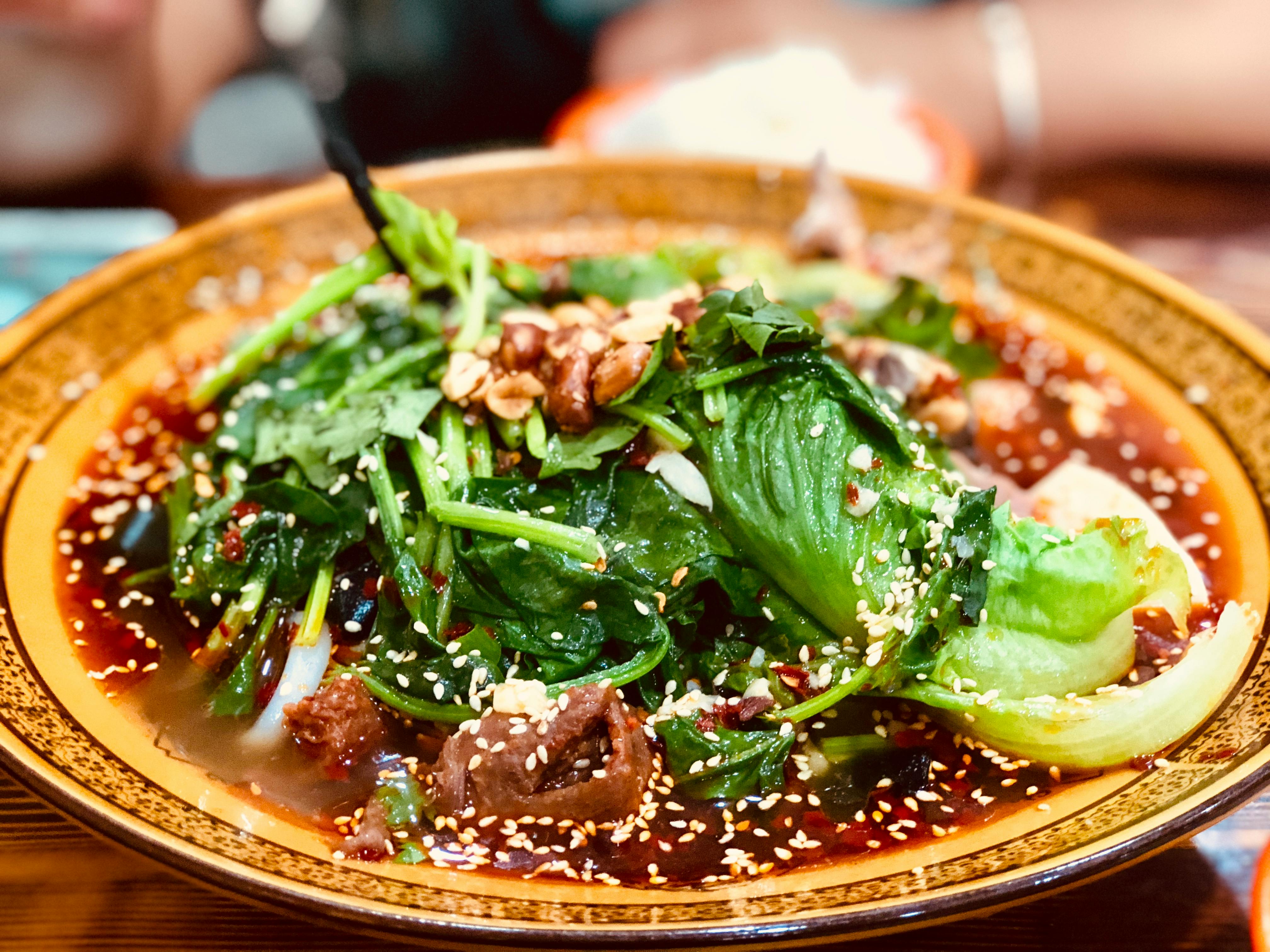
The diets react (see scores below)
Common Ingredients
- fish fillets
- dried chilies
- sichuan peppercorns
- chili bean paste
- bean sprouts
- garlic
- ginger
- scallions
- egg white
- cornstarch
Specific recipes may vary.
Incompatible with 6 of 11 diets
Diet Ratings
Shui Zhu Yu (水煮鱼) is a Sichuan boiled fish dish that has several keto-friendly elements — fish is an excellent low-carb protein, and the aromatics (dried chilies, Sichuan peppercorns, garlic, ginger, scallions) are used in modest quantities. However, two ingredients create meaningful carb concerns: cornstarch is used to coat the fish fillets (a standard velveting technique) and chili bean paste (doubanjiang) typically contains fermented beans and sometimes added sugars, both contributing net carbs. Bean sprouts add minor carbs but are relatively low. The cornstarch coating, even in small amounts per serving, combined with the chili bean paste, can push a serving toward or past the cautious zone. With modifications — substituting cornstarch with egg white only or a small amount of xanthan gum, and using a sugar-free doubanjiang — this dish becomes much more keto-compatible. As traditionally prepared in a restaurant, portion control and awareness of hidden carbs are necessary.
Some lazy keto or flexible keto practitioners argue that the small amount of cornstarch used for velveting (typically 1-2 tsp spread across multiple servings) and the modest portion of doubanjiang contribute negligible net carbs per serving and the dish is effectively keto-safe. Strict keto adherents counter that any cornstarch and fermented bean paste with potential sugars warrants avoidance or substitution.
Shui Zhu Yu (水煮鱼, Sichuan boiled fish) is fundamentally incompatible with a vegan diet. It contains multiple animal-derived ingredients: fish fillets as the primary protein, and egg white used in the velveting process to coat the fish. Both are clearly animal products excluded under all vegan definitions. The dish cannot be considered vegan in its traditional form, though a plant-based adaptation using tofu or king oyster mushrooms with egg-free starch coating would be possible.
Shui Zhu Yu contains multiple non-paleo ingredients that disqualify it. Cornstarch is a grain-derived starch used to coat the fish, chili bean paste is a fermented legume-based condiment (typically made with broad beans/fava beans), and bean sprouts are sprouted legumes — all of which are excluded on a paleo diet. These are not minor or trace ingredients; they are structurally central to the dish. The fish, dried chilies, Sichuan peppercorns, garlic, ginger, scallions, and egg white are all paleo-compliant, but the legume and grain components make this dish a clear avoid in its traditional form.
Shui Zhu Yu features fish as the primary protein, which is strongly encouraged in the Mediterranean diet (2-3 times weekly). However, the dish diverges significantly from Mediterranean principles in its preparation and flavor profile. The heavy use of chili bean paste (a processed, high-sodium condiment), cornstarch coating, and the traditional cooking method involving poaching in large quantities of chili oil rather than extra virgin olive oil are problematic. Bean sprouts, garlic, ginger, and scallions are plant-forward positives. The egg white is a minor, acceptable ingredient. Overall, the core protein is aligned, but the heavy processed condiment use, likely cooking in non-EVOO oils, and high sodium content from chili bean paste pull the score down significantly from a full approval.
Some Mediterranean diet interpreters focus on the food category rather than the exact preparation, arguing that a fish-centered dish with abundant aromatics and vegetables is fundamentally compatible with the diet's spirit. They might suggest simple substitutions (EVOO for chili oil, reduced chili bean paste) to make it compliant while preserving the dish's character.
Shui Zhu Yu is fundamentally incompatible with the carnivore diet despite containing fish as the primary protein. The dish is dominated by plant-based ingredients: dried chilies, Sichuan peppercorns, chili bean paste (fermented soybeans — a legume), bean sprouts (a plant food), garlic, ginger, scallions, and cornstarch (a grain-derived starch). The egg white is the only other animal-derived ingredient, but it is used as a coating agent in a sea of prohibited plant foods. Chili bean paste alone contains soybeans, making it a legume product that would be excluded even on a lenient carnivore approach. The dish cannot be made carnivore-compliant without removing virtually every defining ingredient — at which point it is no longer Shui Zhu Yu.
Shui Zhu Yu (水煮鱼) contains two clearly excluded ingredients: cornstarch and chili bean paste (doubanjiang). Cornstarch is explicitly listed as an excluded ingredient on Whole30. Chili bean paste (doubanjiang) is a fermented soy and bean paste, making it a legume-derived product that is excluded under the soy and legumes rule. These are not minor or ambiguous issues — both are core components of this dish that cannot be omitted without fundamentally changing its character. Additionally, chili bean paste often contains added sugar and wheat, compounding the non-compliance. Even if one attempted to substitute around these ingredients, the dish as traditionally prepared is not Whole30 compatible.
Shui Zhu Yu (水煮鱼) contains multiple high-FODMAP ingredients that make it unsuitable during the elimination phase. Garlic is one of the highest-FODMAP foods (fructans) and is a core flavoring in this dish. Chili bean paste (doubanjiang) typically contains garlic and/or onion as major ingredients, adding a double dose of fructans. Scallions (green onion bulbs/white parts) are high in fructans, though the green tops alone are low-FODMAP. Bean sprouts are a moderate concern as well — while mung bean sprouts are generally considered low-FODMAP at small servings, the combination of problematic ingredients here is the bigger issue. Fish fillets, egg white, cornstarch, ginger, Sichuan peppercorns, and dried chilies are individually low-FODMAP. However, the garlic and chili bean paste alone are sufficient to classify this dish as high-FODMAP with no realistic way to consume a standard restaurant serving safely during elimination. A home-modified version omitting garlic and replacing doubanjiang with a garlic-free chili paste could potentially be made compliant, but as traditionally prepared this dish must be avoided.
Shui Zhu Yu (水煮鱼, 'water-boiled fish') presents a mixed DASH profile. On the positive side, it features lean fish as the primary protein — an excellent DASH-approved source — along with DASH-friendly aromatics (garlic, ginger, scallions) and vegetables (bean sprouts). Egg white and cornstarch are relatively neutral. However, the dish raises significant concerns: chili bean paste (doubanjiang) is highly sodium-dense, often contributing 600–900mg of sodium per tablespoon, and restaurant preparations typically use 2–4 tablespoons. Dried chilies and Sichuan peppercorns are low-sodium and acceptable, but the overall dish as commonly prepared in restaurants can easily exceed 1,500–2,000mg of sodium per serving — approaching or exceeding the entire daily DASH sodium limit. Cooking oil is also typically used liberally in this dish, often floating visibly on top, though oil type matters. Home preparation with reduced chili bean paste, low-sodium substitutes, and controlled oil could shift this toward 'approve,' but as commonly consumed, moderation and caution are warranted.
Some DASH-oriented nutritionists note that the fish base and vegetable components are inherently DASH-aligned, and that home-cooked versions with low-sodium chili bean paste could be adapted into the DASH framework. However, NIH DASH guidelines are unambiguous about limiting high-sodium condiments and sauces, making restaurant-standard preparations difficult to reconcile with DASH sodium targets.
Shui Zhu Yu (water-boiled fish) has a solid Zone foundation built around fish as the primary protein — an excellent lean protein source rich in omega-3 fatty acids, which aligns perfectly with Sears' anti-inflammatory emphasis. Bean sprouts provide a low-glycemic vegetable carbohydrate, and aromatics like garlic, ginger, and scallions are Zone-favorable polyphenol-rich additions. However, several factors push this into 'caution' territory. The dish is traditionally finished with a large pour of hot oil (often soybean or vegetable oil) over the top, which introduces significant omega-6-heavy seed oils — a direct conflict with Zone anti-inflammatory principles. The cornstarch used as a velveting agent adds a moderate glycemic load that must be accounted for in carb blocks. Chili bean paste (doubanjiang) typically contains added salt and sometimes sugar, adding a small glycemic contribution. The overall macro ratio as traditionally prepared is likely skewed toward fat and carbohydrates relative to protein, and the fat profile is problematic. With careful portion control, substitution of the finishing oil with a small amount of olive or macadamia oil, and ensuring the fish portion is appropriately sized (~25g protein per meal), this dish can be made Zone-compatible — but as traditionally prepared in restaurants, it requires significant modification.
Some Zone practitioners would rate this more favorably, noting that fish is one of Sears' top-recommended protein sources, and the dish is fundamentally broth/water-based (hence the name) rather than fried. The anti-inflammatory spices (ginger, garlic, Sichuan peppercorns) and omega-3-rich fish could be seen as strongly Zone-aligned. The oil pour is a modifiable element, and home preparation allows full control over fat quality and quantity. In Sears' later anti-inflammatory Zone writings, the emphasis on omega-3s and polyphenols would actually highlight this dish's potential as a vehicle for those nutrients.
Shui Zhu Yu (水煮鱼, 'water-boiled fish') is a Sichuan dish with a strong anti-inflammatory foundation. The primary protein — white fish fillets — is lean and low in saturated fat, and if a fattier fish like grass carp or catfish is used, it contributes some omega-3s. Garlic and ginger are well-documented anti-inflammatory agents, and dried chilies contain capsaicin, which has been shown to reduce inflammatory cytokines. Sichuan peppercorns contain hydroxy-alpha sanshool and other bioactive compounds with emerging evidence of anti-inflammatory activity. Bean sprouts add fiber and polyphenols. Egg white and cornstarch used as a velveting marinade are largely neutral. The main concern is chili bean paste (doubanjiang), which can be high in sodium and may contain fermented oils, and the traditional preparation often calls for a significant pour of hot oil over the finished dish — typically seed oils like rapeseed or vegetable oil — which raises the omega-6 profile and oxidation concern depending on how it's prepared at home vs. restaurant. The dish is not inherently processed or laden with additives, and the anti-inflammatory spice profile is genuinely strong. Scored 7 reflecting excellent spice/protein foundation tempered by preparation-variable oil concerns.
The traditional restaurant preparation of Shui Zhu Yu involves ladling a large quantity of very hot seed oil (often refined rapeseed or soybean oil) over the dish at the end, which significantly increases the omega-6 load and creates oxidation products — a concern shared by anti-inflammatory practitioners who flag seed oils. However, home preparation can substitute extra virgin olive oil or simply reduce the oil pour, and mainstream anti-inflammatory authorities like Dr. Weil would likely still emphasize the net benefit of the fish, garlic, ginger, and chili compounds.
Shui Zhu Yu (水煮鱼) is a Sichuan boiled fish dish that presents significant problems for GLP-1 patients despite its fish protein base. The dish is defined by an intensely spicy profile from large quantities of dried chilies, Sichuan peppercorns, and chili bean paste — a combination that is very likely to worsen GLP-1-associated nausea, acid reflux, and GI distress, particularly given slowed gastric emptying. Authentic preparation also involves a substantial pool of chili oil (often 1/2 to 1 cup of oil poured over the dish), making it very high in fat per serving, which further exacerbates nausea and bloating. While fish fillets provide quality lean protein and the egg white and cornstarch coating is relatively benign, the dish as typically prepared is too spicy and too oily to be appropriate for most GLP-1 patients. Bean sprouts add minimal fiber. The overall caloric and fat load from the oil, combined with extreme spice intensity, places this dish firmly in the avoid category for standard GLP-1 dietary guidance.
Some GLP-1 clinicians and dietitians note that individual spice tolerance varies widely, and a patient with pre-existing high spice tolerance and well-controlled GI side effects might tolerate a reduced-oil, reduced-chili home-cooked version — the fish protein base is genuinely beneficial. However, the restaurant-standard version of this dish is consistently flagged as problematic due to its extreme spice level and oil content, and most GLP-1 nutrition practitioners would not recommend it without significant modification.
*See how scores were generated at our methodology page.
Nutritional profile
Six traits that cut across every diet.
Fiber & Plants
How much whole-plant food and fiber it delivers.
Healthy Fats
The quality of its fats (unsaturated, omega-3).
Whole / Unprocessed
How close it is to its natural, unprocessed form.
Gut Gentle
How easy it is on digestion (low FODMAP, few irritants).
Low Glycemic
How little it spikes your blood sugar.
Protein Density
How much protein it packs per calorie.
Controversy Index
Higher controversy = more disagreement between diets.
Diet-Specific Tips
 Keto — 4/10
View tips
- Cornstarch used in fish velveting adds net carbs and is a grain-derived thickener incompatible with strict keto
- Chili bean paste (doubanjiang) contains fermented soybeans and often added sugar, adding hidden carbs
- Fish is an excellent keto-friendly lean protein source
- Dried chilies, Sichuan peppercorns, garlic, ginger, and scallions are low-carb aromatics used in small quantities
- Bean sprouts have modest net carbs (~3-4g per 100g) and are used as a base layer
- Dish can be modified for keto by omitting cornstarch and using sugar-free doubanjiang
- Restaurant versions are less controllable and likely higher in hidden carbs
 Mediterranean — 5/10
View tips
- Fish is the primary protein, strongly aligned with Mediterranean guidelines
- Chili bean paste is a processed, high-sodium condiment not typical of Mediterranean eating
- Traditional preparation uses large amounts of chili oil, not extra virgin olive oil
- Cornstarch is a refined starch used as a coating, minimally problematic but not ideal
- Bean sprouts, garlic, ginger, and scallions are plant-based positives
- Not a Mediterranean dish — cross-cultural assessment introduces interpretive uncertainty
 DASH — 5/10
View tips
- Fish (primary protein) is strongly DASH-approved as a lean protein source
- Chili bean paste (doubanjiang) is extremely high in sodium — primary concern
- Restaurant preparation likely delivers 1,500–2,000mg+ sodium per serving
- Bean sprouts, garlic, ginger, scallions are DASH-friendly vegetables/aromatics
- Liberal use of cooking oil in traditional preparation adds fat concerns
- Home preparation with low-sodium adjustments could significantly improve DASH compatibility
- Egg white is DASH-neutral; cornstarch adds negligible nutritional impact
 Zone — 6/10
View tips
- Fish is an ideal Zone protein — lean, high omega-3, anti-inflammatory
- Traditional finishing oil is typically omega-6-heavy soybean or vegetable oil, conflicting with Zone fat guidelines
- Cornstarch velveting adds moderate glycemic load requiring block accounting
- Bean sprouts are a favorable low-glycemic Zone carbohydrate
- Aromatics (garlic, ginger, scallions) are polyphenol-rich and Zone-favorable
- Chili bean paste may contain added sugar/salt — minor glycemic concern
- Overall fat-to-protein ratio as traditionally served is likely out of Zone balance
- Home preparation allows modification to use monounsaturated oils and control portions
 Anti-Inflammatory — 7/10
View tips
- Lean fish as primary protein — low saturated fat, some omega-3s depending on species
- Garlic and ginger — potent anti-inflammatory compounds (allicin, gingerols, shogaols)
- Dried chilies — capsaicin shown to reduce CRP and pro-inflammatory cytokines
- Sichuan peppercorns — bioactive compounds with emerging anti-inflammatory evidence
- Bean sprouts — fiber and polyphenols, low inflammatory load
- Chili bean paste (doubanjiang) — high sodium; minor concern
- Hot oil pour in traditional preparation — significant omega-6 concern depending on oil used and quantity
- No refined sugars, trans fats, or artificial additives
- Cornstarch velveting — minor refined starch, nutritionally inconsequential at dish-level quantities