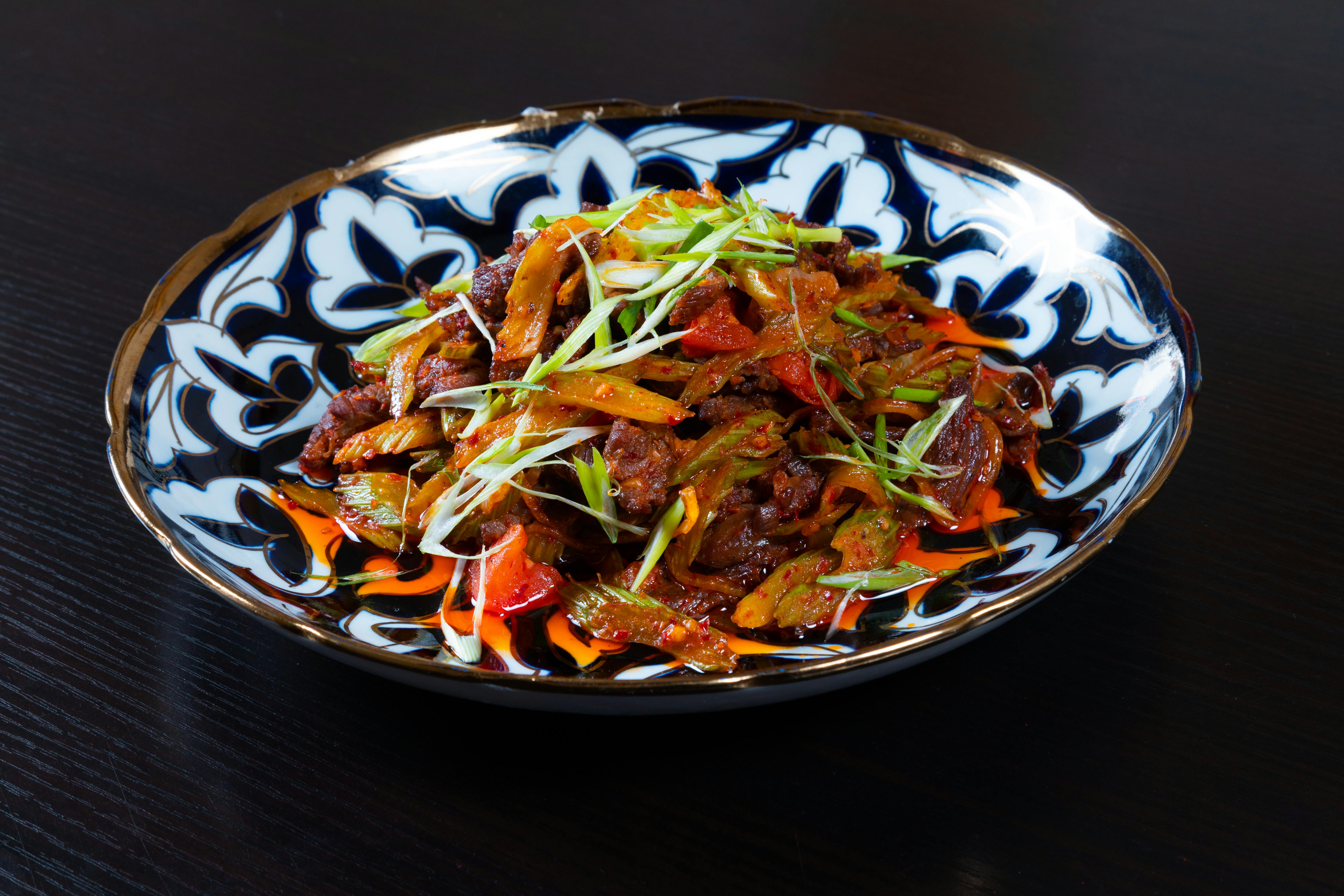
Photo: Collab Media / Pexels
Chinese
Yu Xiang Rou Si
The diets react (see scores below)
Common Ingredients
- pork
- wood ear mushrooms
- bamboo shoots
- pickled chili
- garlic
- ginger
- scallions
- soy sauce
- vinegar
- sugar
Specific recipes may vary.
Incompatible with 7 of 11 diets
Diet Ratings
Yu Xiang Rou Si is fundamentally incompatible with ketogenic diet principles. The dish contains added sugar as a core ingredient in the signature yu xiang sauce, plus soy sauce which adds additional carbs. Bamboo shoots and wood ear mushrooms contribute modest carbs, but the real problem is the deliberate sweet-sour-savory sauce profile that requires sugar. Traditional recipes use a notable amount of sugar (often 1-2 tablespoons) to achieve the characteristic flavor balance, making it impossible to stay within keto carb limits without fundamentally altering the dish beyond recognition. Vinegar combined with sugar creates a glycemic load that would disrupt ketosis. The pork component is keto-friendly, but the sauce and overall carbohydrate profile from sugar, soy sauce, and starchy vegetables combined disqualify this dish.
Yu Xiang Rou Si is a classic Sichuan pork dish. Pork is the primary protein and a core, non-negotiable component of the dish. It is an animal product and is strictly excluded from a vegan diet. There is no ambiguity here — the dish cannot be considered vegan in its standard form. The remaining ingredients (wood ear mushrooms, bamboo shoots, pickled chili, garlic, ginger, scallions, soy sauce, vinegar, sugar) are all plant-based, but the presence of pork disqualifies the dish entirely.
Yu Xiang Rou Si contains several non-paleo ingredients that disqualify it from paleo compliance. Soy sauce is a legume-derived, grain-processed condiment containing soy and wheat — both explicitly excluded from paleo. Sugar is refined and excluded. Vinegar (especially rice vinegar common in this dish) is a processed product typically derived from grains. Pickled chili often contains added salt and preservatives. While the core protein (pork) and many vegetables (wood ear mushrooms, bamboo shoots, garlic, ginger, scallions) are individually paleo-friendly, the sauce base fundamentally violates paleo principles. This dish cannot be adapted without completely replacing its defining flavor profile.
Yu Xiang Rou Si is centered on pork (red meat), which the Mediterranean diet limits to a few times per month. The dish also contains added sugar and soy sauce (a processed, high-sodium condiment), which are minimally compatible with Mediterranean principles. On the positive side, the dish includes vegetables like wood ear mushrooms, bamboo shoots, garlic, ginger, and scallions — plant foods that align well with Mediterranean values. However, the dominant protein is red meat, the cooking style does not use olive oil, and the sauce profile relies on added sugar and processed condiments, pushing this firmly into 'avoid' territory as a regular meal choice.
Some Mediterranean diet interpreters might argue that when pork is used in a small quantity relative to the abundant vegetables (mushrooms, bamboo shoots, aromatics), the dish's overall plant-forward ratio brings it closer to a 'caution' rating — similar to how traditional Mediterranean cuisines occasionally use small amounts of cured pork as a flavoring rather than a main protein source.
Yu Xiang Rou Si is fundamentally incompatible with the carnivore diet. While pork is an approved animal protein, the dish is overwhelmingly plant-based in composition. Wood ear mushrooms and bamboo shoots are plant foods explicitly excluded from carnivore. The sauce is built on soy sauce (fermented soybean — legume-derived), vinegar (plant-derived), and sugar (excluded entirely). Aromatics including garlic, ginger, scallions, and pickled chili are all plant foods. The pork component represents only a fraction of the dish, and it is marinated and cooked in non-compliant sauces. There is no version of this dish that could be made carnivore-compliant without ceasing to be Yu Xiang Rou Si entirely.
Yu Xiang Rou Si contains two clearly excluded ingredients: soy sauce (soy is a legume and explicitly banned on Whole30) and sugar (added sugar is explicitly excluded). While the pork, wood ear mushrooms, bamboo shoots, garlic, ginger, scallions, and vinegar are all compliant, the soy sauce and sugar are non-negotiable disqualifiers. The dish could theoretically be adapted using coconut aminos in place of soy sauce and omitting sugar, but as traditionally prepared it is not Whole30 compatible.
Yu Xiang Rou Si contains multiple high-FODMAP ingredients that make it unsuitable during the elimination phase. Garlic is one of the highest-FODMAP foods tested by Monash University, containing significant fructans even in very small quantities. Scallions (white parts) are also high in fructans, though the green tops are low-FODMAP. Wood ear mushrooms contain polyols (mannitol) and are rated high-FODMAP by Monash. Pickled chili sauces used in this dish typically contain garlic as a primary ingredient, compounding the fructan load. Bamboo shoots are generally low-FODMAP in small servings, and pork, ginger, soy sauce (in small amounts), vinegar, and sugar are low-FODMAP. However, the combination of garlic, scallion whites, and wood ear mushrooms makes this dish a clear avoid during elimination. Even if garlic were replaced with garlic-infused oil, the wood ear mushrooms alone would likely push this into high-FODMAP territory at standard serving sizes.
Yu Xiang Rou Si (fish-fragrant pork shreds) contains several DASH-friendly elements — lean pork in moderate portions is acceptable, wood ear mushrooms and bamboo shoots are low-calorie vegetables rich in fiber, and aromatics like garlic, ginger, and scallions align well with DASH. However, the dish presents notable concerns for DASH adherence. Soy sauce is a high-sodium ingredient and a dominant flavor component; a typical restaurant serving can contribute 800–1,200mg of sodium, a substantial portion of even the standard DASH limit of 2,300mg/day. Pickled chili adds further sodium from the brining process. Added sugar is also a feature of this dish's characteristic sweet-sour-savory balance, which DASH advises limiting. The pork, if prepared with lean cuts (tenderloin or loin), is acceptable, but fattier cuts or restaurant preparations may add saturated fat. The dish could be made DASH-compatible with low-sodium soy sauce, reduced sugar, and lean pork, but as commonly prepared in restaurants it requires caution.
NIH DASH guidelines explicitly flag soy sauce and high-sodium condiments as incompatible with sodium targets, making this dish a borderline case. However, some DASH-oriented clinicians note that when prepared at home with low-sodium soy sauce and lean pork, the vegetable density (mushrooms, bamboo shoots) and use of vinegar over salt-heavy sauces can bring this dish into acceptable DASH territory, particularly for non-hypertensive individuals on the standard 2,300mg threshold.
Yu Xiang Rou Si (Fish-Fragrant Pork Slivers) has a mixed Zone profile. On the positive side, the dish features lean pork (a reasonable protein source), low-glycemic vegetables like wood ear mushrooms and bamboo shoots, and anti-inflammatory aromatics (garlic, ginger, scallions). The mushrooms and bamboo shoots are Zone-favorable low-glycemic carbs. However, several factors complicate Zone compatibility: (1) Pork is generally acceptable in Zone but may carry more saturated fat than preferred lean proteins depending on the cut used — tenderloin is fine, but fattier cuts are less ideal. (2) The sugar in the sauce adds high-glycemic carbohydrate calories that disrupt the 40/30/30 ratio. (3) Traditional preparation often uses significant amounts of oil for stir-frying, and if a seed oil (soybean oil, as typical in Chinese restaurant cooking) is used rather than monounsaturated fat, this conflicts with Zone's fat quality guidelines. (4) Soy sauce adds sodium but negligible macro disruption. The vinegar and pickled chili are fine. The dish can be made Zone-friendly with a lean pork cut (tenderloin), minimal sugar, and cooking in a small amount of olive or sesame oil, but as traditionally prepared it requires meaningful modification to hit Zone ratios cleanly.
Some Zone practitioners would rate this more favorably, noting that the vegetable-to-protein ratio is solid and the dish's overall carbohydrate load is relatively modest compared to other Chinese stir-fries. Dr. Sears' later writings on polyphenols and anti-inflammatory foods would highlight the garlic, ginger, vinegar, and chili as beneficial additions. A strict early-Zone reading, however, would flag the added sugar and likely seed oil as unfavorable elements requiring correction before the dish earns Zone approval.
Yu Xiang Rou Si presents a genuinely mixed anti-inflammatory profile. On the positive side, the dish features several beneficial ingredients: wood ear mushrooms offer beta-glucans and polysaccharides with documented anti-inflammatory and immunomodulatory properties; garlic and ginger are well-established anti-inflammatory spices containing allicin and gingerols respectively; bamboo shoots provide fiber and antioxidants; and pickled chili contributes capsaicin, which has anti-inflammatory effects. The aromatic base of garlic, ginger, and scallions aligns well with anti-inflammatory principles. However, the primary protein is pork, which anti-inflammatory frameworks categorize as red meat — to be limited rather than emphasized. The sauce contains added sugar (a pro-inflammatory concern, though likely modest in quantity per serving) and soy sauce (high sodium, which is not directly inflammatory but worth noting). Vinegar is generally neutral to mildly beneficial. The dish is likely stir-fried in a seed oil (typically vegetable or soybean oil in Chinese cooking), which is debated in anti-inflammatory nutrition due to omega-6 content and oxidation potential — though the ingredient list does not specify this. Overall, the dish has meaningful anti-inflammatory components undermined by the red meat base and added sugar, landing it squarely in the 'caution' zone as an occasional dish rather than a regular staple.
Some anti-inflammatory practitioners (including Dr. Weil's broader framework) would consider pork a moderate-limitation food rather than strictly avoided, especially lean cuts like pork tenderloin or loin used in this dish — making this more acceptable than a beef-heavy preparation. Conversely, stricter anti-inflammatory and autoimmune protocols (AIP, Wahls Protocol) would flag both the added sugar and soy sauce (a processed soy product with high sodium) as concerns beyond just the pork, pushing this dish lower on the compatibility scale.
Yu Xiang Rou Si is a stir-fried shredded pork dish with a sweet-sour-spicy sauce profile. The protein source (pork) is moderate in quality for GLP-1 patients — it provides meaningful protein but is typically made with pork loin or shoulder, which carries more fat than chicken breast or fish. The vegetables (wood ear mushrooms, bamboo shoots) add fiber, low-calorie bulk, and micronutrients, which is a genuine positive. However, several elements raise caution flags: (1) the sauce contains added sugar, which contributes empty calories and undermines glycemic stability; (2) pickled chili may worsen reflux or nausea, which are common GLP-1 side effects; (3) stir-frying typically uses a non-trivial amount of oil, raising the fat-per-serving profile; (4) the sweet-sour-spicy flavor profile is highly palatable and may encourage overeating in patients whose appetite suppression is the primary therapeutic mechanism. On the positive side, the dish is not fried, contains fermented ingredients (vinegar, pickled chili) that may support digestion, and the shredded pork in small portions does contribute to protein goals. Portion control and sauce moderation are key — restaurant versions tend to be heavier on oil and sugar than home-cooked versions.
Some GLP-1-informed dietitians would view this dish more favorably, noting that pork loin is a lean protein source comparable to chicken in many cuts, and that the vegetable content (mushrooms, bamboo shoots) meaningfully contributes to fiber intake. Others would flag the sugar and chili content more aggressively, particularly for patients in early titration phases who are most sensitive to GI side effects and blood sugar fluctuations.
*See how scores were generated at our methodology page.
Nutritional profile
Six traits that cut across every diet.
Fiber & Plants
How much whole-plant food and fiber it delivers.
Healthy Fats
The quality of its fats (unsaturated, omega-3).
Whole / Unprocessed
How close it is to its natural, unprocessed form.
Gut Gentle
How easy it is on digestion (low FODMAP, few irritants).
Low Glycemic
How little it spikes your blood sugar.
Protein Density
How much protein it packs per calorie.
Controversy Index
Higher controversy = more disagreement between diets.
Diet-Specific Tips
 DASH — 4/10
View tips
- High sodium from soy sauce and pickled chili — major DASH concern
- Added sugar in sauce formulation conflicts with DASH guidelines
- Wood ear mushrooms and bamboo shoots are DASH-friendly vegetables
- Lean pork (tenderloin) is acceptable in DASH in moderate portions
- Garlic, ginger, scallions are encouraged aromatic vegetables
- Vinegar is a low-sodium acidulant, preferable to salt-heavy alternatives
- Restaurant preparation likely exceeds DASH sodium targets; home preparation with low-sodium soy sauce improves score significantly
 Zone — 5/10
View tips
- Lean pork (especially tenderloin) is a Zone-acceptable protein, but fat content varies by cut
- Wood ear mushrooms and bamboo shoots are low-glycemic, Zone-favorable carbs
- Added sugar in the sauce introduces high-glycemic carbohydrates that disrupt 40/30/30 balance
- Stir-fry oil type matters — traditional soybean/vegetable oil is omega-6-heavy and Zone-unfavorable
- Garlic, ginger, vinegar, and chili align with Zone's anti-inflammatory and polyphenol emphasis
- Dish can be Zone-optimized with lean pork cut, reduced sugar, and monounsaturated cooking oil
 Anti-Inflammatory — 5/10
View tips
- Pork is a red meat — anti-inflammatory frameworks recommend limiting, not avoiding entirely, but it reduces the overall score
- Wood ear mushrooms contribute beta-glucans with documented anti-inflammatory and immune-supportive properties
- Garlic and ginger are potent anti-inflammatory spices well-supported by research (allicin, gingerols)
- Pickled chili provides capsaicin, which inhibits NF-κB and reduces inflammatory signaling
- Added sugar in the sauce is a mild pro-inflammatory concern
- Soy sauce adds sodium and is a processed (rather than whole) soy product
- Bamboo shoots contribute fiber and antioxidants, supporting gut health
- Likely cooked in seed oil (e.g., vegetable/soybean), which is debated due to omega-6 content and oxidation
 GLP-1 Friendly — 5/10
View tips
- Pork provides moderate protein but with higher fat than preferred lean proteins (chicken breast, fish, tofu)
- Added sugar in sauce reduces glycemic friendliness and caloric quality
- Pickled chili may worsen GLP-1-related reflux or nausea, especially in sensitive patients
- Stir-fry preparation typically involves moderate oil use, raising fat-per-serving
- Wood ear mushrooms and bamboo shoots add fiber and low-calorie bulk — a genuine positive
- Dish is not fried — easier to digest than deep-fried alternatives
- Highly palatable sweet-sour-spicy profile may reduce satiety cue effectiveness
- Home-cooked versions with lean pork loin, less oil, and reduced sugar would score meaningfully higher (6-7)