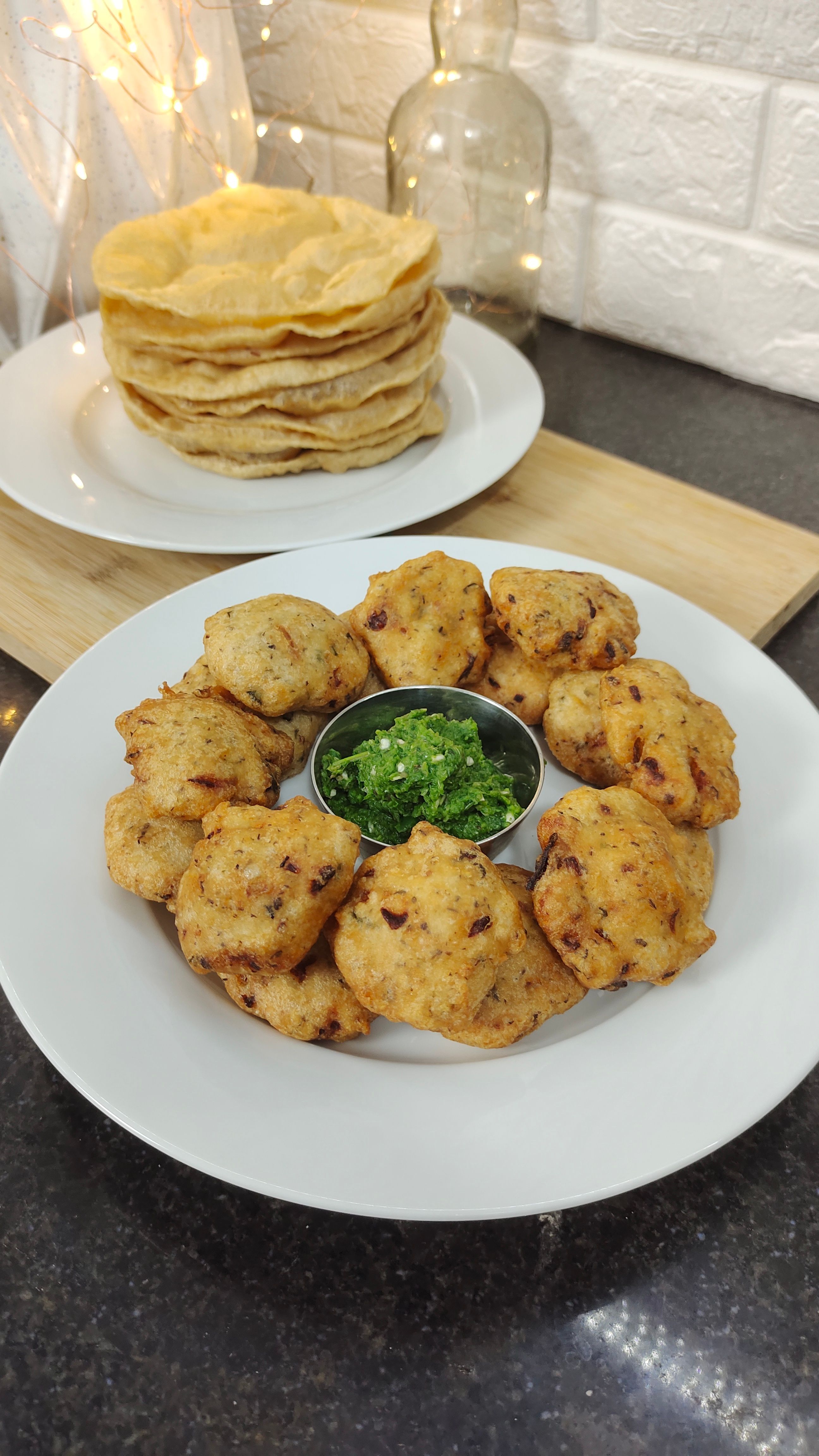
Photo: Sabhyata Sahu / Pexels
The diets react (see scores below)
Common Ingredients
- chickpea flour
- onions
- chili
- cumin
- coriander
- garlic
- vegetable oil
- salt
Specific recipes may vary.
Incompatible with 6 of 11 diets
Diet Ratings
Bajiye is a Somali fritter made primarily from chickpea flour (besan), which is extremely high in net carbs — approximately 44g net carbs per 100g. Even a small serving of these deep-fried fritters would likely exceed or consume the entire daily keto carb budget. Chickpea flour is fundamentally incompatible with ketogenic eating, as legume-based flours are dense in starch and carbohydrates with insufficient fiber offset to bring net carbs to an acceptable level. The frying oil adds fat, but the carbohydrate base disqualifies this dish entirely.
Bajiye is a Somali fried fritter made entirely from plant-based ingredients. Chickpea flour forms the base, with onions, chili, cumin, coriander, garlic, and salt as flavoring, all fried in vegetable oil. Every ingredient is unambiguously plant-derived with no animal products or animal-derived additives present. The dish is a whole-food-adjacent preparation — chickpea flour retains good nutritional value and the spices are minimally processed. The main mild concern from a whole-food plant-based perspective is deep-frying in vegetable oil, which adds significant fat and reduces the nutritional profile compared to unfried preparations, keeping the score from a perfect 10.
Bajiye contains multiple paleo-incompatible ingredients. Chickpea flour is derived from chickpeas, a legume explicitly excluded from the paleo diet due to its lectin and phytate content. Vegetable oil is a processed seed/plant oil avoided in paleo in favor of animal fats, olive oil, or coconut oil. Added salt is also discouraged. The herbs and spices (cumin, coriander, garlic, chili) and onions are paleo-friendly, but the foundational ingredients — chickpea flour and vegetable oil — make this dish firmly non-paleo. There is strong, consistent consensus across all major paleo authorities on excluding legume-derived flours and industrial seed/vegetable oils.
Bajiye is a Somali fritter made from chickpea flour (a legume-based, plant-forward ingredient) with aromatic vegetables and spices — all of which are strongly encouraged in the Mediterranean diet. The chickpea flour base is nutritionally excellent: high in protein, fiber, and micronutrients. The spices (cumin, coriander, garlic) and onions are Mediterranean-friendly. However, the preparation method — deep frying in vegetable oil — is the key concern. The Mediterranean diet emphasizes extra virgin olive oil as the primary fat; unspecified 'vegetable oil' likely means refined oils (e.g., sunflower, soybean, or palm) which are not canonical. Deep frying also adds significant calories and may introduce oxidized fats. If made with olive oil or baked/air-fried, this would score higher. As-is, it earns a 'caution' due to the frying method and non-specified oil type.
Some Mediterranean diet interpretations, particularly those aligned with traditional Levantine and North African cuisines, are more permissive about occasional fried legume-based snacks (similar to falafel), especially when olive oil is used for frying. In this view, the chickpea flour base would push the dish toward approval as an acceptable plant-based snack.
Bajiye is a Somali fritter made entirely from plant-based ingredients. Chickpea flour is a legume product, onions, chili, cumin, coriander, and garlic are all plant foods, and vegetable oil is a plant-derived fat. There is no animal product whatsoever in this dish. Every single ingredient violates carnivore diet principles, making this completely incompatible with any tier of the carnivore diet.
Bajiye is a Somali fritter made from chickpea flour (besan), which is derived from chickpeas — a legume explicitly excluded on the Whole30 program. Chickpeas and all legume-derived flours are not permitted. While the remaining ingredients (onions, chili, cumin, coriander, garlic, vegetable oil, salt) are all Whole30-compliant, the chickpea flour is a disqualifying ingredient. There is no compliant substitution that would preserve the character of this dish. Additionally, bajiye is a fritter — a fried batter-based snack — which falls into the 'no recreating baked goods/junk food' category even if compliant flours were used.
Bajiye (Somali chickpea flour fritters) contains multiple high-FODMAP ingredients that make it unsuitable during the elimination phase. Chickpea flour is high in GOS (galacto-oligosaccharides) and fructans, making it high-FODMAP even at small servings — unlike canned or cooked chickpeas, chickpea flour is not washed or rinsed, so FODMAPs are highly concentrated. Onions are one of the highest-FODMAP foods due to fructans and are problematic at virtually any culinary quantity. Garlic is similarly high in fructans and is a major FODMAP trigger. These three ingredients alone would make this dish a clear avoid. The remaining ingredients (chili, cumin, coriander, vegetable oil, salt) are individually low-FODMAP and pose no concern.
Bajiye are Somali fritters made from chickpea flour batter deep-fried in vegetable oil. The base ingredients are largely DASH-friendly: chickpea flour provides plant-based protein, fiber, potassium, and magnesium; onions, garlic, chili, cumin, and coriander are all DASH-compatible aromatics and spices. However, the deep-frying method significantly increases total fat content, and while vegetable oil (likely soybean or sunflower) is unsaturated, the high volume of oil absorbed during frying raises total calorie density and fat load in ways DASH discourages for regular snacking. Salt quantity is unspecified but fritters typically contain moderate-to-high sodium depending on preparation. DASH emphasizes portion control and limits high-fat snacks even when the fat is unsaturated. As an occasional snack in small portions, bajiye is acceptable, but it is not an emphasized DASH food.
NIH DASH guidelines do not address fried chickpea snacks directly; standard interpretation flags deep-frying as adding excess fat and calories inconsistent with DASH snack guidance. However, some DASH-aligned clinicians note that unsaturated vegetable oils are preferable to saturated fats, and chickpea flour's high fiber and protein content supports satiety — making small portions of bajiye more acceptable than processed snack foods with equivalent calories.
Bajiye are Somali fritters made from chickpea flour batter deep-fried in vegetable oil. From a Zone perspective, several issues arise. First, the macronutrient ratio is significantly skewed: chickpea flour is predominantly carbohydrate (though it has more protein than wheat flour), and deep-frying adds a substantial fat load — but the fat is from vegetable oil (likely omega-6-heavy seed oil such as sunflower or canola), which Sears explicitly discourages due to its pro-inflammatory arachidonic acid cascade. Second, there is no lean protein source, making it very difficult to build a Zone-balanced meal around this snack without significant additions. Third, chickpea flour has a moderate glycemic index (lower than wheat flour), which is a partial positive — chickpeas are considered a somewhat 'favorable' carb in Zone due to their fiber content and protein contribution. The spices (cumin, coriander, garlic, chili) are anti-inflammatory positives. However, the deep-fried nature, omega-6 vegetable oil, lack of protein, and carbohydrate-dominant macro profile make this a challenging Zone food requiring very careful portioning and pairing.
Some Zone practitioners note that chickpea flour has a meaningful protein content (~22g per 100g) and significant fiber, giving it a lower net carb profile than many grain-based flours. In Sears' later anti-inflammatory framework, the key concern is the vegetable oil — if bajiye were prepared with a more favorable fat (e.g., shallow-fried or air-fried with minimal oil), the chickpea base could be treated as a modest 'unfavorable but usable' carb block. Small portions paired with a lean protein side could approximate Zone ratios.
Bajiye is a Somali fritter made from chickpea flour batter seasoned with anti-inflammatory spices, then deep-fried in vegetable oil. The base ingredients are individually favorable: chickpea flour is rich in plant protein, fiber, and resistant starch, supporting gut health and glycemic stability. Garlic, chili, cumin, coriander, and onions all contain meaningful anti-inflammatory compounds (allicin, quercetin, capsaicin, cuminaldehyde, linalool). These spices are well-supported within anti-inflammatory nutrition frameworks. However, the deep-frying method is the primary concern. Vegetable oil — typically a high-omega-6 refined oil such as sunflower or corn oil — is used in quantity for frying. Anti-inflammatory protocols generally caution against regular use of these seed oils due to high omega-6 content and the potential for oxidation at frying temperatures, which can generate pro-inflammatory aldehydes. The frying also significantly increases caloric density and fat load of an otherwise plant-forward snack. If made with a more favorable oil (e.g., a small amount of avocado oil) or consumed occasionally, the spice and legume benefits are real. As a regularly consumed deep-fried snack in refined seed oils, it earns a cautious middle rating.
Mainstream nutrition science (including AHA guidance) considers refined vegetable oils like sunflower and canola acceptable fats, and some anti-inflammatory researchers note that the polyphenols and fiber in the chickpea-spice base meaningfully offset the frying concern — particularly for occasional consumption. Stricter anti-inflammatory and functional medicine practitioners (e.g., Dr. Mark Hyman, IFM protocols) would flag the high-omega-6 frying oil as a meaningful pro-inflammatory factor that outweighs the spice benefits when the dish is consumed regularly.
Bajiye are deep-fried chickpea flour fritters — the Somali equivalent of pakoras or falafel cooked in abundant oil. While chickpea flour does provide some plant-based protein and fiber in its raw form, deep-frying dramatically increases fat content per serving, making these a poor fit for GLP-1 patients. High fat loads worsen nausea, bloating, and reflux — the most common GLP-1 side effects — because slowed gastric emptying means fatty foods sit in the stomach far longer than usual. The chili content also adds a mild reflux/nausea risk. As a snack, bajiye offers very little protein per calorie (most of the calories come from absorbed frying oil), low nutrient density per calorie, and poor digestibility. The chickpea flour base has theoretical nutritional merit, but the deep-frying method disqualifies this dish under GLP-1 dietary guidelines.
*See how scores were generated at our methodology page.
Nutritional profile
Six traits that cut across every diet.
Fiber & Plants
How much whole-plant food and fiber it delivers.
Healthy Fats
The quality of its fats (unsaturated, omega-3).
Whole / Unprocessed
How close it is to its natural, unprocessed form.
Gut Gentle
How easy it is on digestion (low FODMAP, few irritants).
Low Glycemic
How little it spikes your blood sugar.
Protein Density
How much protein it packs per calorie.
Controversy Index
Higher controversy = more disagreement between diets.
Diet-Specific Tips
 Vegan — 8/10
View tips
- Chickpea flour is 100% plant-based and a good source of protein and fiber
- All spices (cumin, coriander, chili, garlic) are fully vegan
- Vegetable oil used for frying — no animal fats involved
- No dairy, eggs, or any animal-derived ingredients present
- Deep-frying slightly reduces nutritional quality but does not affect vegan compliance
- No cross-contamination concerns from listed ingredients
 Mediterranean — 5/10
View tips
- Chickpea flour is a legume-based ingredient — strongly approved in the Mediterranean diet
- All spices and aromatics (garlic, onion, cumin, coriander, chili) are Mediterranean-compatible
- Deep frying method is not aligned with Mediterranean diet principles
- Unspecified 'vegetable oil' likely refers to refined oil rather than extra virgin olive oil
- No red meat, added sugar, or refined grains present
- Similar in concept to falafel, which is sometimes accepted in Mediterranean-adjacent traditions
 DASH — 5/10
View tips
- Chickpea flour is a DASH-friendly legume-based ingredient rich in fiber, protein, and magnesium
- Deep-frying significantly increases total fat and calorie content, inconsistent with DASH snack guidance
- Vegetable oil used is unsaturated, which is preferable to saturated fats under DASH
- Salt content is unspecified but likely moderate-to-high in traditional preparation
- Spices and aromatics (garlic, cumin, coriander, chili) are fully DASH-compatible
- Portion size is critical — a small serving is more acceptable than large quantities
 Zone — 4/10
View tips
- Deep-fried in omega-6-heavy vegetable oil — directly conflicts with Sears' anti-inflammatory fat guidelines
- No lean protein source present — unbalanced macro profile with no protein block
- Chickpea flour has moderate GI and some protein/fiber — partial Zone positive compared to wheat flour
- Carbohydrate-dominant macros make 40/30/30 ratio very difficult to achieve with this dish alone
- Anti-inflammatory spices (garlic, cumin, coriander, chili) are Zone-positive additions
- Would require significant portioning discipline and lean protein pairing to fit a Zone meal
 Anti-Inflammatory — 5/10
View tips
- Chickpea flour provides plant-based protein, fiber, and resistant starch — anti-inflammatory food base
- Garlic, chili, cumin, coriander, and onion are well-supported anti-inflammatory spices and aromatics
- Deep-frying in vegetable oil (likely high-omega-6 sunflower or corn oil) is the primary concern
- High-temperature frying of omega-6 oils can generate pro-inflammatory oxidation byproducts
- No added sugars, no refined carbohydrates, no artificial additives — clean ingredient profile
- Cooking method substantially alters the inflammatory profile of otherwise favorable ingredients
- Occasional consumption contextually more acceptable than as a daily staple