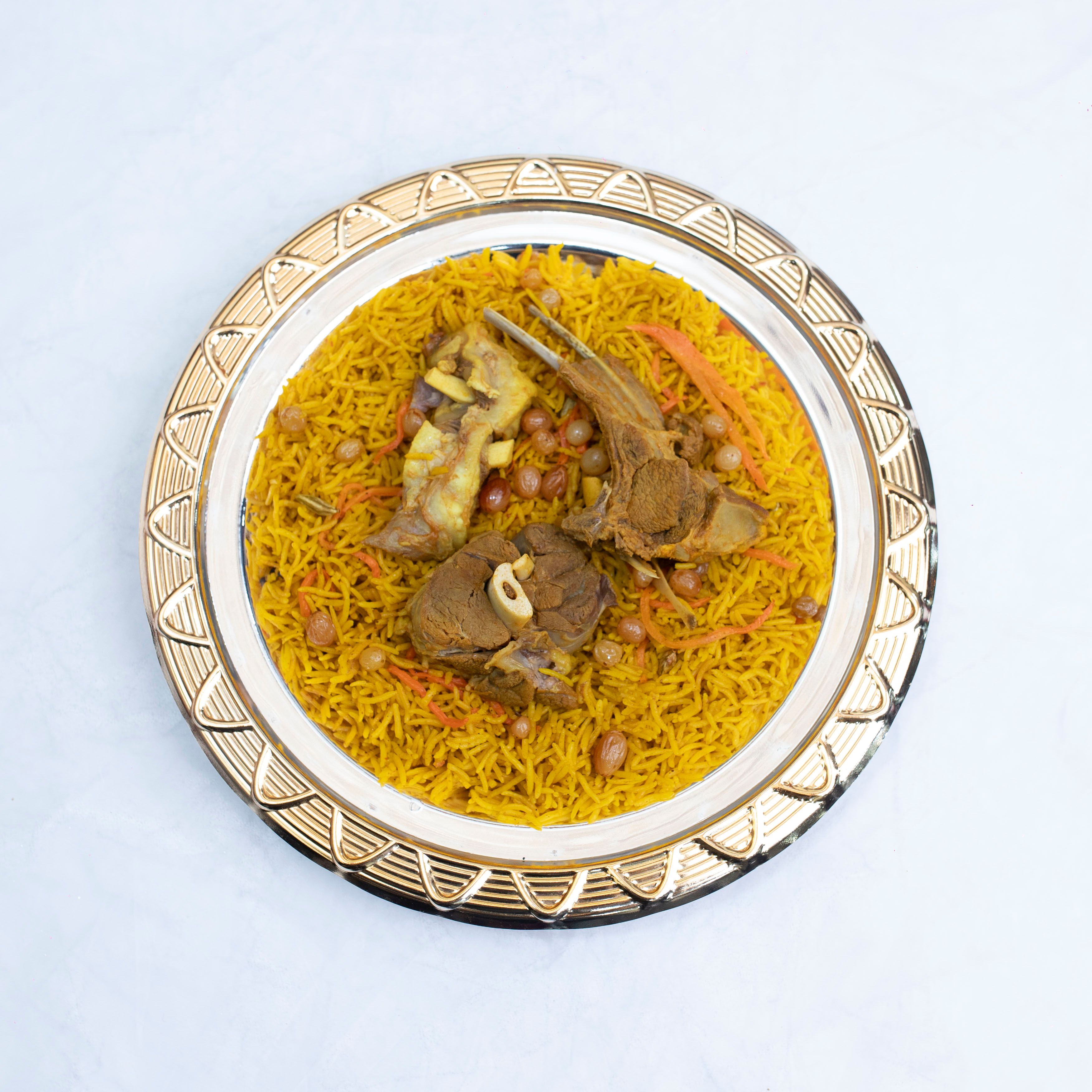
Somali
Bariis Iskukaris
The diets react (see scores below)
Common Ingredients
- basmati rice
- beef
- onions
- tomatoes
- garlic
- xawaash spice
- raisins
- carrots
Specific recipes may vary.
Incompatible with 7 of 11 diets
Diet Ratings
Bariis Iskukaris is fundamentally incompatible with a ketogenic diet. The primary ingredient is basmati rice, which contains approximately 45g of net carbs per cooked cup — enough to exceed the entire daily keto carb allowance in a single serving. Raisins add additional concentrated sugar (roughly 25g net carbs per small handful). Carrots contribute moderate carbs as well. Together, these three ingredients alone make this dish severely keto-incompatible. While the beef, garlic, onions, tomatoes, and xawaash spices are relatively low-carb components, they are completely overshadowed by the rice and raisins. No portion size of this dish as traditionally prepared would keep a diner within ketosis.
Bariis Iskukaris is a traditional Somali spiced rice dish that explicitly contains beef as its primary protein. Beef is an animal product and is categorically excluded from a vegan diet. All other ingredients — basmati rice, onions, tomatoes, garlic, xawaash spice blend, raisins, and carrots — are fully plant-based, but the inclusion of beef renders the entire dish non-vegan.
Bariis Iskukaris is a Somali spiced rice dish whose defining base ingredient is basmati rice, a grain that is strictly excluded from the Paleolithic diet. Grains are among the most clearly prohibited food groups in paleo — they were not available to pre-agricultural hunter-gatherers in a cultivated form and contain anti-nutrients such as lectins and phytates. The remaining ingredients (beef, onions, tomatoes, garlic, raisins, carrots) are all individually paleo-approved, and xawaash is a blend of whole spices (cumin, coriander, cardamom, cloves, turmeric, black pepper, cinnamon) that are fully compatible. However, the central grain component is non-negotiable and disqualifies the dish as a whole. No paleo-compliant substitution (such as cauliflower rice) is present here.
Bariis Iskukaris is a Somali spiced rice dish with beef as the primary protein. The Mediterranean diet limits red meat to a few times per month, making beef a problematic primary protein. Basmati rice, while a refined grain, is lower glycemic than many white rices and used in moderation in some Mediterranean-adjacent cuisines, but it is not a whole grain. The dish does include genuinely Mediterranean-friendly ingredients — tomatoes, onions, garlic, carrots, and raisins — which add vegetables, antioxidants, and plant diversity. However, the combination of a red meat primary protein with a refined grain base places this dish outside Mediterranean diet principles. The spice blend (xawaash) is nutritionally neutral but adds flavor without concern. Overall, the dish is not compatible as a regular meal within Mediterranean diet guidelines.
Some Mediterranean diet practitioners adopt a broader 'traditional whole-foods' interpretation that permits occasional red meat dishes if the overall meal includes abundant vegetables and plant ingredients, as this dish does. Additionally, basmati rice has a lower glycemic index than many refined grains and is tolerated in moderation in some Eastern Mediterranean traditions (e.g., Lebanese or Turkish pilafs), which could shift this dish toward 'caution' rather than 'avoid' if portion sizes are modest and beef is limited.
Bariis Iskukaris is a Somali spiced rice dish that is fundamentally incompatible with the carnivore diet. The primary base is basmati rice, a grain, which alone disqualifies this dish entirely. Beyond the rice, the recipe includes multiple plant-derived ingredients: onions, tomatoes, garlic, xawaash spice blend (a mix of plant-based spices), raisins (fruit), and carrots (root vegetable). The only carnivore-compatible ingredient is the beef. This dish is essentially a plant-heavy rice pilaf with a small amount of animal protein — the inverse of what a carnivore diet requires. There is no ambiguity or community debate here; virtually every plant ingredient listed is explicitly excluded from the carnivore diet.
Bariis Iskukaris contains basmati rice, which is a grain explicitly excluded on the Whole30 program. Regardless of the other compliant ingredients (beef, onions, tomatoes, garlic, raisins, carrots), the rice alone disqualifies this dish. Xawaash is a Somali spice blend typically made from cumin, coriander, cardamom, black pepper, turmeric, and cinnamon — all compliant spices — but the foundational ingredient, basmati rice, is a clear Whole30 exclusion.
Bariis Iskukaris contains multiple high-FODMAP ingredients that make it unsuitable during the elimination phase. Onions are very high in fructans and are a primary flavoring base of this dish — even small amounts cooked into the rice will leach fructans into the entire dish. Garlic is similarly very high in fructans and is a core aromatic. Raisins are high in fructose and polyols (sorbitol) and become high-FODMAP at servings as small as 1 tablespoon. Together, onions, garlic, and raisins create a triple FODMAP burden that cannot be mitigated by portion control. While basmati rice, beef, tomatoes (in moderate amounts), and carrots are individually low-FODMAP, the dish as traditionally prepared is not safe during elimination.
Bariis Iskukaris is a Somali spiced rice dish combining basmati rice, beef, vegetables (onions, tomatoes, carrots), aromatics (garlic), xawaash spice blend, and raisins. Several components align well with DASH principles: tomatoes, onions, carrots, and garlic are DASH-approved vegetables rich in potassium and fiber; raisins contribute potassium and natural sweetness without added sugar; and the aromatic spice base (xawaash typically contains cumin, coriander, cardamom, turmeric, and black pepper) adds flavor without sodium, which is exactly what DASH encourages as a salt substitute. Basmati rice is acceptable but is a refined grain — whole grain brown rice would be preferred under DASH. The primary concern is the beef: DASH limits red meat due to saturated fat content. The cut and preparation method matter significantly — lean beef (e.g., sirloin, round) trimmed of fat in moderate portions is more acceptable than fatty cuts. The dish's overall sodium content depends heavily on preparation — if salt is added generously during cooking, sodium could be problematic. As traditionally prepared in moderate portions with lean beef and no added salt beyond spices, this dish sits in the caution range: nutritious and vegetable-forward, but the red meat and refined rice prevent a full approval.
NIH DASH guidelines explicitly limit red meat and favor whole grains, which would keep this dish in the caution category. However, updated clinical interpretations note that lean red meat in modest portions (3oz or less) consumed infrequently can fit within a broader heart-healthy dietary pattern, and the vegetable density and spice-forward (low-sodium) preparation of this dish reflect DASH-compatible cooking principles.
Bariis Iskukaris is a traditional Somali spiced rice dish that presents multiple Zone Diet challenges. The dominant ingredient is basmati rice, which is a high-glycemic refined carbohydrate that Sears classifies as 'unfavorable' — it will spike insulin and is difficult to balance within Zone ratios. While basmati has a somewhat lower GI than white rice, it still carries a heavy carbohydrate load. Raisins compound the problem, as Sears explicitly lists raisins as an unfavorable, high-sugar carbohydrate to avoid. The beef protein is acceptable in lean cuts but is less ideal than skinless poultry or fish. On the positive side, the dish includes Zone-favorable vegetables (onions, tomatoes, garlic, carrots) and the xawaash spice blend (typically cumin, coriander, turmeric, cardamom, cloves) is anti-inflammatory and polyphenol-rich, which aligns with Sears' later nutritional emphasis. However, the carbohydrate profile is dominated by unfavorable sources (rice + raisins) rather than low-glycemic vegetables, making it very hard to achieve the 40/30/30 Zone ratio without drastically reducing rice portions and eliminating the raisins. As served traditionally, the dish skews heavily carbohydrate-heavy with poor glycemic quality, placing it in caution territory closer to the lower end.
Bariis Iskukaris is a Somali spiced rice dish with a mixed anti-inflammatory profile. On the positive side, it contains several beneficial components: tomatoes and onions provide quercetin, lycopene, and antioxidants; garlic has well-documented anti-inflammatory properties (allicin); carrots contribute beta-carotene and carotenoids; raisins offer polyphenols; and xawaash spice blend typically includes cumin, coriander, turmeric, cardamom, cinnamon, and black pepper — several of which (turmeric, cinnamon, black pepper) are explicitly emphasized in anti-inflammatory frameworks. Basmati rice is a refined carbohydrate with moderate glycemic index (lower than most white rices due to its amylose content), placing it in a gray zone — not ideal but not equivalent to heavily refined carbs. The primary concern is beef, which is categorized as a food to limit in anti-inflammatory frameworks due to saturated fat content and associations with elevated inflammatory markers (CRP, IL-6) in research. The dish's overall profile is moderate: the spice blend and vegetables partially offset the beef's pro-inflammatory potential, but beef remains the dominant protein. If made with lean beef in modest portions, the dish is acceptable occasionally.
Some anti-inflammatory practitioners, including those influenced by Dr. Weil's broader framework, would view this dish more favorably given its rich spice blend (particularly turmeric and cinnamon in xawaash) and colorful vegetable base — arguing the phytochemical load meaningfully offsets lean beef's modest inflammatory potential. Conversely, stricter anti-inflammatory protocols (e.g., those targeting autoimmune conditions) would rate this lower, flagging both the refined basmati rice and beef as compounding concerns.
Bariis Iskukaris is a Somali spiced rice dish featuring basmati rice as the base with beef, vegetables (onions, tomatoes, carrots), aromatics (garlic), xawaash spice blend, and raisins. It has several GLP-1-friendly elements — lean beef provides meaningful protein, carrots and tomatoes add micronutrients and some fiber, and the dish is not fried or heavily greasy. However, basmati rice is a refined carbohydrate with moderate glycemic impact and low fiber, and raisins add concentrated sugar with minimal nutritional benefit. The protein-to-carb ratio depends heavily on beef portion size relative to rice — in traditional servings, rice dominates. The xawaash spice blend (typically cumin, coriander, cardamom, turmeric, cinnamon, black pepper) is generally well-tolerated and not problematically spicy, which is a positive. The dish is easy to digest and not high in fat if lean beef is used and minimal oil is added during cooking. The main concerns are the refined rice base delivering empty carbohydrate calories and the raisins adding sugar — both reduce nutrient density per calorie for patients eating smaller volumes. With portion adjustment (smaller rice, larger beef and vegetable portion) and substituting brown rice or cauliflower rice, this dish could score significantly higher.
Some GLP-1-focused dietitians would rate this more favorably, noting that basmati rice has a lower glycemic index than many refined grains and that the combination of protein, fat, and fiber from vegetables moderates blood sugar impact — making moderate rice portions acceptable. Others take a stricter view that any refined grain base unnecessarily displaces protein and fiber in a reduced-appetite context where caloric efficiency is paramount.
*See how scores were generated at our methodology page.
Nutritional profile
Six traits that cut across every diet.
Fiber & Plants
How much whole-plant food and fiber it delivers.
Healthy Fats
The quality of its fats (unsaturated, omega-3).
Whole / Unprocessed
How close it is to its natural, unprocessed form.
Gut Gentle
How easy it is on digestion (low FODMAP, few irritants).
Low Glycemic
How little it spikes your blood sugar.
Protein Density
How much protein it packs per calorie.
Controversy Index
Higher controversy = more disagreement between diets.
Diet-Specific Tips
 DASH — 6/10
View tips
- Beef (red meat) is limited under DASH due to saturated fat — cut and portion size are critical
- Basmati rice is a refined grain; DASH prefers whole grains like brown rice
- Vegetables (tomatoes, carrots, onions, garlic) provide DASH-valued potassium, fiber, and micronutrients
- Xawaash spice blend adds flavor without sodium — aligns with DASH sodium-reduction strategy
- Raisins contribute potassium and natural sweetness, acceptable in small quantities
- Sodium content of the dish depends on added salt during preparation — low-salt versions score higher
- Dish can be upgraded to 'approve' range by substituting lean poultry or fish and using brown rice
 Zone — 4/10
View tips
- Basmati rice is the dominant ingredient — a high-glycemic, 'unfavorable' Zone carbohydrate that disrupts the 40/30/30 ratio
- Raisins are explicitly listed by Sears as an unfavorable, high-sugar carbohydrate to avoid
- Beef protein is acceptable if lean but less ideal than chicken or fish
- Favorable vegetables present (onions, tomatoes, garlic, carrots) but insufficient to offset the high-glycemic carb load
- Xawaash spice blend is anti-inflammatory and polyphenol-rich — a Zone positive
- Dish as traditionally served is carbohydrate-heavy with poor glycemic quality; could only approach Zone compliance with major portion restructuring
 Anti-Inflammatory — 5/10
View tips
- Beef is a 'limit' food in anti-inflammatory frameworks due to saturated fat and associations with elevated CRP
- Xawaash spice blend likely contains turmeric, cinnamon, and black pepper — all with anti-inflammatory properties
- Garlic, tomatoes, onions, and carrots contribute meaningful antioxidants and polyphenols
- Basmati rice is a refined carbohydrate but has a relatively lower glycemic index than most white rice varieties
- Raisins provide polyphenols but also concentrated natural sugar
- Overall dish is vegetable- and spice-forward, which partially offsets the beef
 GLP-1 Friendly — 5/10
View tips
- Basmati rice is a refined carbohydrate with limited fiber, reducing nutrient density per calorie
- Beef provides meaningful protein but overall protein-to-carb ratio is portion-dependent and often rice-heavy in traditional serving sizes
- Raisins add concentrated sugar and minimal nutritional value — counterproductive for GLP-1 patients
- Xawaash spice blend is generally well-tolerated and not overly spicy — a positive for GI comfort
- Dish is not fried and not inherently high-fat if lean beef and minimal oil are used
- Vegetables (carrots, tomatoes, onions) contribute micronutrients and modest fiber
- Easily modifiable: increasing beef proportion and reducing rice, or substituting brown rice, would meaningfully improve the rating