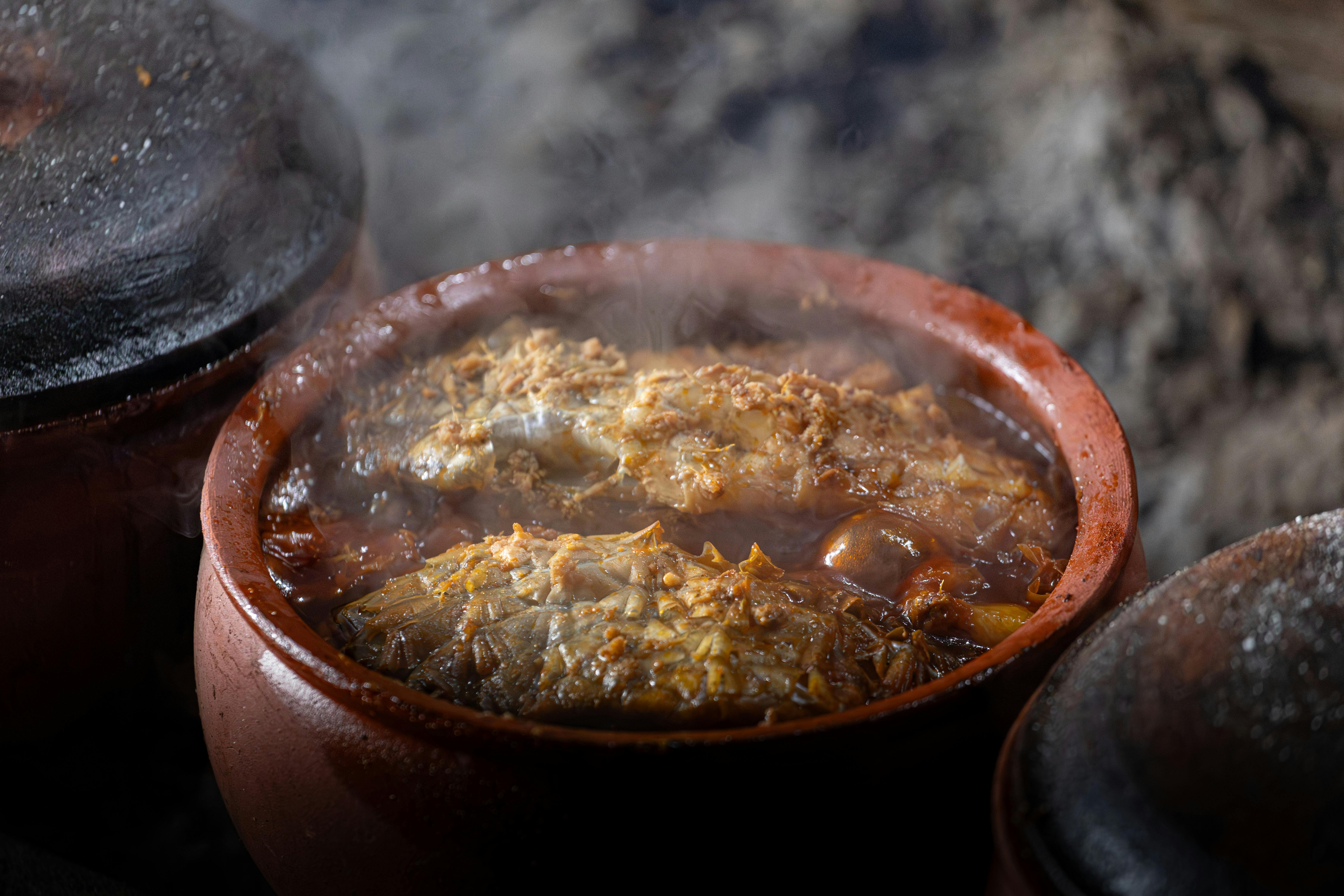
Photo: Hồng Quang Official / Pexels
The diets react (see scores below)
Common Ingredients
- beef
- potatoes
- carrots
- tomatoes
- onions
- garlic
- cumin
- coriander
Specific recipes may vary.
Incompatible with 4 of 11 diets
Diet Ratings
Maraq is a Somali beef soup that, while protein-rich from the beef, contains potatoes as a primary ingredient — a starchy vegetable with very high net carbs (roughly 15-17g net carbs per 100g). A standard serving would easily push net carbs well beyond the keto daily limit. Carrots add additional net carbs (~7g/100g). Tomatoes and onions contribute moderate carbs as well. Together, the starchy and root vegetable base makes this dish fundamentally incompatible with ketosis in its traditional form. The spices (cumin, coriander, garlic) and beef are keto-friendly, but the overall carbohydrate load is too high to manage with portion control alone.
Maraq is a traditional Somali beef broth soup. Beef is an animal product and is entirely incompatible with a vegan diet. The remaining ingredients — potatoes, carrots, tomatoes, onions, garlic, cumin, and coriander — are all plant-based, but the presence of beef as the primary protein makes this dish clearly non-vegan.
Maraq is a simple Somali beef and vegetable soup with mostly paleo-friendly ingredients. Beef, carrots, tomatoes, onions, garlic, cumin, and coriander are all clearly approved paleo foods. The sticking point is white potatoes, which occupy a well-known gray area in the paleo community. Loren Cordain's original framework excludes white potatoes due to their glycemic load and glycoalkaloid content, while many modern paleo practitioners and protocols now permit them. With no grains, legumes, dairy, seed oils, or processed ingredients otherwise present, this dish is very close to fully paleo-compliant — the white potato is the sole debated element pulling the score into caution territory.
Mark Sisson (Primal Blueprint) and the Whole30 protocol both include white potatoes as acceptable, arguing their nutrient density and whole-food status outweigh concerns. If white potatoes are accepted in one's personal paleo framework, Maraq would be a straightforward approve.
Maraq is a Somali beef and vegetable soup featuring a strong lineup of Mediterranean-friendly ingredients: tomatoes, carrots, potatoes, onions, garlic, and aromatic spices (cumin, coriander). The vegetable and spice base aligns well with Mediterranean principles. However, the primary protein is beef, which is a red meat — limited to a few times per month in strict Mediterranean diet guidelines. The dish is a whole-food, minimally processed preparation with no added sugars or refined grains, which works in its favor. The overall dish sits in a moderate zone: the cooking method (soup/broth) and vegetable density are positive, but the beef protein source prevents a full approval.
Some Mediterranean diet practitioners, particularly those following a more flexible or traditional Southern Mediterranean interpretation, would consider an occasional lean beef broth-based soup with abundant vegetables acceptable — especially if consumed infrequently. The vegetable-to-meat ratio in a dish like Maraq can be favorable, with beef acting more as a flavoring agent than the central focus, which some authorities view more leniently.
Maraq is a Somali beef soup that contains numerous plant-based ingredients incompatible with the carnivore diet. While the beef base is carnivore-approved, the dish is heavily loaded with plant foods: potatoes (starchy tuber), carrots (root vegetable), tomatoes (fruit/vegetable), onions (vegetable), garlic (vegetable), cumin (plant spice), and coriander (plant spice). The majority of the dish by ingredient count is plant-derived, making it clearly incompatible with carnivore principles. There is unanimous consensus across all carnivore tiers — from the strictest Lion Diet to the more relaxed animal-based approach — that this combination of vegetables and spices is excluded. The only carnivore-compatible element is the beef itself.
Maraq is a traditional Somali beef and vegetable soup made with wholly compliant ingredients. Beef, potatoes, carrots, tomatoes, onions, and garlic are all whole, unprocessed foods explicitly allowed on Whole30. Cumin and coriander are natural spices with no excluded additives. There are no grains, legumes, dairy, added sugars, alcohol, or any other excluded ingredients present. This dish is a straightforward, nutrient-dense whole-food meal that aligns perfectly with the Whole30 program's intent.
Maraq contains two major high-FODMAP ingredients that make it unsuitable during the elimination phase: onions and garlic. Both are among the highest-fructan foods tested by Monash University and are problematic at any culinary quantity. Onions contain significant fructans even at very small amounts (Monash rates them as high-FODMAP at just 28g/one slice), and garlic is one of the most concentrated sources of fructans — even a single clove is high-FODMAP. These two ingredients are foundational to the flavor base of Maraq and cannot simply be reduced to a 'safe' portion within the context of a traditional preparation. The remaining ingredients — beef, potatoes, carrots, tomatoes, cumin, and coriander — are all low-FODMAP at standard servings. However, the onion and garlic content alone disqualifies this dish during the strict elimination phase.
Maraq is a Somali beef and vegetable soup featuring potatoes, carrots, tomatoes, onions, garlic, and spices — a generally wholesome combination. The vegetables (carrots, tomatoes, onions, garlic, potatoes) align well with DASH principles, providing potassium, fiber, and micronutrients. The spices (cumin, coriander) are sodium-free and DASH-compatible. However, beef is the primary protein, and DASH guidelines limit red meat due to saturated fat and cholesterol concerns, recommending lean poultry or fish instead. The rating depends heavily on the cut of beef used: lean cuts (e.g., round, sirloin, trimmed stew beef) in modest portions would push this toward approval, while fattier cuts (e.g., short ribs, untrimmed chuck) increase saturated fat significantly. Additionally, sodium content is highly variable — traditional preparation may involve salt addition that could push sodium toward or beyond DASH limits. As commonly prepared with modest beef portions and without excessive salt, this earns a cautious middle rating.
NIH DASH guidelines categorize red meat as a food to limit due to saturated fat content. However, updated clinical interpretations note that lean red meat in small portions (≤3 oz, 1-2x/week) within an otherwise vegetable-rich, low-sodium diet like this soup can fit DASH goals — particularly given the high vegetable density and sodium-free spice profile of this dish.
Maraq is a Somali beef and vegetable soup that presents a mixed Zone profile. On the positive side, carrots, tomatoes, onions, and garlic are Zone-favorable low-glycemic vegetables rich in polyphenols, and the anti-inflammatory spices (cumin, coriander) align well with Sears' emphasis on reducing inflammation. However, two significant Zone concerns arise: (1) Potatoes are explicitly classified as 'unfavorable' high-glycemic carbohydrates in Zone methodology — they spike blood sugar rapidly and are difficult to portion into Zone blocks without disrupting the 40/30/30 ratio. (2) Beef (unspecified cut) likely includes fatty cuts traditional to Somali cooking, introducing saturated fat that Zone protocol prefers to limit. The soup format itself is Zone-adaptable — broth-based soups are naturally lower in fat and can be portioned carefully. A modified version using lean beef (e.g., round or sirloin), reducing or eliminating potatoes, and increasing the favorable vegetables would score 7+. As traditionally prepared, this dish requires meaningful modification to fit Zone blocks cleanly.
Some Zone practitioners following Sears' later anti-inflammatory writings (e.g., 'The Anti-Inflammation Zone') may be more lenient about potatoes in small quantities, particularly in a broth-based soup where total carbohydrate load per serving is diluted. If the beef used is lean and potatoes are a minor ingredient, a practitioner might treat this as a borderline 5-6 caution rather than a near-avoid.
Maraq is a Somali beef and vegetable soup that presents a mixed anti-inflammatory profile. On the positive side, it contains a strong roster of anti-inflammatory ingredients: garlic and onions provide allicin and quercetin, tomatoes offer lycopene and vitamin C, carrots supply beta-carotene, and potatoes contribute potassium and vitamin C. Cumin and coriander are both recognized anti-inflammatory spices with antioxidant properties. The soup format itself is beneficial — long cooking in broth can extract beneficial compounds and the dish is likely lower in fat than a dry-cooked beef preparation. The central concern is beef as the primary protein. Anti-inflammatory guidelines (including Dr. Weil's pyramid) place red meat in the 'limit' category due to saturated fat content, arachidonic acid, and association with elevated inflammatory markers like CRP and IL-6 in epidemiological research. However, the quantity of beef relative to vegetables matters: if this is a broth-forward soup where beef plays a supporting role rather than being consumed in large portions, the inflammatory load is meaningfully reduced. Overall, the rich vegetable and spice base partially offsets the pro-inflammatory potential of the beef, landing this dish in cautious/moderate territory rather than outright avoidance.
Some anti-inflammatory practitioners, including those following Dr. Weil's broader dietary philosophy, would note that modest amounts of lean beef in a vegetable-rich, spice-forward broth soup is a reasonable occasional inclusion — particularly if the beef is grass-fed, which has a more favorable omega-3 to omega-6 ratio. Conversely, stricter anti-inflammatory and autoimmune protocols (such as AIP) would flag both beef's arachidonic acid content and tomatoes' solanine as potential triggers, pushing this dish toward avoidance for sensitive individuals.
Maraq is a Somali beef and vegetable soup that has several GLP-1-friendly qualities but is held back primarily by its beef protein source. On the positive side, it is a broth-based soup — easy to digest, hydrating, and naturally portion-friendly in small servings. The vegetables (carrots, tomatoes, onions, potatoes) contribute fiber, micronutrients, and water content. Cumin and coriander are mild spices unlikely to worsen GI side effects. However, beef is a moderate-to-high saturated fat protein depending on the cut used. Traditional Maraq often uses bone-in cuts or fattier cuts of beef, which increases saturated fat load and can worsen nausea, bloating, and reflux — common GLP-1 side effects. Protein content per serving is meaningful but lower than a lean protein-forward dish. Potatoes add starchy carbohydrates with limited protein return. The dish is not high-protein-dense enough per calorie to score as an approve without modification. With a lean beef cut (such as eye of round or sirloin), trimmed of visible fat, and a modest potato portion, this dish becomes more GLP-1 compatible.
Some GLP-1-focused dietitians accept beef-based soups and stews as reasonable protein vehicles because the slow-cooked broth format improves digestibility and fat skimming is easy after refrigeration — reducing saturated fat significantly. Others flag all fatty beef cuts as problematic given that GLP-1 patients are especially sensitive to high-fat meals triggering nausea and delayed gastric emptying compounding the medication effect.
*See how scores were generated at our methodology page.
Nutritional profile
Six traits that cut across every diet.
Fiber & Plants
How much whole-plant food and fiber it delivers.
Healthy Fats
The quality of its fats (unsaturated, omega-3).
Whole / Unprocessed
How close it is to its natural, unprocessed form.
Gut Gentle
How easy it is on digestion (low FODMAP, few irritants).
Low Glycemic
How little it spikes your blood sugar.
Protein Density
How much protein it packs per calorie.
Controversy Index
Higher controversy = more disagreement between diets.
Diet-Specific Tips
 Paleo — 5/10
View tips
- Beef is fully paleo-approved as the primary protein
- White potatoes are the key contested ingredient — excluded by Cordain-school paleo but accepted by many modern paleo practitioners
- Carrots, tomatoes, onions, and garlic are unambiguously paleo
- Cumin and coriander are approved whole spices
- No grains, legumes, dairy, seed oils, or processed ingredients present
- Dish is otherwise minimally processed and whole-food based
 Mediterranean — 5/10
View tips
- Beef is a red meat, restricted to occasional consumption in Mediterranean diet
- Rich vegetable base (tomatoes, carrots, potatoes, onions, garlic) is strongly Mediterranean-aligned
- Whole-food, minimally processed preparation with no refined grains or added sugars
- Aromatic spices (cumin, coriander) are consistent with Mediterranean flavor profiles
- Broth-based soup format can dilute red meat impact relative to a steak-centered dish
- No olive oil explicitly listed as the cooking fat, which is a missed Mediterranean cornerstone
 Whole30 — 9/10
View tips
- Beef is an approved Whole30 protein
- All vegetables (potatoes, carrots, tomatoes, onions, garlic) are fully compliant
- Cumin and coriander are natural, compliant spices
- No excluded ingredients present (no grains, legumes, dairy, added sugar, or alcohol)
- Simple, whole-food preparation consistent with Whole30 spirit
 DASH — 5/10
View tips
- Beef is a red meat, limited on DASH due to saturated fat — cut and portion size are critical
- Rich vegetable base (carrots, tomatoes, potatoes, onions) strongly supports DASH principles
- Sodium content is variable; home preparation without added salt or with minimal salt is DASH-compatible
- Cumin and coriander are sodium-free, DASH-friendly flavor enhancers
- Potatoes and carrots contribute potassium and fiber, key DASH nutrients
- Soup format allows for a high vegetable-to-meat ratio, which is favorable
 Zone — 5/10
View tips
- Potatoes are a Zone 'unfavorable' carbohydrate — high glycemic index, explicitly discouraged by Dr. Sears
- Carrots, tomatoes, onions, and garlic are Zone-favorable low-glycemic vegetables
- Beef cut is unspecified — fatty cuts increase saturated fat content beyond Zone recommendations
- Broth-based soup format is naturally Zone-compatible and allows controlled portioning
- Anti-inflammatory spices (cumin, coriander) positively align with Zone's polyphenol emphasis
- Protein-to-carb ratio is difficult to balance without knowing beef quantity relative to potatoes
- Dish lacks a clear monounsaturated fat source, which would need to be added (e.g., olive oil drizzle)
 Anti-Inflammatory — 5/10
View tips
- Beef is a red meat — anti-inflammatory guidelines recommend limiting due to saturated fat and arachidonic acid
- Garlic and onions provide allicin, quercetin, and other anti-inflammatory polyphenols
- Tomatoes and carrots contribute lycopene, beta-carotene, and antioxidant vitamins
- Cumin and coriander are anti-inflammatory spices with antioxidant activity
- Soup format dilutes fat content and emphasizes vegetable-to-protein ratio
- Potatoes are neutral-to-beneficial in whole form (fiber, vitamins) for the general population
- Inflammatory impact reduced if beef portion is modest relative to vegetables
 GLP-1 Friendly — 5/10
View tips
- Broth-based format supports easy digestibility and hydration
- Beef protein source — fat content highly cut-dependent, often moderate-to-high saturated fat
- Vegetable mix adds fiber and micronutrients but protein density per calorie is moderate
- Potatoes contribute starchy carbs with limited protein payoff
- Mild spices (cumin, coriander) are GLP-1 tolerable
- Can be optimized significantly by choosing lean beef cuts and skimming fat from broth