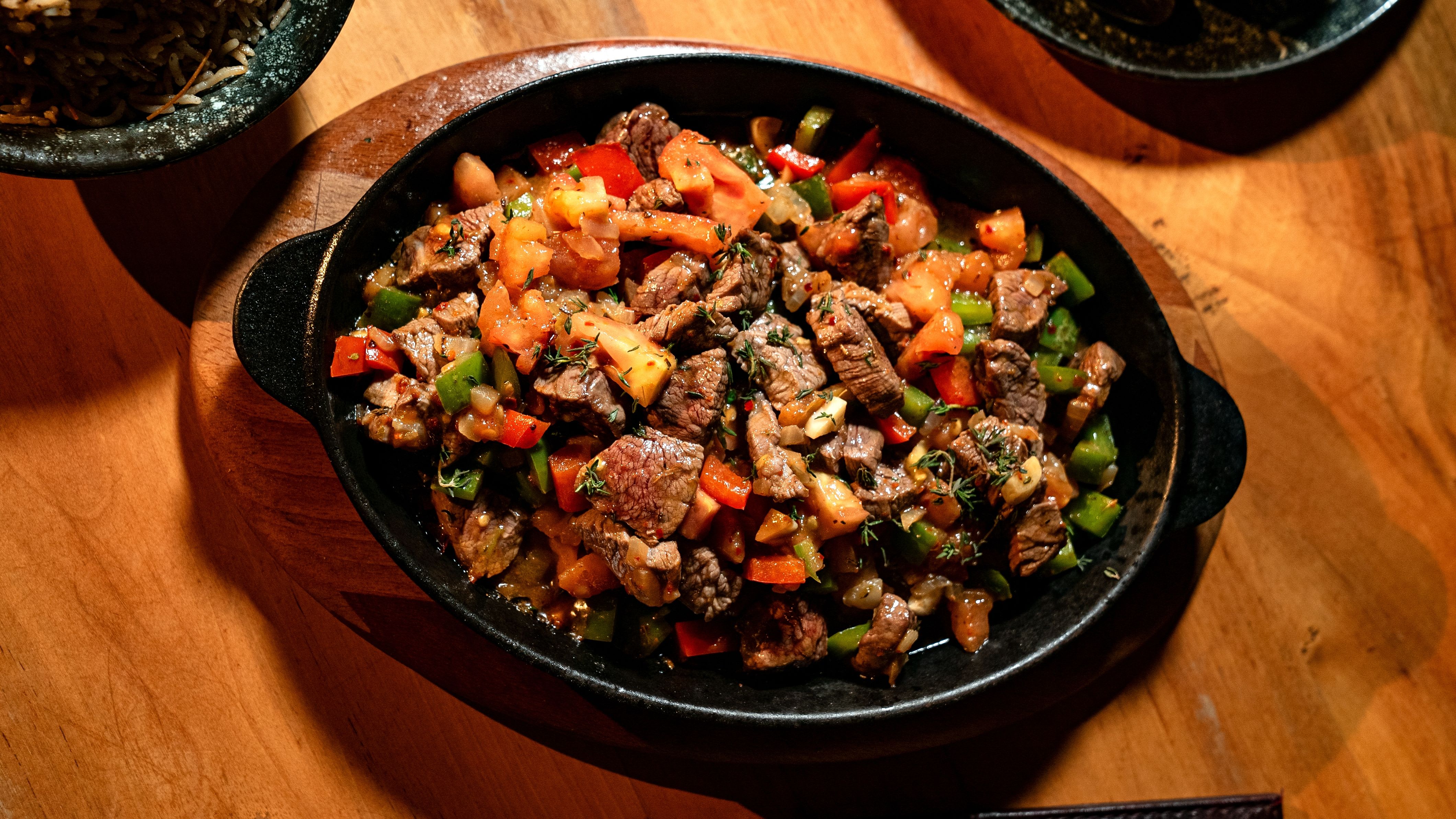
Photo: Mohamed Olwy / Pexels
The diets react (see scores below)
Common Ingredients
- beef
- onions
- bell peppers
- garlic
- cumin
- coriander
- tomatoes
- vegetable oil
Specific recipes may vary.
Incompatible with 5 of 11 diets
Diet Ratings
Suqaar is a Somali stir-fried beef dish that is fundamentally keto-friendly in structure — lean beef with spices cooked in oil. The main concerns are the bell peppers (moderate carbs, roughly 4-6g net carbs per half cup) and tomatoes (roughly 3-4g net carbs per half cup), which together can push net carbs higher depending on portion size. Onions add another 4-5g net carbs per serving. A standard serving could land in the 8-15g net carb range, which is manageable within a daily keto budget but requires mindfulness. The spices (cumin, coriander, garlic) are fine in culinary amounts. Vegetable oil is acceptable though less preferred than animal fats or olive oil by stricter practitioners. With portion control on the vegetables, this dish fits keto well.
Strict keto practitioners may flag the combination of tomatoes, bell peppers, and onions as unnecessarily carb-dense, arguing these vegetables should be minimized or replaced with lower-carb options like zucchini or leafy greens to maximize the daily carb budget for higher-nutrient choices.
Suqaar is a Somali stir-fried meat dish with beef as its primary protein. Beef is an animal product and is unequivocally excluded from a vegan diet. All other ingredients (onions, bell peppers, garlic, cumin, coriander, tomatoes, vegetable oil) are plant-based, but the presence of beef makes this dish incompatible with veganism.
Suqaar is a Somali stir-fry dish made with beef, vegetables, and spices — most of which are fully paleo-compliant. Beef, onions, bell peppers, garlic, cumin, coriander, and tomatoes are all approved paleo foods. However, the dish is traditionally cooked in vegetable oil, which is a seed oil explicitly excluded from the paleo diet. Seed oils like canola, soybean, or generic 'vegetable oil' are industrially processed and high in omega-6 polyunsaturated fats, making them a clear avoid under paleo guidelines. This single ingredient disqualifies the dish as traditionally prepared. A simple substitution — cooking in ghee, coconut oil, or avocado oil — would make the dish largely paleo-approved.
Suqaar is a Somali stir-fried beef dish. The primary protein is red meat, which the Mediterranean diet restricts to a few times per month. The accompanying vegetables (onions, bell peppers, garlic, tomatoes) and spices (cumin, coriander) are positive elements aligned with Mediterranean principles, and the use of vegetable oil rather than animal fat is a mild positive. However, beef as the central ingredient is a clear departure from Mediterranean diet priorities, pushing this into 'avoid' territory. The vegetable content slightly elevates the score above a 1-2, but the red meat foundation is the defining factor.
Some Mediterranean diet practitioners, particularly those acknowledging Eastern Mediterranean and Middle Eastern culinary traditions, allow small portions of lean red meat a few times per month. If Suqaar is consumed infrequently and in modest portions with an emphasis on the vegetable components, it could be considered an occasional 'caution'-level food rather than a strict avoid — especially since the dish is not processed and uses whole-food ingredients.
Suqaar is a Somali beef stir-fry that, while centered on beef (a carnivore-approved protein), is heavily loaded with plant-based ingredients that are entirely excluded from the carnivore diet. Onions, bell peppers, garlic, tomatoes, cumin, and coriander are all plant foods — vegetables and spices that violate core carnivore principles. Vegetable oil is a plant-derived fat that is strictly avoided on carnivore in favor of animal fats like tallow or lard. The beef itself would be acceptable, but as prepared, the dish cannot be considered carnivore-compatible in any tier of the diet.
Suqaar is a traditional Somali stir-fried meat dish made with wholesome, unprocessed ingredients. Every component in this dish — beef, onions, bell peppers, garlic, cumin, coriander, tomatoes, and vegetable oil — is fully compliant with Whole30 rules. Meat is explicitly allowed, vegetables (onions, bell peppers, tomatoes) are allowed, spices (cumin, coriander) are allowed, garlic is allowed, and natural fats/oils are allowed. There are no excluded ingredients such as grains, legumes, dairy, added sugars, alcohol, or any other banned substances. Vegetable oil is compliant as a cooking fat, though some Whole30 practitioners prefer less refined oils like olive or coconut oil. This dish is a straightforward, whole-food meal that aligns perfectly with the spirit and letter of the Whole30 program.
Suqaar contains two major high-FODMAP ingredients that make it unsuitable during the elimination phase: onions and garlic. Both are among the highest-fructan foods tested by Monash University, and even small amounts (e.g., a quarter of an onion, a single clove of garlic) push a dish well into high-FODMAP territory. These aromatics are foundational to the dish and cannot simply be reduced to a safe threshold without fundamentally altering the recipe. Beef itself is low-FODMAP (plain protein contains no FODMAPs), bell peppers are low-FODMAP at standard servings, cumin and coriander are low-FODMAP as spices, canned or fresh tomatoes are low-FODMAP at moderate servings, and vegetable oil is FODMAP-free. However, the onion and garlic content alone is disqualifying for the elimination phase.
Suqaar is a Somali stir-fried beef dish with vegetables and spices. The vegetable components — onions, bell peppers, garlic, tomatoes — are strongly DASH-aligned, providing potassium, fiber, and antioxidants. The spices (cumin, coriander) are DASH-friendly with no sodium concerns. The limiting factor is beef, which DASH guidelines classify as red meat to be limited due to saturated fat content. DASH recommends lean meats and emphasizes poultry and fish over red meat. The cut and fat content of beef used matters significantly — lean cuts like sirloin or round are far more acceptable than fatty cuts. Vegetable oil is preferred over tropical oils and is acceptable in moderation. The dish lacks added sodium from high-sodium condiments (no soy sauce, no processed ingredients), which is a meaningful positive. Overall, Suqaar is a moderately DASH-compatible dish — better than most red meat preparations due to its vegetable density and clean ingredient profile, but the red meat base keeps it in the 'caution' zone per standard DASH guidelines.
NIH DASH guidelines recommend limiting red meat broadly due to saturated fat; however, updated clinical interpretations note that lean beef in portion-controlled servings (3 oz or less) can fit within a DASH pattern, and Suqaar's high vegetable-to-meat ratio and absence of processed high-sodium ingredients make it more acceptable than the red meat category label alone would suggest.
Suqaar is a Somali stir-fried meat dish that has several Zone-favorable elements but requires attention to a few details. The vegetables (onions, bell peppers, garlic, tomatoes) are low-glycemic Zone-favorable carbohydrates with good polyphenol content. The spices (cumin, coriander) are anti-inflammatory and Zone-neutral. The main concerns are: (1) beef — while lean cuts of beef are acceptable in Zone, the cut used in Suqaar is variable; if it's a fattier cut, saturated fat content rises, pushing it toward 'caution'; lean cuts like sirloin or eye of round would bring it closer to 'approve.' (2) Vegetable oil — Zone strongly favors monounsaturated fats (olive oil, avocado oil) over generic vegetable oils, which are typically high in omega-6 polyunsaturated fats (soybean, canola, sunflower), creating a pro-inflammatory profile contrary to Zone's anti-inflammatory emphasis. With portion control — a palm-sized serving of lean beef (~25g protein), generous colorful vegetables, and substituting olive oil — Suqaar can be reasonably Zone-balanced, though as traditionally prepared it skews slightly off the ideal fat profile.
Some Zone practitioners and later Sears writings take a more flexible view on omega-6 seed oils in small cooking quantities, arguing the anti-inflammatory benefit of the polyphenol-rich vegetables and spices may offset modest omega-6 exposure. Additionally, if the beef used is naturally lean (as is common in traditional Somali cuisine which historically used grass-fed, lean cattle), the saturated fat concern diminishes significantly, and some would rate this dish a solid 7.
Suqaar is a Somali stir-fried beef dish with a genuinely mixed anti-inflammatory profile. On the positive side, it features several notable anti-inflammatory ingredients: garlic and onions contain quercetin and organosulfur compounds that reduce inflammatory markers; bell peppers and tomatoes are rich in vitamin C, carotenoids, and lycopene; cumin and coriander both have demonstrated anti-inflammatory and antioxidant properties. These elements collectively add meaningful anti-inflammatory value. The main concern is the beef itself — red meat is a 'limit' food in anti-inflammatory frameworks due to saturated fat content and arachidonic acid, which can promote inflammatory signaling. The inflammatory burden depends heavily on the cut used (lean cuts like sirloin tip fare better than fattier cuts) and portion size. The second concern is 'vegetable oil,' which in this context likely refers to a refined seed oil such as sunflower, corn, or soybean oil. These are high in omega-6 fatty acids and are generally advised against in anti-inflammatory protocols when used regularly, though the amount used in a stir-fry is moderate. If extra virgin olive oil were substituted and a lean cut used, this dish would rate higher. As prepared, it represents a moderate-quality meal — nutrient-dense vegetables and beneficial spices partially offset the pro-inflammatory signals from red meat and likely refined oil.
Most anti-inflammatory authorities (Dr. Weil, IF Rating system) flag red meat and refined seed oils as limiting factors, supporting a 'caution' verdict. However, mainstream nutrition research notes that lean red meat in moderate portions can fit within a broadly healthy diet, and some researchers distinguish between industrially refined seed oils and minimally processed versions — the AHA and many dietitians consider certain vegetable oils neutral or acceptable in modest quantities.
Suqaar is a Somali stir-fried beef dish with vegetables and spices. It offers meaningful protein from beef and fiber and micronutrients from onions, bell peppers, tomatoes, and garlic. The spice blend (cumin, coriander) is mild and generally well-tolerated on GLP-1 medications. However, the primary protein source is beef, which depending on the cut used can carry moderate to high saturated fat — a concern both for GLP-1 side effects (nausea, bloating, slowed gastric emptying compounded by fatty meat) and for cardiovascular health during weight loss. The use of vegetable oil adds additional fat calories. The dish does not qualify as a lean protein source by default, though lean beef cuts (e.g., sirloin, eye of round) would improve the rating. Portion size matters significantly here — a small serving over a high-fiber base (e.g., lentils or vegetables) would be more compatible. The vegetable content is a genuine positive for fiber and nutrient density.
Some GLP-1-focused dietitians accept lean beef in moderation as a valid high-protein option, particularly for patients who tolerate red meat well and need dietary variety for adherence — in that context, a lean-cut suqaar could be rated higher. Others caution against any red meat given that saturated fat consistently worsens nausea and reflux in GLP-1 patients, and that gastric emptying is already slowed, making fatty proteins sit heavier and longer.
*See how scores were generated at our methodology page.
Nutritional profile
Six traits that cut across every diet.
Fiber & Plants
How much whole-plant food and fiber it delivers.
Healthy Fats
The quality of its fats (unsaturated, omega-3).
Whole / Unprocessed
How close it is to its natural, unprocessed form.
Gut Gentle
How easy it is on digestion (low FODMAP, few irritants).
Low Glycemic
How little it spikes your blood sugar.
Protein Density
How much protein it packs per calorie.
Controversy Index
Higher controversy = more disagreement between diets.
Diet-Specific Tips
 Keto — 6/10
View tips
- Beef is an excellent keto protein source with zero carbs
- Bell peppers contribute moderate net carbs (~4-6g per half cup)
- Tomatoes add additional net carbs (~3-4g per half cup)
- Onions are higher-carb vegetables requiring portion control
- Spices and garlic are fine in culinary quantities
- Vegetable oil is acceptable but less preferred by strict keto
- Total net carbs per serving manageable with portion control
- No grains, added sugars, or high-carb starches present
 Whole30 — 9/10
View tips
- Beef is an explicitly allowed protein on Whole30
- All vegetables (onions, bell peppers, tomatoes, garlic) are compliant
- Cumin and coriander are compliant spices
- Vegetable oil is a compliant cooking fat
- No excluded ingredients present
- Dish is a whole-food preparation, not a recreation of junk food or baked goods
 DASH — 5/10
View tips
- Red meat (beef) is limited on DASH due to saturated fat content
- High vegetable density (onions, bell peppers, tomatoes, garlic) strongly supports DASH goals
- No high-sodium condiments or processed ingredients — low sodium profile
- Spices (cumin, coriander) are DASH-friendly flavor enhancers with no sodium
- Vegetable oil preferred over saturated tropical oils — acceptable
- Lean beef cuts would score higher; fatty cuts would score lower
- Portion control critical — 3 oz lean beef serving aligns with DASH
- Dish would score higher with chicken or fish substituted for beef
 Zone — 6/10
View tips
- Lean beef is Zone-acceptable protein but cut selection significantly affects saturated fat load
- Bell peppers, onions, tomatoes, and garlic are Zone-favorable low-glycemic carbohydrates rich in polyphenols
- Vegetable oil is likely omega-6-heavy (pro-inflammatory), conflicting with Zone's anti-inflammatory fat emphasis
- Cumin and coriander are Zone-neutral spices with anti-inflammatory properties
- Dish lacks a dedicated carbohydrate block side — often served with rice, which would be an 'unfavorable' Zone carb
- With lean beef and olive oil substitution, macros can be structured into balanced Zone blocks
- Portion control of beef to ~3oz (~85g) aligns with Zone's ~25g protein per meal target
 Anti-Inflammatory — 5/10
View tips
- Red meat (beef) is a 'limit' food in anti-inflammatory frameworks due to saturated fat and arachidonic acid
- Garlic and onions provide quercetin and organosulfur anti-inflammatory compounds
- Bell peppers and tomatoes contribute carotenoids, lycopene, and vitamin C
- Cumin and coriander have documented antioxidant and anti-inflammatory properties
- Vegetable oil (likely refined seed oil) is high in omega-6 fatty acids, discouraged in anti-inflammatory protocols
- Overall dish quality is highly dependent on beef cut leanness and oil type used
 GLP-1 Friendly — 5/10
View tips
- Beef provides substantial protein but saturated fat content depends heavily on cut — fatty cuts worsen GLP-1 GI side effects
- Slowed gastric emptying on GLP-1s means fatty or dense proteins are harder to tolerate
- Vegetables (bell peppers, tomatoes, onions, garlic) contribute fiber, micronutrients, and water content — positives
- Vegetable oil adds fat calories; amount used in cooking affects overall fat load
- Mild spices (cumin, coriander) are generally well-tolerated and do not worsen GI symptoms
- Portion-sensitive: small servings of a lean-cut version are compatible; large servings of fatty beef are not
- No refined carbohydrates, no added sugar, no fried preparation — structural positives