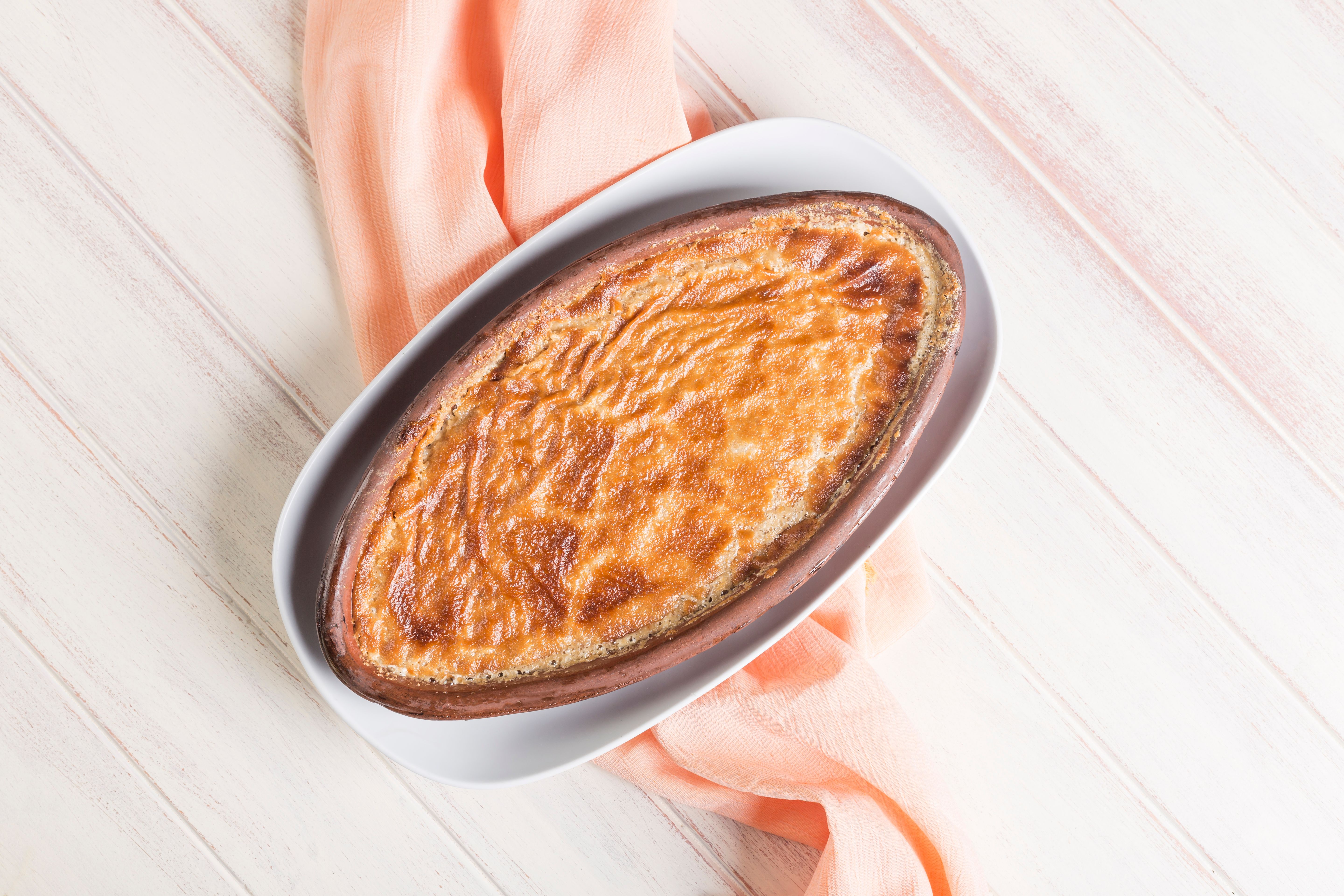
South-African
Melktert
The diets react (see scores below)
Common Ingredients
- milk
- eggs
- sugar
- flour
- butter
- cinnamon
- vanilla
- pastry
Specific recipes may vary.
Incompatible with 11 of 11 diets
Diet Ratings
Melktert is a South African milk tart that is fundamentally incompatible with a ketogenic diet. It contains multiple high-carb ingredients: a wheat flour-based pastry crust, significant added sugar, and flour used in the custard filling. A single slice easily contains 40-60g of net carbs, which alone would exceed or match the entire daily keto carb allowance. There is no meaningful way to consume traditional melktert while maintaining ketosis. The only keto-compatible element is the butter, eggs, and cinnamon, but these are overwhelmed by the carbohydrate load from sugar, flour, and pastry.
Melktert (milk tart) is a traditional South African custard tart that is fundamentally incompatible with a vegan diet. Its core ingredients — milk, eggs, and butter — are all animal-derived products explicitly excluded under vegan principles. These are not incidental trace ingredients but the primary structural and flavour components of the dish. The pastry base typically also contains butter. There is no ambiguity here: this dish cannot be considered vegan in its traditional form.
Melktert is a traditional South African milk tart that is fundamentally incompatible with the Paleo diet. It contains multiple core non-Paleo ingredients: milk (dairy), flour (grain-based), sugar (refined), butter (dairy), and pastry (grain-based processed dough). Every structural component of this dish violates Paleo principles — the crust is made from pastry/flour, the filling is a dairy-and-grain-thickened custard sweetened with refined sugar. While eggs, cinnamon, and vanilla are Paleo-approved, they are minor components that do not redeem the dish. This is not a gray-area food — it is a processed baked good built almost entirely from excluded ingredient categories.
Melktert is a South African milk tart consisting of a sweet pastry crust filled with a custard made from milk, eggs, sugar, and flour, flavored with cinnamon and vanilla. This dessert directly contradicts multiple Mediterranean diet principles: it is built on refined white flour pastry, contains significant added sugar, uses butter as the primary fat instead of olive oil, and is a highly processed sweet treat with little nutritional value. While eggs and milk are individually acceptable in moderation on the Mediterranean diet, their role here is to deliver a sugary, refined-grain dessert. There are no vegetables, legumes, whole grains, or other Mediterranean staples present. The combination of refined grains, added sugars, and saturated fat from butter places this firmly in the 'avoid' category.
Melktert is a South African milk tart that is fundamentally incompatible with the carnivore diet. While it contains some animal-derived ingredients (milk, eggs, butter), the dish is built around a pastry crust made from flour and is heavily sweetened with sugar — both of which are strictly excluded on carnivore. Additional plant-derived ingredients include cinnamon, vanilla, and the pastry shell itself. The flour-based crust and added sugar alone are disqualifying, making this a dessert pastry that belongs firmly in the avoid category regardless of its animal-derived components.
Melktert (South African milk tart) contains multiple Whole30-excluded ingredients. Milk is dairy and excluded. Sugar (added sugar) is excluded. Flour is a grain product and excluded. Butter (regular) is excluded (only ghee/clarified butter is the dairy exception). Pastry shell is made from flour and butter, compounding the grain and dairy violations. Additionally, as a tart/pastry, it falls squarely into the 'no recreating baked goods' rule. This dish fails on virtually every ingredient count.
Melktert (South African milk tart) contains multiple high-FODMAP ingredients that make it problematic during the elimination phase. The filling is primarily milk-based, and a standard serving contains a significant quantity of lactose (cow's milk is high-FODMAP above 100ml). The pastry/flour component contains wheat, which is high in fructans. Together, these two ingredients — lactose from milk and fructans from wheat-based pastry and flour (used to thicken the filling) — make a standard slice of melktert high-FODMAP. Eggs, butter, cinnamon, and vanilla are low-FODMAP. Sugar in moderate amounts is also acceptable. However, the combination of substantial lactose and wheat fructans means a typical serving would almost certainly exceed FODMAP thresholds for at least two FODMAP categories simultaneously.
Some FODMAP practitioners note that a very small slice might reduce lactose and fructan load to borderline levels, and that lactase enzyme supplements can mitigate the lactose component. However, Monash University's elimination phase guidelines advise avoiding both regular milk in large quantities and wheat-based pastry, so most clinical FODMAP dietitians would recommend avoiding melktert entirely during elimination rather than attempting portion control across two stacked FODMAP categories.
Melktert is a South African milk tart consisting of a sweet pastry crust filled with a custard-like mixture of milk, eggs, sugar, flour, butter, and cinnamon. This dish is problematic for DASH compliance on multiple fronts: (1) The pastry crust is made with refined white flour and butter, contributing saturated fat and refined carbohydrates with little fiber. (2) Significant added sugar content places it firmly in the 'sweets' category that DASH explicitly limits. (3) Butter in both the pastry and custard adds saturated fat, which DASH restricts. (4) As a snack, portion control is difficult, and the caloric density from fat and sugar is high. (5) It provides negligible potassium, magnesium, or fiber — the key DASH-beneficial nutrients. While it does contain milk (a DASH-friendly food in its low-fat form), the overall nutritional profile of melktert as a dessert/snack is dominated by added sugar, refined flour, and saturated fat, making it incompatible with DASH dietary principles. NIH/NHLBI guidelines explicitly categorize sweets and pastries as foods to limit or avoid on the DASH plan.
Melktert is a South African milk tart consisting of a sweet pastry crust filled with a sweetened milk custard. From a Zone Diet perspective, this dish is highly problematic on multiple fronts. The macronutrient ratio is essentially the inverse of Zone targets: it is dominated by high-glycemic carbohydrates (refined flour pastry crust, added sugar in both crust and filling) with minimal lean protein and a fat profile weighted toward saturated fat from butter. The sugar content is substantial and directly raises insulin, which is precisely what the Zone Diet seeks to minimize. The pastry shell is made from refined flour and butter — an unfavorable carbohydrate combined with saturated fat, with no fiber or polyphenol benefit. Even a small serving would consume a disproportionate share of carbohydrate and fat blocks while contributing almost no protein blocks, making it nearly impossible to balance into a Zone meal or snack without heroic compensatory portioning elsewhere. There is no lean protein component, no monounsaturated fat, and no low-glycemic carbohydrate. As a snack category item, it fails all three Zone macronutrient criteria simultaneously. This is one of the relatively rare cases where the food genuinely cannot be incorporated into Zone eating in any practical way.
Melktert is a traditional South African milk tart with a profile that conflicts with anti-inflammatory principles on multiple fronts. The dish is built on a refined wheat pastry crust (refined carbohydrates with minimal fiber or nutrients), is sweetened with added sugar, and relies on butter (saturated fat) as a key fat source. Full-fat dairy milk forms the bulk of the filling. These ingredients collectively represent several categories that anti-inflammatory frameworks flag as pro-inflammatory: refined carbohydrates, added sugars, saturated fat from butter, and full-fat dairy. The one redemptive ingredient is cinnamon, which has documented anti-inflammatory properties, and vanilla, which is neutral-to-mildly beneficial for polyphenol content. However, these spices appear in small quantities and cannot offset the inflammatory load of the base ingredients. Eggs contribute some neutral-to-modest nutrition (choline, selenium) but also arachidonic acid. This dish has no omega-3s, no antioxidant-rich vegetables or fruits, no legumes, no whole grains, and no beneficial oils like extra virgin olive oil. It is essentially a dessert tart high in sugar, refined flour, saturated fat, and full-fat dairy — a combination consistently associated with increased inflammatory markers (CRP, IL-6) in research. As an occasional indulgence it may not cause harm, but it does not align with anti-inflammatory dietary principles and should be categorized as a food to avoid within this framework.
Melktert is a traditional South African milk tart consisting of a sweet pastry crust filled with a milk-based custard sweetened with sugar and flavored with cinnamon and vanilla. It is poorly suited for GLP-1 patients on nearly every key criterion. It has negligible protein density — the eggs and milk contribute only small amounts relative to the high calorie load, and the dish is listed with no primary protein. It is high in refined carbohydrates from the pastry shell and added sugar, making it a high-glycemic, calorie-dense food with very little nutritional return per bite. The butter in both the pastry and custard contributes saturated fat, which can worsen GLP-1 side effects including nausea, bloating, and reflux. The sugar load is incompatible with the guideline to avoid high-sugar foods. Fiber content is essentially zero. The rich, sweet, fatty profile is precisely the category of food that GLP-1 patients are advised to avoid. Even as an occasional small treat, a standard slice provides empty calories that crowd out the nutrient-dense foods patients critically need when eating reduced volumes.
*See how scores were generated at our methodology page.
Nutritional profile
Six traits that cut across every diet.
Fiber & Plants
How much whole-plant food and fiber it delivers.
Healthy Fats
The quality of its fats (unsaturated, omega-3).
Whole / Unprocessed
How close it is to its natural, unprocessed form.
Gut Gentle
How easy it is on digestion (low FODMAP, few irritants).
Low Glycemic
How little it spikes your blood sugar.
Protein Density
How much protein it packs per calorie.
Controversy Index
Higher controversy = more disagreement between diets.