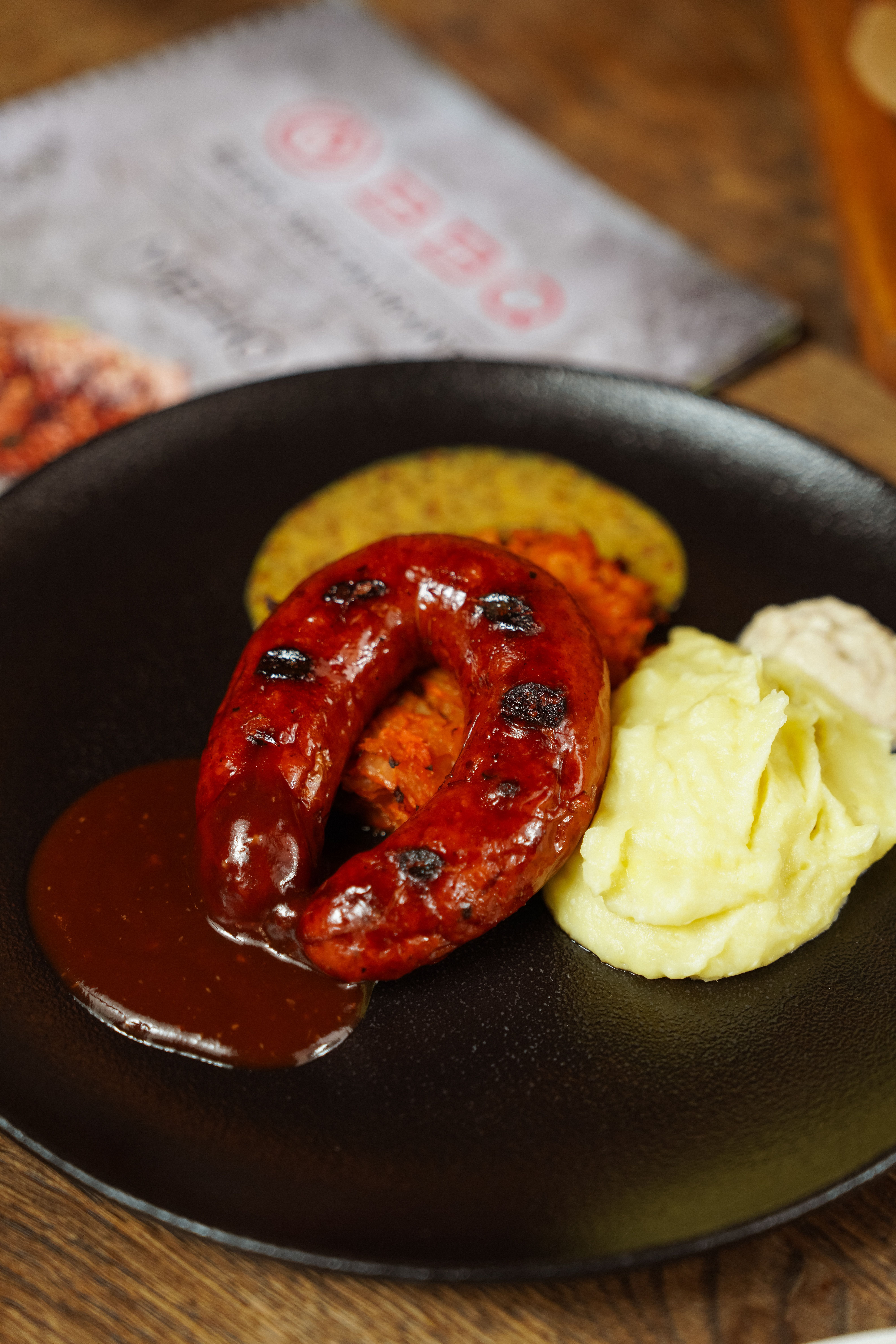
South-African
Pap and Wors
The diets react (see scores below)
Common Ingredients
- maize meal
- boerewors
- water
- salt
- tomato
- onion
Specific recipes may vary.
Incompatible with 9 of 11 diets
Diet Ratings
Pap and Wors is fundamentally incompatible with a ketogenic diet due to its primary base ingredient: maize meal (pap). Maize meal is a refined grain product with extremely high net carbs — a single standard serving of pap (roughly 200g cooked) can contain 30–45g of net carbs, easily consuming an entire day's keto carb budget in one component alone. The boerewors sausage is actually keto-friendly on its own, being a high-fat, moderate-protein beef and spice sausage with minimal carbs. The tomato and onion relish adds a small but non-trivial carb load. However, the maize meal base is the dealbreaker and cannot be consumed in any meaningful portion without breaking ketosis. This verdict is clear and unambiguous across all keto protocols.
Pap and Wors contains boerewors, a South African beef sausage, as its primary protein. Beef is an animal product and is unambiguously excluded from a vegan diet. Boerewors also typically contains pork fat and natural casings derived from animal intestines, compounding the non-vegan status. The pap (maize porridge) component made from maize meal, water, and salt is itself plant-based, as are the tomato and onion, but the presence of boerewors makes the dish as a whole entirely incompatible with a vegan diet.
Pap and Wors is a beloved South African staple, but it fails paleo standards primarily due to maize meal (pap), which is a processed grain product made from corn — explicitly excluded from the paleo diet. Corn/maize is a grain, and all grains are avoided on paleo due to their antinutrient content (phytates, lectins) and the fact that they were not part of the Paleolithic diet. Additionally, salt is added (excluded on strict paleo), and boerewors, while beef-based, is a processed sausage that typically contains fillers, preservatives, curing agents, and added salt. The tomato and onion components are paleo-approved vegetables, but they cannot redeem a dish whose foundational ingredient — pap — is a non-negotiable grain exclusion.
Pap and Wors is a South African staple combining maize meal (a refined grain with high glycemic index, not a Mediterranean whole grain) and boerewors (a heavily spiced beef sausage that is processed red meat with high saturated fat content). Both primary components directly contradict Mediterranean diet principles: refined maize meal lacks the fiber and nutrients of whole grains, while boerewors is a processed red meat product — doubly problematic as both processed and red meat. The tomato and onion are positive additions, but they are minor components that cannot offset the core issues. No olive oil, no legumes, no fish, no whole grains — this dish shares almost no foundational principles with the Mediterranean dietary pattern.
Pap and Wors is fundamentally incompatible with the carnivore diet. The dish is built around pap (maize meal porridge), a grain-based starch that is entirely plant-derived and represents exactly the type of food carnivore eliminates. While boerewors (South African beef sausage) is the animal protein component, it typically contains plant-based additives such as spices, vinegar, and sometimes fillers, making even the meat component questionable on strict carnivore. The dish also includes tomato and onion, both plant foods that are explicitly excluded. The dominant caloric base being maize meal makes this a cereal-forward dish with a meat accompaniment — essentially the inverse of what carnivore allows.
Pap and Wors is a beloved South African staple, but it is not compatible with Whole30. Maize meal (ground corn/mielie meal) is the core ingredient of pap, and corn is explicitly excluded on the Whole30 as a grain. This alone disqualifies the dish regardless of the other ingredients. Additionally, boerewors (a traditional spiced sausage) typically contains breadcrumbs or other grain-based fillers, as well as added sugars and sulfites depending on the brand — making it a likely second violation. The remaining ingredients (water, salt, tomato, onion) are all Whole30-compliant, but the dish cannot be salvaged given the maize meal base.
Pap and Wors contains two significant FODMAP concerns that make it problematic during the elimination phase. First, onion is one of the highest-FODMAP foods tested by Monash University, rich in fructans, and is a core flavoring ingredient in this dish — it cannot reasonably be omitted from a traditional preparation. Second, boerewors (South African sausage) typically contains onion and/or garlic as standard spice ingredients, compounding the fructan load. Maize meal (pap) is low-FODMAP and safe. Tomato is low-FODMAP at standard servings (up to about 65g per Monash). Salt and water are FODMAP-free. However, the combination of onion in the dish plus onion/garlic within the boerewors sausage blend makes this dish high-FODMAP at any realistic serving size. Modifications — such as using plain beef sausage without onion/garlic and omitting onion from the dish — could make it compliant, but as traditionally prepared it must be avoided.
Some clinical FODMAP practitioners note that if homemade boerewors is prepared without onion or garlic and the dish is served without onion, pap with plain grilled beef sausage would be low-FODMAP; however, commercially available boerewors almost universally contains these high-FODMAP ingredients, making a 'safe' version difficult to achieve outside home cooking.
Pap and Wors presents significant challenges for the DASH diet primarily due to boerewors, a South African sausage that is high in saturated fat, sodium, and often contains fatty cuts of beef and pork. Boerewors typically contains 20-30% fat by weight and 600-900mg of sodium per 100g serving, both of which conflict directly with DASH principles of limiting saturated fat and sodium (<2,300mg/day). Maize meal (pap) is a refined grain rather than a whole grain, offering minimal fiber and limited nutritional density compared to DASH-preferred whole grains like brown rice or whole wheat. The tomato and onion components are DASH-positive, providing potassium, fiber, and antioxidants. However, the dish's core protein source fundamentally undermines DASH compatibility. Added salt further elevates sodium content. While the vegetables offer some redemption, the overall profile — high saturated fat, high sodium, refined grain base, processed red meat — aligns more closely with the 'avoid' category.
NIH DASH guidelines clearly limit processed red meat and high-sodium foods; however, some updated clinical interpretations acknowledge that homemade boerewors prepared with leaner cuts, reduced salt, and consumed in small portions alongside generous vegetables could be considered an occasional 'caution' food rather than a categorical avoid — particularly if sodium-reduced seasoning is used and pap is made with maize meal enriched with micronutrients.
Pap and Wors presents a challenging Zone Diet profile due to two primary issues. First, maize meal (pap) is a high-glycemic carbohydrate — essentially a refined grain porridge similar to grits or polenta — which Sears classifies as an 'unfavorable' carbohydrate. It causes rapid blood sugar spikes and is difficult to portion into Zone blocks without overwhelming the carb allocation. Second, boerewors is a traditional South African sausage made from a mix of beef and pork fat with spices, giving it a high saturated fat content and a less-than-lean protein profile, making it a poor match for the Zone's preference for lean proteins and monounsaturated fats. On the positive side, tomato and onion are favorable low-glycemic vegetables that add polyphenols and support the Zone's anti-inflammatory goals. In theory, this dish could be adjusted toward Zone compliance by drastically reducing pap portion size (treating it as a small carb block), supplementing with more vegetables, and using a leaner sausage — but as traditionally prepared, the macro ratio skews heavily toward high-GI carbohydrates and saturated fat, with inadequate lean protein and monounsaturated fat.
Some Zone practitioners note that Sears' later works (e.g., 'The Zone Diet' and his omega-3/polyphenol focus) allow for modest amounts of unfavorable carbs if the overall meal ratio is corrected. A small portion of pap alongside a larger vegetable base (tomato-onion relish) and a modest boerewors serving could technically be assembled into an approximate 40/30/30 block structure. In that context, the dish earns a mid-range caution rather than a near-avoid, because Zone is ratio-based and no single ingredient is categorically banned.
Pap and Wors is a South African staple combining maize meal porridge with boerewors (a spiced beef sausage), often served with a simple tomato and onion relish. From an anti-inflammatory perspective, this dish presents a mixed profile. The tomato and onion relish is genuinely beneficial — tomatoes supply lycopene and vitamin C, while onions provide quercetin, both established anti-inflammatory compounds. However, the two primary components raise concerns. Maize meal (pap) is a refined, high-glycemic carbohydrate with minimal fiber compared to whole grains; regular consumption of refined grains is associated with elevated inflammatory markers. Boerewors is a fatty beef sausage seasoned with coriander, cloves, and other spices — while the spices themselves are mildly anti-inflammatory, boerewors is high in saturated fat and sodium, and the red/processed meat base is consistently flagged as pro-inflammatory in anti-inflammatory nutrition frameworks. The sausage also typically contains preservatives and fillers depending on the commercial preparation. The dish lacks omega-3 sources, antioxidant-rich vegetables beyond the relish, or meaningful fiber. Occasional consumption as part of an otherwise anti-inflammatory diet is not alarming, but it is not a dish to emphasize.
Some nutrition researchers and traditional food advocates note that homemade boerewors made with high-quality beef and minimal additives is meaningfully different from ultra-processed sausages, and the spice blend (coriander, cloves, nutmeg) contributes genuine anti-inflammatory phytochemicals. Additionally, while maize meal is refined, it is not equivalent to high-fructose corn syrup or white flour in terms of glycemic impact when cooked as a thick porridge, and some researchers argue the glycemic response of pap is modulated by the fat content of the accompanying wors.
Pap and Wors is a traditional South African dish of maize meal porridge (pap) served with boerewors, a coiled beef-and-pork spiced sausage. It scores poorly across nearly every GLP-1 dietary priority. Boerewors is a high-fat processed sausage — typically 20–30g fat per 100g serving — with a significant saturated fat load and moderate protein that is undermined by poor protein density per calorie. It also contains added spices (coriander, cloves, nutmeg) which most patients tolerate, but the high fat content is the primary concern. Pap (maize meal porridge) is a refined starch with negligible fiber, low protein, and low micronutrient density — effectively empty calories that offer little nutritional value per bite. The tomato and onion components are beneficial (fiber, micronutrients, hydration), but they represent a small fraction of the dish. The combination of high saturated fat from boerewors plus a refined starchy base is likely to worsen GLP-1 side effects including nausea, bloating, and reflux due to slowed gastric emptying. Portion sensitivity is a concern: even a small serving delivers a high fat load. The tomato-onion relish (chakalaka-style preparation) offers modest mitigation but does not change the overall profile meaningfully.
Some GLP-1 dietitians may acknowledge that boerewors provides a meaningful protein hit (roughly 15–18g per 100g) and that traditional cultural foods should not be categorically excluded — a modified version using a smaller portion of wors, whole-grain or fortified pap, and a generous tomato-onion sauce could shift the profile toward 'caution.' However, the standard preparation as described does not meet GLP-1 dietary thresholds for fat content or protein density, and the high saturated fat load is a consistent concern across GLP-1 nutrition guidance.
*See how scores were generated at our methodology page.
Nutritional profile
Six traits that cut across every diet.
Fiber & Plants
How much whole-plant food and fiber it delivers.
Healthy Fats
The quality of its fats (unsaturated, omega-3).
Whole / Unprocessed
How close it is to its natural, unprocessed form.
Gut Gentle
How easy it is on digestion (low FODMAP, few irritants).
Low Glycemic
How little it spikes your blood sugar.
Protein Density
How much protein it packs per calorie.
Controversy Index
Higher controversy = more disagreement between diets.
Diet-Specific Tips
 Zone — 4/10
View tips
- Maize meal (pap) is a high-glycemic refined grain carbohydrate, classified as 'unfavorable' in Zone terminology
- Boerewors is a high-fat, moderately processed sausage with significant saturated fat — not a lean Zone-approved protein
- Tomato and onion are favorable low-glycemic, polyphenol-rich vegetables that partially support Zone goals
- As traditionally prepared, the dish skews toward an excess of high-GI carbs and saturated fat relative to lean protein and monounsaturated fat
- Portion control could theoretically allow incorporation into a Zone meal, but significant modifications (less pap, more vegetables, leaner protein) would be required
- No omega-3-rich ingredients or monounsaturated fats present in the base recipe
 Anti-Inflammatory — 4/10
View tips
- Boerewors is a red and processed meat high in saturated fat — a flagged pro-inflammatory food category
- Maize meal (pap) is a refined, low-fiber, high-glycemic carbohydrate, not a whole grain
- Tomato and onion relish provides lycopene, quercetin, and vitamin C — genuinely anti-inflammatory
- Spices in boerewors (coriander, cloves) have mild anti-inflammatory properties
- Dish is low in omega-3 fatty acids and antioxidant diversity
- Commercial boerewors may contain preservatives and additives
- Lacks legumes, oily fish, leafy greens, or other emphasized anti-inflammatory foods