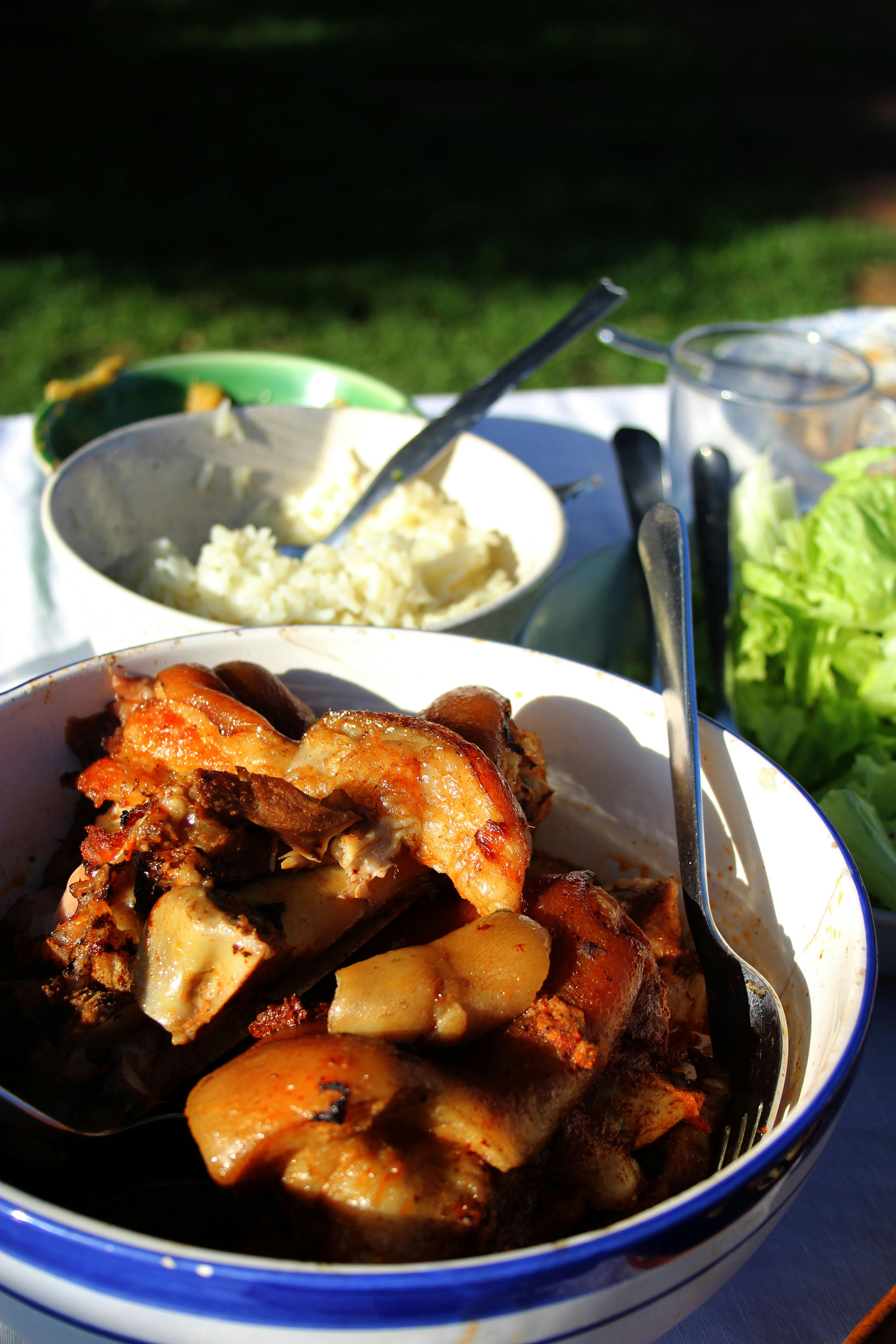
Photo: Christine Cleireny / Pexels
South-African
Potjiekos
The diets react (see scores below)
Common Ingredients
- beef
- potatoes
- carrots
- onion
- peppers
- stock
- wine
- spices
Specific recipes may vary.
Incompatible with 5 of 11 diets
Diet Ratings
Potjiekos is a traditional South African slow-cooked stew that is fundamentally incompatible with ketogenic principles in its standard form. The primary offenders are potatoes and carrots, which are high-starch and high-sugar root vegetables that alone can easily push a single serving well over the 20-50g daily net carb limit. A typical potato serving (150g) contributes roughly 25-30g net carbs, and carrots add another 8-10g per serving. Combined with onions, peppers, and wine (which adds residual sugars even after cooking), a standard portion of potjiekos could easily deliver 50-70g+ net carbs — far exceeding the daily keto threshold in a single meal. The beef base is keto-friendly and provides quality protein and fat, but it cannot redeem the dish as traditionally prepared. A heavily modified version substituting potatoes with cauliflower or turnip, reducing carrots significantly, and using a dry low-carb wine in small amounts could theoretically be adapted, but that would no longer constitute traditional potjiekos.
Potjiekos is a traditional South African slow-cooked stew prepared in a cast-iron pot (potjie). This version contains beef as the primary protein, which is unambiguously an animal product and therefore incompatible with a vegan diet. The stock is also likely beef-based, adding a second animal-derived ingredient. There is no plant-based variation being presented here — the dish is defined by its meat content.
Potjiekos is a South African slow-cooked stew that is largely paleo-friendly in concept — beef, carrots, onion, and peppers are all approved paleo ingredients. However, the dish contains white potatoes, which are debated within the paleo community, and wine/stock, which may contain added sulfites, salt, or other additives depending on preparation. Spices are generally approved if unprocessed and salt-free. The white potatoes are the primary sticking point: Loren Cordain's original framework discourages them due to glycoalkaloid content and glycemic load, while many modern paleo practitioners and protocols now accept them as a whole-food starch. The dish scores in the caution range rather than avoid because the majority of ingredients are clearly paleo-compliant and the problematic elements are debated rather than outright excluded.
Mark Sisson (Primal Blueprint) and the Whole30 protocol both permit white potatoes as a whole-food carbohydrate source, and many modern paleo practitioners would approve this dish with homemade, salt-free stock. Conversely, strict Cordain-school paleo adherents would flag the white potatoes and advise substituting with sweet potatoes, and would also flag commercially prepared stock or wine with additives.
Potjiekos is a South African slow-cooked stew made primarily with beef as the central protein, which directly conflicts with Mediterranean diet principles that limit red meat to a few times per month. While the dish contains several Mediterranean-friendly ingredients — vegetables (carrots, onion, peppers, potatoes), wine, and spices — the beef-centric nature and the traditional cooking method (using animal fat or butter in the cast-iron pot rather than olive oil) make this a poor fit. The vegetable content and use of wine are positive elements, but they cannot offset the primary red meat protein, which the Mediterranean diet explicitly restricts. If made occasionally with a small amount of beef and olive oil as the fat, it could edge toward caution territory, but as a traditional preparation it leans toward avoid.
Some Mediterranean diet interpreters take a more flexible view, noting that red meat in a vegetable-rich stew, consumed only occasionally, is not categorically prohibited — traditional Greek and Southern Italian cuisines do include infrequent lamb or beef stews. The abundant vegetables, wine, and spices align well with Mediterranean principles, and if olive oil replaced animal fats in cooking, a moderate portion could be considered an occasional acceptable meal rather than a strict avoid.
Potjiekos is a traditional South African slow-cooked stew that contains multiple plant-based ingredients alongside the beef. While beef is carnivore-approved, the dish is dominated by vegetables (potatoes, carrots, onion, peppers), wine (plant-derived alcohol), and spices — all of which are excluded on a strict carnivore diet. The stock may also contain plant-based additives. There is no version of this dish that qualifies as carnivore-compatible without a near-total reconstruction that would make it unrecognizable as Potjiekos. The beef component alone is approved, but as a complete dish it must be avoided.
Potjiekos is a traditional South African slow-cooked stew made in a cast-iron pot, and most of its ingredients are Whole30-compliant: beef, potatoes, carrots, onion, peppers, and spices are all approved whole foods. However, two ingredients require scrutiny. First, 'wine' is listed — alcohol is excluded on Whole30, though wine is sometimes used in cooking where the alcohol burns off; the Whole30 program does not make an exception for cooking wine (unlike, say, vanilla extract), so this is a red flag unless omitted or substituted. Second, 'stock' must be label-checked to ensure it contains no added sugar, MSG (now allowed per 2024 rules), sulfites (now allowed), or other excluded additives — many commercial stocks contain non-compliant ingredients. If the wine is omitted and a compliant stock is used, this dish becomes straightforwardly approvable. As commonly prepared with wine included, it falls into caution territory.
Some Whole30 practitioners argue that wine used purely as a cooking liquid (with alcohol fully cooked off) is functionally different from drinking alcohol, and that the spirit of the rule targets alcohol consumption rather than trace culinary use. However, official Whole30 guidelines by Melissa Urban do not carve out an exception for cooking wine, and the program explicitly lists alcohol as excluded without such a caveat.
Potjiekos contains two high-FODMAP ingredients that make it unsuitable during the elimination phase: onion and stock. Onion is one of the highest-FODMAP foods tested by Monash University, containing significant fructans at any culinary quantity — even small amounts cooked into a dish release fructans into the cooking liquid, making the entire dish high-FODMAP. Commercial stock almost universally contains onion and/or garlic (either whole or as powder/extract), compounding the fructan load. Wine in moderate culinary quantities is generally considered low-FODMAP, and the remaining ingredients — beef, potatoes, carrots, and peppers — are low-FODMAP at standard servings. However, the onion and stock combination is a disqualifying factor for the elimination phase. The dish could be made low-FODMAP with substitutions: replacing onion with the green tops of spring onions, using homemade or certified low-FODMAP stock, and using garlic-infused oil instead of garlic.
Potjiekos is a South African slow-cooked stew made in a cast-iron pot. The vegetable components — carrots, onions, peppers, and potatoes — are strongly DASH-aligned, providing potassium, magnesium, and fiber. However, beef is a red meat, which DASH limits due to saturated fat content; the cut used (e.g., chuck vs. lean stewing steak) significantly impacts saturated fat load. Stock is typically high in sodium, and wine adds minimal concern. Spices vary but can contribute sodium if salt-heavy blends are used. The dish is not inherently incompatible with DASH but requires modifications: lean beef cuts, low-sodium stock, and sodium-conscious spice choices. As commonly prepared in South African tradition, the sodium content from stock and the saturated fat from fattier beef cuts push this into 'caution' territory rather than 'approve.'
NIH DASH guidelines explicitly limit red meat consumption and recommend lean poultry or fish as preferred proteins; however, updated clinical interpretations note that lean cuts of beef in moderate portions within an otherwise vegetable-rich dish can be acceptable — some DASH-oriented dietitians would approve this dish if made with lean beef and low-sodium stock, aligning with the spirit of DASH's emphasis on overall dietary pattern rather than individual food exclusion.
Potjiekos is a slow-cooked South African stew with a mixed Zone profile. The dish contains several Zone-compatible elements — beef (lean cuts acceptable as protein), carrots, onions, and peppers (favorable low-glycemic vegetables), and spices — but is undermined by two significant Zone concerns. First, potatoes are explicitly classified as a high-glycemic, unfavorable carbohydrate in Zone methodology; Dr. Sears consistently lists them among foods to avoid alongside white bread and corn. Second, beef can range from lean (acceptable) to fatty cuts (problematic for saturated fat ratio), and traditional potjiekos often uses tougher, fattier cuts. The wine and stock add minimal macronutrient concern. The carbohydrate block would be dominated by potatoes rather than the preferred colorful vegetables, skewing the glycemic load upward and making it difficult to achieve the 40/30/30 ratio without significant recipe modification. A Zone-adapted version would replace potatoes with additional low-GI vegetables (zucchini, green beans, cauliflower) and ensure a lean beef cut, which would push the score toward 6-7. As traditionally prepared, it requires substantial modification.
Some Zone practitioners argue that in the context of a protein- and fiber-rich stew with controlled portion sizes, a modest amount of potato can be worked into a Zone block calculation without catastrophically spiking glycemic load — particularly if the overall meal portion is small and the potato quantity is limited. Later Sears writings on polyphenols would also favor the colorful peppers, onions, and wine (polyphenol sources) in this dish, which partially offset concerns.
Potjiekos is a traditional South African slow-cooked stew prepared in a cast iron pot, and its anti-inflammatory profile is genuinely mixed. The primary protein is beef, which anti-inflammatory guidelines place in the 'limit' category due to saturated fat content and arachidonic acid, though slow cooking can render some fat off. On the positive side, the dish is rich in colorful vegetables — carrots (beta-carotene), peppers (vitamin C, capsaicin), and onions (quercetin) — all of which carry meaningful antioxidant and anti-inflammatory properties. Potatoes are a neutral starchy carbohydrate. The inclusion of wine in cooking is consistent with Dr. Weil's framework, which accommodates moderate red wine for resveratrol, though alcohol burns off during cooking. Stock adds depth without significant inflammatory burden. Spices (likely including garlic, pepper, and possibly paprika or bay leaf) can contribute anti-inflammatory polyphenols. The dish's overall profile depends heavily on the cut of beef used — leaner cuts like chuck or round reduce saturated fat load — and the ratio of vegetables to meat. As a slow-cooked, vegetable-forward dish with beneficial aromatics and spices, it occupies a middle ground: not a strong anti-inflammatory choice, but far from a highly inflammatory one. Suitable occasionally rather than regularly.
Some anti-inflammatory practitioners following the Autoimmune Protocol (AIP) would flag both nightshade ingredients (peppers, potatoes) as potentially problematic for inflammation in sensitive individuals, due to solanine and lectins. Additionally, those taking a stricter view of red meat would rate this dish lower, while proponents of nose-to-tail or ancestral eating frameworks (e.g., Paul Saladino) argue that unprocessed red meat from well-raised animals is not inherently pro-inflammatory.
Potjiekos is a slow-cooked South African stew that has meaningful nutritional merits but several drawbacks for GLP-1 patients. On the positive side, it is a slow-cooked, soft, easily digestible dish — the long braising time breaks down fibers and proteins, making it gentle on a sluggish GLP-1 stomach. It contains a reasonable protein source in beef, along with fiber-contributing vegetables (carrots, onion, peppers) and potatoes. However, the primary protein is beef, which is typically a fattier cut in traditional potjiekos (chuck, short rib, or oxtail are most common), contributing significant saturated fat that can worsen GLP-1 side effects like nausea and bloating. The wine adds alcohol — though most of the alcohol cooks off during the long braise, residual compounds and the general caution around alcohol remain relevant. Potatoes are starchy and lower in nutrient density per calorie compared to non-starchy vegetables. Protein density per serving is moderate but likely insufficient on its own without attention to portion and cut selection. Overall, this dish sits in caution territory: acceptable occasionally if made with a leaner beef cut (sirloin, eye of round), wine used minimally and cooked off fully, and served in a small portion prioritizing protein and vegetables over potato.
Some GLP-1-focused dietitians would view a slow-braised beef and vegetable stew favorably due to its soft texture, warm palatability, and combination of protein and fiber in one dish — particularly useful when appetite is suppressed and patients need nutrient density in small volumes. Others flag beef categorically due to saturated fat content and the risk of worsening GI side effects, and would recommend substituting chicken thigh or lean chicken breast before approving this dish for regular consumption.
*See how scores were generated at our methodology page.
Nutritional profile
Six traits that cut across every diet.
Fiber & Plants
How much whole-plant food and fiber it delivers.
Healthy Fats
The quality of its fats (unsaturated, omega-3).
Whole / Unprocessed
How close it is to its natural, unprocessed form.
Gut Gentle
How easy it is on digestion (low FODMAP, few irritants).
Low Glycemic
How little it spikes your blood sugar.
Protein Density
How much protein it packs per calorie.
Controversy Index
Higher controversy = more disagreement between diets.
Diet-Specific Tips
 Paleo — 5/10
View tips
- Beef is a core approved paleo protein
- Carrots, onion, and peppers are approved paleo vegetables
- White potatoes are debated — excluded by Cordain, accepted by Sisson and Whole30
- Wine may contain sulfites and other additives; used in cooking but still a processed product
- Stock is a gray area — homemade bone broth is ideal; commercial stock often contains added salt and preservatives
- Spices are approved if natural and salt-free
- Overall dish concept aligns with paleo whole-food philosophy despite a few debated components
 Whole30 — 6/10
View tips
- Wine (alcohol) is listed as an ingredient — alcohol is excluded on Whole30 with no cooking exception
- Stock must be verified as compliant (no added sugar or other excluded additives)
- All other ingredients — beef, potatoes, carrots, onion, peppers, spices — are fully Whole30-compliant
- Dish is easily made compliant by substituting wine with compliant stock or water and using a verified clean stock
 DASH — 5/10
View tips
- Red meat (beef) is limited on DASH due to saturated fat — cut selection is critical
- Stock is typically high in sodium, potentially exceeding DASH limits per serving
- Vegetables (carrots, peppers, onions, potatoes) are strong DASH-positive ingredients providing potassium and fiber
- Wine adds negligible nutritional concern in cooking quantities
- Spice blends may add significant sodium if salt-heavy
- Low-sodium stock and lean beef cuts would significantly improve DASH compatibility
- Portion control of beef within the stew is important for staying within DASH red meat guidelines
 Zone — 4/10
View tips
- Potatoes are explicitly 'unfavorable' high-glycemic carbohydrates in Zone methodology — a primary concern
- Beef protein quality depends heavily on cut; fatty cuts add excess saturated fat beyond Zone targets
- Peppers, carrots, and onions are favorable low-glycemic Zone vegetables that support the dish
- Wine and spices contribute polyphenols, which align with Sears' anti-inflammatory emphasis
- Traditional preparation does not target 40/30/30 ratio; carb blocks are potato-heavy rather than vegetable-balanced
- Zone-adaptation feasible by substituting potatoes with low-GI vegetables and selecting lean beef
 Anti-Inflammatory — 5/10
View tips
- Beef is primary protein — anti-inflammatory guidelines recommend limiting red meat due to saturated fat and arachidonic acid
- Colorful vegetables (carrots, peppers, onion) provide antioxidants, quercetin, beta-carotene, and vitamin C
- Spices and aromatics (garlic, pepper, etc.) contribute anti-inflammatory polyphenols
- Wine inclusion aligns with Dr. Weil's moderate allowance; alcohol largely cooks off
- Potatoes are a neutral starchy carbohydrate; minimal inflammatory burden
- Peppers and potatoes are nightshades — potential concern for autoimmune-sensitive individuals
- Lean cut selection and vegetable-to-meat ratio significantly affect the dish's inflammatory load
- Slow cooking is a neutral-to-positive preparation method compared to high-heat grilling or frying
 GLP-1 Friendly — 5/10
View tips
- Beef is a moderate-to-high saturated fat protein source depending on cut — traditional potjiekos often uses fatty braising cuts
- Wine ingredient raises alcohol caution flag, though extended cooking reduces but does not eliminate concern
- Slow-cooked texture is GLP-1 friendly — soft, easy to digest, gentle on slowed gastric emptying
- Vegetable variety (carrots, peppers, onion) contributes fiber and micronutrients
- Potatoes add starchy carbohydrates with lower nutrient density per calorie — portion of potato relative to protein matters
- Protein density per serving is moderate but depends heavily on beef-to-vegetable-to-potato ratio
- Can be optimized by using a leaner beef cut and increasing vegetable volume relative to potato