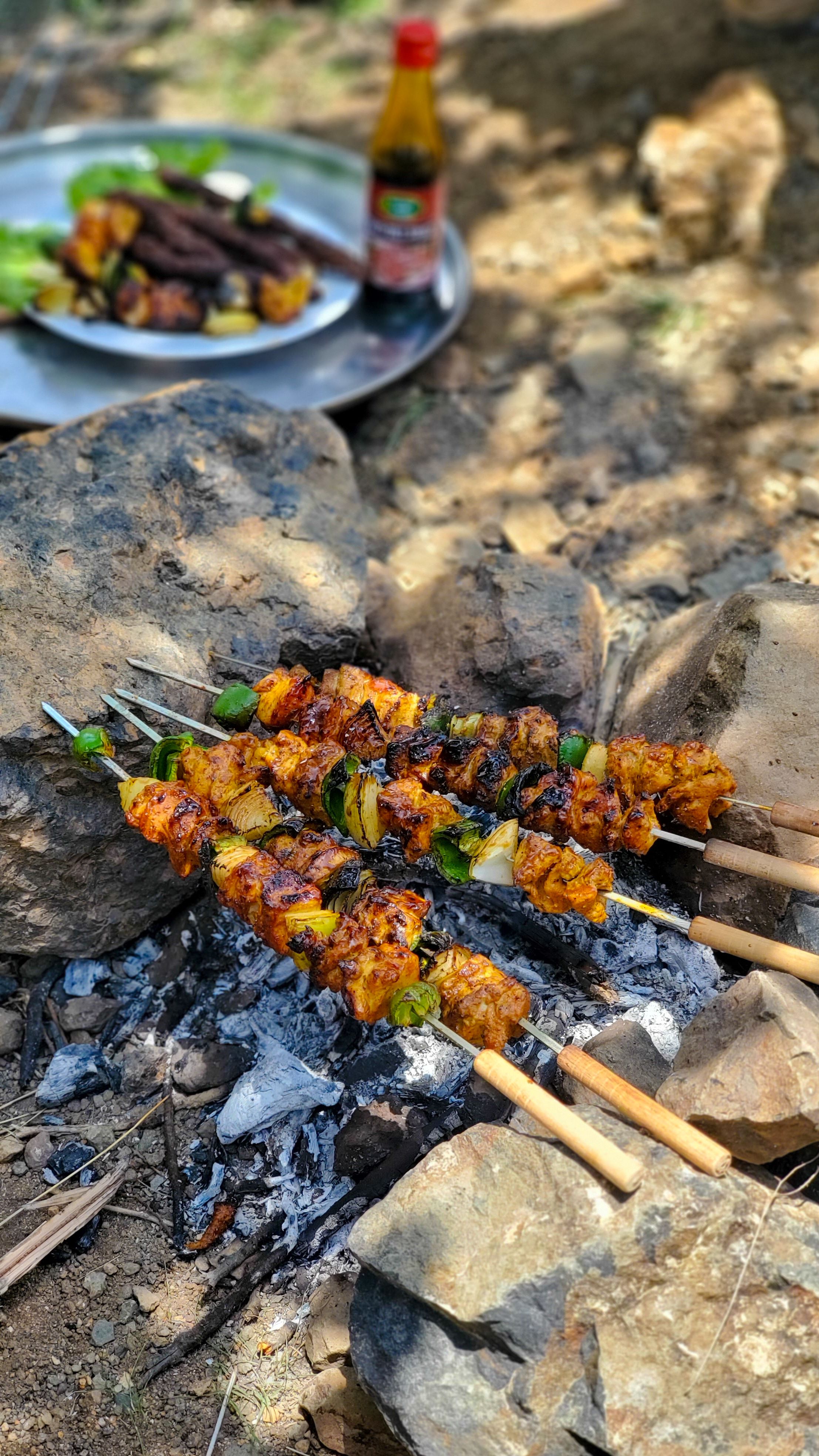
Photo: Aziza Mohammed / Pexels
South-African
Sosaties
The diets react (see scores below)
Common Ingredients
- lamb
- dried apricots
- onion
- curry powder
- garlic
- vinegar
- apricot jam
- bay leaves
Specific recipes may vary.
Incompatible with 5 of 11 diets
Diet Ratings
Sosaties are a traditional South African marinated kebab dish that contains multiple high-carb ingredients that make it fundamentally incompatible with ketogenic eating. Dried apricots are very high in sugar and concentrated carbohydrates (roughly 60-65g net carbs per 100g). Apricot jam is pure sugar and one of the worst offenders for keto, adding significant glycemic load. Combined, these two ingredients alone would almost certainly push a single serving well over the entire daily net carb allowance of 20-50g. The curry powder, garlic, vinegar, onion, and bay leaves are generally fine in small amounts, and lamb itself is an excellent keto protein and fat source — but the marinade and skewer ingredients dominate the carb profile. Even in small portions, the apricot jam and dried apricots cannot realistically be reduced enough to make this dish keto-compatible without fundamentally altering its character.
Sosaties are South African skewered kebabs whose primary protein is lamb, a direct animal product. Lamb is unambiguously non-vegan, making this dish entirely incompatible with a vegan diet. No substitution or preparation method can make the standard version of this dish vegan.
Sosaties are South African spiced lamb skewers with a sweet-sour marinade. The lamb, onion, garlic, curry powder, bay leaves, and dried apricots are all paleo-compatible — dried fruit is generally accepted in moderation, though it is calorie-dense and high in natural sugar. The main concerns are vinegar (most paleo authorities accept apple cider or wine vinegar as minimally processed, but some strict interpretations exclude it) and apricot jam, which is almost always a commercially processed product containing refined sugar and often preservatives. Even homemade apricot jam relies on concentrated added sugar to set, which falls outside paleo guidelines. If the jam were replaced with blended fresh or dried apricots, the dish would move closer to approval. As commonly prepared, the apricot jam is the decisive problem ingredient, pulling the dish into caution territory.
Strict Cordain-school paleo would flag the vinegar and any added sugar in the jam outright, potentially pushing this to avoid. Conversely, more flexible practitioners (Mark Sisson, Practical Paleo) might accept a homemade version using only whole dried apricots and a splash of apple cider vinegar, which would rate as a solid approve.
Sosaties are a South African dish featuring lamb as the primary protein, which is red meat — limited to a few times per month in the Mediterranean diet. Beyond the protein issue, the dish includes apricot jam (added sugar) and vinegar-based marinade, adding refined sugars that contradict Mediterranean principles. The spice blend and aromatics (garlic, onion, curry powder, bay leaves) are fine, and dried apricots are a reasonable fruit component, but these positives are outweighed by the red meat base and added sugar from the jam. This is not a Mediterranean staple and conflicts with core guidelines.
Some Mediterranean diet interpreters allow occasional red meat, particularly lamb, which is traditional in Greek, Turkish, and North African cuisines bordering the Mediterranean. In those contexts, a small portion of lean lamb skewer eaten infrequently could be considered compatible — the dried fruit and spice elements even echo Moroccan-style cooking. The added sugar from apricot jam, however, remains a consistent concern across all interpretations.
Sosaties is a South African marinated kebab dish that, while built on lamb (an excellent carnivore protein), is heavily laden with plant-based and processed ingredients that make it entirely incompatible with the carnivore diet. Dried apricots, apricot jam, and onion are plant foods containing sugars and carbohydrates. Curry powder is a blend of plant-derived spices. Garlic is a plant. Vinegar, while debated, is typically derived from plant fermentation and is used here as a marinade base. Bay leaves are plant matter. The dish is essentially a sugar-and-spice marinade applied to lamb — the dominant flavor and caloric profile comes from the fruit and spice components, not the meat itself. This is about as far from carnivore as a lamb dish can get.
Sosaties are South African marinated lamb kebabs, and most of the core ingredients are Whole30-compliant: lamb, onion, curry powder, garlic, vinegar, bay leaves, and dried apricots are all allowed. The critical issue is apricot jam, which almost universally contains added sugar, making standard apricot jam a Whole30 violation. However, the dish could be made compliant by substituting the apricot jam with a date-sweetened or 100% fruit-only version, or by blending whole dried apricots or fruit juice to achieve the same sweet-tangy effect. The dried apricots should also be checked for added sulfites — though sulfites are no longer excluded per 2024 Whole30 rule changes, so this is not a disqualifying concern. The dish's flavor profile and structure (marinated grilled meat) are entirely in the spirit of Whole30. With ingredient substitutions, this dish can be made fully compliant.
Some Whole30 practitioners argue that replicating sweet, jam-based marinades — even with compliant fruit-only substitutes — edges toward recreating the comfort-food sweetness the program aims to reset. However, Melissa Urban and official Whole30 guidelines explicitly allow fruit and fruit juice as sweeteners in recipes, so a fruit-sweetened marinade is technically sanctioned.
Sosaties contain multiple high-FODMAP ingredients that make this dish unsuitable during the elimination phase. Onion is one of the highest-FODMAP foods (fructans) and cannot be made safe at any reasonable serving size. Garlic is similarly very high in fructans. Dried apricots are high in polyols (sorbitol) — Monash rates dried apricots as high-FODMAP at just 3 pieces (21g). Apricot jam typically contains concentrated fructose and/or high-fructose ingredients. The marinade and sauce in this dish means these FODMAP compounds are dissolved throughout the entire dish, making it impossible to simply remove the offending ingredients. Lamb itself is low-FODMAP, curry powder is generally low-FODMAP, vinegar (small amounts) and bay leaves are low-FODMAP — but the combination of onion, garlic, dried apricots, and apricot jam makes the overall dish clearly high-FODMAP.
Sosaties are South African marinated lamb kebabs combining several DASH-relevant factors that pull in opposite directions. On the positive side, the dish includes beneficial ingredients: dried apricots provide potassium and fiber, onion and garlic offer antioxidants, and the marinade is vinegar-based rather than high-sodium. However, lamb is a red meat with moderate-to-high saturated fat content, which DASH guidelines advise limiting. The apricot jam adds notable added sugar, and curry powder/spice blends can sometimes contain hidden sodium depending on the blend used. The dish is not heavily processed and contains no tropical oils or full-fat dairy, which works in its favor. If prepared with lean cuts of lamb (leg or loin, well-trimmed), portion-controlled to 3oz, low-sodium curry powder, and reduced jam, it becomes more DASH-compatible. As commonly prepared, the red meat and added sugar place it in the caution zone.
NIH DASH guidelines categorically limit red meat consumption and emphasize poultry and fish as preferred proteins, placing lamb-based dishes in a cautious category. However, updated clinical interpretations note that lean, trimmed lamb in modest portions can fit within a DASH-style eating pattern, particularly when the overall dietary pattern is otherwise DASH-compliant, and some cardiologists now distinguish between processed red meat (high risk) and unprocessed lean red meat (moderate risk).
Sosaties present a mixed Zone Diet profile. The lamb itself is a moderate Zone protein — it contains more saturated fat than ideal lean proteins like skinless chicken or fish, but lean cuts of lamb can work within Zone blocks. The bigger issue is the carbohydrate sources: dried apricots and apricot jam are both high-glycemic, concentrated sugar sources that Sears would classify as 'unfavorable' carbs. Apricot jam is essentially sugar-dense and would spike insulin, working against Zone's core anti-inflammatory goal. However, the dish also contains onion and garlic (favorable, low-GI carbs) and vinegar (neutral/beneficial). Curry powder and bay leaves are spice-level ingredients with negligible macro impact but positive polyphenol contribution. To fit this dish into a Zone meal, one would need to: (1) use lean lamb cuts and trim visible fat, (2) minimize the apricot jam portion significantly or substitute with fresh apricots, (3) balance with additional non-starchy vegetables. As traditionally prepared, the jam and dried fruit load pushes the glycemic profile well above Zone-friendly levels, making this a 'caution' dish requiring meaningful modification rather than an outright avoid, since the structural protein component and spices are workable.
Some Zone practitioners following Sears' later work (e.g., 'The OmegaRx Zone') might rate this more harshly given the concentrated sugar from apricot jam directly driving an insulin spike — a central villain in Sears' framework. The dried apricots and jam together could push a serving's carb block count very high with poor glycemic quality, leading stricter Zone adherents to treat this as closer to an 'avoid' in its traditional preparation. Conversely, a moderate Zone practitioner might accept a very small portion of this dish — emphasizing the lamb and onion while treating the sweet marinade as a minor flavor element — and rate it more favorably.
Sosaties present a genuinely mixed anti-inflammatory profile. On the positive side, curry powder contains turmeric (curcumin), ginger, and other anti-inflammatory spices that are well-supported by research. Garlic and onion contribute quercetin and organosulfur compounds with anti-inflammatory properties. Dried apricots offer beta-carotene and polyphenols, though in concentrated sugar form. Vinegar (particularly apple cider vinegar) has some evidence for glycemic moderation. However, lamb is a red meat with notable saturated fat content, which anti-inflammatory frameworks consistently recommend limiting. Apricot jam introduces added sugars, which are pro-inflammatory — though the amount per serving is likely modest as a marinade component. Bay leaves contribute minor anti-inflammatory phytonutrients. The dish is not heavily processed and is grilled (a positive preparation method), but the red meat base and added sugar from jam prevent a full approval. Lamb is lower in pro-inflammatory arachidonic acid than beef and contains some conjugated linoleic acid (CLA), which slightly moderates the concern. Occasional consumption as part of an otherwise anti-inflammatory dietary pattern is reasonable.
Some anti-inflammatory practitioners, particularly those following stricter protocols like AIP or Dr. Weil's more conservative guidance, would score this lower due to the red meat base and added sugar from apricot jam, recommending substitution with chicken or fish. Conversely, others note that grass-fed lamb has a more favorable omega-6 to omega-3 ratio than grain-fed beef, and that the spice profile (turmeric, garlic, curry) may meaningfully offset modest red meat consumption within an otherwise healthy dietary pattern.
Sosaties are South African marinated lamb skewers that present a mixed nutritional profile for GLP-1 patients. On the positive side, lamb is a complete protein source and the skewer format naturally encourages smaller, portion-controlled servings. The marinade includes onion, garlic, vinegar, and curry powder — all low-calorie and digestively active ingredients. However, lamb is a fatty red meat with meaningful saturated fat content depending on the cut (shoulder and leg differ significantly), which can worsen GLP-1 side effects like nausea, bloating, and reflux. The inclusion of apricot jam and dried apricots adds concentrated sugars that spike glycemic load with little fiber or protein payoff per calorie. The curry spice level is typically mild in traditional sosatie recipes, which is acceptable, but individual batches vary. Overall: decent protein delivery in a small-portion-friendly format, undermined by saturated fat from lamb and added sugars from the jam and dried fruit components.
Some GLP-1-focused dietitians accept lean lamb cuts (leg) trimmed of visible fat as a legitimate protein source, arguing the saturated fat concern is overstated when portions are small (2–3 skewers) and the marinade's vinegar base aids digestion. Others maintain that any fatty red meat should be avoided on GLP-1 therapy due to slowed gastric emptying compounding the fat digestion burden, and flag the apricot jam as an unnecessary glycemic risk that should be substituted or eliminated entirely.
*See how scores were generated at our methodology page.
Nutritional profile
Six traits that cut across every diet.
Fiber & Plants
How much whole-plant food and fiber it delivers.
Healthy Fats
The quality of its fats (unsaturated, omega-3).
Whole / Unprocessed
How close it is to its natural, unprocessed form.
Gut Gentle
How easy it is on digestion (low FODMAP, few irritants).
Low Glycemic
How little it spikes your blood sugar.
Protein Density
How much protein it packs per calorie.
Controversy Index
Higher controversy = more disagreement between diets.
Diet-Specific Tips
 Paleo — 5/10
View tips
- Lamb is a fully paleo-approved protein
- Dried apricots are paleo-acceptable in moderation due to high natural sugar content
- Apricot jam typically contains refined sugar and is a processed product — key disqualifying ingredient
- Vinegar is generally accepted by mainstream paleo but excluded by strict interpretations
- Curry powder, garlic, bay leaves, and onion are all paleo-compliant
- Dish could be made paleo by substituting whole blended apricots for the jam
 Whole30 — 5/10
View tips
- Apricot jam almost always contains added sugar — a Whole30-excluded ingredient
- Lamb, onion, garlic, curry powder, vinegar, and bay leaves are all fully compliant
- Dried apricots are compliant; added sulfites are no longer excluded per 2024 rule update
- Dish can be made compliant by replacing jam with a 100% fruit or date-sweetened alternative
- Marinated grilled meat format aligns well with Whole30 spirit
- Fruit juice or blended dried apricots are explicitly allowed as sweeteners per official guidelines
 DASH — 5/10
View tips
- Lamb is a red meat with saturated fat — DASH recommends limiting red meat
- Dried apricots contribute beneficial potassium, fiber, and micronutrients
- Apricot jam adds significant added sugar, which DASH discourages
- Vinegar-based marinade keeps sodium moderate compared to soy/teriyaki alternatives
- No high-sodium sauces, processed ingredients, or tropical oils
- Curry powder sodium content varies — low-sodium blends preferred
- Portion control of lamb (≤3oz lean cut) critical for DASH compatibility
- Fruit and aromatic ingredients (onion, garlic) are DASH-positive components
 Zone — 5/10
View tips
- Lamb is a moderate Zone protein — usable but higher in saturated fat than ideal lean proteins
- Apricot jam is a concentrated sugar source, classified as a highly unfavorable carb in Zone methodology
- Dried apricots are high-glycemic compared to fresh fruit and would count as unfavorable Zone carbs
- Onion and garlic are favorable low-GI carb contributors
- Curry powder and vinegar are Zone-neutral to positive (anti-inflammatory polyphenols)
- Dish can be modified toward Zone compliance by reducing jam, using lean lamb cuts, and pairing with non-starchy vegetables
- Traditional preparation as a sweet-savory marinade skews the carb profile toward high glycemic load
 Anti-Inflammatory — 5/10
View tips
- Lamb is red meat — high in saturated fat, limited to occasional use in anti-inflammatory frameworks
- Curry powder contains turmeric and other anti-inflammatory spices with curcumin and antioxidant compounds
- Garlic and onion provide quercetin, allicin, and organosulfur anti-inflammatory compounds
- Apricot jam contributes added sugar, a pro-inflammatory element
- Dried apricots offer beta-carotene and polyphenols but in a concentrated sugar form
- Vinegar may support glycemic moderation and has minor anti-inflammatory properties
- Grilling is a generally favorable preparation method (no added inflammatory oils)
- Lamb's fatty acid profile is less pro-inflammatory than grain-fed beef, especially if grass-fed
 GLP-1 Friendly — 5/10
View tips
- Lamb is a saturated-fat-containing red meat that may worsen nausea, bloating, and reflux in GLP-1 patients due to slowed gastric emptying
- Apricot jam and dried apricots add concentrated sugar with minimal fiber or protein benefit per calorie
- Skewer format is portion-friendly and supports small-meal eating pattern
- Garlic, onion, vinegar, and curry powder are low-calorie, low-fat marinade components
- Protein content is meaningful but fat content is cut-dependent — leg of lamb is significantly leaner than shoulder
- Mild curry spice level is generally tolerable but individual GI sensitivity varies
- Dried apricots do contribute small amounts of fiber, partially offsetting the sugar concern