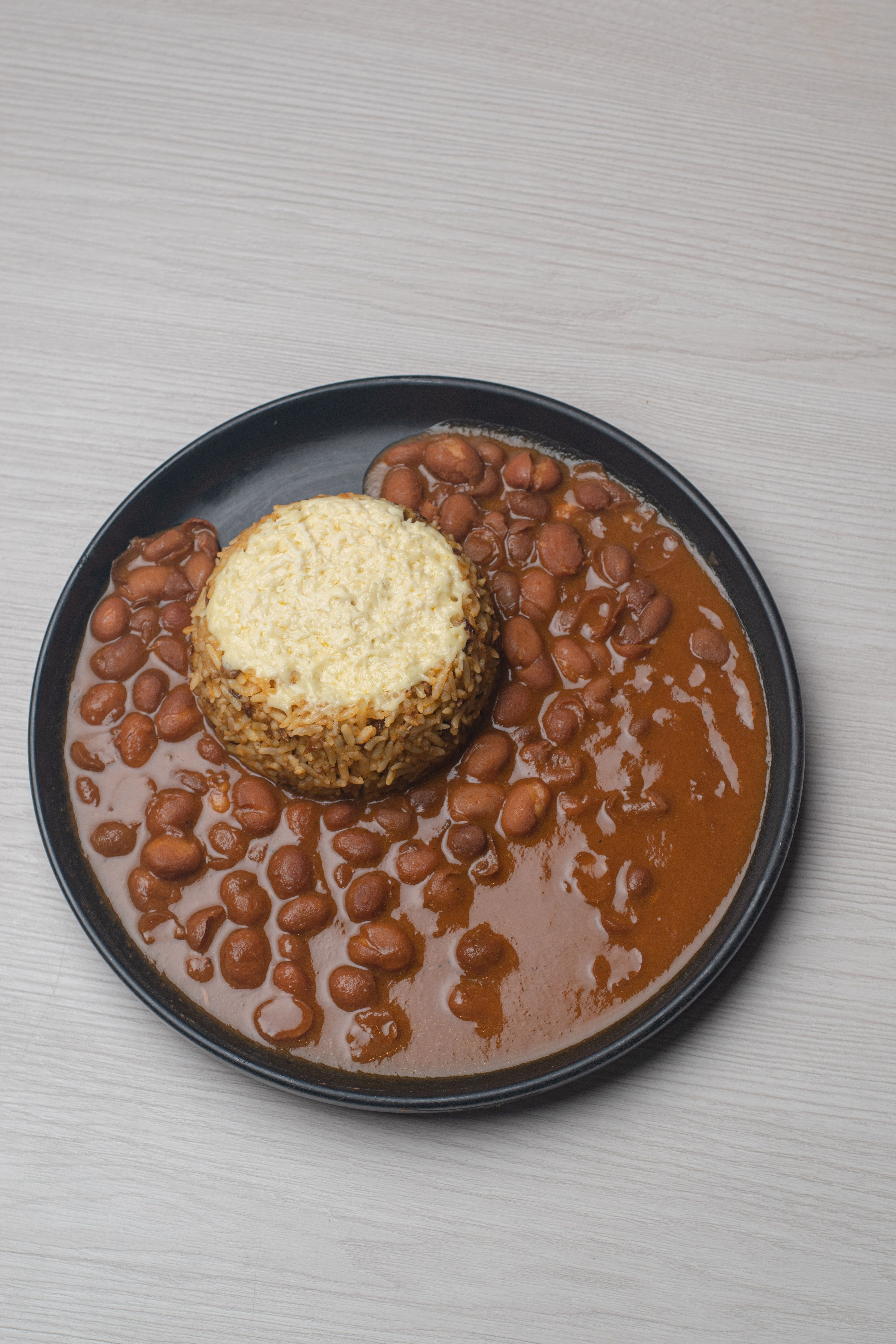
South-African
Umngqusho
The diets react (see scores below)
Common Ingredients
- samp
- sugar beans
- onion
- garlic
- butter
- stock
- salt
Specific recipes may vary.
Incompatible with 6 of 11 diets
Diet Ratings
Umngqusho is a traditional South African dish made primarily from samp (dried cracked maize/corn kernels) and sugar beans — both of which are extremely high in net carbohydrates and fundamentally incompatible with ketosis. Samp is a starchy grain product with roughly 70-75g of carbs per 100g dry weight, and sugar beans are legumes with approximately 40-50g net carbs per 100g cooked. A single standard serving of this dish would likely deliver 60-100g+ of net carbs, far exceeding the entire daily keto allowance of 20-50g. The butter and stock are keto-friendly components, but they cannot offset the overwhelming carbohydrate load from the two primary ingredients. There is no feasible portion size that makes this dish compatible with maintaining ketosis.
Umngqusho is a traditional South African dish made from samp (dried corn kernels) and sugar beans, which are both fully plant-based. However, this recipe explicitly includes butter, which is a dairy product derived from cow's milk and is therefore not vegan. The stock also warrants scrutiny, as most traditional stock used in this context is bone or meat-based, though vegan stock alternatives exist. The combination of these two animal-derived ingredients makes this version of Umngqusho non-vegan as listed. A vegan version is straightforward to make by substituting butter with a plant-based alternative (e.g., vegan margarine or olive oil) and ensuring vegetable stock is used.
Umngqusho is a traditional South African dish built on two foundational non-paleo ingredients: samp (dried, coarsely ground corn — a grain) and sugar beans (legumes). Both are explicitly excluded from the paleo diet. Corn is a grain high in anti-nutrients, and beans are legumes containing lectins and phytates that the paleo framework identifies as harmful. Beyond the primary ingredients, the dish also contains butter (dairy, discouraged in strict paleo) and added salt (excluded). Stock may contain additives or preservatives. The only paleo-compliant ingredients are onion and garlic. This dish is fundamentally incompatible with paleo principles at its core structure — it cannot be made paleo-friendly through minor substitutions without becoming an entirely different dish.
Umngqusho is a traditional South African dish of samp (dried, cracked maize kernels) and sugar beans, which aligns well with Mediterranean principles of legume-forward, plant-based eating. Sugar beans are an excellent source of plant protein and fiber, strongly encouraged in the Mediterranean diet. However, samp is a processed, refined grain product — maize that has been stripped and cracked — which lacks the fiber and nutritional profile of whole grains like barley, farro, or whole wheat preferred in Mediterranean guidelines. The use of butter rather than olive oil is also a departure from Mediterranean principles, introducing saturated fat where extra virgin olive oil would be canonical. The onion, garlic, and stock base are positive elements. Overall, the dish is nutritious and plant-forward but is held back by refined grain content and butter.
Some Mediterranean diet interpreters would score this more favorably, noting that traditional Mediterranean cuisines (e.g., North African) include maize-based staples and that the legume-dominant protein profile is highly aligned with Mediterranean values. Swapping butter for olive oil would bring this dish very close to a full approval.
Umngqusho is a traditional South African dish made almost entirely of plant-based ingredients. Samp (dried corn kernels) and sugar beans (legumes) are the two primary components, both strictly excluded on the carnivore diet. Onion, garlic, and stock (likely vegetable-based given the ingredient list) are additional plant-derived components. Butter is the only animal-derived ingredient present, and it plays a minor supporting role. This dish is fundamentally incompatible with carnivore principles — it is a plant-forward staple with no meaningful animal protein source.
Umngqusho contains multiple excluded ingredients. Samp is a processed form of dried corn (hominy), which is a grain explicitly excluded on Whole30. Sugar beans are legumes, also explicitly excluded from the Whole30 program. Additionally, butter (not ghee or clarified butter) is a dairy product and therefore excluded. With three distinct excluded ingredient categories — grains (samp/corn), legumes (sugar beans), and dairy (butter) — this dish is firmly off-limits on Whole30.
Umngqusho contains multiple high-FODMAP ingredients that make it unsuitable during the elimination phase. Samp (dried, broken maize/hominy) is high in fructans at typical serving sizes. Sugar beans are legumes and extremely high in GOS (galacto-oligosaccharides), one of the most problematic FODMAP categories. Onion is one of the highest-FODMAP foods known, rich in fructans, and is essentially unavoidable in any meaningful quantity. Garlic is similarly high in fructans and is high-FODMAP even in tiny amounts. Butter is low-FODMAP, and plain stock (if onion/garlic-free) can be acceptable, but the combination of samp, sugar beans, onion, and garlic creates an extremely high-FODMAP dish. There is no realistic serving size of this dish that would be low-FODMAP given the foundational ingredients. This dish should be strictly avoided during the elimination phase.
Umngqusho is a traditional South African dish made from samp (dried corn kernels) and sugar beans, which are both highly nutritious DASH-compatible ingredients. Sugar beans are an excellent source of plant-based protein, fiber, potassium, and magnesium — all core DASH nutrients. Samp, while a whole food, is a processed corn product with a moderate glycemic load and less fiber than whole grains like brown rice or oats. The dish earns strong marks for its legume base and absence of red meat or saturated fat beyond the butter. However, several concerns temper the rating: (1) Butter adds saturated fat, which DASH limits — substituting with olive or canola oil would improve compliance. (2) Stock (especially commercial stock) can be high in sodium, and combined with added salt, the sodium content of this dish as commonly prepared may approach or exceed DASH limits per serving. (3) Samp is not a whole grain in the traditional DASH sense (it lacks the full bran/germ). With low-sodium stock, reduced salt, and substituting butter with a vegetable oil, this dish could score 7-8 and be fully approved. As typically prepared, it lands in the caution range due to sodium and saturated fat concerns.
NIH DASH guidelines emphasize beans and legumes as strongly recommended foods (4-5 servings/week), which forms the core of this dish. Some DASH-oriented clinicians would argue that when prepared with low-sodium stock and minimal added salt, Umngqusho is essentially a DASH-ideal meal, and that the butter quantity used in traditional recipes is small enough not to disqualify it — placing it closer to an 'approve' rating with simple substitutions.
Umngqusho is a traditional South African dish combining samp (dried, stamped maize kernels) and sugar beans, cooked with onion, garlic, butter, and stock. From a Zone perspective, this dish presents a significant macro imbalance challenge. The dominant ingredients — samp and sugar beans — are both high-carbohydrate foods. Samp is a processed maize product with a relatively high glycemic load and is classified as an 'unfavorable' carbohydrate in Zone terminology, similar to corn. Sugar beans provide protein but are also carbohydrate-dense (roughly 40g net carbs per 100g cooked), making the carb-to-protein ratio heavily skewed toward carbohydrates. The butter adds saturated fat rather than the preferred monounsaturated fat. While beans do provide protein (Zone recognizes legumes as a vegetarian protein source, using the 3g fat block adjustment), the protein quantity relative to the carbohydrate load makes hitting the 40/30/30 ratio very difficult without significant portion control and supplementation with lean protein. This dish can technically be incorporated into a Zone meal plan in small portions, but as a standalone main, it skews heavily carbohydrate-dominant and would require major restructuring or complementary foods to approach Zone ratios.
Some Zone practitioners, particularly those following Sears' later anti-inflammatory writings, would note that legumes like sugar beans are high in polyphenols and fiber, which improve gut health and reduce the net glycemic impact. In this view, the combination of beans and samp — while carb-heavy — provides slow-digesting carbohydrates and the beans' fiber content meaningfully reduces net carbs. A small portion of umngqusho paired with additional lean protein (e.g., grilled chicken or fish) and a non-starchy vegetable side could be made Zone-compatible, pushing its practical score slightly higher for flexible Zone practitioners.
Umngqusho is a traditional South African dish combining samp (dried, cracked hominy corn) and sugar beans, which forms a nutritionally interesting but mixed anti-inflammatory profile. Sugar beans are a strong anti-inflammatory positive: high in fiber, plant-based protein, folate, magnesium, and polyphenols that support gut health and reduce inflammatory markers like CRP. Beans and legumes are explicitly emphasized in Dr. Weil's Anti-Inflammatory Food Pyramid. Garlic and onion contribute meaningful anti-inflammatory compounds (allicin, quercetin, organosulfur compounds). However, samp is a processed, dehulled corn product with a high glycemic index — much of its fiber and nutrient content is stripped compared to whole grain corn. Refined or high-GI carbohydrates can transiently raise blood sugar and promote low-grade inflammation. Butter, while small in quantity, is a saturated fat that the anti-inflammatory framework recommends limiting. Extra virgin olive oil would be a more favorable fat here. Stock may contain sodium and additives depending on whether it is homemade or commercial. Overall, the beans and aromatics are genuinely anti-inflammatory, but samp's refined nature and the use of butter pull the dish into the moderate/caution range rather than a clear approval. Substituting olive oil for butter and pairing with additional vegetables would improve the profile substantially.
Some anti-inflammatory practitioners, particularly those following strict approaches like the Autoimmune Protocol (AIP), would flag both the corn-based samp (a grain with potential lectin content) and the legumes (phytates, lectins) as potentially problematic for individuals with gut permeability or autoimmune conditions. However, mainstream anti-inflammatory authorities including Dr. Weil explicitly recommend beans and legumes as anti-inflammatory staples, and traditional whole-food bean-based dishes like umngqusho are broadly viewed favorably in plant-forward nutrition frameworks.
Umngqusho is a traditional South African dish of samp (dried, stamped maize kernels) and sugar beans, cooked with onion, garlic, butter, and stock. It has genuine nutritional strengths — sugar beans provide a meaningful combination of plant protein and dietary fiber, and the dish is low in fat (aside from butter), easy to digest when well-cooked, and nutrient-dense relative to its calorie load. However, it presents two significant challenges for GLP-1 patients. First, protein content is moderate but not high: a typical serving delivers roughly 10–14g of protein, falling short of the 15–30g per-meal target unless portion size is increased — which conflicts with the small-stomach reality of GLP-1 therapy. Second, samp is a refined, low-fiber, slow-digesting carbohydrate with a high glycemic load; it is not a whole grain and contributes bulk carbohydrate calories without the fiber benefit of, say, whole maize or legumes alone. The butter adds saturated fat, which at typical cooking quantities (1–2 tbsp for a pot) is moderate but worth noting. The bean component is genuinely beneficial — high fiber, plant protein, blood sugar stabilizing — and partially offsets the samp's weaknesses. This dish works best as a supporting side in a small portion, paired with a lean protein to close the protein gap, rather than as a standalone main.
Some GLP-1-focused dietitians would rate this more favorably, noting that beans are among the most evidence-supported foods for satiety and blood sugar control, and that the combined bean-and-grain format provides a complete amino acid profile that reduces the urgency of the protein gap. Others would rate it more cautiously, flagging samp's high glycemic index and the dish's carbohydrate density as problematic for patients whose reduced calorie budgets should be weighted toward protein-first foods.
*See how scores were generated at our methodology page.
Nutritional profile
Six traits that cut across every diet.
Fiber & Plants
How much whole-plant food and fiber it delivers.
Healthy Fats
The quality of its fats (unsaturated, omega-3).
Whole / Unprocessed
How close it is to its natural, unprocessed form.
Gut Gentle
How easy it is on digestion (low FODMAP, few irritants).
Low Glycemic
How little it spikes your blood sugar.
Protein Density
How much protein it packs per calorie.
Controversy Index
Higher controversy = more disagreement between diets.
Diet-Specific Tips
 Mediterranean — 6/10
View tips
- Sugar beans are an excellent legume — core to the Mediterranean diet
- Samp is a refined/processed maize product, not a whole grain — less ideal than whole grains like barley or farro
- Butter used as fat instead of extra virgin olive oil — adds saturated fat, diverges from Mediterranean fat principles
- Onion and garlic are Mediterranean staples and positively contribute
- No red meat, no added sugar, no highly processed ingredients
- Dish is plant-forward and high in fiber and protein overall
 DASH — 6/10
View tips
- Sugar beans are a DASH-recommended legume: high in fiber, potassium, magnesium, and plant protein
- Samp is a whole-food corn ingredient but less fiber-dense than whole grains emphasized by DASH
- Butter contributes saturated fat, which DASH limits — substitution with olive oil recommended
- Stock and added salt together create significant sodium risk; low-sodium stock and reduced salt would improve score substantially
- No red meat, no added sugar, no trans fat, no tropical oils — structurally aligned with DASH principles
- Onion and garlic add beneficial phytonutrients with negligible sodium or fat impact
- As commonly prepared, sodium content may exceed DASH targets per serving
 Zone — 4/10
View tips
- Samp is a high-glycemic, 'unfavorable' carbohydrate derived from maize — similar to corn, which Sears flags as problematic
- Sugar beans are carbohydrate-dense even as a protein source, making the carb-to-protein ratio heavily skewed
- Butter contributes saturated fat rather than preferred monounsaturated fat (olive oil, avocado, almonds)
- No lean animal protein present — the dish relies on legume protein, which requires the vegetarian fat block adjustment (3g fat per block)
- Onion and garlic are Zone-favorable low-glycemic aromatics and polyphenol sources — a positive element
- As a standalone main, achieving 40/30/30 ratio without supplementation or significant portion restriction is very difficult
- Dish lacks non-starchy vegetables, which are the cornerstone of Zone carbohydrate sourcing
 Anti-Inflammatory — 6/10
View tips
- Sugar beans are strongly anti-inflammatory: high fiber, plant protein, polyphenols, and associated with reduced CRP
- Garlic and onion provide allicin, quercetin, and organosulfur compounds with documented anti-inflammatory effects
- Samp is a processed, high-GI corn product with reduced fiber compared to whole grains — a moderate inflammatory concern
- Butter is a saturated fat, which the anti-inflammatory framework recommends limiting; EVOO would be preferable
- Commercial stock may introduce sodium and additives; homemade stock is preferable
- Dish lacks omega-3 sources, colorful vegetables, or other key anti-inflammatory components
- Overall whole-food, plant-forward base is a positive, but samp and butter moderate the score
 GLP-1 Friendly — 5/10
View tips
- Sugar beans provide meaningful plant protein (~10–14g per serving) and high dietary fiber — both GLP-1 priorities
- Samp is a refined, high-glycemic carbohydrate with low fiber density, not a whole grain — adds caloric bulk without proportional nutritional return
- Protein per serving likely falls short of the 15–30g per-meal target; needs a lean protein accompaniment to qualify as a complete GLP-1-friendly main
- Butter adds saturated fat — moderate at typical cooking quantities but worth limiting
- Well-cooked beans and samp are soft and easy to digest, which is a positive for GLP-1 patients dealing with slowed gastric emptying
- High-volume dish by nature — portion control is important given reduced stomach capacity on GLP-1 therapy
- No fried components, no added sugar, no carbonation — avoids common GLP-1 trigger ingredients