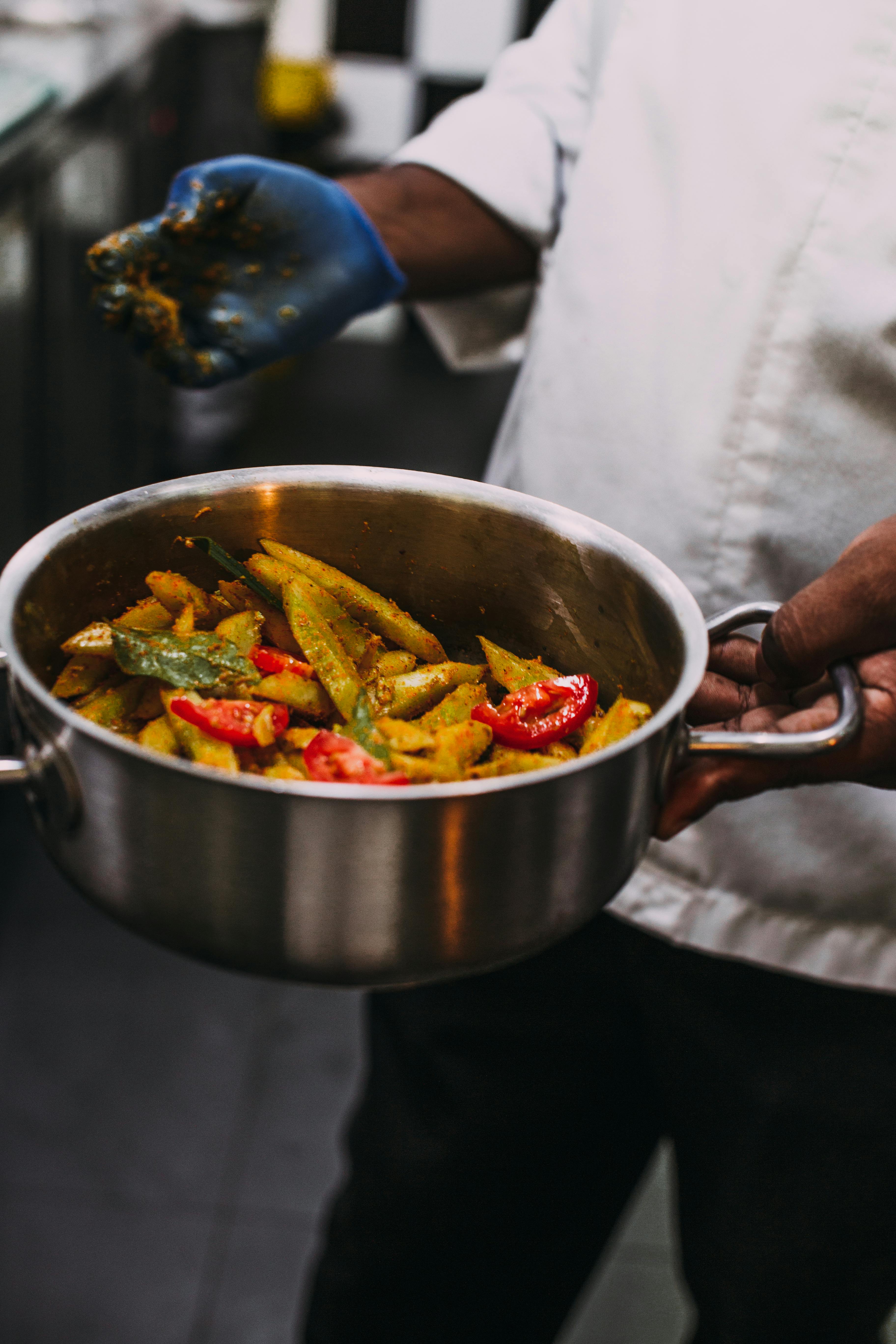
Photo: Rachel Claire / Pexels
The diets react (see scores below)
Common Ingredients
- mixed vegetables
- coconut
- yogurt
- green chiles
- cumin
- curry leaves
- coconut oil
- turmeric
Specific recipes may vary.
Incompatible with 4 of 11 diets
Diet Ratings
Avial is a South Indian dish made with a medley of mixed vegetables, which is the critical variable here. Traditional avial includes starchy vegetables like raw banana, yam, drumstick, and potatoes alongside lower-carb options like ash gourd and green beans. This mixed vegetable base can push net carbs significantly higher than keto limits in a standard serving. The coconut, coconut oil, and moderate yogurt are keto-friendly components, providing healthy fats and minimal carbs. However, the dish's compatibility hinges entirely on which vegetables are used. If prepared with exclusively low-carb vegetables (zucchini, green beans, ash gourd, green chiles), it could approach approval territory. With traditional starchy vegetables (potato, yam, raw banana), it becomes incompatible with ketosis. Portion control and vegetable selection are essential.
Some lazy keto and flexible keto practitioners argue that a small portion of avial made with traditional vegetables can fit within a 50g daily net carb allowance if the rest of the day's intake is strictly managed. Strict keto adherents, however, would reject any dish containing yam, raw banana, or potato outright regardless of portion size.
Avial contains yogurt, which is a dairy product derived from cow's milk. This makes the dish non-vegan in its traditional form. All other ingredients — mixed vegetables, coconut, green chiles, cumin, curry leaves, coconut oil, and turmeric — are fully plant-based and would score highly on their own. However, the yogurt is a core structural ingredient in Avial, used to bind and sour the dish, and cannot be overlooked. A vegan version can be made by substituting the yogurt with coconut milk or a plant-based yogurt, which is a common adaptation.
Avial is disqualified primarily by yogurt, which is a dairy product explicitly excluded from the paleo diet. All other ingredients — mixed vegetables, coconut, green chiles, cumin, curry leaves, coconut oil, and turmeric — are fully paleo-compliant. However, yogurt is a core, non-negotiable component of traditional Avial and cannot be omitted without fundamentally changing the dish. Dairy is one of the clearest exclusions in the paleo framework, with broad consensus across all major paleo authorities.
Avial is a nutrient-dense, plant-forward South Indian dish built on mixed vegetables, yogurt, and spices — all of which align well with Mediterranean diet principles. The abundant mixed vegetables are highly encouraged, and yogurt fits as a moderate dairy component. However, two ingredients create friction with Mediterranean guidelines: coconut and coconut oil. Coconut oil is not a traditional Mediterranean fat and is high in saturated fat, contrasting with extra virgin olive oil as the canonical fat source. Coconut flesh similarly adds saturated fat not typical of the Mediterranean pattern. The rest of the dish — cumin, turmeric, curry leaves, green chiles — are healthful spices with no meaningful conflict. Overall, Avial is a wholesome vegetable dish that earns approval on its plant-richness, but the coconut-based fats temper the score into caution territory.
Some modern Mediterranean diet interpretations are more permissive about plant-derived saturated fats, noting that coconut's medium-chain triglycerides may behave differently metabolically than animal saturated fats. Additionally, certain liberal interpretations focus on overall dietary pattern rather than specific fat sources, which would push this dish closer to an approve rating given its strong vegetable base.
Avial is an entirely plant-based South Indian dish with zero animal products. Every single ingredient — mixed vegetables, coconut, green chiles, cumin, curry leaves, coconut oil, and turmeric — is plant-derived. The only potential animal-derived ingredient is yogurt, but even if dairy were present, it would be a minor component in an otherwise completely plant-based dish. There is universal consensus in the carnivore community that this dish is completely incompatible with the carnivore diet. No version of carnivore eating — from the permissive 'animal-based' approach to strict Lion Diet — would include a vegetable-based curry.
Avial contains yogurt, which is a dairy product explicitly excluded on the Whole30 program. Dairy (including yogurt, milk, cheese, sour cream) is one of the core eliminated food groups for the full 30 days. All other ingredients in this dish — mixed vegetables, coconut, green chiles, cumin, curry leaves, coconut oil, and turmeric — are fully Whole30-compliant. However, the yogurt alone disqualifies the dish as traditionally prepared. A modified version substituting coconut cream or omitting the yogurt entirely could be made compliant.
Avial is a Kerala dish with several FODMAP concerns. The most significant issue is the 'mixed vegetables' — Avial traditionally includes drumstick, raw banana, yam, and sometimes high-FODMAP vegetables like snake gourd or bitter gourd, but critically often contains vegetables such as raw banana (low-FODMAP) alongside potentially problematic ones. The bigger concerns are: (1) Yogurt is high in lactose and is a key binding ingredient in Avial — this is a meaningful FODMAP load unless lactose-free yogurt is substituted. (2) The 'mixed vegetables' component is inherently ambiguous — if it includes high-FODMAP items like cauliflower in large amounts, green peas, or shallots, the dish becomes avoid-level. (3) Coconut (fresh or desiccated) is low-FODMAP at small servings (~half cup fresh or 1/4 cup desiccated per Monash) but Avial uses a substantial amount of ground coconut paste. (4) Cumin, curry leaves, turmeric, coconut oil, and green chiles are low-FODMAP. The yogurt alone makes this a caution-to-avoid during strict elimination unless lactose-free yogurt is used, and the vegetable mix uncertainty adds further ambiguity.
Monash University rates plain yogurt as high-FODMAP due to lactose, which is a core Avial ingredient — some clinical FODMAP practitioners would classify this dish as 'avoid' during elimination unless lactose-free yogurt is explicitly confirmed. Additionally, the undefined 'mixed vegetables' could easily include high-FODMAP items (green peas, large serves of cauliflower, or shallots), making real-world Avial highly variable in FODMAP load.
Avial is a South Indian mixed vegetable dish with many DASH-positive elements: a variety of vegetables (excellent source of potassium, magnesium, and fiber), yogurt (calcium, probiotics — though traditionally full-fat), and anti-inflammatory spices like turmeric and cumin. However, two ingredients create tension with DASH guidelines. First, coconut is high in saturated fat, and coconut oil — used for tempering — is a tropical oil that DASH explicitly limits due to its saturated fat content (approximately 90% saturated fat). Second, grated coconut adds additional saturated fat. These factors prevent a full 'approve' rating despite the strong vegetable base. The dish is generally low in sodium, which is a plus. Overall, Avial is acceptable in moderation for DASH adherents, particularly if coconut oil is replaced with a DASH-approved oil (e.g., olive or canola) and coconut is used sparingly.
NIH DASH guidelines clearly limit tropical oils including coconut oil due to high saturated fat content. However, some updated clinical interpretations note that the medium-chain triglycerides (MCTs) in coconut may behave differently metabolically than long-chain saturated fats, and that the dominant saturated fatty acid in coconut (lauric acid) may raise HDL alongside LDL — leading some DASH-oriented practitioners in South Asian dietary contexts to allow small amounts of coconut in otherwise vegetable-rich dishes rather than categorically excluding them.
Avial is a South Indian dish built primarily on mixed vegetables cooked with coconut, yogurt, and coconut oil. The vegetable base is Zone-friendly — low-glycemic, high in fiber, and polyphenol-rich, especially with turmeric and curry leaves adding anti-inflammatory benefits. However, the dish has two notable Zone concerns: (1) coconut and coconut oil are high in saturated fat, which early Sears writings discouraged, and (2) the fat profile leans heavily saturated rather than monounsaturated, making it imperfect as a Zone fat source. There is no meaningful protein in this dish, so it functions as a carb-and-fat side only — usable in a Zone meal but requiring lean protein alongside it to balance the blocks. The yogurt contributes a modest protein offset and is Zone-favorable. As a side dish accompanying lean protein (e.g., grilled fish or chicken), Avial can fit reasonably into a Zone meal, but the coconut fat content means portion control is important. The vegetable variety and anti-inflammatory spices are genuine Zone positives.
In Sears' later anti-inflammatory work (particularly 'The Mediterranean Zone' and writings on omega-3 balance), he softened his stance on saturated fat somewhat, focusing more on the omega-6 to omega-3 ratio. Coconut oil, while saturated, is medium-chain triglyceride (MCT)-dominant and is viewed more favorably by some Zone practitioners than long-chain saturated fats from red meat. Under this lens, Avial's fat profile is less problematic, and its strong polyphenol content from turmeric, curry leaves, and green chiles could push its score higher (6-7) in the modern Zone anti-inflammatory framework.
Avial is a traditional Kerala dish with a strong anti-inflammatory foundation. Mixed vegetables (typically drumstick, raw banana, yam, carrots, beans, and raw mango) deliver a broad spectrum of antioxidants, carotenoids, and fiber. Turmeric provides curcumin, one of the most well-studied anti-inflammatory compounds. Curry leaves contain flavonoids and alkaloids with demonstrated antioxidant activity. Cumin offers anti-inflammatory phenolic compounds. Green chiles contribute capsaicin, which has anti-inflammatory properties. Yogurt adds beneficial probiotics that support gut health and reduce systemic inflammation. The main area of nuance is coconut oil, which is high in saturated fat (predominantly lauric acid) — this is debated in anti-inflammatory circles. Most mainstream anti-inflammatory protocols recommend limiting saturated fat, yet coconut oil's medium-chain triglycerides may have a distinct metabolic profile. The amount used in Avial is typically moderate (used as a finishing oil), which limits the concern. Overall, the dish is vegetable-forward, spice-rich, and minimally processed — a solid anti-inflammatory choice.
The coconut and coconut oil content introduces meaningful debate: Dr. Weil and mainstream anti-inflammatory guidelines caution against regular use of coconut oil due to its high saturated fat content and potential to raise LDL cholesterol. However, some integrative medicine practitioners and ancestral diet advocates argue that the lauric acid and MCTs in coconut products have neutral or beneficial effects on inflammation, and traditional dietary patterns using coconut do not show elevated inflammatory disease burden.
Avial is a traditional South Indian dish of mixed vegetables cooked with coconut, yogurt, and a small amount of coconut oil. Its strengths are meaningful: the mixed vegetables provide fiber, micronutrients, and high water content — all beneficial for GLP-1 patients managing constipation and reduced thirst. Yogurt adds a modest probiotic and protein contribution, and the dish is generally easy to digest in small portions. However, Avial has notable drawbacks for GLP-1 patients. Coconut (grated or paste) is high in saturated fat, and coconut oil adds additional saturated fat — both of which can worsen nausea, bloating, and reflux, which are common GLP-1 side effects. The dish carries no meaningful primary protein source, making it a poor standalone option given the 15–30g per meal protein target. Green chiles may also trigger reflux or nausea in sensitive patients, particularly those in early weeks of GLP-1 therapy. As a side dish paired with a high-protein main (e.g., grilled fish or lentils), Avial is a reasonable complement. As a standalone or primary dish, it falls short of GLP-1 dietary priorities.
Some GLP-1-focused dietitians accept coconut-containing dishes in moderation, noting that the saturated fat is consumed in relatively small absolute quantities per serving and that the fiber and vegetable density are meaningful benefits. Others are stricter about coconut fat given its documented potential to worsen gastric-emptying-related GI symptoms, and would recommend a modified version using minimal coconut and substituting low-fat yogurt in larger proportion.
*See how scores were generated at our methodology page.
Nutritional profile
Six traits that cut across every diet.
Fiber & Plants
How much whole-plant food and fiber it delivers.
Healthy Fats
The quality of its fats (unsaturated, omega-3).
Whole / Unprocessed
How close it is to its natural, unprocessed form.
Gut Gentle
How easy it is on digestion (low FODMAP, few irritants).
Low Glycemic
How little it spikes your blood sugar.
Protein Density
How much protein it packs per calorie.
Controversy Index
Higher controversy = more disagreement between diets.
Diet-Specific Tips
 Keto — 4/10
View tips
- Mixed vegetables are highly variable — traditional avial includes starchy vegetables (yam, raw banana, potato) that are incompatible with keto
- Coconut and coconut oil are keto-friendly, providing healthy saturated fats
- Yogurt contributes minimal carbs in typical quantities used
- Net carbs can range from moderate to very high depending on vegetable selection
- Dish can be made keto-compatible by substituting starchy vegetables with low-carb alternatives
- Standard restaurant or traditional preparation likely exceeds keto carb thresholds per serving
 Mediterranean — 6/10
View tips
- Rich mixed vegetable base strongly aligns with plant-forward Mediterranean principles
- Yogurt is an acceptable moderate dairy component
- Coconut oil is not the canonical Mediterranean fat (extra virgin olive oil is preferred) and is high in saturated fat
- Coconut flesh adds additional saturated fat atypical of the Mediterranean pattern
- Spices (turmeric, cumin, curry leaves) are healthful and unproblematic
- No red meat, refined grains, or added sugars present
- Dish is minimally processed and whole-food based
 Low-FODMAP — 4/10
View tips
- Yogurt is a primary ingredient and is high-FODMAP due to lactose — a key elimination phase concern
- Mixed vegetables are undefined; traditional Avial may include high-FODMAP vegetables depending on regional variation
- Coconut used in paste form in large quantities — low-FODMAP only at small serves (≤1/2 cup fresh per Monash)
- Cumin, turmeric, curry leaves, green chiles, and coconut oil are all low-FODMAP and safe
- Dish can be made low-FODMAP with lactose-free yogurt and careful vegetable selection, but standard preparation is likely problematic
 DASH — 5/10
View tips
- Strong mixed-vegetable base provides potassium, magnesium, and fiber — core DASH nutrients
- Coconut oil is a tropical oil explicitly limited by DASH guidelines due to very high saturated fat
- Grated coconut adds additional saturated fat burden
- Yogurt contributes calcium but is traditionally full-fat in this dish; low-fat substitution improves DASH compatibility
- Dish is naturally low in sodium — a significant DASH advantage
- Spices (turmeric, cumin, curry leaves) are DASH-neutral and anti-inflammatory
- Substituting coconut oil with olive or canola oil would significantly improve the DASH score
 Zone — 5/10
View tips
- Mixed vegetable base is Zone-favorable: low-glycemic, high-fiber carbohydrate source
- Coconut and coconut oil are high in saturated fat, not the preferred monounsaturated fat of classic Zone guidelines
- No significant protein — must be paired with lean protein to form a complete Zone meal
- Yogurt contributes modest protein and is a Zone-favorable dairy inclusion
- Anti-inflammatory spices (turmeric, curry leaves, cumin) align with Sears' polyphenol emphasis
- Dish functions as a carb+fat side; fat blocks will be largely consumed by coconut content, requiring careful portion sizing
- Coconut oil's MCT composition is viewed more favorably in Sears' later anti-inflammatory writings
 Anti-Inflammatory — 8/10
View tips
- Rich variety of vegetables providing antioxidants, fiber, and diverse phytonutrients
- Turmeric (curcumin) — one of the most potent anti-inflammatory spices
- Curry leaves — flavonoids and antioxidant alkaloids
- Cumin — anti-inflammatory phenolics
- Green chiles — capsaicin with anti-inflammatory effects
- Yogurt — probiotics supporting gut-mediated anti-inflammatory pathways
- Coconut oil — high in saturated fat, debated; moderate quantity mitigates concern
- Whole food, plant-forward, minimally processed dish
 GLP-1 Friendly — 5/10
View tips
- No significant protein source — falls well short of 15–30g per meal protein target
- Coconut and coconut oil contribute saturated fat that can worsen GLP-1 GI side effects (nausea, bloating, reflux)
- High vegetable content provides fiber and supports digestion and hydration
- Yogurt adds modest protein and probiotics, beneficial for gut health
- Green chiles may trigger reflux or nausea in GLP-1 patients with GI sensitivity
- Works best as a fiber-rich side alongside a high-protein main dish, not as a standalone
- Generally easy to digest in small portions, which suits GLP-1 meal sizing