Photo: Thomas Nahar / Pexels
Indian
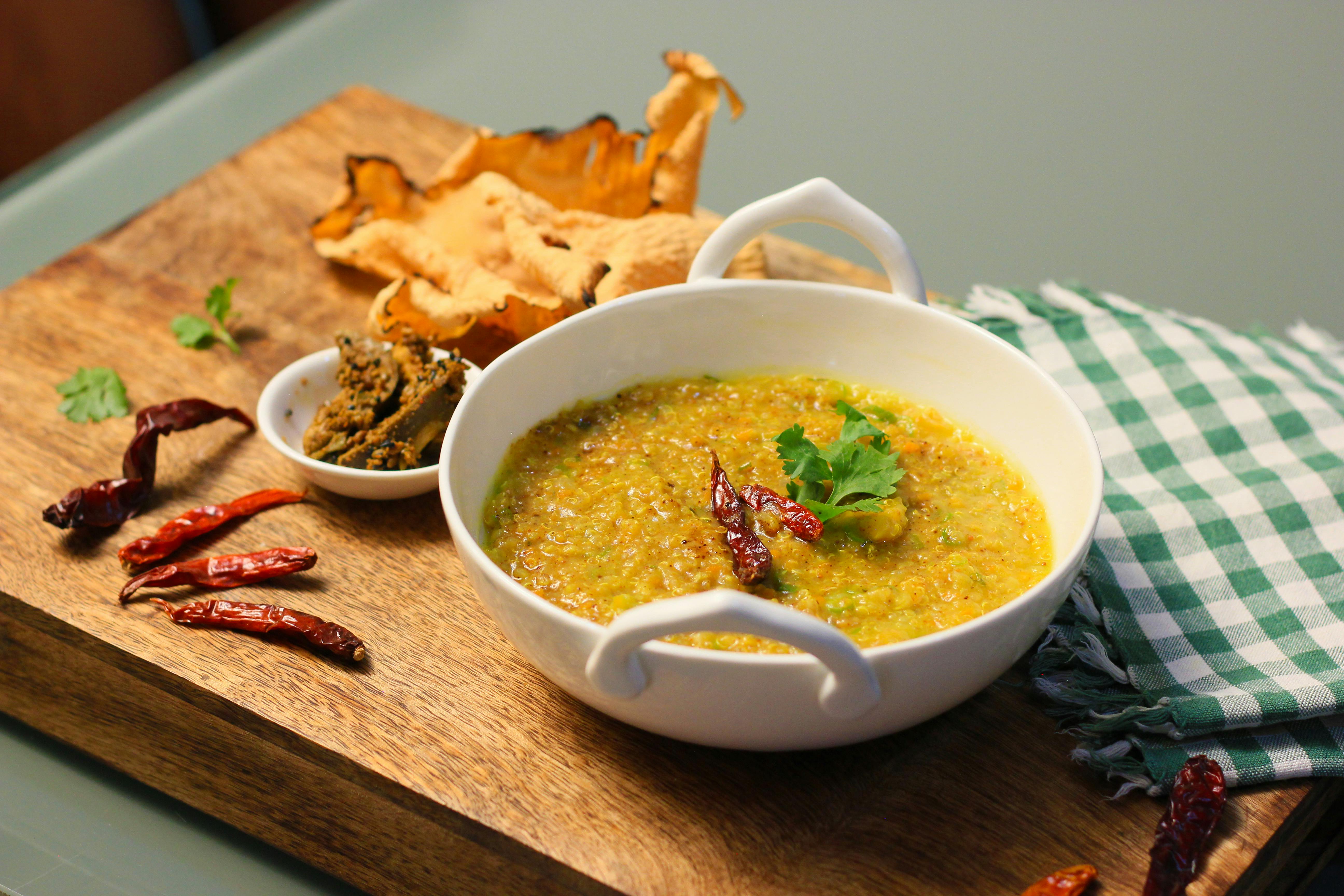
Bisi Bele Bath
The diets react (see scores below)
Common Ingredients
- rice
- toor dal
- tamarind
- mixed vegetables
- sambar powder
- curry leaves
- cashews
- ghee
Specific recipes may vary.
Incompatible with 6 of 11 diets
Diet Ratings
Bisi Bele Bath is fundamentally incompatible with a ketogenic diet. Its two primary ingredients — rice and toor dal (split pigeon peas) — are both extremely high in net carbohydrates. A standard serving of this dish easily contains 50-80g of net carbs from rice alone, far exceeding the entire daily keto allowance of 20-50g. Toor dal adds another significant carb load. While the dish does contain keto-friendly elements like ghee, curry leaves, and some vegetables, these are entirely outweighed by the dominant grain and legume base. There is no practical portion size that would make this dish compatible with maintaining ketosis.
Bisi Bele Bath as listed contains ghee, which is clarified butter — a dairy product derived from cow's milk and therefore a clear animal product excluded under all vegan definitions. Every other ingredient (rice, toor dal, tamarind, mixed vegetables, sambar powder, curry leaves, cashews) is fully plant-based. The dish is easily made vegan by substituting ghee with coconut oil or another plant-based fat, but in its traditional and listed form it is not vegan-compatible.
Bisi Bele Bath is fundamentally incompatible with the paleo diet. Its two primary components — rice (a grain) and toor dal (a legume) — are both explicitly excluded from paleo eating. These are not minor or optional ingredients; they form the structural base of the dish. Sambar powder typically contains legume-based ingredients and added salt. Ghee occupies a debated gray area in paleo, and cashews and tamarind are generally paleo-acceptable, as are curry leaves and mixed vegetables, but the presence of two major non-paleo staples makes the overall dish a clear avoid. There is no meaningful way to modify this dish and still call it Bisi Bele Bath.
Bisi Bele Bath is a nutritious South Indian dish combining lentils (toor dal), vegetables, and rice. The toor dal provides excellent plant-based protein and fiber, and the mixed vegetables add micronutrients — both strongly aligned with Mediterranean principles. However, the base is white rice (a refined grain), and ghee (clarified butter, a saturated animal fat) is used as the primary fat rather than olive oil. The dish is minimally processed, whole-food-based, and legume-forward, which earns it considerable credit, but the refined grain base and ghee usage keep it from a full approval.
Some Mediterranean diet interpreters focused on traditional regional diets — such as those studied in parts of Greece and Southern Italy — do include white rice in moderate amounts as an acceptable staple. Additionally, a strict whole-food, legume-and-vegetable-forward reading might elevate this dish closer to approval if ghee is used sparingly, given that the overall dish profile is plant-dominant and unprocessed.
Bisi Bele Bath is a traditional South Indian rice-lentil dish that is entirely plant-based. Every single ingredient — rice (grain), toor dal (legume), tamarind (fruit), mixed vegetables (plant), sambar powder (plant-based spice blend), curry leaves (plant), and cashews (nut) — is strictly forbidden on the carnivore diet. The only marginally carnivore-adjacent ingredient is ghee, but its presence in a dish overwhelmingly composed of excluded plant foods does not redeem it in any way. This dish represents virtually everything the carnivore diet eliminates: grains, legumes, vegetables, fruits, nuts, seeds, and plant-derived spices. There is no animal protein present whatsoever. This is one of the clearest possible 'avoid' cases on the carnivore diet.
Bisi Bele Bath contains two explicitly excluded ingredient categories that make it incompatible with Whole30. First, rice is a grain and is explicitly prohibited on the program. Second, toor dal (split pigeon peas) is a legume and is also explicitly excluded. These are not edge cases or gray areas — both grains and legumes are among the most clearly defined exclusions in the Whole30 ruleset. The remaining ingredients (tamarind, mixed vegetables, sambar powder, curry leaves, cashews, ghee) are largely compliant, but the foundational ingredients of this dish — rice and dal — are both off-limits. There is no compliant version of Bisi Bele Bath that retains its traditional character.
Bisi Bele Bath is a traditional Karnataka dish that combines several high-FODMAP ingredients. The primary concern is toor dal (split pigeon peas), which is high in GOS (galacto-oligosaccharides) — a key FODMAP — and is used in substantial quantities as a core component of this dish, not a garnish. Sambar powder typically contains onion and garlic powder, both of which are high in fructans and are high-FODMAP even in small amounts (especially powdered forms, which are concentrated). Mixed vegetables in this dish traditionally include onion, which is a major fructan source. Cashews are low-FODMAP only at a serving of about 10 nuts (around 40g); they become high-FODMAP at larger amounts due to GOS and fructans. Rice, ghee, tamarind (in small amounts), and curry leaves are generally low-FODMAP. However, the combination of toor dal, likely-onion-containing sambar powder, and potentially onion in the vegetable mix makes this dish high-FODMAP at any standard serving during the elimination phase.
Some FODMAP-aware recipe adaptations of Bisi Bele Bath exist that substitute toor dal with a low-FODMAP legume alternative (e.g., canned, well-rinsed lentils in very small portions) and use garlic/onion-free spice blends — clinical FODMAP dietitians note that with significant modifications the dish framework could be adapted, but the traditional version as described is not suitable for elimination. The exact FODMAP load of sambar powder varies by brand and recipe, but most commercial blends contain onion and garlic powder, which Monash University identifies as high-FODMAP even in small quantities.
Bisi Bele Bath is a traditional South Indian one-pot dish combining rice, toor dal (split pigeon peas), mixed vegetables, and tamarind, cooked with ghee, cashews, and sambar powder. Several components are genuinely DASH-friendly: toor dal is an excellent source of plant protein, fiber, potassium, and magnesium; mixed vegetables contribute micronutrients; and tamarind adds flavor without sodium. However, two ingredients temper the rating. Ghee is clarified butter — a saturated fat source that DASH guidelines explicitly limit — and sambar powder, while aromatic, often contributes moderate sodium depending on formulation and quantity used. Cashews add heart-healthy unsaturated fats but are calorie-dense. The white rice base is refined grain rather than the whole grain DASH emphasizes. Overall, the dish is nutritionally balanced and plant-forward but requires portion control on ghee and attention to sodium from spice blends. A DASH-modified version using less ghee, low-sodium sambar powder, and substituting brown rice would score significantly higher (7-8).
NIH DASH guidelines clearly limit saturated fat and refined grains, placing this dish in the 'caution' category. However, updated clinical interpretations increasingly recognize that traditional legume-and-vegetable-forward dishes like Bisi Bele Bath — even with modest ghee — have a favorable overall nutrient profile, and some DASH-oriented dietitians would approve moderate portions given the strong fiber, potassium, and plant protein contributions from dal and vegetables.
Bisi Bele Bath is a traditional South Indian one-pot dish that presents a mixed Zone Diet profile. The dominant carbohydrate source is white rice, which is high-glycemic and classified as 'unfavorable' in Zone terminology — it spikes insulin rapidly and provides little fiber. Toor dal (split pigeon peas) is a more Zone-friendly ingredient, offering protein and fiber alongside its carbohydrates, and partially compensates for the rice's glycemic impact. The mixed vegetables are excellent Zone additions, providing low-glycemic carbs, fiber, and polyphenols. However, the overall carb load from rice is substantial, making the 40/30/30 ratio very difficult to achieve. The dish also lacks a clear lean protein source — toor dal provides some protein but the amino acid density and quantity per serving is lower than Zone-ideal lean proteins. Ghee is saturated fat, which Sears' earlier Zone writings discourage, though later anti-inflammatory work is more nuanced about it. Cashews add monounsaturated fat but also carbs. Tamarind and sambar powder/curry leaves are Zone-positive for their polyphenol content. Overall, the dish skews heavily carbohydrate (particularly high-GI carbohydrate) with insufficient lean protein to achieve Zone balance without significant modification — such as reducing rice quantity, adding a lean protein source, and increasing vegetables.
Some Zone practitioners argue that in a mixed dish like Bisi Bele Bath, the fiber from dal and vegetables moderates the glycemic index of white rice meaningfully, and that the dish can be portion-controlled into a reasonable Zone block structure. Additionally, Dr. Sears' later work on anti-inflammatory eating acknowledges that traditional whole-food preparations with polyphenol-rich spices (tamarind, curry leaves, sambar powder) have benefits that offset some glycemic concerns. A small serving of Bisi Bele Bath alongside additional lean protein could technically fit Zone blocks.
Bisi Bele Bath is a traditional South Indian one-pot dish with a mixed anti-inflammatory profile. On the positive side, toor dal (split pigeon peas) is a legume rich in fiber and plant protein, which supports gut health and has modest anti-inflammatory benefits. Mixed vegetables contribute antioxidants, polyphenols, and carotenoids depending on the mix (carrots, peas, beans, etc.). Tamarind contains polyphenols and has shown some anti-inflammatory activity in research. Sambar powder is a spice blend typically containing coriander, cumin, turmeric, black pepper, chili, and mustard seeds — all of which carry meaningful anti-inflammatory credentials, particularly turmeric (curcumin) and chili (capsaicin). Curry leaves have antioxidant and anti-inflammatory properties supported by preliminary research. The challenges come primarily from ghee and white rice. Ghee is clarified butter — a source of saturated fat and butyrate. White rice is a refined carbohydrate with a high glycemic index that can contribute to post-meal glucose spikes and downstream inflammatory signaling, particularly in quantity. Cashews add some healthy fats and minerals but also contribute to caloric density. The dish scores better than typical refined-carb meals due to its legume base, spice profile, and vegetable content, but the white rice base and ghee prevent a full approval under anti-inflammatory principles. Swapping white rice for brown rice would meaningfully improve the profile.
Some anti-inflammatory practitioners, particularly those aligned with Ayurvedic and whole-food traditions, would view ghee more favorably — it contains butyrate (a short-chain fatty acid that supports gut lining integrity and reduces colonic inflammation) and is considered digestively superior to other fats in Ayurvedic medicine. Additionally, the combination of legumes, spices, and vegetables in a traditional preparation could earn a higher 'approve' score in frameworks that weigh dietary patterns over individual ingredients. Conversely, low-carb or glycemic-focused anti-inflammatory advocates (e.g., those following Dr. David Perlmutter's approach) would rate this lower due to the white rice and tamarind sugar load.
Bisi Bele Bath is a traditional South Indian one-pot dish combining rice, toor dal (split pigeon peas), vegetables, and spices cooked together with ghee. It has meaningful nutritional strengths but several GLP-1 considerations that push it into caution territory. On the positive side, toor dal provides plant-based protein and fiber, and the mixed vegetables add micronutrients and additional fiber. The dish is warm, soft, and easy to digest — well-suited to GLP-1 patients with gastric emptying slowdown. Tamarind, curry leaves, and sambar powder are nutritionally fine in typical amounts. However, the primary carbohydrate base is white rice, which is calorie-dense relative to its protein and fiber contribution and offers limited nutrient density per calorie — a meaningful drawback when total intake is reduced. Ghee adds saturated fat, which can worsen nausea and reflux on GLP-1 medications; traditional recipes can be quite ghee-heavy. Cashews, while containing healthy fats and some protein, add caloric density and fat per serving. The dish as classified has no primary protein source — toor dal contributes some protein (roughly 7-8g per serving) but a typical serving is unlikely to meet the 15-30g per meal protein target without augmentation. Portion sensitivity is relevant: a small serving is manageable and digestible, but the rice-forward composition means it is easy to fill up on carbohydrates before meeting protein goals. Modified versions using less ghee, reduced rice volume, and increased dal ratio would score higher.
Some GLP-1-focused dietitians view lentil-and-vegetable rice dishes like Bisi Bele Bath favorably because the combined fiber and plant protein improve satiety and blood sugar stability compared to plain rice dishes — the dal-rice combination also improves amino acid profile. Others flag the white rice base and ghee content as problematic for patients who are calorie-restricted and prone to GI side effects, recommending substitution with brown rice or cauliflower rice and minimal ghee to make it more GLP-1 compatible.
*See how scores were generated at our methodology page.
Nutritional profile
Six traits that cut across every diet.
Fiber & Plants
How much whole-plant food and fiber it delivers.
Healthy Fats
The quality of its fats (unsaturated, omega-3).
Whole / Unprocessed
How close it is to its natural, unprocessed form.
Gut Gentle
How easy it is on digestion (low FODMAP, few irritants).
Low Glycemic
How little it spikes your blood sugar.
Protein Density
How much protein it packs per calorie.
Controversy Index
Higher controversy = more disagreement between diets.
Diet-Specific Tips
 Mediterranean — 5/10
View tips
- Toor dal is an excellent legume source, strongly aligned with Mediterranean principles
- Mixed vegetables add fiber and micronutrients, core to the diet
- White rice is a refined grain; Mediterranean guidelines prefer whole grains
- Ghee is a saturated animal fat, not the preferred Mediterranean fat (olive oil)
- Dish is whole-food-based with no added sugars or highly processed ingredients
- Cashews provide beneficial plant-based fats and are Mediterranean-compatible
 DASH — 5/10
View tips
- Toor dal provides plant protein, fiber, potassium, and magnesium — core DASH nutrients
- Mixed vegetables add micronutrients and support DASH vegetable servings
- Ghee is a saturated fat, which DASH guidelines explicitly limit
- White rice is a refined grain; DASH emphasizes whole grains
- Sambar powder and overall dish preparation can contribute moderate sodium
- Cashews add healthy fats but are calorie-dense — portion control needed
- Low-sodium sambar powder and reduced ghee would substantially improve DASH compatibility
 Zone — 4/10
View tips
- White rice is a high-glycemic 'unfavorable' carbohydrate in Zone methodology, making this dish carb-heavy
- Toor dal provides moderate protein and fiber, partially offsetting glycemic impact of rice
- No clear lean protein source — the dish would require supplementation to hit 30% protein target
- Mixed vegetables are Zone-favorable and add fiber and polyphenols
- Ghee is saturated fat, limited in classic Zone protocol
- Tamarind and sambar spices are polyphenol-rich, aligning with Sears' anti-inflammatory principles
- Cashews add monounsaturated fat but also contribute carbohydrates
- The overall macro ratio of the dish skews heavily toward carbohydrates, making Zone balance difficult without significant portion reduction
 Anti-Inflammatory — 5/10
View tips
- Toor dal (legume) provides fiber, plant protein, and modest anti-inflammatory benefits
- Sambar powder contains turmeric, cumin, coriander, and chili — strong anti-inflammatory spices
- Mixed vegetables contribute antioxidants and polyphenols
- Curry leaves have antioxidant properties
- Tamarind contains polyphenols with some anti-inflammatory activity
- White rice is a refined carbohydrate with high glycemic index — pro-inflammatory in excess
- Ghee (clarified butter) is high in saturated fat — limited under anti-inflammatory guidelines, though butyrate content is a mitigating factor
- Cashews add healthy fats and minerals but are calorie-dense
- Overall dietary pattern is traditional and legume-forward, which is a positive signal
 GLP-1 Friendly — 5/10
View tips
- White rice is the primary base — high glycemic load, low protein density per calorie
- Toor dal adds meaningful plant protein and fiber but a standard serving may yield only 7-9g protein — below the 15-30g per meal target
- Ghee contributes saturated fat which can worsen GLP-1 side effects including nausea, bloating, and reflux
- Cashews add caloric density and fat — portion of cashews matters significantly
- Soft, warm texture is easy to digest — well-suited to slowed gastric emptying
- Mixed vegetables improve fiber and micronutrient content
- Dish is portion-sensitive: small servings are manageable, large servings amplify carbohydrate and fat concerns
- No high-density animal protein — would benefit from pairing with eggs, chicken, or paneer to meet protein targets