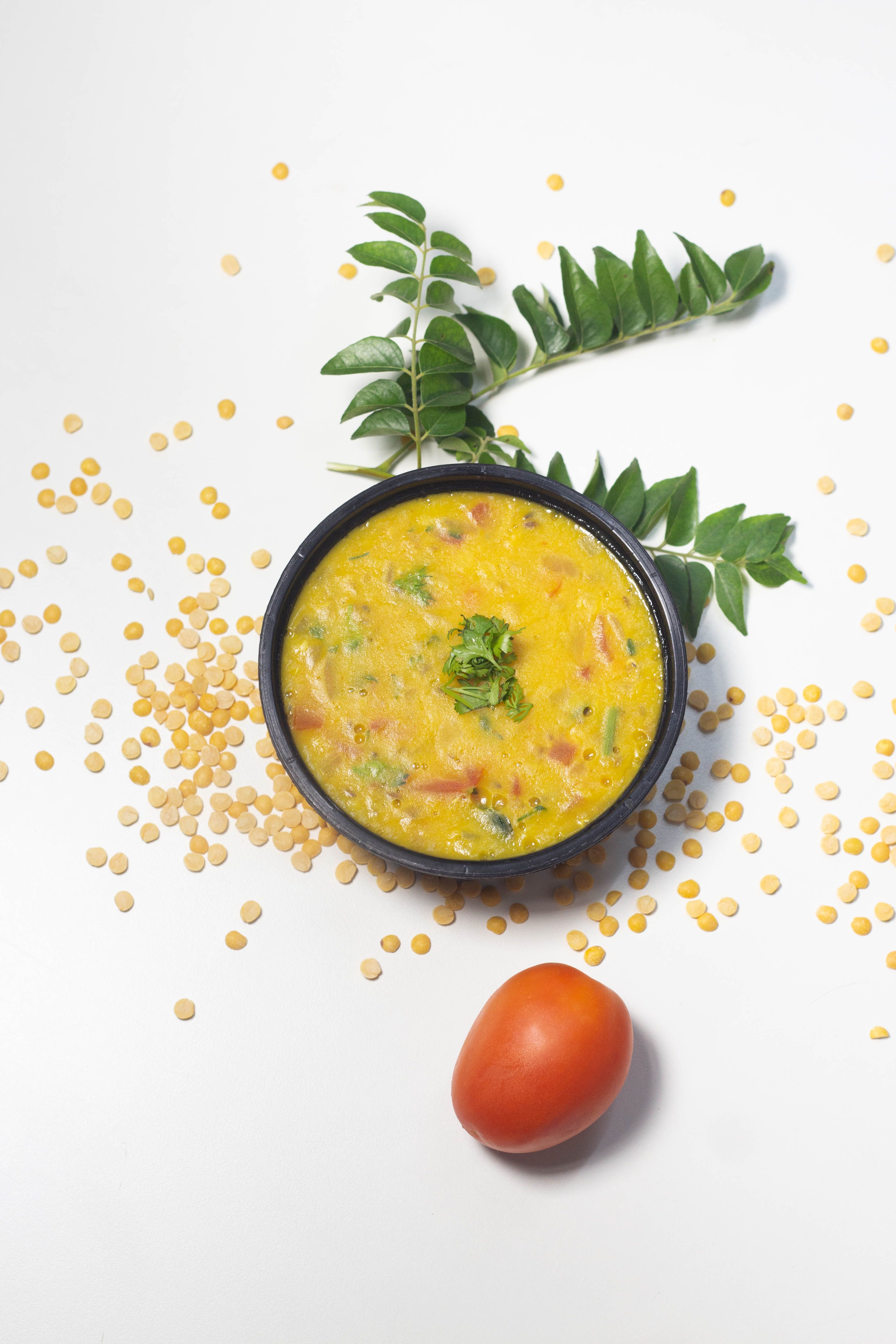
Photo: Rahul Sonawane / Pexels
The diets react (see scores below)
Common Ingredients
- moong dal
- mixed vegetables
- coconut
- cumin
- green chiles
- curry leaves
- turmeric
- mustard seeds
Specific recipes may vary.
Incompatible with 4 of 11 diets
Diet Ratings
Kootu is a South Indian dish combining lentils (moong dal) with mixed vegetables and coconut. The primary concern is moong dal, which contains approximately 25-30g net carbs per 100g cooked — a significant carb load that will quickly push a standard serving over the daily keto limit. Mixed vegetables further add to the carb count depending on the specific vegetables used (e.g., carrots, plantain, yam are common in kootu and are high-carb). While coconut, spices (cumin, turmeric, mustard seeds), green chiles, and curry leaves are keto-friendly, they cannot offset the carb burden from the dal and starchy vegetables. A typical serving of kootu would likely contain 20-35g net carbs, making it incompatible with maintaining ketosis for most individuals.
Some lazy keto or targeted keto practitioners argue that a small portion of kootu (2-3 tablespoons as a condiment rather than a side dish) could fit within daily limits, especially if the mixed vegetables are low-carb options like drumstick or raw banana in minimal quantities, and if the rest of the day's meals are extremely low carb.
Kootu is a traditional South Indian dish made entirely from whole plant foods. Every ingredient listed — moong dal, mixed vegetables, coconut, cumin, green chiles, curry leaves, turmeric, and mustard seeds — is 100% plant-derived with no animal products or animal-derived additives. It is also a whole-food preparation, meaning it scores at the high end of the approve range. The dish provides protein from lentils, healthy fats from coconut, and a rich array of micronutrients and phytonutrients from the spices and vegetables. There is no meaningful debate within the vegan community about this dish.
Kootu's primary protein is moong dal (split mung beans), which is a legume — explicitly excluded from the paleo diet due to its lectin and phytate content. Legumes are among the clearest disqualifiers in paleo, regardless of the school of thought. The remaining ingredients (mixed vegetables, coconut, cumin, green chiles, curry leaves, turmeric, mustard seeds) are all paleo-approved, but the foundational ingredient — moong dal — makes this dish incompatible with paleo principles. The dish cannot be considered paleo even in a modified or lenient interpretation, as legumes are universally excluded across all major paleo authorities including Cordain, Sisson, and Wolf.
Kootu is a South Indian dish combining lentils (moong dal) with mixed vegetables, making it predominantly plant-based and legume-rich — both pillars of the Mediterranean diet. The spices (turmeric, cumin, mustard seeds, curry leaves) are anti-inflammatory and align well with the diet's emphasis on herbs and spices. The primary concern is coconut, which is not a traditional Mediterranean ingredient and contains saturated fat, unlike the preferred extra virgin olive oil. However, the overall dish is whole, minimally processed, high in fiber and plant protein, and free from refined grains, added sugars, or red meat.
Some Mediterranean diet purists may downgrade this dish due to the use of coconut, whose saturated fat content conflicts with the diet's emphasis on monounsaturated fats from olive oil; strict clinical interpretations (e.g., Willett's Harvard-based Mediterranean diet pyramid) would flag coconut as a non-traditional fat source. However, broader whole-food plant-based interpretations of the Mediterranean pattern would embrace this dish as highly compatible given its legume and vegetable foundation.
Kootu is entirely plant-based with zero animal-derived ingredients. It consists of moong dal (a legume), mixed vegetables, coconut (a plant fat), and an array of plant spices and aromatics (cumin, green chiles, curry leaves, turmeric, mustard seeds). Every single ingredient is explicitly excluded on the carnivore diet. Lentils and legumes are among the most anti-carnivore foods due to their carbohydrate and antinutrient content. This dish is fundamentally incompatible with any tier of carnivore eating.
Kootu's primary protein is moong dal (mung beans), which is a legume. Legumes are explicitly excluded on the Whole30 program for the full 30 days. While the rest of the ingredients — mixed vegetables, coconut, cumin, green chiles, curry leaves, turmeric, and mustard seeds — are all Whole30-compliant, the moong dal is a disqualifying ingredient. Unlike green beans, sugar snap peas, or snow peas, which are explicitly excepted from the legume exclusion, moong dal has no such exception. The dish cannot be made compliant without fundamentally changing its character by removing the dal entirely.
Kootu is a South Indian dish combining lentils and vegetables with a coconut-spice base. The key FODMAP concern is moong dal (split mung beans), which contains GOS and is considered high-FODMAP at typical serving sizes. Monash rates cooked split mung beans (moong dal) as low-FODMAP only at very small portions (~¼ cup or ~38g cooked), but a standard side serving of kootu would typically contain more than this threshold. The 'mixed vegetables' component is ambiguous and could include high-FODMAP items like cauliflower (moderate at >¾ cup), sweet corn, or other problematic vegetables. Coconut (shredded/fresh) is low-FODMAP at small amounts (~½ cup). The spice base ingredients — cumin, green chiles, curry leaves, turmeric, and mustard seeds — are all low-FODMAP as they are used in small culinary quantities. Overall, the dish is borderline due to the moong dal GOS load at realistic serving sizes and the uncertain vegetable mix, making it risky during strict elimination phase.
Monash University rates small portions of cooked moong dal as low-FODMAP, and some FODMAP-trained dietitians consider moong dal one of the safer legumes compared to chickpeas or kidney beans. However, many elimination-phase protocols advise avoiding all lentils and legumes entirely to ensure GOS restriction, since typical kootu servings are difficult to portion-control precisely.
Kootu is a South Indian dish combining lentils (moong dal) and mixed vegetables — both strongly aligned with DASH principles as excellent sources of plant protein, fiber, potassium, and magnesium. The spices (cumin, turmeric, mustard seeds, curry leaves, green chiles) add flavor without sodium, which is ideal for DASH. However, the inclusion of coconut is the primary concern: NIH/NHLBI DASH guidelines explicitly limit tropical oils and coconut due to their high saturated fat content. Coconut in Kootu is typically used as grated fresh or desiccated coconut (not coconut oil), which, while still containing saturated fat, delivers it in whole-food form with fiber. The quantity used in a typical serving is moderate (~2-3 tablespoons grated coconut), making the saturated fat contribution meaningful but not extreme. Overall, this is a nutrient-dense, low-sodium, high-fiber dish that is close to DASH-approved but the coconut content prevents a full approval under strict DASH interpretation.
NIH DASH guidelines restrict coconut-based ingredients due to saturated fat concerns, placing this dish in the caution category. However, updated clinical interpretations note that whole grated coconut (as opposed to coconut oil) carries fiber and is consumed in small quantities in dishes like Kootu, and some DASH-oriented dietitians consider such dishes fully acceptable given the overwhelming nutritional benefits of the lentil-vegetable base.
Kootu is a South Indian dish combining moong dal with mixed vegetables, coconut, and spices. From a Zone perspective, it has several favorable elements but requires attention to ratios. Moong dal provides plant-based protein and fiber-rich carbohydrates, making it a reasonable Zone protein source — though as a legume it contributes significant carbohydrate load alongside its protein, requiring block adjustment. The mixed vegetables are Zone-favorable low-glycemic carbs. However, coconut introduces saturated fat rather than the preferred monounsaturated fat profile, and the dish lacks a distinct lean protein anchor to hit the 30% protein target. As a side dish, it would need pairing with a lean protein source to achieve the 40/30/30 ratio. The spices (cumin, turmeric, curry leaves, mustard seeds, green chiles) are anti-inflammatory polyphenol-rich additions that Sears would endorse, particularly turmeric. The main Zone challenge is the combined carbohydrate load from both dal and vegetables, plus the saturated fat from coconut displacing monounsaturated sources.
Some Zone practitioners familiar with Sears' later anti-inflammatory writing (Toxic Fat, The OmegaRx Zone) would note that coconut fat, while saturated, contains medium-chain triglycerides that behave differently metabolically than long-chain saturated fats. Additionally, the high polyphenol content from turmeric, curry leaves, and chiles aligns strongly with Sears' later emphasis on anti-inflammatory eating beyond pure macros. These practitioners might score this higher (7) as a favorable plant-based Zone option when portioned correctly.
Kootu is a South Indian dish that aligns exceptionally well with anti-inflammatory dietary principles. Moong dal is one of the most easily digestible legumes, providing plant-based protein, fiber, and polyphenols that support gut health and reduce inflammatory markers. Mixed vegetables contribute a broad spectrum of antioxidants, carotenoids, and phytonutrients. Turmeric is perhaps the most research-validated anti-inflammatory spice, with curcumin demonstrably reducing CRP and IL-6. Mustard seeds contain omega-3 alpha-linolenic acid and glucosinolates with anti-inflammatory properties. Curry leaves are rich in flavonoids and alkaloids shown to reduce oxidative stress. Cumin provides antioxidant and anti-inflammatory volatile oils. Green chiles supply capsaicin, which modulates NF-κB inflammatory pathways. Coconut contributes medium-chain triglycerides; while coconut's saturated fat content is debated, the modest culinary quantity used in kootu is unlikely to be problematic and is largely offset by the dish's overwhelmingly anti-inflammatory ingredient profile. This dish is whole-food, plant-based, minimally processed, and spice-forward — hitting nearly every positive pillar of the anti-inflammatory framework.
Kootu is a South Indian dish of cooked lentils (moong dal) and mixed vegetables bound with a coconut-cumin paste. It performs well on most GLP-1 criteria: moong dal provides a solid plant protein and fiber base, mixed vegetables add micronutrients and additional fiber, and the spices (turmeric, cumin, mustard seeds, curry leaves) are anti-inflammatory and digestive-supportive. The dish is soft-textured and easy to digest, well-suited to slowed gastric emptying. Green chiles appear in modest culinary quantities and are unlikely to trigger significant reflux in most patients, though sensitive individuals may want to reduce them. The primary concern is coconut: traditional kootu uses a meaningful amount of grated coconut or coconut paste, which adds saturated fat and calories. Coconut is not fried fat, and its medium-chain triglycerides are handled somewhat differently metabolically, but at standard recipe proportions it moderately elevates the fat content of an otherwise lean dish. As a side dish served in small portions — typical in Indian meal contexts — the overall fat load per serving remains manageable. Protein contribution from moong dal alone is moderate (~6-8g per half-cup cooked), so pairing with another protein source at the same meal is advisable to meet GLP-1 protein targets.
Some GLP-1-focused dietitians flag coconut-based dishes categorically due to saturated fat content and the potential to worsen nausea or slow digestion further; others accept coconut in traditional culinary quantities given the overall fiber and micronutrient density of the dish and the distinction between coconut's medium-chain saturated fats and long-chain saturated fats found in red meat or dairy.
*See how scores were generated at our methodology page.
Nutritional profile
Six traits that cut across every diet.
Fiber & Plants
How much whole-plant food and fiber it delivers.
Healthy Fats
The quality of its fats (unsaturated, omega-3).
Whole / Unprocessed
How close it is to its natural, unprocessed form.
Gut Gentle
How easy it is on digestion (low FODMAP, few irritants).
Low Glycemic
How little it spikes your blood sugar.
Protein Density
How much protein it packs per calorie.
Controversy Index
Higher controversy = more disagreement between diets.
Diet-Specific Tips
 Vegan — 9/10
View tips
- All ingredients are whole plant foods — no animal products present
- Moong dal provides complete plant protein alongside mixed vegetables
- Coconut contributes healthy plant-based fats
- Traditional spices (turmeric, mustard seeds, cumin, curry leaves) are all plant-derived
- No processed or ethically contested ingredients
- No cross-contamination concerns relevant to vegan classification
 Mediterranean — 8/10
View tips
- Moong dal provides excellent plant-based protein and fiber, a Mediterranean diet staple
- Mixed vegetables align perfectly with the diet's emphasis on abundant plant foods
- Coconut is not a traditional Mediterranean fat and contains saturated fat, unlike preferred olive oil
- No refined grains, added sugars, or processed ingredients
- Anti-inflammatory spice profile (turmeric, cumin) consistent with Mediterranean principles
- Minimally processed, whole-food preparation method
 Low-FODMAP — 4/10
View tips
- Moong dal contains GOS and is low-FODMAP only at small portions (~38g cooked); realistic kootu servings likely exceed this
- Mixed vegetables are unspecified — high-FODMAP vegetables (e.g., cauliflower in large amounts, snow peas) could be included
- Coconut is low-FODMAP at culinary amounts used in kootu (~2-3 tbsp)
- Cumin, turmeric, mustard seeds, curry leaves, and green chiles are all low-FODMAP at typical spice-level quantities
- Dish is difficult to portion-control in practice, making elimination-phase compliance uncertain
- GOS from lentils is the primary FODMAP risk in this dish
 DASH — 6/10
View tips
- Moong dal is an excellent DASH-friendly plant protein and fiber source
- Mixed vegetables strongly align with DASH vegetable serving goals
- Coconut contains saturated fat, which DASH limits — this is the primary concern
- Whole grated coconut used in moderation reduces (but does not eliminate) saturated fat concern vs. coconut oil
- No added sodium from ingredients — spices used for flavor are DASH-positive
- High in potassium, magnesium, and fiber from lentils and vegetables
- Low in added sugars, processed ingredients, and cholesterol
 Zone — 6/10
View tips
- Moong dal provides plant-based protein but also contributes significant net carbohydrates, requiring careful block counting
- Mixed vegetables are Zone-favorable low-glycemic carbohydrates
- Coconut provides saturated fat rather than preferred monounsaturated fat (olive oil, avocado, almonds)
- High polyphenol content from turmeric, curry leaves, and green chiles aligns with Sears' anti-inflammatory focus
- As a side dish, lacks sufficient lean protein to stand alone as a Zone meal — must be paired
- Legume-based protein requires using the vegetarian fat block ratio (3g fat per block) rather than the animal protein ratio
 Anti-Inflammatory — 9/10
View tips
- Turmeric (curcumin) — one of the most evidence-backed anti-inflammatory spices, reduces CRP and IL-6
- Moong dal — easily digestible legume rich in fiber, plant protein, and polyphenols
- Mixed vegetables — broad antioxidant and carotenoid content
- Curry leaves — rich in flavonoids and alkaloids with antioxidant and anti-inflammatory effects
- Mustard seeds — source of ALA (omega-3) and glucosinolates
- Cumin — anti-inflammatory volatile oils and antioxidant activity
- Green chiles — capsaicin modulates NF-κB inflammatory signaling
- Whole-food, plant-based, minimally processed preparation
- Coconut used in modest culinary quantity — minor saturated fat concern offset by overall profile
 GLP-1 Friendly — 7/10
View tips
- Moong dal provides plant protein and soluble fiber — supports both GLP-1 priority #1 and #2
- Mixed vegetables add micronutrients and fiber, supporting nutrient density per calorie
- Coconut adds saturated fat — the main concern; quantity matters and traditional recipes vary
- Soft, cooked texture is easy to digest — well-suited to slowed gastric emptying on GLP-1s
- Green chiles may irritate sensitive GI tracts; patients prone to reflux should reduce or omit
- Protein per serving as a side dish is moderate — should be paired with a higher-protein main
- Small portion-friendly as a side dish in an Indian meal structure