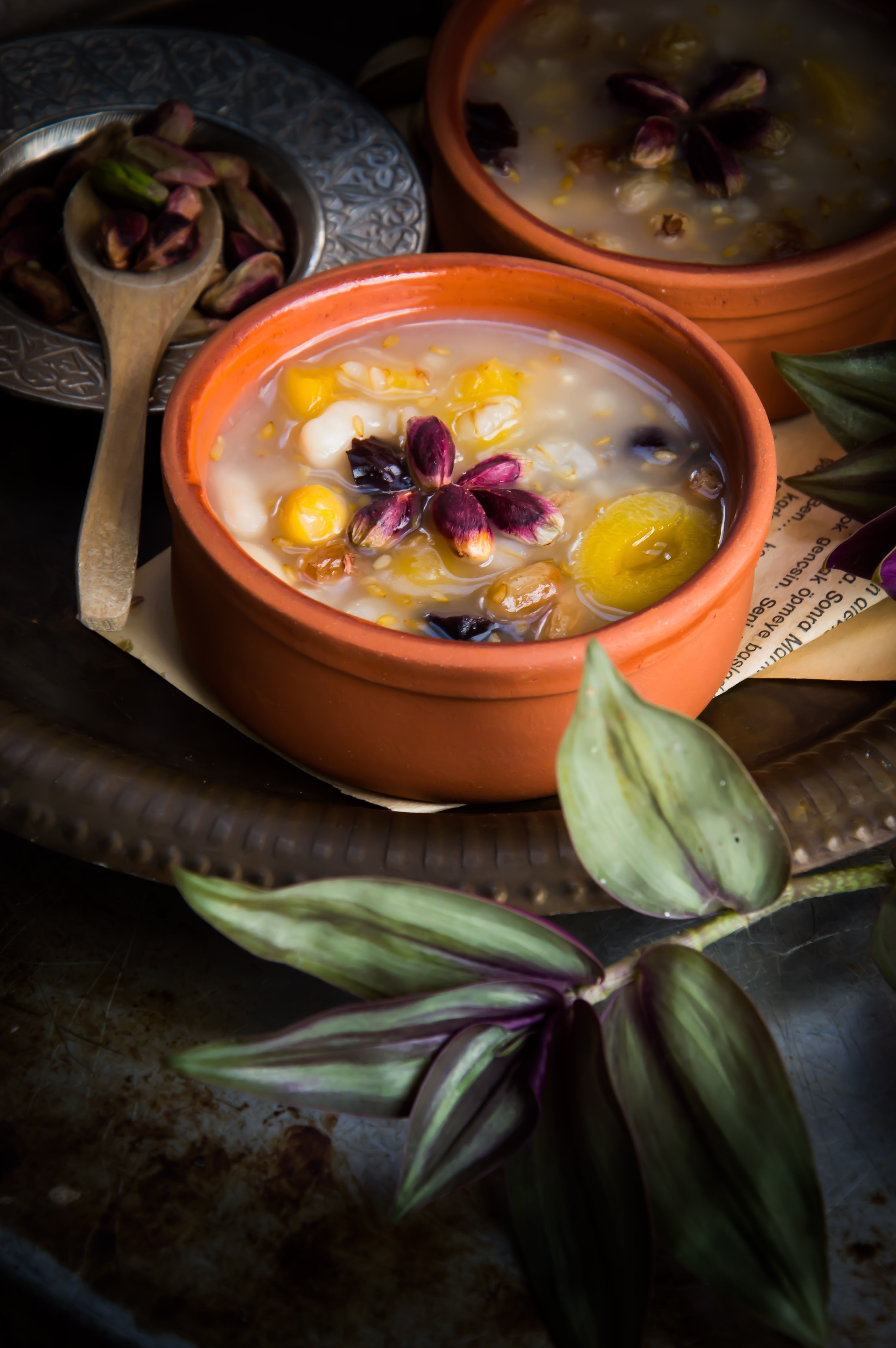
The diets react (see scores below)
Common Ingredients
- vermicelli
- milk
- sugar
- cardamom
- cashews
- raisins
- ghee
- saffron
Specific recipes may vary.
Incompatible with 9 of 11 diets
Diet Ratings
Payasam is fundamentally incompatible with a ketogenic diet. It contains three major keto-disqualifying ingredients: vermicelli (a wheat-based pasta with very high net carbs), sugar (pure added sugar), and raisins (concentrated fruit sugar). A single serving would easily deliver 50-80g of net carbs, far exceeding the entire daily keto limit in one snack. Even the ghee — normally a keto-approved fat — cannot offset the massive carbohydrate load from the other ingredients. Milk also contributes lactose (natural sugar), adding further carbs. The only marginally keto-friendly components are ghee, cardamom, saffron, and cashews (in small amounts), but these are a minor fraction of the dish's composition.
Payasam contains multiple animal-derived ingredients that make it clearly non-vegan. Milk is a dairy product (animal-derived), and ghee is clarified butter, also dairy-derived. Both are unambiguous animal products excluded under all vegan frameworks. The remaining ingredients — vermicelli, sugar, cardamom, cashews, raisins, and saffron — are plant-based, but the presence of milk and ghee disqualifies the dish entirely. A vegan version of payasam can be made by substituting coconut milk or oat milk for dairy milk and using coconut oil or vegan butter instead of ghee.
Payasam contains multiple non-paleo ingredients that are clearly excluded from the diet. Vermicelli is a wheat-based grain product — grains are strictly prohibited in paleo. Milk is dairy, which is excluded. Refined sugar is explicitly off-limits. Ghee is debated (most modern paleo practitioners accept it, but strict Cordain-school paleo excludes all dairy derivatives). The compliant ingredients — cardamom, cashews, raisins, and saffron — are far outnumbered and outweighed by the core non-paleo components. This dish cannot be considered paleo in any meaningful interpretation.
Payasam is an Indian sweet dessert pudding that conflicts with core Mediterranean diet principles on multiple fronts. It is made with refined vermicelli (refined grain), significant added sugar, ghee (saturated animal fat rather than olive oil), and sweetened with raisins. While milk, cashews, cardamom, and saffron have some nutritional value, the overall profile is dominated by refined carbohydrates, added sugars, and saturated fat — all of which the Mediterranean diet minimizes. Ghee, a clarified butter, directly contradicts the principle that extra virgin olive oil should be the primary fat source. The high sugar content places this firmly in the 'avoid' category under Mediterranean diet guidelines.
Payasam is almost entirely plant-based and incompatible with the carnivore diet. Vermicelli is a grain-based pasta, sugar is a processed plant-derived sweetener, cardamom and saffron are plant spices, cashews and raisins are plant foods (nuts and fruit), and ghee is the only animal-derived ingredient — and even that is debated on strict carnivore. The dish has no primary animal protein and is fundamentally a dessert built around carbohydrates and plant ingredients. This is a clear avoid with near-universal consensus in the carnivore community.
Payasam contains multiple excluded ingredients that make it clearly non-compliant with Whole30. Vermicelli is a grain-based pasta (wheat), which is excluded. Milk is dairy, which is excluded. Sugar is an added sweetener, which is explicitly excluded. Three out of eight ingredients are direct violations of Whole30 rules, making this dish firmly in the 'avoid' category with no ambiguity.
Payasam contains multiple high-FODMAP ingredients that make it unsuitable during the elimination phase. The two primary concerns are: (1) vermicelli, which is typically made from wheat and is therefore high in fructans — a major FODMAP trigger; and (2) milk, used in large quantities in payasam, which is high in lactose. Raisins are also high-FODMAP due to excess fructose and polyols, and cashews become high-FODMAP at servings above 10 nuts (GOS and fructans). A standard serving of payasam would include meaningful amounts of all these ingredients simultaneously, making this dish clearly high-FODMAP overall. Ghee, saffron, cardamom, and sugar are individually low-FODMAP, but they cannot offset the primary problematic ingredients.
Payasam is a traditional Indian sweet dessert/snack made with vermicelli, full-fat milk, sugar, ghee, cashews, raisins, cardamom, and saffron. From a DASH perspective, it presents several concerns: (1) Sugar: significant added sugar content conflicts with DASH's recommendation to limit sweets and added sugars. (2) Ghee: a saturated fat source — DASH explicitly limits saturated fat and recommends vegetable oils over animal fats like ghee. (3) Full-fat milk: DASH specifies fat-free or low-fat dairy. (4) Vermicelli: typically refined wheat, not a whole grain, offering minimal fiber. On the positive side, cashews and raisins provide some potassium and magnesium, and the sodium content is naturally low. The dish is not categorically excluded but is a high-sugar, moderate saturated fat preparation that would need significant modification (low-fat milk, minimal ghee, reduced sugar) to align better with DASH. As an occasional small-portion treat it falls into 'caution' rather than 'avoid,' since sodium is not a concern and it contains some nuts and dried fruit.
NIH DASH guidelines clearly limit added sugars and saturated fats like ghee, placing this dessert in caution territory. However, some DASH-oriented clinicians note that small portions of traditional sweets with naturally low sodium, some nuts, and dried fruit can fit within an overall DASH pattern if consumed infrequently — and emerging evidence is softening the stance on full-fat dairy's cardiovascular impact.
Payasam is a traditional Indian sweet dessert that is fundamentally incompatible with Zone Diet principles. The dish is dominated by high-glycemic, insulin-spiking ingredients: vermicelli (refined white pasta), sugar (pure high-glycemic carbohydrate), and raisins (a 'avoid' fruit in Zone due to high sugar concentration). The macronutrient ratio is essentially the inverse of Zone targets — it is overwhelmingly carbohydrate-heavy with significant saturated fat from ghee and negligible lean protein. There is no meaningful protein source (milk contributes a small amount, but not enough to approach the 30% protein target). The fat present is primarily saturated (ghee), which Zone discourages in favor of monounsaturated fats. Sugar is listed as a core ingredient, making this a high-glycemic load food that would trigger exactly the insulin response Zone Diet is designed to prevent. Even in small portions, the macro ratios cannot be corrected without fundamentally changing the dish. As a snack, it provides no protein block, no favorable carbohydrate block, and unfavorable fat — making it essentially impossible to incorporate into a Zone-compliant eating pattern without pairing with substantial lean protein and fat corrections that would make the 'payasam' portion negligible.
Payasam is a traditional Indian sweet dessert made from vermicelli (refined wheat), whole milk, and significant added sugar — three ingredients that collectively create a pro-inflammatory profile. Refined vermicelli is a high-glycemic refined carbohydrate that spikes blood glucose and promotes inflammatory signaling. Added sugar is one of the clearest pro-inflammatory dietary components. Ghee is a saturated fat that the anti-inflammatory framework limits rather than avoids — it is not as harmful as trans fats and has some defenders in Ayurvedic and ancestral health circles, but remains in the 'limit' category. On the positive side, cardamom and saffron are both anti-inflammatory spices with meaningful antioxidant and bioactive properties. Cashews provide some healthy monounsaturated fats. Raisins offer polyphenols, though they also contribute to sugar load. Overall, the dish's foundational ingredients — refined carbs, added sugar, and ghee — outweigh its modest anti-inflammatory contributions from spices and nuts. As an occasional treat, it is not a serious concern, but it cannot be considered compatible with regular anti-inflammatory eating.
Payasam is a traditional Indian sweet dessert (kheer-style dish) made with vermicelli cooked in full-fat milk, loaded with sugar, ghee, cashews, and raisins. It is a high-sugar, high-fat, low-protein, low-fiber dish that conflicts with nearly every GLP-1 dietary priority. The refined vermicelli is a refined carbohydrate with negligible fiber. Sugar is the primary caloric driver alongside ghee (saturated fat) and whole milk fat. Cashews and raisins add additional fat and sugar respectively with minimal protein contribution. There is no meaningful protein source in this dish. For GLP-1 patients eating smaller volumes with reduced appetite, payasam represents almost pure empty calories — sugar, saturated fat, and refined carbs with virtually no protein or fiber payoff. The high sugar load risks blood sugar spikes, and the fat content (ghee plus full-fat milk plus cashews) may worsen nausea, bloating, and reflux — common GLP-1 side effects. This dish is essentially the nutritional opposite of what GLP-1 patients need.
*See how scores were generated at our methodology page.
Nutritional profile
Six traits that cut across every diet.
Fiber & Plants
How much whole-plant food and fiber it delivers.
Healthy Fats
The quality of its fats (unsaturated, omega-3).
Whole / Unprocessed
How close it is to its natural, unprocessed form.
Gut Gentle
How easy it is on digestion (low FODMAP, few irritants).
Low Glycemic
How little it spikes your blood sugar.
Protein Density
How much protein it packs per calorie.
Controversy Index
Higher controversy = more disagreement between diets.
Diet-Specific Tips
 DASH — 4/10
View tips
- High added sugar content conflicts with DASH sugar limits
- Ghee is a saturated fat source discouraged by DASH
- Full-fat milk used rather than DASH-recommended low-fat or fat-free dairy
- Vermicelli is refined grain, not whole grain — lower fiber
- Naturally low sodium, which aligns with DASH sodium goals
- Cashews and raisins contribute beneficial potassium and magnesium
- Small portions occasionally may be acceptable within a broader DASH eating pattern
 Anti-Inflammatory — 4/10
View tips
- Refined vermicelli is a high-glycemic carbohydrate that promotes inflammatory response
- Added sugar is a core pro-inflammatory ingredient
- Ghee (saturated fat) falls in the 'limit' category of anti-inflammatory diets
- Cardamom and saffron provide genuine anti-inflammatory antioxidants and bioactives
- Whole milk dairy is neutral-to-moderate per anti-inflammatory guidelines
- Cashews contribute monounsaturated fats with modest anti-inflammatory benefit
- Overall sugar and refined carb load dominates the dish's inflammatory profile