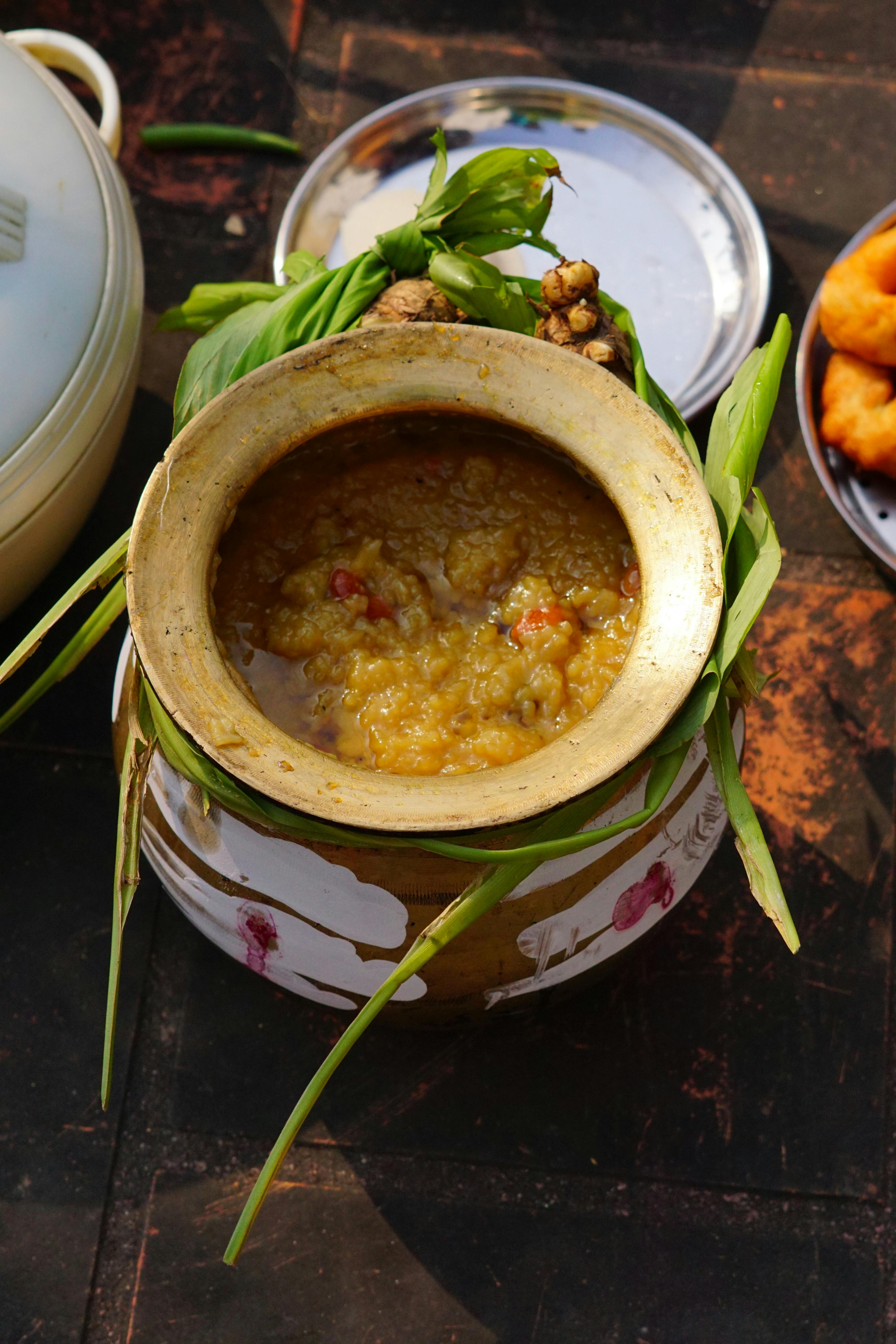
Photo: Narasimhan AVPL / Pexels
The diets react (see scores below)
Common Ingredients
- rice
- moong dal
- black pepper
- cumin
- ginger
- curry leaves
- cashews
- ghee
Specific recipes may vary.
Incompatible with 5 of 11 diets
Diet Ratings
Pongal is fundamentally incompatible with a ketogenic diet. Its two primary ingredients — rice and moong dal — are both high-carbohydrate foods. A standard serving of Pongal (approximately 200-250g) contains roughly 40-60g of net carbs from rice alone, which meets or exceeds the entire daily carb allowance for ketosis. Moong dal adds additional net carbs (around 10-15g per serving). While ghee, black pepper, cumin, ginger, curry leaves, and cashews are individually more keto-friendly, they are minor components that cannot offset the massive carbohydrate load from rice and dal. The dish's entire structure is built around starchy grains and legumes, making portion control ineffective — even a small serving would likely disrupt ketosis.
Pongal contains ghee, which is clarified butter — a dairy product derived from cow's milk and therefore an animal product. All other ingredients (rice, moong dal, black pepper, cumin, ginger, curry leaves, cashews) are fully plant-based. The dish fails vegan criteria solely due to ghee. A vegan version of Pongal can easily be made by substituting ghee with coconut oil or another plant-based fat, which is a common adaptation.
Pongal is fundamentally incompatible with the paleo diet. Its two primary ingredients — rice (a grain) and moong dal (a legume) — are both explicitly excluded from paleo eating. Rice is a grain that was unavailable to Paleolithic hunter-gatherers, and moong dal is a legume containing lectins and phytic acid that strict paleo excludes. These two ingredients form the entire base of the dish, making substitution impossible while retaining the identity of Pongal. The remaining ingredients — black pepper, cumin, ginger, curry leaves, cashews, and ghee — are individually paleo-friendly or debated (ghee), but they are minor seasonings that cannot redeem a dish built on two hard-excluded food groups.
Pongal is a wholesome dish with several Mediterranean-compatible elements: moong dal (legume) is excellent, and spices like black pepper, cumin, ginger, and curry leaves align well with the herb/spice emphasis of the diet. However, two factors temper the rating. First, white rice is a refined grain — the Mediterranean diet strongly prefers whole grains, though white rice does appear in some traditional Mediterranean cuisines in moderation. Second, ghee (clarified butter) is the primary fat here, displacing extra virgin olive oil, which is the canonical fat of the Mediterranean diet. Ghee is a saturated animal fat not traditional to Mediterranean cooking. The cashews add healthy fats, and the legume content is a genuine positive. Overall, this is a nutritious dish that partially aligns with Mediterranean principles but diverges on grain refinement and fat source.
Some modern Mediterranean diet practitioners argue that whole, minimally processed dishes built around legumes and anti-inflammatory spices deserve more credit regardless of fat source — particularly when ghee is used in small quantities. Additionally, white rice is regularly consumed in traditional Greek and Turkish cuisines, suggesting the grain component may be acceptable in moderate portions.
Pongal is almost entirely plant-based and incompatible with the carnivore diet. The primary ingredients — rice (a grain) and moong dal (a legume) — are strictly excluded on carnivore. The remaining ingredients (black pepper, cumin, ginger, curry leaves, cashews) are all plant-derived spices, seeds, or nuts, also excluded. Ghee is the only animal-derived ingredient, but it constitutes a minor component of the dish and cannot redeem the overwhelmingly plant-based composition. There is no animal protein present whatsoever. This dish is essentially the opposite of a carnivore meal.
Pongal contains two excluded ingredients: rice (a grain) and moong dal (a legume). Both are explicitly prohibited on the Whole30 program. While ghee, black pepper, cumin, ginger, curry leaves, and cashews are all compliant, the foundational ingredients of this dish make it incompatible with Whole30. There is no compliant workaround that would still constitute Pongal as a dish.
Pongal is a South Indian rice and lentil porridge. Most ingredients are low-FODMAP: white rice is approved by Monash, ghee is fat-based and FODMAP-free, black pepper, cumin, ginger, and curry leaves are all used in small culinary quantities and are low-FODMAP at typical serving sizes. The problematic ingredients are moong dal (split mung beans) and cashews. Moong dal contains GOS (galacto-oligosaccharides); Monash rates canned/cooked mung beans as low-FODMAP at 1/4 cup (40g) but high-FODMAP at larger serves. In Pongal, moong dal is typically used in a 1:4 ratio with rice and cooked until very soft — the portion per serving can be moderate but the extended cooking and dilution may reduce FODMAP load somewhat. Cashews are high-FODMAP at standard quantities (Monash rates 10 cashews as the threshold); traditional Pongal often uses a small garnish of cashews (5–6), which may sit near or slightly below the threshold. The combination of two moderate-FODMAP ingredients (moong dal and cashews) in a single dish creates a stacking risk, where individually borderline portions combine to push the meal into high-FODMAP territory. A cautious serving with minimal cashews and controlled moong dal portions could keep this low-FODMAP, but standard restaurant or home preparations are unlikely to stay within safe limits.
Monash University rates small servings of cooked mung beans and very small cashew portions as low-FODMAP individually, which might suggest this dish is safe. However, clinical FODMAP practitioners commonly advise avoiding legume-containing dishes during strict elimination due to GOS stacking risk and portion-control difficulty, especially in restaurant settings.
Pongal is a South Indian breakfast dish made from rice and moong dal cooked together, seasoned with black pepper, cumin, ginger, and curry leaves, and finished with ghee and cashews. The dish has several DASH-positive elements: moong dal provides plant-based protein, fiber, potassium, and magnesium; spices like ginger, pepper, and cumin add flavor without sodium; and the dish is naturally low in sodium. However, ghee is a saturated fat derived from butter, which DASH explicitly limits, and cashews are calorie-dense nuts that contribute saturated fat when used in larger quantities. While DASH encourages nuts, it favors unsalted varieties in modest portions. White rice is also a refined grain, whereas DASH emphasizes whole grains. The combination of ghee (typically 1-2 tbsp per serving) and cashews pushes the saturated fat content above what DASH ideally recommends. A modified version using less ghee or substituting with a small amount of canola or olive oil, and using brown rice, would score significantly higher (7-8). As traditionally prepared, Pongal is acceptable in moderation but not a core DASH dish.
NIH DASH guidelines specify limiting saturated fat and favor whole grains over refined grains, placing traditional ghee-based Pongal in the 'caution' zone. However, some DASH-oriented dietitians note that ghee in small culinary quantities (under 1 tsp per serving) may be acceptable within overall saturated fat limits, and that the high fiber and micronutrient content of moong dal partially offsets concerns — particularly for individuals without dyslipidemia.
Pongal is a traditional South Indian breakfast dish that presents significant challenges for Zone Diet compliance. The dish is primarily composed of white rice and moong dal cooked together, making it carbohydrate-dominant with a high glycemic load. White rice is explicitly flagged as an 'unfavorable' and high-glycemic carbohydrate in Zone methodology — exactly the type of refined starch Dr. Sears advises against. The moong dal does contribute some protein and fiber, which moderates the glycemic impact somewhat, but not enough to bring the dish into Zone balance. The fat component (ghee and cashews) is present but skews toward saturated fat (ghee) rather than the preferred monounsaturated sources. Critically, the dish has no lean protein source listed, making the 40/30/30 macro ratio essentially unachievable as served. The carbohydrate-to-protein ratio is severely skewed — a typical serving would be perhaps 60-70% carbohydrates by calories with minimal protein. The anti-inflammatory spices (ginger, black pepper, cumin, curry leaves) are Zone-positive polyphenol contributors, but they cannot compensate for the macro imbalance. To make this Zone-compatible, one would need to substitute white rice with cauliflower rice or significantly reduce the rice portion, add a substantial lean protein (eggs, paneer, chicken), and replace or reduce the ghee. As traditionally prepared, Pongal is a high-glycemic, protein-deficient, carbohydrate-heavy dish that does not fit Zone parameters without major modification.
Pongal is a traditional South Indian comfort dish with a mixed anti-inflammatory profile. On the positive side, the spice blend is excellent: black pepper (piperine enhances curcumin absorption and has its own anti-inflammatory properties), cumin, ginger (gingerols are well-documented anti-inflammatory compounds), and curry leaves (rich in antioxidants and flavonoids) all contribute meaningful anti-inflammatory benefit. Moong dal (split mung beans) is a legume high in fiber and plant protein with a favorable anti-inflammatory profile — Dr. Weil's pyramid emphasizes beans and legumes. The combination of rice and moong dal provides complementary amino acids and a moderate glycemic load (lower than plain rice alone). However, the dish has two notable concerns: (1) White rice is a refined carbohydrate that spikes blood glucose and contributes to inflammatory markers — using brown rice or millet would improve the profile significantly. (2) Ghee is clarified butter, a saturated fat that the anti-inflammatory framework lists under 'limit.' While ghee has some defenders (see dissenting view), it is not endorsed by mainstream anti-inflammatory guidelines. Cashews add healthy monounsaturated fats but also contribute additional saturated fat. Overall, Pongal is a modest, wholesome dish elevated by its spice profile but held back by refined white rice and ghee.
Some integrative nutrition practitioners, particularly those drawing from Ayurvedic tradition, consider ghee a therapeutic fat with anti-inflammatory properties due to its butyrate content, which supports gut lining integrity — Dr. Vasant Lad and Ayurvedic medicine broadly endorse ghee for digestive health. However, Dr. Weil's Anti-Inflammatory Food Pyramid and mainstream anti-inflammatory nutrition science classify butter and clarified butter as saturated fats to limit, not emphasize. Similarly, white rice is considered acceptable in traditional dietary contexts (particularly in Asian-origin diets studied in longevity research), though most anti-inflammatory frameworks prefer whole grain alternatives.
Pongal is a traditional South Indian breakfast made primarily from white rice and moong dal cooked together, finished with ghee, cashews, black pepper, cumin, ginger, and curry leaves. While moong dal contributes some protein and fiber, the dish is predominantly a refined carbohydrate base (white rice) with limited protein density — a significant concern for GLP-1 patients who need 15–30g of protein per meal to preserve muscle mass during rapid weight loss. A standard serving of Pongal delivers roughly 8–12g of protein and only moderate fiber, falling well short of per-meal protein targets. Ghee and cashews add saturated and total fat, which can worsen GLP-1 side effects like nausea, bloating, and reflux. On the positive side, the spices (ginger, cumin, black pepper) are digestive-friendly and may actually ease GI discomfort. The dish is soft, warm, and easy to digest, which suits GLP-1 patients struggling with gastric emptying issues. The portion is naturally small and satisfying in texture. It is not fried or high in sugar. Overall, Pongal is not harmful but is poorly optimized for GLP-1 nutritional priorities — low protein, moderate fat from ghee and cashews, and a refined carbohydrate base. It can be made more GLP-1 appropriate by reducing ghee, limiting cashews, and pairing with a high-protein side such as eggs, low-fat yogurt, or a protein supplement.
Some GLP-1-focused dietitians may view Pongal more favorably, particularly for patients in early treatment phases experiencing severe nausea, since its soft texture, warm temperature, and digestive spices make it one of the easier foods to tolerate. The moong dal component also provides a meaningful protein and fiber contribution relative to many other breakfast starches, and some practitioners prioritize tolerability over protein optimization during high-side-effect periods.
*See how scores were generated at our methodology page.
Nutritional profile
Six traits that cut across every diet.
Fiber & Plants
How much whole-plant food and fiber it delivers.
Healthy Fats
The quality of its fats (unsaturated, omega-3).
Whole / Unprocessed
How close it is to its natural, unprocessed form.
Gut Gentle
How easy it is on digestion (low FODMAP, few irritants).
Low Glycemic
How little it spikes your blood sugar.
Protein Density
How much protein it packs per calorie.
Controversy Index
Higher controversy = more disagreement between diets.
Diet-Specific Tips
 Mediterranean — 5/10
View tips
- Moong dal (legume) is a Mediterranean diet staple and a strong positive
- White rice is a refined grain, not preferred over whole grains in Mediterranean guidelines
- Ghee replaces extra virgin olive oil as the primary fat — a significant departure from Mediterranean principles
- Anti-inflammatory spices (black pepper, cumin, ginger, curry leaves) are highly compatible
- Cashews provide healthy unsaturated fats, a positive contribution
- No red meat, processed foods, or added sugars present
 Low-FODMAP — 5/10
View tips
- Moong dal (split mung beans) contains GOS and is high-FODMAP above 1/4 cup per serve
- Cashews are high-FODMAP above approximately 10 nuts — common garnish quantities may exceed this
- FODMAP stacking risk: two moderate-GOS/polyol sources in one dish
- White rice is low-FODMAP and safe as the primary base
- Ghee is fat-based and contains no FODMAPs
- Ginger, cumin, black pepper, and curry leaves are low-FODMAP at culinary amounts
- Portion size and moong dal quantity are critical determinants of overall FODMAP load
 DASH — 5/10
View tips
- Ghee is a saturated fat, which DASH explicitly limits
- White rice is a refined grain; DASH prefers whole grains like brown rice
- Moong dal provides beneficial plant protein, fiber, potassium, and magnesium
- Naturally very low in sodium — a strong DASH positive
- Cashews contribute additional saturated fat; portion size matters
- Aromatic spices replace salt for flavor, aligning well with DASH principles
- Modified version with less ghee and brown rice would be DASH-approved
 Zone — 5/10
View tips
- White rice is a high-glycemic 'unfavorable' carbohydrate explicitly discouraged in Zone methodology
- No lean protein source present — critical omission for achieving 40/30/30 macro ratio
- Moong dal provides some protein and fiber, partially moderating glycemic impact
- Ghee is a saturated fat source, not the preferred monounsaturated fat in Zone guidelines
- Cashews contribute some monounsaturated fat but also add carbohydrates
- Anti-inflammatory spices (ginger, cumin, black pepper, curry leaves) are polyphenol-rich and Zone-positive
- As traditionally prepared, carbohydrates likely constitute 65-75% of calories — far exceeding the 40% Zone target
- Would require substantial modification (cauliflower rice substitution, added lean protein) to approach Zone compliance
 Anti-Inflammatory — 5/10
View tips
- Ginger provides well-documented anti-inflammatory gingerols and shogaols
- Black pepper and cumin are anti-inflammatory spices that enhance the dish's overall profile
- Curry leaves are rich in antioxidants and flavonoids
- Moong dal is a beneficial legume high in fiber with a favorable anti-inflammatory profile
- White rice is a refined carbohydrate that raises blood glucose and may increase inflammatory markers
- Ghee is clarified butter (saturated fat) — classified as 'limit' in anti-inflammatory guidelines
- Cashews add monounsaturated fats but also contribute additional saturated fat
- Rice + moong dal combination lowers overall glycemic impact compared to plain rice
 GLP-1 Friendly — 4/10
View tips
- Low protein density — moong dal helps but white rice dominates; falls short of 15–30g per meal target
- White rice is a refined carbohydrate with limited fiber and high glycemic load
- Ghee adds saturated fat, which can worsen GLP-1 nausea and reflux
- Cashews contribute additional fat and calories with modest protein benefit
- Ginger, cumin, and black pepper are GLP-1 friendly — support digestion and ease GI discomfort
- Soft texture and easy digestibility are positive for slowed gastric emptying
- Not fried, not sugary, not carbonated — avoids major GLP-1 red flags
- Should be paired with a high-protein side to meet meal protein targets
- Ghee quantity is portion-sensitive — even small increases significantly raise fat and calorie content