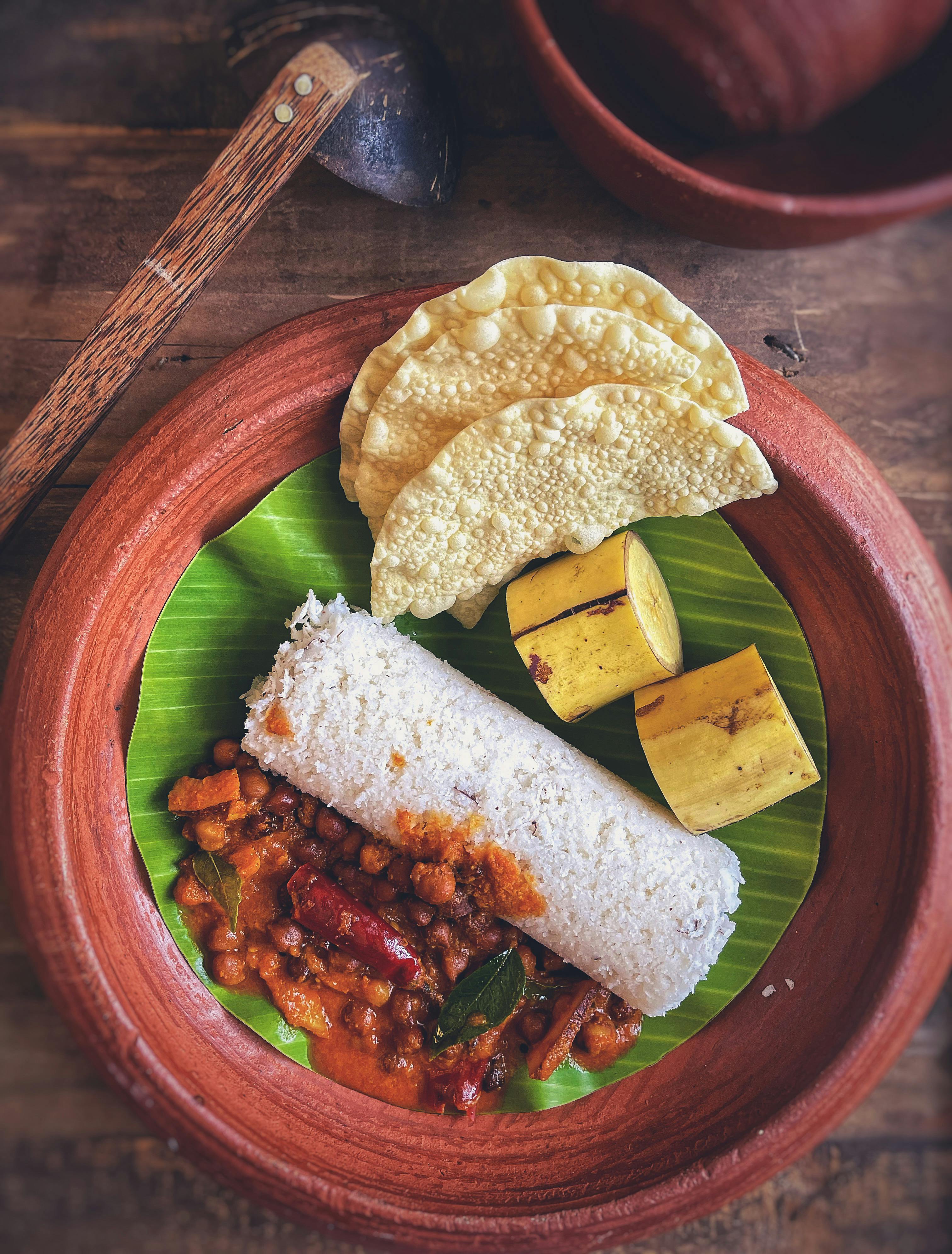
Photo: Saveurs Secretes / Pexels
The diets react (see scores below)
Common Ingredients
- rice flour
- coconut
- water
- salt
- cumin seeds
Specific recipes may vary.
Incompatible with 4 of 11 diets
Diet Ratings
Puttu is a steamed South Indian breakfast dish made primarily from rice flour, which is a high-glycemic, high-carb grain product. A single standard serving (approximately 100g) of puttu contains roughly 35-40g of net carbs, almost entirely from rice flour. This alone can exceed or nearly exhaust the entire daily net carb allowance on a ketogenic diet. While coconut adds some healthy fat and fiber, it does not meaningfully offset the dominant rice flour carb load. Cumin and salt are negligible. Puttu is fundamentally grain-based and incompatible with ketosis.
Puttu is a traditional South Indian and Kerala steamed breakfast dish made entirely from plant-based whole foods. Rice flour provides a wholesome grain base, fresh or desiccated coconut adds healthy fats and texture, and cumin seeds contribute flavor and digestive benefits. Water and salt complete the ingredient list. There are no animal products, animal-derived ingredients, or heavily processed components. All five listed ingredients are unambiguously vegan and minimally processed, making this an excellent whole-food plant-based choice.
Puttu is a steamed Kerala breakfast dish made primarily from rice flour, which is a grain product and explicitly excluded from the paleo diet. Rice flour is a processed form of rice — itself a grain — and grains are among the most clearly non-paleo foods due to their anti-nutrient content (lectins, phytates) and the fact that widespread grain consumption only began with the agricultural revolution. Additionally, the recipe includes added salt, which is also excluded under strict paleo guidelines. The remaining ingredients — coconut and cumin seeds — are paleo-friendly, but they play a minor supporting role. The dish is fundamentally built around a grain-based flour, making it incompatible with the paleo framework.
Puttu is a steamed dish made from rice flour and coconut, which are whole, minimally processed ingredients with no added sugars or unhealthy fats. The preparation method (steaming) is healthy. However, rice flour is a refined grain, which the Mediterranean diet de-emphasizes in favor of whole grains. Coconut, while a natural plant food, is high in saturated fat and is not a traditional Mediterranean ingredient — olive oil is the canonical fat source. Cumin and salt are neutral. The dish has no legumes, vegetables, or olive oil to anchor it firmly in Mediterranean principles, but its whole-food, plant-based, low-sugar profile keeps it from being discouraged outright.
Some modern Mediterranean diet interpreters apply the diet's plant-forward, minimally processed spirit broadly to traditional whole-food dishes from other cuisines, which could place Puttu closer to 'approve' territory given its steamed preparation and absence of refined sugars or unhealthy additives. Conversely, stricter clinical guidelines (e.g., those emphasizing whole grains and olive oil as non-negotiables) would rate it lower due to refined rice flour and coconut fat.
Puttu is a traditional South Indian steamed breakfast dish made entirely from plant-based ingredients: rice flour (a grain), coconut (a plant fat/fruit), cumin seeds (a spice/seed), and water with salt. It contains zero animal products and is fundamentally incompatible with the carnivore diet at every level. Rice flour is a high-carbohydrate grain product — one of the most excluded food categories on carnivore. Coconut, while popular in some other dietary frameworks, is a plant-derived fat entirely excluded from carnivore. Cumin seeds are plant-based spices, also excluded. There is no animal protein, no animal fat, and no animal-derived ingredient of any kind in this dish.
Puttu is a traditional South Indian/Kerala steamed breakfast dish made primarily from rice flour, which is a grain product. Rice and rice-derived products (including rice flour) are explicitly excluded on the Whole30 program. Despite all other ingredients — coconut, water, salt, and cumin seeds — being fully compliant, the rice flour alone disqualifies this dish. Additionally, Puttu is a grain-based steamed cake that structurally falls into the category of grain-based breakfast staples the program excludes.
Puttu is a South Indian steamed dish made from rice flour and coconut, both of which are generally low-FODMAP at standard serving sizes. Rice flour is a gluten-free grain and is low-FODMAP. Plain water and salt are FODMAP-free. Cumin seeds are used in small culinary quantities and are considered low-FODMAP at typical serving amounts. The main ingredient requiring attention is coconut: desiccated or fresh coconut is low-FODMAP at around 1/2 cup (40g) per Monash, but becomes moderate-to-high FODMAP at larger amounts due to sorbitol content. A standard serving of puttu (roughly 100g) typically contains a moderate but not excessive amount of coconut, keeping it within low-FODMAP thresholds for most preparations. Overall, this dish is well-suited to the elimination phase when portion sizes are reasonable.
Monash University rates desiccated coconut as low-FODMAP at 1/2 cup (40g) but high-FODMAP above that threshold due to sorbitol. Some clinical FODMAP practitioners advise caution with coconut-heavy dishes like puttu, particularly if a generous amount of coconut is used in preparation, as real-world servings may push sorbitol intake into problematic territory.
Puttu is a steamed South Indian breakfast dish made primarily from rice flour and grated coconut. The steaming method is healthy and adds no fat, and the dish contains no added sugars or heavily processed ingredients. However, it has two notable DASH concerns: (1) Rice flour is a refined grain, not a whole grain, which DASH deprioritizes in favor of whole grains like brown rice or whole wheat. (2) Coconut is a tropical source of saturated fat, which DASH explicitly limits. The amount of coconut used in Puttu is moderate (used as layering rather than a sauce), so saturated fat exposure is meaningful but not extreme. Salt is added but typically in small amounts for a steamed dish. Cumin seeds are a neutral-to-positive spice addition. Overall, Puttu is a minimally processed, low-sugar, whole-food dish that is acceptable in moderation, but the refined rice flour and coconut content prevent a full approval under standard DASH guidelines.
NIH DASH guidelines restrict both refined grains and tropical oils/coconut due to saturated fat concerns. However, some updated DASH-aligned clinicians note that the saturated fat in whole-food coconut (as used in Puttu) is consumed in smaller quantities than coconut oil, and the dish's low sodium, low sugar, and absence of processed ingredients make it a reasonable occasional breakfast choice within a broader DASH-compliant diet.
Puttu is a steamed South Indian breakfast made primarily from rice flour and coconut. From a Zone perspective, it presents several challenges: (1) Rice flour is a high-glycemic refined carbohydrate — essentially the same glycemic impact as white rice, which Dr. Sears explicitly categorizes as an 'unfavorable' carb. It will spike insulin quickly, disrupting the hormonal balance the Zone targets. (2) The dish contains no meaningful protein source, making it impossible to hit the 30% protein target on its own. It would need substantial lean protein added alongside it. (3) Coconut, while providing fat, is primarily saturated fat (lauric acid), which the Zone traditionally limits in favor of monounsaturated fats. (4) Cumin and salt are neutral/positive from an anti-inflammatory standpoint. (5) There are no low-glycemic vegetables or favorable carbs present. As a standalone breakfast it badly skews toward carbohydrates (likely 70-80% of calories from carbs) with no protein and primarily saturated fat. It could technically be portioned as a single carb block within a larger Zone meal that includes lean protein and monounsaturated fat on the side, but even then the high glycemic index of rice flour makes it a poor carbohydrate choice compared to Zone-favorable options like oatmeal or most vegetables.
Puttu is a traditional South Indian steamed breakfast made from rice flour, grated coconut, water, salt, and cumin seeds. The preparation method (steaming) is a positive factor, as it avoids frying or added oils. Cumin seeds offer modest anti-inflammatory properties via cuminaldehyde and other phenolic compounds. Coconut contributes medium-chain triglycerides (MCTs) and some fiber, though its saturated fat content is debated in anti-inflammatory contexts. The primary concern is white rice flour: it is a refined carbohydrate with a high glycemic index, which can promote postprandial blood glucose spikes and downstream inflammatory signaling (elevated IL-6, CRP) when consumed regularly or in large portions. It lacks the fiber and phytonutrients of whole grains emphasized in anti-inflammatory frameworks. The dish has no meaningful omega-3 content, antioxidant-rich vegetables, or polyphenol sources. However, it is minimally processed, free of trans fats, added sugars, seed oils, and artificial additives. When consumed in modest portions alongside anti-inflammatory accompaniments (e.g., legume curries, vegetables), its overall impact is neutral to mildly unfavorable rather than strongly pro-inflammatory.
Some integrative nutrition practitioners, including those influenced by Ayurvedic traditions, view rice flour-based steamed foods like puttu as easily digestible and 'light' on the gut, with a lower inflammatory burden than wheat-based products for gluten-sensitive individuals. However, mainstream anti-inflammatory nutrition guidance (Dr. Weil's pyramid, IF Rating system) consistently deprioritizes refined white rice flour in favor of whole grain alternatives, placing this dish in a cautionary rather than approved category.
Puttu is a steamed South Indian breakfast made primarily from rice flour layered with grated coconut. The cooking method (steaming) is gentle and easy to digest, which is a positive for GLP-1 patients dealing with slowed gastric emptying. However, it scores poorly on the two most critical GLP-1 priorities: it provides virtually no protein (no legume or animal protein listed) and is built on refined or semi-refined rice flour, which is low in fiber and has a relatively high glycemic index. Grated coconut adds saturated fat and some fiber, but in the quantities typically used per serving, the fiber contribution is modest. The dish is calorie-light per piece, which can be a mild advantage given reduced appetites, but the calories it does deliver are mostly from refined carbohydrate — not ideal given the premium on nutrient density per calorie. Cumin seeds are digestive-friendly and a genuine plus for GI comfort. Puttu is not inherently harmful and is far preferable to fried or high-sugar breakfast options, but it should be paired with a high-protein side (e.g., kadala curry/black chickpeas, eggs, or dal) to make it GLP-1 compatible. As a standalone meal it falls short of protein and fiber targets.
Some GLP-1-focused dietitians working with South Asian patients may rate traditional steamed foods like puttu more favorably as a culturally appropriate, low-fat, easily digestible option — particularly on high-nausea days — emphasizing that pairings (kadala curry, lentil dal) reliably close the protein and fiber gap. Others hold that the rice flour base spikes blood glucose too quickly for patients who are also managing insulin resistance or type 2 diabetes, and recommend replacing it with ragi (finger millet) flour versions for better fiber and glycemic profile.
*See how scores were generated at our methodology page.
Nutritional profile
Six traits that cut across every diet.
Fiber & Plants
How much whole-plant food and fiber it delivers.
Healthy Fats
The quality of its fats (unsaturated, omega-3).
Whole / Unprocessed
How close it is to its natural, unprocessed form.
Gut Gentle
How easy it is on digestion (low FODMAP, few irritants).
Low Glycemic
How little it spikes your blood sugar.
Protein Density
How much protein it packs per calorie.
Controversy Index
Higher controversy = more disagreement between diets.
Diet-Specific Tips
 Vegan — 9/10
View tips
- Rice flour is a whole-grain plant-based ingredient
- Coconut is a whole plant food providing healthy fats
- Cumin seeds are a whole spice with no animal origin
- No animal products, dairy, eggs, or animal-derived additives present
- Steamed preparation method requires no animal-based fats or oils
- Minimal processing — all ingredients are close to their natural form
 Mediterranean — 5/10
View tips
- Rice flour is a refined grain, not a whole grain — Mediterranean diet prefers whole grains like bulgur, farro, or whole wheat
- Coconut is high in saturated fat and not a traditional Mediterranean food; olive oil is the preferred fat
- Steaming is a healthy, low-fat cooking method consistent with Mediterranean principles
- No added sugars, no processed ingredients, no red meat or unhealthy fats
- Absence of vegetables, legumes, or olive oil limits Mediterranean diet alignment
- Cumin and salt are benign seasonings
 Low-FODMAP — 8/10
View tips
- Rice flour is a low-FODMAP, gluten-free grain — safe during elimination
- Coconut is low-FODMAP at ≤40g (1/2 cup) per Monash, but sorbitol content increases at larger amounts
- Cumin seeds used in small culinary amounts are low-FODMAP
- Water and salt are FODMAP-free
- Portion size of coconut in the dish is the key variable to monitor
- No high-FODMAP ingredients like wheat, onion, garlic, or legumes present
 DASH — 5/10
View tips
- Rice flour is a refined grain, not a whole grain — DASH emphasizes whole grains
- Coconut contains saturated fat from a tropical source, which DASH limits
- Steaming is a DASH-friendly cooking method with no added fats
- No added sugars, no heavily processed ingredients
- Salt is present but typically in small amounts for a steamed dish
- Low in potassium, calcium, and magnesium — does not contribute strongly to DASH's target micronutrients
- No lean protein source, limiting its nutritional completeness as a DASH meal
 Zone — 4/10
View tips
- Rice flour is a high-glycemic refined carbohydrate, classified as 'unfavorable' in Zone terminology
- No protein source present — cannot meet 30% protein ratio without significant additions
- Coconut contributes primarily saturated fat rather than Zone-preferred monounsaturated fat
- Macronutrient profile is heavily carbohydrate-dominant (likely 70-80% carb calories)
- Could serve as a small carb block component if paired with lean protein and MUFA, but poor carb choice even then
- Traditional Zone breakfast would replace rice flour with lower-GI carbohydrates like oatmeal or fruit
 Anti-Inflammatory — 5/10
View tips
- White rice flour is a refined carbohydrate with high glycemic index — a concern for anti-inflammatory eating
- Steaming method avoids pro-inflammatory cooking fats and high-heat oxidation
- Coconut provides MCTs and fiber but also saturated fat, which is debated in anti-inflammatory contexts
- Cumin seeds offer modest anti-inflammatory phenolic compounds
- No omega-3 fatty acids, antioxidant-rich vegetables, or significant polyphenol sources
- Free from trans fats, added sugars, artificial additives, and seed oils — a positive
- Glycemic impact can be mitigated by portion size and pairing with high-fiber, protein-rich accompaniments
 GLP-1 Friendly — 4/10
View tips
- Very low protein — no significant protein source in the dish as listed; fails the #1 GLP-1 dietary priority
- Rice flour is a refined carbohydrate with low fiber and moderate-to-high glycemic index, poor nutrient density per calorie
- Coconut adds saturated fat; in typical puttu proportions this is moderate but worth noting given GLP-1 fat sensitivity
- Steamed preparation is easy to digest and gentle on the gut — a genuine positive for GLP-1 side effect management
- Cumin seeds support digestion and may ease GI discomfort
- Dish is portion-friendly and light, which suits reduced GLP-1 appetite
- Must be paired with a high-protein side (chickpea curry, eggs, dal) to be GLP-1 appropriate; standalone rating is caution
- Ragi (finger millet) flour substitution would meaningfully improve fiber content and lower glycemic impact