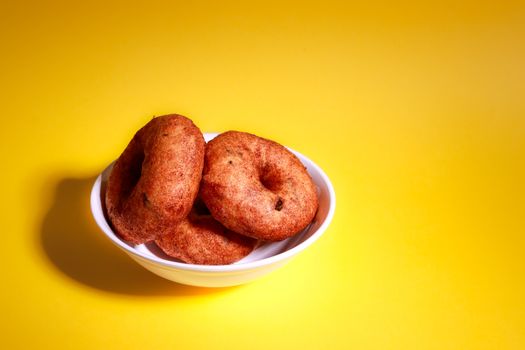
Photo: SRIPADA STUDIOS / Pexels
The diets react (see scores below)
Common Ingredients
- urad dal
- green chiles
- ginger
- curry leaves
- black pepper
- cumin
- salt
- vegetable oil
Specific recipes may vary.
Incompatible with 6 of 11 diets
Diet Ratings
Vada is a deep-fried fritter made primarily from urad dal (black lentils), which is a legume with a significant carbohydrate content. A standard serving of vada (2-3 pieces, ~100g) contains approximately 25-35g of net carbs, largely from the lentil batter. Urad dal contains roughly 50-60g of carbohydrates per 100g dry weight, and while it has some fiber, the net carb load remains high. Even though the dish is deep-fried (adding fat), the primary macronutrient is carbohydrates from the lentils, making it fundamentally incompatible with ketogenic macros. The spices and aromatics (green chiles, ginger, curry leaves, cumin, black pepper) are keto-friendly in small amounts, but they do not offset the high-carb lentil base.
Vada made with this ingredient list is entirely plant-based. Urad dal (black lentils) is the primary protein and binder, supported by aromatic vegetables and spices — green chiles, ginger, curry leaves, black pepper, cumin, and salt — all fully vegan. Vegetable oil is used for deep-frying, which is standard for this preparation and plant-derived. There are no animal products, dairy, eggs, or animal-derived additives present. This is a traditional whole-food Indian snack with minimally processed ingredients, scoring near the top of the approval range.
Vada is fundamentally incompatible with the paleo diet. The primary ingredient, urad dal, is a legume — explicitly excluded from paleo due to its lectin and phytic acid content. The dish is also fried in vegetable oil, a seed oil that is banned under paleo guidelines. Additionally, salt is listed as an ingredient, which is excluded. The spices and aromatics (green chiles, ginger, curry leaves, black pepper, cumin) are paleo-approved, but they cannot redeem a dish whose base is entirely non-paleo. This is not a gray area — legumes and seed oils are among the clearest exclusions in paleo doctrine across all major authorities.
Vada is made primarily from urad dal (black lentils), which is an excellent plant-based protein and legume — strongly aligned with Mediterranean diet principles. The spices (ginger, green chiles, curry leaves, black pepper, cumin) are wholesome and anti-inflammatory. However, vada is traditionally deep-fried in vegetable oil (typically refined oils such as sunflower or canola, not extra virgin olive oil), which contradicts the Mediterranean emphasis on olive oil as the primary fat and raises concerns about the frying method itself. Deep-frying adds significant quantities of refined fat and can produce harmful compounds, moving this dish away from Mediterranean ideals despite its excellent base ingredients. If shallow-fried or baked using extra virgin olive oil, the score would be considerably higher.
Some Mediterranean diet interpreters focus on the quality of whole ingredients rather than cooking method, and would note that lentil-based dishes are Mediterranean staples regardless of preparation style. Additionally, frying in high-oleic oils (e.g., high-oleic sunflower oil) is considered acceptable in some modern Mediterranean diet frameworks, which could push this dish toward approval.
Vada is a traditional Indian fried snack made entirely from plant-based ingredients. Urad dal (black lentils) is a legume — explicitly excluded from the carnivore diet. Every other ingredient is equally forbidden: green chiles, ginger, curry leaves, black pepper, and cumin are all plant-derived spices or vegetables, and vegetable oil is a plant-based fat. There is zero animal-derived content in this dish. This is as far from carnivore-compliant as a food can get.
Vada is a traditional Indian fritter/donut made from urad dal (black gram lentils), which is a legume explicitly excluded from the Whole30 program. Lentils and beans are on the prohibited list regardless of preparation method. Additionally, Vada is typically deep-fried into a donut or fritter shape — a form of fried snack food that falls squarely into the 'junk food recreation' category (analogous to fritters or fried snacks) that Whole30 discourages. The remaining ingredients (green chiles, ginger, curry leaves, black pepper, cumin, salt, vegetable oil) are all compliant, but the primary base ingredient — urad dal — is a non-negotiable exclusion. There is no compliant substitution that would still constitute a Vada.
Vada is made primarily from urad dal (split black lentils), which is high in GOS (galacto-oligosaccharides) — a key FODMAP. Unlike canned lentils where some GOS leaches into the liquid, urad dal in vada is ground into a batter and deep-fried, meaning all the GOS content is retained in the final product. A standard serving of vada (1-2 pieces, approximately 60-100g) would contain a significant amount of urad dal, making this dish high-FODMAP during the elimination phase. The remaining ingredients — green chiles, ginger, curry leaves, black pepper, cumin, and salt — are individually low-FODMAP at typical culinary quantities. Vegetable oil is also low-FODMAP. However, the urad dal base is the dominant ingredient and the primary FODMAP concern, making the overall dish unsuitable for elimination phase.
Monash University has not specifically tested vada as a prepared dish, creating some uncertainty about the exact GOS load per serving. Some clinical FODMAP practitioners note that soaking and fermenting urad dal (as in traditional idli/dosa preparation) may reduce GOS content, and if a fermentation step is used in the batter, FODMAP load could be lower — but standard vada recipes do not typically involve prolonged fermentation sufficient to significantly reduce GOS.
Vada is a traditional Indian fried snack made from urad dal (black lentils), which is a protein- and fiber-rich legume well-aligned with DASH principles. The base ingredients — urad dal, ginger, green chiles, curry leaves, cumin, and black pepper — are all DASH-friendly. However, vada is deep-fried in vegetable oil, which significantly increases total fat content and caloric density. While vegetable oil (e.g., sunflower or canola) is not a saturated fat concern like tropical oils, the deep-frying method is not consistent with DASH's emphasis on low-fat preparation. Additionally, salt is added during preparation and sodium content can vary considerably. The frying oil absorption in a typical vada (2-4 pieces) can add 8-15g of fat per serving. DASH does not explicitly prohibit fried legume preparations, but the diet emphasizes low-fat cooking methods. In moderation and with sodium controlled, vada occupies a middle ground — the lentil base supports DASH goals but the frying method and salt addition undercut it.
NIH DASH guidelines do not specifically address fried lentil preparations; some DASH-oriented dietitians may give more credit to the high-protein, high-fiber urad dal base and consider vada acceptable in moderation, while conservative interpretations would flag the deep-frying method and added salt as inconsistent with DASH's low-fat, low-sodium principles.
Vada is a deep-fried lentil fritter that presents several Zone Diet challenges. Urad dal provides moderate protein (roughly 25g per 100g dry weight) and some carbohydrates, but deep-frying in vegetable oil (typically omega-6-heavy seed oils like sunflower or canola) substantially skews the fat profile away from Zone ideals. The frying process absorbs a significant amount of oil, making the fat content unpredictable and high — and the oil type typically used is pro-inflammatory, directly contradicting Sears' anti-inflammatory emphasis. The urad dal itself is a moderate-glycemic legume, usable as a Zone protein/carb source in block calculations, but the deep-fried format makes macro balancing very difficult. A typical 2-3 piece serving would carry excess fat calories relative to protein and carbs, and the fat source is unfavorable. The spice blend (ginger, curry leaves, cumin, chili) is actually a Zone positive — rich in polyphenols and anti-inflammatory compounds. However, the cooking method largely negates these benefits. A baked or air-fried version would score considerably higher (6-7).
Some Zone practitioners argue that legume-based foods like urad dal vada can be incorporated carefully as a snack if portions are small (1 piece) and paired with lean protein to correct the ratio imbalance. Sears' later work (The OmegaRx Zone) places more emphasis on omega-6 vs. omega-3 balance than absolute fat exclusion, meaning the primary concern shifts to the oil type rather than the frying itself — if made with avocado oil or similar, the score would improve meaningfully.
Vada has a genuinely mixed anti-inflammatory profile. On the positive side, urad dal (black lentil) is a legume rich in fiber, protein, and polyphenols, and legumes are explicitly emphasized in anti-inflammatory frameworks. The spice blend — ginger, black pepper, cumin, and curry leaves — is a strong anti-inflammatory lineup. Ginger contains gingerols and shogaols that suppress inflammatory cytokines; black pepper provides piperine; cumin and curry leaves contribute antioxidants. Green chiles add capsaicin, another anti-inflammatory compound. The lentil base itself supports gut health and reduces CRP in research. The significant limiting factor is deep-frying in vegetable oil. Traditional vada is deep-fried, which substantially increases the omega-6 load and introduces oxidized lipids depending on the oil used and frying temperature — both pro-inflammatory concerns. If a seed oil such as sunflower or corn oil is used, this is a direct conflict with anti-inflammatory principles. Even if a more neutral oil is used (e.g., peanut oil or refined coconut oil), repeated high-heat frying degrades oil quality and generates aldehydes and oxidative byproducts. The beneficial base ingredients earn this dish real credit, but the deep-frying method prevents an 'approve' verdict. Baked or air-fried versions would score significantly higher (7–8).
Some anti-inflammatory practitioners would be more lenient here: the lentil-spice core is genuinely healthful, and occasional deep-fried legume-based snacks within an otherwise anti-inflammatory diet are unlikely to cause harm — Dr. Weil's framework is less restrictive than protocols like AIP and allows for real-world dietary flexibility. Conversely, strict anti-inflammatory adherents following guidelines that flag all seed oils and oxidized fats (as in functional medicine approaches) would rate this lower, particularly if fried in sunflower or corn oil.
Vada is a traditional South Indian deep-fried lentil fritter. While urad dal provides meaningful plant-based protein and some fiber, the preparation method — deep frying in vegetable oil — is the dominant factor here. Deep-fried foods worsen nausea, bloating, and reflux by slowing gastric emptying further on top of the medication's already-slowed gastric motility. The high fat content per serving (a typical 2-piece serving absorbs significant oil during frying) directly conflicts with Rule 3 (low fat) and Rule 5 (easy digestibility). Green chiles and black pepper also introduce spice risk for patients prone to GLP-1-related reflux or nausea. The nutrient-dense base ingredients (urad dal, spices) are undermined entirely by the frying. If the same batter were steamed or baked, the rating would shift considerably upward.
*See how scores were generated at our methodology page.
Nutritional profile
Six traits that cut across every diet.
Fiber & Plants
How much whole-plant food and fiber it delivers.
Healthy Fats
The quality of its fats (unsaturated, omega-3).
Whole / Unprocessed
How close it is to its natural, unprocessed form.
Gut Gentle
How easy it is on digestion (low FODMAP, few irritants).
Low Glycemic
How little it spikes your blood sugar.
Protein Density
How much protein it packs per calorie.
Controversy Index
Higher controversy = more disagreement between diets.
Diet-Specific Tips
 Vegan — 9/10
View tips
- Urad dal is a whole legume and fully plant-based primary protein
- All spices and aromatics (green chiles, ginger, curry leaves, cumin, black pepper) are plant-derived
- Vegetable oil used for frying is plant-based
- No dairy, eggs, or animal-derived binders present
- Minimally processed whole-food ingredients elevate the score within the approve range
 Mediterranean — 5/10
View tips
- Urad dal is a legume — a core Mediterranean diet food
- Deep-frying method conflicts with Mediterranean cooking principles
- Vegetable oil used is likely refined, not extra virgin olive oil
- Spices and aromatics are wholesome and anti-inflammatory
- No processed ingredients, added sugars, or refined grains
- Plant-based protein source aligns well with Mediterranean priorities
 DASH — 4/10
View tips
- Urad dal is a DASH-approved legume high in protein, fiber, potassium, and magnesium
- Deep-frying in oil significantly increases total fat content, inconsistent with DASH low-fat cooking guidance
- Added salt contributes sodium; amount varies by preparation but can be significant
- Spices (ginger, cumin, black pepper, curry leaves) are DASH-neutral or beneficial
- Vegetable oil used for frying is preferable to saturated fats but still raises total fat intake
- Baked or air-fried versions would score considerably higher (6-7) on DASH compatibility
- Typical serving of 2-3 vadas can contain 200-300 kcal with moderate-to-high fat absorption
 Zone — 4/10
View tips
- Deep-fried preparation creates excess and unpredictable fat content, difficult to fit into Zone fat block targets
- Vegetable oil (likely high omega-6 seed oil) is pro-inflammatory, contradicting Zone's anti-inflammatory core principle
- Urad dal provides both protein and carbohydrates — useful as a combined Zone block source but not lean protein alone
- Macro ratio skewed: high fat from frying with incomplete protein and moderate carbs makes 40/30/30 hard to achieve
- Spices (ginger, curry leaves, cumin, black pepper) are Zone-positive due to polyphenol and anti-inflammatory content
- As a snack format, portioning a single block is feasible but the oil absorption makes calorie density high relative to protein
 Anti-Inflammatory — 5/10
View tips
- Urad dal is a beneficial legume rich in fiber, protein, and polyphenols — emphasized in anti-inflammatory diets
- Strong anti-inflammatory spice profile: ginger, black pepper, cumin, curry leaves, green chiles
- Deep-frying significantly increases omega-6 intake and introduces oxidized lipids
- Type of vegetable oil matters — seed oils (sunflower, corn) are particularly problematic under anti-inflammatory guidelines
- High-heat frying generates aldehydes and free radicals regardless of oil type
- Preparation method (baked vs. fried) is the primary variable separating a 'caution' from an 'approve' verdict