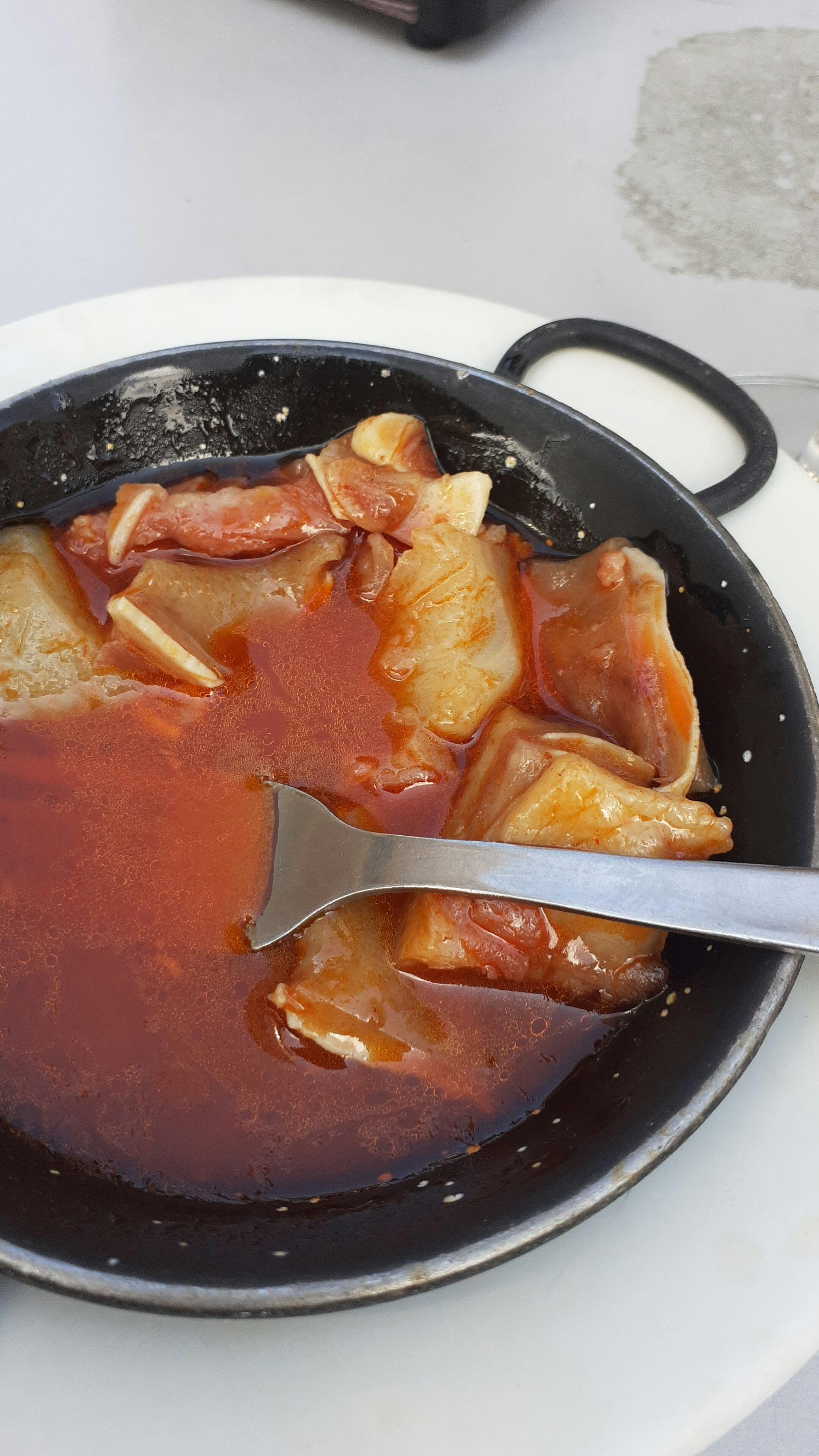
Photo: Eva Alonso / Pexels
Spanish
Callos a la Madrilena
The diets react (see scores below)
Common Ingredients
- beef tripe
- chorizo
- morcilla
- chickpeas
- paprika
- garlic
- onion
- tomato
Specific recipes may vary.
Incompatible with 10 of 11 diets
Diet Ratings
Callos a la Madrilena is fundamentally incompatible with keto due to the inclusion of chickpeas (garbanzos) as a core ingredient. Chickpeas are a legume with approximately 27g of net carbs per 100g cooked serving, and they are used in substantial quantity in this dish. A single serving would almost certainly push net carbs beyond the 20-50g daily limit on its own. The rest of the dish — beef tripe, chorizo, morcilla, garlic, onion, tomato, and paprika — would otherwise be relatively keto-friendly (offal and cured meats are high in fat and protein), but the chickpeas are a disqualifying element that cannot be reduced to a trace amount without fundamentally altering the dish's identity and character.
Callos a la Madrilena is a traditional Spanish tripe stew containing multiple animal products. Beef tripe is the stomach lining of a cow, chorizo is a cured pork sausage, and morcilla is a blood sausage — all of which are directly animal-derived. While chickpeas, paprika, garlic, onion, and tomato are fully plant-based, the dish is fundamentally built around animal proteins and cannot be considered vegan in any meaningful sense. There is no ambiguity here within vegan discourse.
Callos a la Madrileña contains multiple paleo-disqualifying ingredients. Chickpeas are legumes — explicitly excluded from the paleo diet due to their lectin and phytate content. Chorizo and morcilla (blood sausage) are processed meats that typically contain added salt, cured with nitrates/nitrites, and often include fillers or non-compliant additives. While beef tripe is an organ meat that would otherwise be celebrated in paleo eating, and garlic, onion, tomato, and paprika are all paleo-compliant aromatics, the legume and processed meat components are hard disqualifiers with high paleo consensus.
Callos a la Madrilena is a traditional Spanish offal stew that significantly conflicts with Mediterranean diet principles. The dish centers on beef tripe (red/organ meat), chorizo, and morcilla (blood sausage) — all of which are red or processed meats high in saturated fat and sodium. Processed cured meats like chorizo and morcilla are among the foods most strongly discouraged by Mediterranean diet guidelines due to their high sodium, nitrate, and saturated fat content. While the chickpeas, garlic, onion, tomato, and paprika are genuinely Mediterranean-friendly ingredients and provide some nutritional value, they are secondary to the dominant protein sources. The overall dish profile is defined by its heavy reliance on processed and red meat, earning it an 'avoid' classification.
Some Mediterranean diet scholars acknowledge that traditional Iberian cuisines, including Spanish regional cooking, do incorporate cured pork products like chorizo in small quantities as flavoring agents rather than main proteins. From a cultural Mediterranean diet perspective (not strictly clinical), a small portion of this stew occasionally — particularly for its legume and vegetable content — might be considered an acceptable indulgence within a broadly plant-forward dietary pattern.
Callos a la Madrilena contains multiple carnivore-incompatible ingredients that disqualify it entirely. While the dish has a strong animal-protein foundation — beef tripe (an organ meat), chorizo, and morcilla (blood sausage) are all carnivore-approved components — the inclusion of chickpeas (a legume), tomato (fruit/vegetable), onion (vegetable), garlic (vegetable), and paprika (plant-based spice) makes this dish incompatible with the carnivore diet. Chickpeas alone are a hard disqualifier as a legume, a plant food explicitly excluded. The plant ingredients are structural to the dish, not optional garnishes, so the dish cannot be considered carnivore-compatible in its traditional form.
Callos a la Madrileña is excluded from Whole30 due to two clear disqualifying ingredients. First, chickpeas are legumes, which are explicitly banned on the Whole30 program. Second, chorizo and morcilla (blood sausage) are cured/processed meats that almost universally contain added sugar, sulfites (though sulfites are now allowed per 2024 rules), and in many cases soy or other non-compliant additives. Even setting aside the processed meats, the chickpeas alone make this dish a definitive avoid. This is a classic Spanish stew where chickpeas are a foundational, non-optional ingredient, so the dish cannot be made in its traditional form on Whole30.
Callos a la Madrilena contains multiple high-FODMAP ingredients that make it unsuitable during the elimination phase. Chickpeas are high in GOS (galacto-oligosaccharides) at typical serving sizes — while canned chickpeas are lower, a main-dish portion (typically 100g+) far exceeds the Monash low-FODMAP threshold of ~42g. Garlic and onion are two of the highest-FODMAP foods tested by Monash University, both rich in fructans, and they are core aromatics in this dish. These three ingredients alone disqualify the dish. Additionally, chorizo and morcilla (blood sausage) often contain garlic and sometimes onion powder as seasoning ingredients, compounding the fructan load. Tomato is borderline acceptable at small amounts (65g) but is not the primary concern here.
Callos a la Madrilena is a traditional Spanish tripe stew that is fundamentally incompatible with DASH diet principles. The dish centers on two highly processed cured meats — chorizo and morcilla (blood sausage) — which are major sources of sodium, saturated fat, and in the case of morcilla, cholesterol. Chorizo alone can contribute 500-800mg of sodium per serving, and morcilla adds comparable amounts. The saturated fat load from both sausages, combined with fatty beef tripe, significantly exceeds DASH limits on saturated fat. While the dish contains DASH-positive ingredients (chickpeas, garlic, onion, tomato, paprika), these are overwhelmed nutritionally by the high-sodium, high-saturated-fat cured meats. A single serving could easily exceed 1,500-2,000mg of sodium, approaching or surpassing the entire daily sodium budget for standard DASH (2,300mg) or blowing through the low-sodium DASH limit (1,500mg). The red and processed meat content directly conflicts with DASH guidance to limit red meat and avoid processed meats.
Callos a la Madrileña presents a mixed Zone Diet profile that requires careful portioning and modification. The dish contains several problematic elements: chorizo and morcilla (blood sausage) are high in saturated fat and sodium, which conflicts with Zone's emphasis on lean proteins and monounsaturated fats. Beef tripe itself is actually relatively lean and a reasonable protein source, but the accompanying cured meats significantly elevate the saturated fat content, disrupting the 30% fat-from-monounsaturated target. Chickpeas serve as the primary carbohydrate and are a Zone-favorable legume — low-glycemic, high in fiber, and providing a decent block-compatible carb source. The aromatics (garlic, onion, tomato, paprika) are all Zone-friendly and contribute polyphenols. The fundamental problem is the ratio: this dish skews heavily toward protein and saturated fat with insufficient low-glycemic vegetables to balance the Zone blocks properly. A Zone-adapted version could reduce or eliminate the chorizo/morcilla and add more vegetables (spinach, bell peppers) to improve the carb-to-protein balance. As traditionally prepared in a restaurant, the saturated fat load from the cured pork products makes careful portioning essential.
Some Zone practitioners following Sears' later anti-inflammatory framework (Zone Perfect, The Mediterranean Zone) might rate this slightly higher, noting that traditional Spanish cured meats in moderation, combined with the polyphenol-rich paprika and the fiber of chickpeas, could fit within a Mediterranean-Zone hybrid approach. However, the processed nature of chorizo and morcilla, with their high omega-6 arachidonic acid precursors from pork fat, works against Sears' anti-inflammatory protocols specifically.
Callos a la Madrileña is a traditional Spanish offal stew built around ingredients that are predominantly pro-inflammatory by anti-inflammatory diet standards. Beef tripe is a processed organ meat that is high in saturated fat and cholesterol and lacks the omega-3 profile of favored proteins. Chorizo and morcilla (blood sausage) are cured, processed meats — high in saturated fat, sodium, and often containing nitrates/nitrites and artificial additives — which are explicitly flagged as pro-inflammatory across virtually all anti-inflammatory frameworks. The combination of multiple processed pork products makes this dish particularly problematic. On the positive side, the dish does contain genuinely anti-inflammatory components: chickpeas provide fiber, plant protein, and have a favorable inflammatory profile; garlic has well-documented anti-inflammatory properties (allicin); tomato and onion contribute polyphenols and antioxidants; and paprika (particularly smoked paprika) contributes carotenoids and capsaicinoids with anti-inflammatory activity. However, these beneficial ingredients are outweighed by the dominant pro-inflammatory proteins. The overall dish is calorie-dense, saturated-fat-heavy, and dominated by processed red and organ meats — a profile that research links to elevated CRP and IL-6 inflammatory markers. The anti-inflammatory benefits of the vegetable and legume components cannot offset the inflammatory burden of the chorizo, morcilla, and tripe.
Callos a la Madrileña is a heavy, fat-laden Spanish stew that is poorly suited for GLP-1 patients. The dish is dominated by high-saturated-fat processed meats — chorizo and morcilla (blood sausage) — which are among the most problematic foods for GLP-1 users due to their high fat content, spiced/greasy nature, and likelihood of worsening nausea, reflux, and bloating caused by slowed gastric emptying. Beef tripe itself is moderately high in protein but also contains significant fat and is tough to digest, especially in a rich, oil-heavy stew base. The paprika-heavy, spiced profile adds further GI irritation risk. The one redeeming element is the chickpeas, which contribute fiber and plant protein — but they are a minor component in an otherwise problematic dish. The overall fat load, processed meat content, heavy digestibility burden, and spice profile make this a clear avoid for GLP-1 patients.
*See how scores were generated at our methodology page.
Nutritional profile
Six traits that cut across every diet.
Fiber & Plants
How much whole-plant food and fiber it delivers.
Healthy Fats
The quality of its fats (unsaturated, omega-3).
Whole / Unprocessed
How close it is to its natural, unprocessed form.
Gut Gentle
How easy it is on digestion (low FODMAP, few irritants).
Low Glycemic
How little it spikes your blood sugar.
Protein Density
How much protein it packs per calorie.
Controversy Index
Higher controversy = more disagreement between diets.
Diet-Specific Tips
 Zone — 4/10
View tips
- Chorizo and morcilla are high in saturated fat and conflict with Zone's lean protein and monounsaturated fat guidelines
- Beef tripe is a relatively lean protein source and Zone-compatible in principle
- Chickpeas are a favorable Zone carbohydrate — low-glycemic with significant fiber reducing net carb count
- Garlic, onion, tomato, and paprika contribute Zone-friendly polyphenols and low-glycemic carbs
- Dish lacks sufficient non-starchy vegetables to properly balance Zone blocks
- High sodium content from cured meats is a secondary concern
- Saturated fat from pork products conflicts with Zone's omega-3/anti-inflammatory emphasis