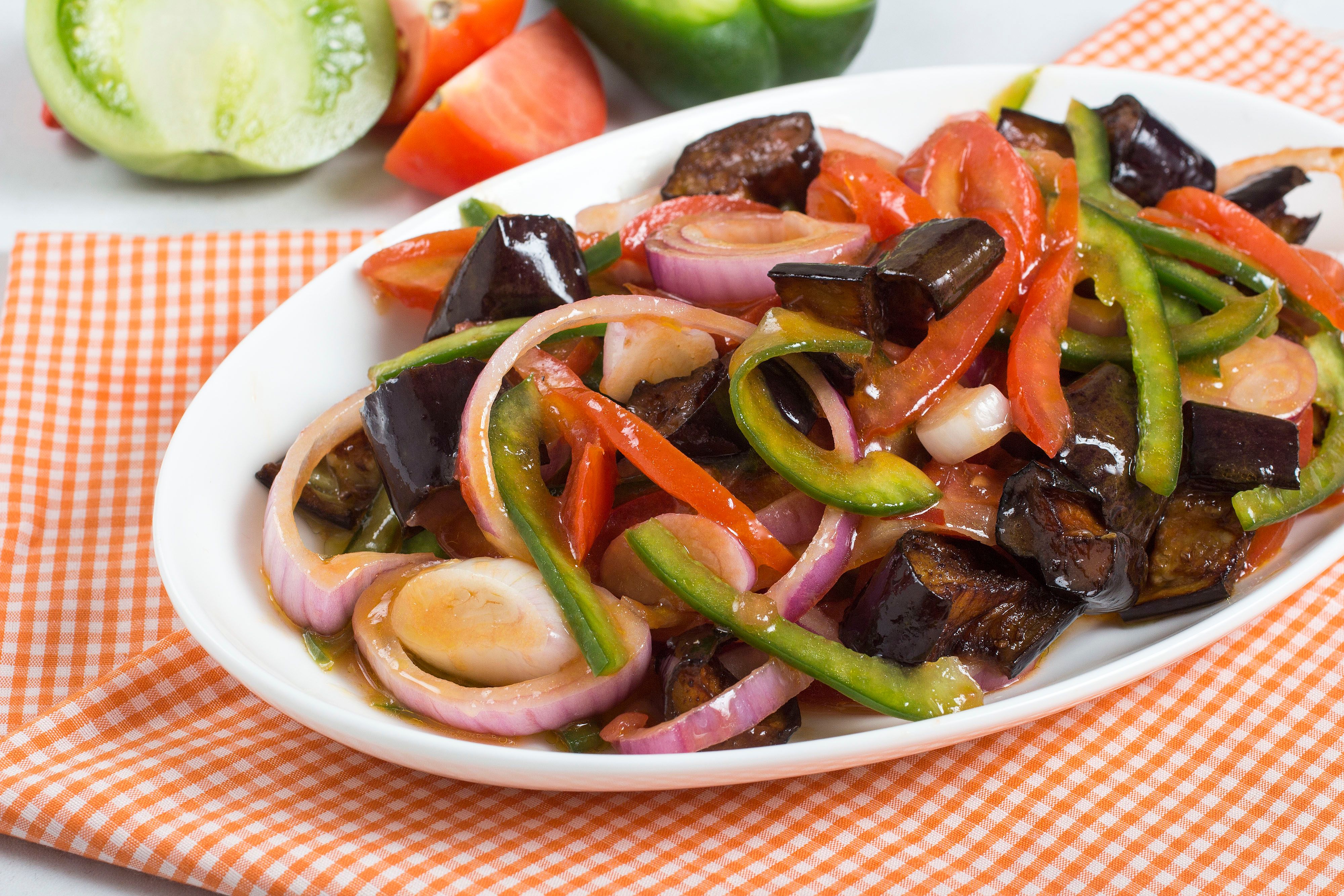
Photo: Sohel Rana Ripon / Pexels
The diets react (see scores below)
Common Ingredients
- eggplant
- red peppers
- onion
- tomato
- garlic
- olive oil
- salt
- sherry vinegar
Specific recipes may vary.
Incompatible with 2 of 11 diets
Diet Ratings
Escalivada is a roasted vegetable dish that is whole and unprocessed, which is a positive. However, the combination of red peppers, onion, tomato, and eggplant adds up to a moderate net carb load per serving. Red peppers (~4-6g net carbs per 100g) and onions (~7-8g net carbs per 100g) are the primary concerns. A typical serving of escalivada (~150-200g) could deliver 8-14g net carbs, which is manageable within a strict keto budget but requires careful portion control. Olive oil is keto-friendly and adds healthy fat. Sherry vinegar contributes negligible carbs. Garlic in typical amounts is fine. The dish lacks protein and fat on its own, so it would function as a side. Strict keto dieters should limit portion size and account for this dish within their daily carb allotment.
Strict keto practitioners may flag this dish more firmly, arguing that red peppers and onions are higher-carb vegetables that should be minimized or avoided entirely, and that the combination of multiple moderate-carb vegetables in one dish makes it easy to exceed daily limits inadvertently.
Escalivada is a traditional Catalan/Spanish roasted vegetable dish consisting entirely of whole plant foods. Every ingredient — eggplant, red peppers, onion, tomato, garlic, olive oil, salt, and sherry vinegar — is fully plant-based. The dish is typically prepared by roasting or grilling the vegetables until tender, then dressing them with olive oil and vinegar. There are no animal products, animal-derived ingredients, or meaningful processing concerns. It scores a 9 rather than 10 only because olive oil is a refined/extracted fat rather than a whole food, though it is universally accepted within vegan dietary frameworks.
Escalivada is a simple roasted vegetable dish with mostly paleo-approved ingredients — eggplant, red peppers, onion, tomato, garlic, and olive oil are all unprocessed plant foods well within the paleo framework. However, two ingredients pull it into caution territory: salt and sherry vinegar. Added salt is explicitly excluded under paleo rules. Sherry vinegar, while a fermented product, is a processed condiment not available to Paleolithic humans. The core vegetables and olive oil are excellent paleo choices, making this dish easily adaptable, but as traditionally prepared it contains these two non-compliant ingredients.
Escalivada is a quintessential Mediterranean dish and a classic of Catalan and broader Spanish cuisine. It consists entirely of roasted or grilled vegetables — eggplant, red peppers, onion, tomato, and garlic — dressed with extra virgin olive oil and a touch of sherry vinegar. Every single ingredient aligns perfectly with Mediterranean diet principles: abundant vegetables as the foundation, olive oil as the primary fat, and no processed ingredients, refined grains, or added sugars. This dish exemplifies the plant-forward, whole-food ethos at the heart of the Mediterranean dietary pattern.
Escalivada is a traditional Spanish roasted vegetable dish consisting entirely of plant-based ingredients: eggplant, red peppers, onion, tomato, garlic, olive oil, and sherry vinegar. Not a single ingredient qualifies under carnivore diet rules. Every component is explicitly excluded — vegetables are forbidden plant foods, olive oil is a plant-derived oil, and sherry vinegar is a plant-based fermented product. There is no animal product present whatsoever, not even as a minor ingredient. This dish is incompatible with the carnivore diet at the most fundamental level.
Escalivada is a traditional Spanish roasted vegetable dish made entirely from whole, unprocessed foods. Every ingredient — eggplant, red peppers, onion, tomato, garlic, olive oil, salt, and sherry vinegar — is explicitly compliant with Whole30 rules. Sherry vinegar is specifically listed as an accepted vinegar type on the official Whole30 program. Olive oil is a natural fat and fully approved. Salt is allowed. All vegetables are whole foods with no excluded ingredients. This dish is a textbook example of clean, Whole30-friendly eating.
Escalivada contains two major high-FODMAP ingredients that make it unsuitable during the elimination phase: onion and garlic. Onion is one of the highest-fructan foods tested by Monash University and is high-FODMAP at any realistic serving size — even small amounts cooked into a dish are problematic because fructans are water-soluble and leach into the food. Garlic is similarly a top-tier fructan source and must be avoided entirely during elimination. These two ingredients are structural to the dish and cannot be reduced to a safe threshold without fundamentally changing the recipe. The remaining ingredients — eggplant (low-FODMAP at 182g per Monash), red peppers (low-FODMAP at 52g per serve), tomato (low-FODMAP at 65g canned or one small common tomato), olive oil, salt, and sherry vinegar — are all low-FODMAP and would otherwise be fine. However, the presence of onion and garlic as core ingredients means the dish as prepared is a clear avoid during the elimination phase.
Escalivada is a traditional Spanish roasted vegetable dish composed almost entirely of DASH-ideal ingredients. Eggplant, red peppers, onion, tomato, and garlic are all non-starchy vegetables rich in potassium, magnesium, fiber, and antioxidants — precisely the foods DASH emphasizes most. Olive oil is a heart-healthy unsaturated fat explicitly permitted in DASH guidelines. Sherry vinegar adds negligible calories and no sodium. The main consideration is added salt during preparation; if kept modest (a light pinch), the dish remains well within DASH sodium targets. As a side dish centered on vegetables with olive oil, this aligns closely with DASH core principles and contributes meaningfully to the 4-5 daily vegetable servings recommended.
Escalivada is a roasted/grilled Spanish vegetable dish composed almost entirely of Zone-favorable ingredients. Eggplant, red peppers, onion, tomato, and garlic are all low-glycemic vegetables that align perfectly with Dr. Sears' emphasis on colorful, polyphenol-rich carbohydrate sources. Olive oil is the quintessential Zone-approved monounsaturated fat. Sherry vinegar adds negligible carbohydrates and may even help moderate the glycemic response of the meal. The dish lacks protein, which is typical for a side dish — it would need to be paired with a lean protein source (e.g., grilled fish or chicken) to complete a Zone-balanced meal. As a carbohydrate and fat component, however, it is nearly ideal: low-glycemic vegetables plus monounsaturated fat, with anti-inflammatory polyphenols from the peppers, tomatoes, and olive oil. Portion control for the olive oil is the only minor consideration, as generous drizzling could shift the fat ratio higher than the Zone target of 10-15g per meal.
Escalivada is a traditional Catalan dish of roasted or grilled vegetables dressed with olive oil — an excellent anti-inflammatory profile overall. Extra virgin olive oil provides oleocanthal (an ibuprofen-like COX inhibitor) and monounsaturated fats. Garlic contributes allicin and sulfur compounds with well-documented anti-inflammatory effects. Tomatoes deliver lycopene, which becomes more bioavailable when cooked, and red peppers are rich in vitamin C and capsanthin carotenoids. Onions provide quercetin, a potent flavonoid. Sherry vinegar adds acetic acid, which may modestly support metabolic markers. The dish is whole-food, plant-based, oil-dressed, and contains zero refined sugars, processed ingredients, or problematic fats. The one area of debate is the nightshade content: eggplant, red peppers, and tomatoes are all nightshades. Mainstream anti-inflammatory nutrition (Dr. Weil's pyramid, Mediterranean diet research) strongly endorses these vegetables for their antioxidant and polyphenol content. However, the Autoimmune Protocol (AIP) and practitioners like Dr. Tom O'Bryan argue that solanine, lectins, and capsaicin in nightshades may trigger or worsen inflammation in individuals with autoimmune conditions or leaky gut. For the general population, the evidence clearly favors these vegetables as anti-inflammatory; the concern is more relevant in autoimmune-specific contexts. Scored 8 rather than 9-10 primarily due to this nightshade consideration for sensitive subpopulations.
Mainstream anti-inflammatory authorities including Dr. Andrew Weil and Mediterranean diet researchers strongly endorse nightshade vegetables (eggplant, tomatoes, peppers) for their lycopene, carotenoids, and flavonoids. However, the Autoimmune Protocol (AIP) and functional medicine practitioners like Dr. Tom O'Bryan exclude nightshades entirely, arguing that alkaloids such as solanine and lectins can increase intestinal permeability and provoke inflammatory responses in genetically susceptible individuals or those with existing autoimmune conditions.
Escalivada is a roasted/charred vegetable dish — eggplant, red peppers, onion, tomato, and garlic dressed with olive oil and sherry vinegar. It is nutrient-dense per calorie, high in fiber, easy to digest (soft-roasted vegetables), and rich in antioxidants and micronutrients. The olive oil adds beneficial unsaturated fat but also contributes calories and fat grams that can worsen nausea or reflux if used liberally. The core drawback is the complete absence of protein, which is the #1 priority for GLP-1 patients. As a standalone dish, it does nothing to meet the 15–30g per-meal protein target. The vinegar and garlic are fine in typical amounts. Portion sensitivity is low — this dish works well in small servings. Scores well on fiber, digestibility, and nutrient density; scores zero on protein, which caps it at caution rather than approve. Best used as a side paired with a high-protein main (grilled chicken, fish, eggs) to round out a GLP-1-friendly meal.
*See how scores were generated at our methodology page.
Nutritional profile
Six traits that cut across every diet.
Fiber & Plants
How much whole-plant food and fiber it delivers.
Healthy Fats
The quality of its fats (unsaturated, omega-3).
Whole / Unprocessed
How close it is to its natural, unprocessed form.
Gut Gentle
How easy it is on digestion (low FODMAP, few irritants).
Low Glycemic
How little it spikes your blood sugar.
Protein Density
How much protein it packs per calorie.
Controversy Index
Higher controversy = more disagreement between diets.
Diet-Specific Tips
 Keto — 5/10
View tips
- Red peppers are relatively high in net carbs among keto vegetables (~4-6g/100g)
- Onions contribute meaningful net carbs (~7-8g/100g) and should be used sparingly
- Eggplant and tomato add additional net carbs to the total
- Olive oil is ideal for keto — healthy fat with zero carbs
- Sherry vinegar adds negligible carbs
- No added sugars or grains — whole unprocessed ingredients
- Portion control is essential; a large serving can push close to daily carb limits
 Vegan — 9/10
View tips
- All ingredients are whole plant foods
- No animal products or animal-derived ingredients present
- Olive oil is plant-derived and universally vegan-compliant
- Sherry vinegar is plant-based (wine-derived, no animal fining agents in vinegar production)
- Minimal processing — dish relies on roasting whole vegetables
- Exemplifies the whole-food plant-based ideal
 Paleo — 5/10
View tips
- Eggplant, red peppers, onion, tomato, and garlic are all paleo-approved vegetables
- Olive oil is a preferred paleo fat
- Added salt is excluded under paleo guidelines
- Sherry vinegar is a processed, fermented condiment not available to hunter-gatherers
- Dish is easily made paleo-compliant by omitting salt and vinegar
- No grains, legumes, dairy, or seed oils present
 Mediterranean — 10/10
View tips
- 100% plant-based ingredients
- Extra virgin olive oil as the sole fat source
- Multiple vegetables providing fiber, vitamins, and antioxidants
- No processed ingredients, refined grains, or added sugars
- Traditional Spanish/Catalan dish deeply rooted in Mediterranean culinary heritage
- Sherry vinegar adds flavor without nutritional concerns
- Suitable as a daily staple
 Whole30 — 9/10
View tips
- All ingredients are whole, unprocessed vegetables
- Olive oil is an approved natural fat
- Sherry vinegar is explicitly listed as a compliant vinegar on Whole30
- Salt is permitted
- No added sugar, dairy, grains, legumes, or other excluded ingredients
- Simple preparation method (roasting) does not implicate any rule violations
 DASH — 8/10
View tips
- All main ingredients are non-starchy vegetables — core DASH foods
- Rich in potassium, magnesium, and fiber from eggplant, peppers, tomato, and onion
- Olive oil is a DASH-approved unsaturated fat
- No saturated fat, no added sugar, no processed ingredients
- Salt is the only potential concern — home preparation allows easy sodium control
- Sherry vinegar adds flavor without sodium penalty
- Counts toward DASH's 4-5 daily vegetable servings goal
 Zone — 8/10
View tips
- All vegetables are low-glycemic and Zone-favorable carbohydrate sources
- Olive oil provides ideal monounsaturated fat aligned with Zone fat recommendations
- Rich in polyphenols (red peppers, tomatoes, eggplant) supporting Zone's anti-inflammatory focus
- No protein present — must be paired with lean protein to form a complete Zone meal
- Olive oil quantity should be monitored to stay within Zone fat block targets (10-15g per meal)
- Sherry vinegar adds negligible carbs and may modestly blunt glycemic response
 Anti-Inflammatory — 8/10
View tips
- Extra virgin olive oil — oleocanthal and MUFAs with strong anti-inflammatory credentials
- Garlic — allicin and organosulfur compounds reduce inflammatory cytokines
- Red peppers — high vitamin C, capsanthin, and beta-carotene
- Tomatoes — cooked lycopene is well-absorbed and reduces CRP in studies
- Eggplant — nasunin (anthocyanin) and chlorogenic acid are potent antioxidants
- Onions — quercetin is a well-studied anti-inflammatory flavonoid
- Sherry vinegar — acetic acid; modest metabolic benefits
- All nightshades: mainstream anti-inflammatory diet approves, but AIP/autoimmune protocols exclude them
- No refined carbohydrates, added sugars, seed oils, or processed ingredients
 GLP-1 Friendly — 6/10
View tips
- Zero protein — fails the #1 GLP-1 dietary priority
- High fiber from eggplant, peppers, onion, and tomato — supports digestion and fullness
- Olive oil provides healthy unsaturated fat but adds calories and may worsen nausea if portion is generous
- Soft roasted texture is easy to digest — favorable given slowed gastric emptying
- High water content in vegetables supports hydration
- Low sugar, no refined carbs, no fried components
- Sherry vinegar and garlic are well-tolerated in typical serving amounts
- Excellent as a side paired with a protein source; poor as a standalone meal for GLP-1 patients