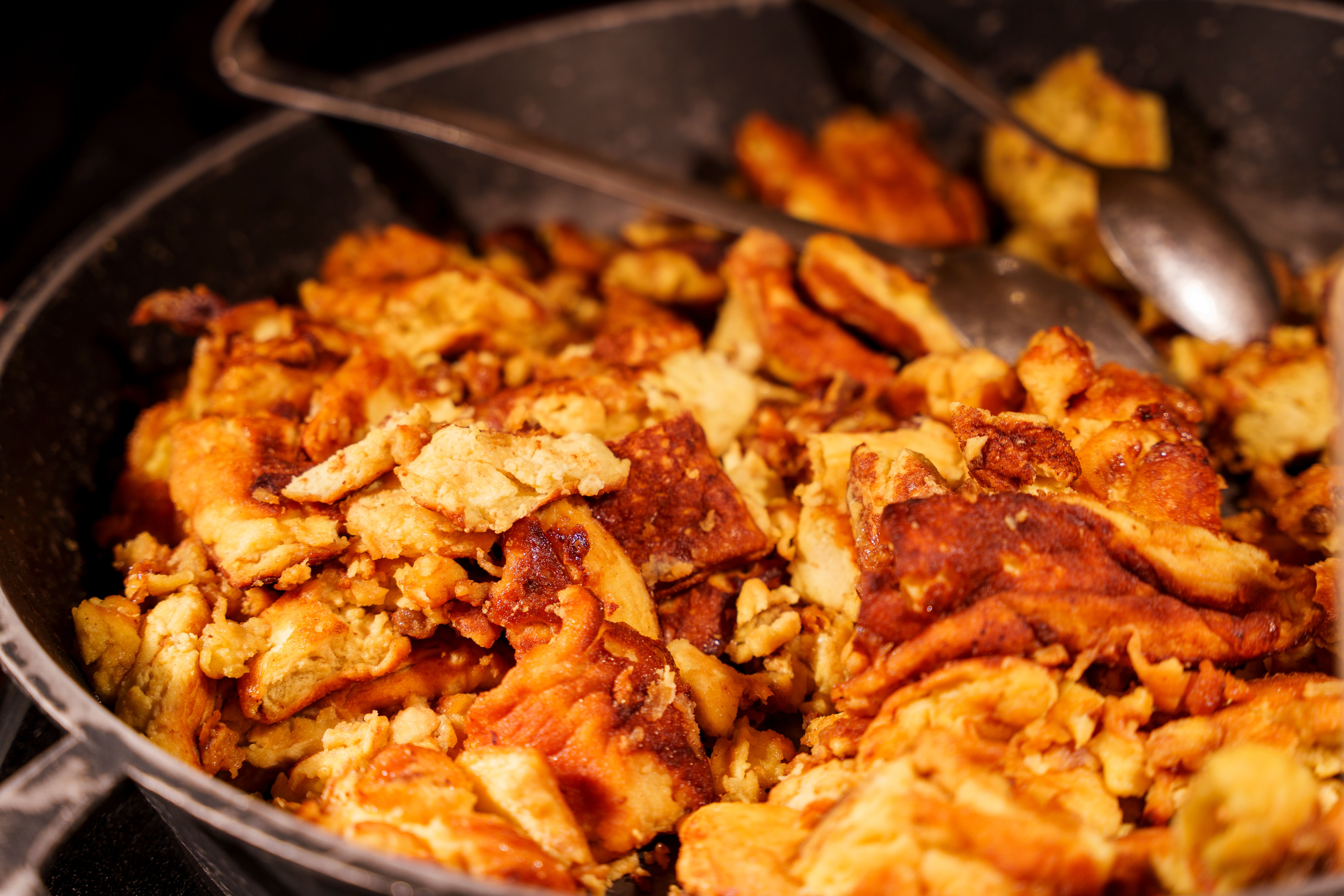
Photo: Nadine Ginzel / Pexels
The diets react (see scores below)
Common Ingredients
- stale bread
- chorizo
- pancetta
- garlic
- olive oil
- paprika
- grapes
Specific recipes may vary.
Incompatible with 9 of 11 diets
Diet Ratings
Spanish Migas is built around stale bread as its primary bulk ingredient, which is a grain-based, high-carb food that is fundamentally incompatible with ketosis. A standard serving of Migas would deliver well over 30-50g of net carbs from the bread alone, immediately breaking ketosis. Compounding this, grapes are a high-sugar fruit that adds additional net carbs and simple sugars. While several ingredients—chorizo, pancetta, garlic, olive oil, and paprika—are keto-friendly, they are supporting players in a dish whose foundation is explicitly anti-ketogenic. This dish cannot be made keto-compliant without a complete structural overhaul that would make it an entirely different dish.
Spanish Migas as described contains multiple animal products that are strictly excluded from a vegan diet. Chorizo is a cured pork sausage, and pancetta is cured pork belly — both are meat products derived from pigs. These are the primary protein sources and central to the dish. The remaining ingredients (stale bread, garlic, olive oil, paprika, grapes) are all plant-based, but the presence of chorizo and pancetta makes this dish entirely incompatible with a vegan diet. There is no ambiguity here.
Migas is built on stale bread as its primary base ingredient, which is a grain product — strictly excluded from the paleo diet with no debate. Bread (wheat) is one of the clearest 'avoid' foods in all paleo frameworks. Beyond the bread, chorizo and pancetta are processed meats that typically contain added salt, preservatives, and sometimes sugar or additives, making them non-compliant as well. The remaining ingredients — garlic, olive oil, paprika, and grapes — are all paleo-approved, but they cannot redeem a dish whose foundation is a grain-based staple. This dish is fundamentally incompatible with paleo principles.
Migas is a traditional Spanish peasant dish built around stale bread fried in olive oil with cured pork products. While olive oil and garlic are Mediterranean staples, the dish is dominated by chorizo and pancetta — both processed red meats high in saturated fat and sodium that the Mediterranean diet explicitly limits to only a few times per month. The bread base is typically white/refined, not a whole grain. Grapes add a positive fruit element, and garlic and paprika are fine, but the heavy reliance on processed pork as the primary protein and flavor driver places this dish firmly outside Mediterranean diet guidelines for regular consumption.
Some Mediterranean diet scholars note that traditional rural Spanish cuisine, including dishes like migas, reflects genuine Mediterranean culinary heritage and that small amounts of cured pork as a flavoring agent (rather than a main protein) can fit within flexible interpretations of the pattern. A portion-controlled version with reduced chorizo and whole-grain bread might be rated 'caution' rather than 'avoid.'
Migas is fundamentally incompatible with the carnivore diet. The dish is built on stale bread as its primary base — a grain product that is strictly excluded. It also contains olive oil (plant-derived fat), garlic (plant), paprika (plant-based spice), and grapes (fruit). While chorizo and pancetta are animal-derived, they are minor components in a dish dominated by plant foods. No amount of meat garnish redeems a bread-based dish loaded with multiple plant ingredients.
Spanish Migas is fundamentally built on stale bread as its primary base ingredient. Bread is a grain-based product and grains are explicitly excluded on the Whole30. Beyond the bread itself, chorizo and pancetta are processed meats that commonly contain added sugars, sulfites (though sulfites are now permitted in 2024), and other non-compliant additives — though compliant versions may exist. The dish's defining characteristic is the fried bread crumbs, which cannot be substituted without fundamentally changing the dish. The remaining ingredients (garlic, olive oil, paprika, grapes) are all Whole30-compliant, but the stale bread alone disqualifies this dish entirely.
Migas contains multiple high-FODMAP ingredients that make it unsuitable during the elimination phase. Stale bread is the base of the dish and is made from wheat, which is high in fructans — a major FODMAP category. Garlic is one of the highest-FODMAP foods tested by Monash University, rich in fructans, and is used as a foundational flavoring ingredient here. Chorizo frequently contains garlic and onion powder as key seasonings, adding further fructan load. Grapes are borderline but generally considered low-FODMAP at small servings (around 10 grapes), though their contribution is the least concerning element. The combination of wheat bread and garlic alone is sufficient to classify this dish as high-FODMAP at any standard serving size.
Spanish Migas as traditionally prepared is poorly aligned with DASH diet principles. The dish is built around two high-sodium, high-saturated-fat processed pork products — chorizo and pancetta — which are explicitly in the category of foods DASH limits or avoids. Chorizo is particularly problematic, typically containing 400-600mg sodium per ounce and significant saturated fat. Pancetta, while less spiced, is similarly high in sodium and saturated fat as a cured meat. The stale bread base, while not inherently bad, is typically refined white bread rather than a whole grain. The olive oil and garlic are DASH-friendly, and the grapes add a fruit component that aligns with DASH, but these positives are overwhelmed by the dominant protein sources. The combination of two processed/cured red meats in a single dish would make it very difficult to stay within DASH sodium and saturated fat limits even in modest portions.
Migas presents significant Zone Diet challenges primarily due to its carbohydrate and fat profiles. The dominant carbohydrate source is stale bread — a high-glycemic, refined carbohydrate that Zone methodology classifies as 'unfavorable.' It raises blood sugar rapidly and provides little fiber to offset its glycemic load. The protein sources (chorizo and pancetta) are fatty, processed pork products high in saturated fat, making them 'unfavorable' proteins in Zone terminology compared to lean options like skinless chicken or fish. The fat profile is mixed: olive oil is an excellent monounsaturated fat and earns Zone approval, but the saturated fat load from two cured pork products pushes well beyond Zone's guideline of roughly 10-15g fat per meal, much of it in the less-desirable saturated category. On the positive side, garlic and paprika are polyphenol-rich spices Sears actively promotes for their anti-inflammatory properties, grapes add a modest low-glycemic fruit block (though in large quantities they become a concern), and olive oil aligns perfectly with Zone fat recommendations. The dish is not impossible to Zone-adapt — one could reduce bread quantity drastically, use a smaller amount of one cured meat, and lean heavily on the olive oil as the fat block — but as traditionally prepared, the bread-dominant, dual-fatty-pork structure makes achieving 40/30/30 macrobalance very difficult without significant modification.
Some Zone practitioners following Sears' later anti-inflammatory writings (The Anti-Inflammation Zone, The OmegaRx Zone) may be more permissive about saturated fat from traditional whole-food sources like chorizo and pancetta, viewing them as preferable to industrial seed oils. Additionally, if the bread portion is kept to a single small block and the dish is served alongside non-starchy vegetables, a skilled Zone practitioner could construct a reasonable block meal from this base. The grapes also provide polyphenols consistent with Sears' later emphasis on polyphenol-rich eating.
Spanish Migas presents a mixed anti-inflammatory profile. On the positive side, olive oil is a cornerstone anti-inflammatory fat rich in oleocanthal, garlic provides allicin and quercetin with well-documented anti-inflammatory effects, paprika delivers carotenoids and vitamin C, and grapes contribute resveratrol and polyphenols. These are genuinely beneficial components. However, the dish is anchored by two cured pork products — chorizo and pancetta — which are high in saturated fat and sodium, and are processed meats linked to increased inflammatory markers (including CRP and IL-6) in epidemiological research. Chorizo in particular often contains added preservatives and nitrates. The stale bread base, while traditional, is typically made from refined white flour, contributing refined carbohydrates with minimal fiber. The combination of two processed, high-fat pork products in a single dish amplifies the inflammatory load beyond what occasional red meat consumption would suggest. The beneficial ingredients (garlic, olive oil, paprika, grapes) provide meaningful mitigation but cannot offset the central reliance on processed cured meats. This dish is acceptable occasionally but is not aligned with regular anti-inflammatory eating patterns.
Some anti-inflammatory practitioners, drawing from Mediterranean diet traditions (which Dr. Weil's pyramid partially reflects), argue that small amounts of traditional cured meats like chorizo used as flavoring agents within an otherwise vegetable- and olive-oil-rich context are compatible with anti-inflammatory eating — consistent with how southern European populations consume them. The opposing view, supported by WHO and processed meat research, holds that any regular consumption of cured/processed meats meaningfully increases inflammatory risk regardless of culinary context.
Spanish Migas is a poor fit for GLP-1 patients across nearly every rating dimension. The dish is built on a base of stale bread fried in olive oil — a refined carbohydrate cooked in substantial fat, delivering empty calories with minimal protein or fiber per serving. The primary proteins are chorizo and pancetta, both highly processed fatty pork products that are high in saturated fat, sodium, and calories per gram of protein — the opposite of the lean, high-density protein sources GLP-1 patients need. The high fat content from both the frying oil and the cured meats is strongly associated with worsening GLP-1 side effects including nausea, bloating, and reflux, given the medication's effect on slowing gastric emptying. Garlic and paprika are generally well-tolerated in small amounts, and grapes add minimal fiber with a sugar contribution that is not a major concern on its own, but they do not redeem the dish nutritionally. Overall, Migas is high in saturated fat, high in refined carbohydrates, low in lean protein, and prepared in a way (pan-frying) that is explicitly discouraged for GLP-1 patients.
*See how scores were generated at our methodology page.
Nutritional profile
Six traits that cut across every diet.
Fiber & Plants
How much whole-plant food and fiber it delivers.
Healthy Fats
The quality of its fats (unsaturated, omega-3).
Whole / Unprocessed
How close it is to its natural, unprocessed form.
Gut Gentle
How easy it is on digestion (low FODMAP, few irritants).
Low Glycemic
How little it spikes your blood sugar.
Protein Density
How much protein it packs per calorie.
Controversy Index
Higher controversy = more disagreement between diets.
Diet-Specific Tips
 Zone — 4/10
View tips
- Stale bread is a high-glycemic, unfavorable Zone carbohydrate and dominates the dish's carb profile
- Chorizo and pancetta are fatty processed meats — high saturated fat, not lean Zone-preferred proteins
- Olive oil is an ideal Zone monounsaturated fat source
- Garlic and paprika provide anti-inflammatory polyphenols consistent with Zone principles
- Grapes offer a modest fruit carb block with polyphenol benefit but must be portioned carefully
- As traditionally prepared, the macro ratio skews heavily toward carbohydrates and saturated fat, making 40/30/30 difficult to achieve
- Significant portioning modification required to Zone-balance this dish
 Anti-Inflammatory — 4/10
View tips
- Chorizo and pancetta are processed meats high in saturated fat, sodium, and nitrates — pro-inflammatory
- Two processed pork products in one dish significantly amplifies inflammatory load
- Olive oil provides oleocanthal and monounsaturated fats — anti-inflammatory
- Garlic contributes allicin, quercetin, and sulfur compounds — anti-inflammatory
- Grapes add resveratrol and polyphenols — anti-inflammatory
- Paprika supplies carotenoids and vitamin C — anti-inflammatory
- Stale bread base is likely refined carbohydrate with low fiber — mildly pro-inflammatory
- Traditional dish with small portions of cured meat relative to bread base may reduce overall impact