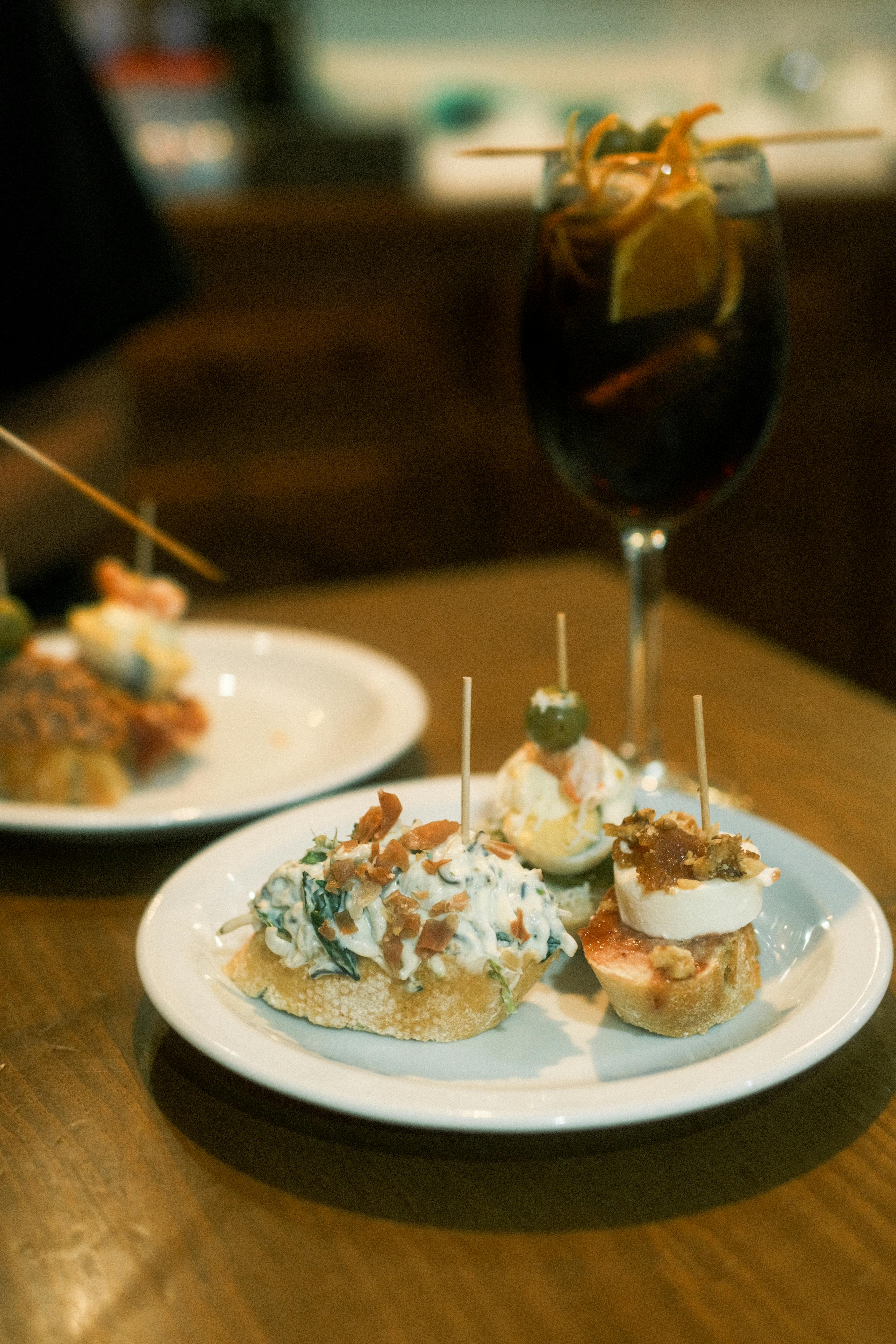
Photo: Ana Lourenco / Pexels
The diets react (see scores below)
Common Ingredients
- bread
- anchovies
- olives
- peppers
- cheese
- cured ham
- tortilla
- toothpicks
Specific recipes may vary.
Incompatible with 7 of 11 diets
Diet Ratings
Pintxos are fundamentally built on bread (the defining base of the dish), which is a high-carb grain product completely incompatible with ketosis. A single pintxo typically sits on a slice of baguette containing 10-15g of net carbs, and these snacks are invariably consumed in multiples. While the toppings — anchovies, olives, cheese, cured ham, and peppers — are largely keto-friendly or at worst cautionary in isolation, the bread base is non-negotiable to the dish's identity. The tortilla española (Spanish potato omelette) listed as an ingredient adds further carb load from potatoes. The toppings alone do not constitute pintxos; the dish as traditionally served is incompatible with a ketogenic diet.
Pintxos as described contain multiple animal products that make them clearly incompatible with a vegan diet. Anchovies are fish, cheese is a dairy product, cured ham (jamón) is pork, and tortilla española is made with eggs. The bread and olives/peppers are plant-based, but the dish as a whole is dominated by animal-derived ingredients across nearly every component.
Pintxos are fundamentally built on bread (a grain-based product), which is a core exclusion in any paleo framework. Beyond the bread base, the dish also contains cheese (dairy, excluded), cured ham (processed meat, typically contains added salt and preservatives), and tortilla española (which uses white potatoes — debated — but also often contains dairy). Olives, peppers, and anchovies are individually paleo-compatible, but they represent a small fraction of this dish. The defining structural and ingredient violations — grains, dairy, and processed meats — make this dish clearly incompatible with a paleo diet.
Pintxos are a traditional Basque snack featuring a mix of Mediterranean-friendly and less ideal ingredients. Anchovies and olives are excellent Mediterranean staples — high in healthy fats and nutrients. Peppers are a great plant-based component. However, the base is typically white bread (refined grain), cured ham is a processed red meat limited in the Mediterranean diet, and cheese adds saturated fat. The combination creates a mixed nutritional profile: some strongly approved elements alongside ingredients that should be limited. Enjoyed occasionally and in small portions (as is traditional), pintxos can fit into a Mediterranean lifestyle, but the refined bread and cured ham prevent a full approval.
Some Mediterranean diet authorities, particularly those emphasizing traditional regional Spanish practices, would note that small portions of cured ham and artisan bread are part of authentic Iberian food culture and acceptable in moderation. Conversely, stricter modern clinical guidelines (e.g., PREDIMED-influenced protocols) would flag the refined bread and processed cured meat as incompatible with optimal adherence.
Pintxos are fundamentally incompatible with the carnivore diet. The dish is built on bread (grain-based), which is a core excluded food group. Additional plant-based ingredients include olives, peppers, and tortilla (egg- and potato-based Spanish omelette, or possibly corn tortilla — both problematic). While anchovies, cured ham, and cheese are animal-derived, they are minor components of a dish whose very foundation is plant and grain-based. The overall dish cannot be adapted to carnivore without being deconstructed beyond recognition — at which point it is no longer pintxos. No legitimate carnivore framework would include this dish as presented.
Pintxos contain multiple excluded ingredients that make this dish incompatible with Whole30. First and most fundamentally, the base of pintxos is bread — a grain-based product explicitly excluded from the Whole30 program. Second, 'tortilla' in the Spanish context refers to tortilla española (a potato and egg omelette), which itself would be compliant, but in the context of pintxos it is served on top of bread, so the bread exclusion still applies. Third, cheese is a dairy product, which is excluded (only ghee and clarified butter are permitted dairy exceptions). Cured ham frequently contains added sugars and sulfites (though sulfites are no longer excluded per 2024 rules, sugar remains excluded). Olives, peppers, and anchovies are generally compliant ingredients. However, the bread alone is sufficient to make this dish a clear avoid, and the cheese compounds the exclusion. Pintxos also structurally resemble the 'no recreating baked goods or junk food' prohibition — they are essentially open-faced sandwiches or canapés, a format explicitly discouraged by the program.
Pintxos are a Basque tapas-style snack traditionally served on slices of bread (baguette or white wheat bread), which is the primary structural component and a significant source of fructans — making this dish high-FODMAP at any standard serving during the elimination phase. The toppings themselves are a mixed picture: anchovies, olives, and cured ham (jamón) are generally low-FODMAP; peppers (bell peppers) are low-FODMAP in typical portions; tortilla española (Spanish omelette) may contain onion, a high-fructan ingredient. Cheese type is unspecified — hard aged cheeses (manchego, aged cheddar) are low-FODMAP, but soft or fresh cheeses are high in lactose. Even if the toppings were all low-FODMAP, the wheat bread base is the critical disqualifying factor for the elimination phase. A standard pintxo serving of 2–4 pieces would deliver a meaningful fructan load from the bread alone.
Monash University rates some sourdough bread as low-FODMAP in very small servings (1 slice of long-fermented spelt sourdough) due to reduced fructan content from fermentation. Some clinical FODMAP practitioners suggest that if pintxos were made on certified low-FODMAP bread or gluten-free bread, most toppings could be tolerated — but this modification is non-standard and not how pintxos are traditionally prepared.
Pintxos as traditionally prepared are incompatible with DASH diet principles due to the cumulative sodium load from multiple high-sodium ingredients. Anchovies are extremely high in sodium (approximately 1,600–2,000mg per 100g), cured ham (jamón) is heavily salt-cured with sodium levels often exceeding 2,000mg per 100g, olives are sodium-brined (approximately 700–1,500mg per 100g), and aged or processed cheeses add further sodium. Together, even a modest serving of pintxos can approach or exceed the entire DASH daily sodium limit of 1,500–2,300mg. The bread base is typically refined white bread rather than a whole grain. Cured ham also contributes saturated fat and falls into the red/processed meat category that DASH explicitly limits. While some individual ingredients like peppers and tortilla española (egg and potato) are DASH-compatible, they are overwhelmed by the sodium-heavy components. This is a traditional snack designed around preserved, cured, and pickled ingredients — preservation methods that are fundamentally at odds with DASH's sodium restrictions.
Pintxos are traditional Spanish bar snacks built on a base of crusty white bread (baguette-style), which is the primary Zone concern — white bread is a high-glycemic, unfavorable carbohydrate in Zone terminology. However, the toppings tell a more Zone-friendly story: anchovies provide lean protein and omega-3 fatty acids (highly anti-inflammatory and Zone-favorable), olives contribute monounsaturated fat (ideal Zone fat source), peppers are excellent low-glycemic polyphenol-rich vegetables, and cured ham provides protein. Cheese adds some saturated fat, and cured ham carries sodium and moderate saturated fat. The tortilla (Spanish egg-potato omelet) adds some protein but also higher-GI potato starch. The fundamental structural problem is the bread base — it dominates the carbohydrate block with high-glycemic, low-fiber refined starch, throwing off the 40/30/30 ratio. A Zone practitioner could adapt pintxos by minimizing the bread portion, loading up on anchovy, olive, and pepper toppings, and treating the whole assembly as a carefully portioned snack rather than a free-form serving. As traditionally consumed in quantity at a bar, pintxos are carb-heavy and difficult to balance.
Some Zone practitioners following Sears' later anti-inflammatory framework (Toxic Fat, The Mediterranean Zone) would view pintxos more favorably in context. The Mediterranean ingredient profile — omega-3-rich anchovies, polyphenol-rich olives and peppers, and moderate protein from ham and egg — closely mirrors Sears' praised Mediterranean diet components. If bread portions are small (as they traditionally are — just a thin slice as a base), the overall macro ratio of the topped pintxo may not be as far from Zone balance as a pure bread assessment suggests. Sears' later work elevated polyphenols and omega-3s as primary anti-inflammatory tools, which anchovies and olives deliver well.
Pintxos are a mixed platter from a anti-inflammatory standpoint. On the positive side, anchovies are an excellent source of omega-3 fatty acids and are among the most anti-inflammatory proteins available; olives provide oleic acid and polyphenols similar to extra virgin olive oil; peppers are rich in vitamin C, carotenoids, and antioxidants; and the tortilla (Spanish egg-based omelette) offers moderate nutritional value. These ingredients collectively bring meaningful anti-inflammatory benefit. On the negative side, the bread base is a refined carbohydrate with limited fiber, representing the kind of starchy carrier the anti-inflammatory framework discourages; cured ham (jamón) is a processed red meat high in sodium and saturated fat, both associated with pro-inflammatory effects; and cheese contributes saturated fat from full-fat dairy, which the framework recommends limiting. Taken together, pintxos are a compositionally diverse snack where the anti-inflammatory stars (anchovies, olives, peppers) are offset by refined bread, processed cured meat, and cheese. The dish is acceptable in moderation and context — particularly if anchovy- and olive-forward preparations are chosen — but cannot be broadly approved as written.
A Mediterranean-diet lens (which overlaps heavily with anti-inflammatory principles) might view pintxos more favorably: the combination of anchovies, olives, and peppers is archetypal Mediterranean fare, and some anti-inflammatory authorities like Dr. Weil treat moderate consumption of cured meats and cheese within a predominantly plant- and fish-rich diet as acceptable. Conversely, stricter anti-inflammatory protocols would flag the refined bread base and cured ham more harshly, pushing the verdict closer to 'avoid' for those managing chronic inflammatory conditions.
Pintxos are small Spanish bar snacks served on bread, typically topped with a combination of anchovies, olives, peppers, cheese, cured ham (jamón), and Spanish tortilla (egg and potato). As a category, they are portion-small by nature, which aligns with GLP-1 small-serving guidance. However, the ingredient profile is mixed. The refined bread base offers little fiber and low nutrient density per calorie — a meaningful drawback given how limited caloric intake is on GLP-1s. Cured ham and cheese introduce saturated fat and sodium. Olives provide unsaturated fat but are calorie-dense in volume. On the positive side, anchovies are an excellent omega-3 protein source, Spanish tortilla contributes egg-based protein, and peppers add micronutrients. The combination yields moderate protein across a typical pintxo serving (roughly 5–10g depending on toppings), well below the 15–30g per meal target. Salt-cured and processed meats (jamón, anchovies) also raise sodium concerns, which can worsen fluid retention or nausea in some GLP-1 patients. This dish is not ideal but not categorically harmful — it could work as an occasional small snack if anchovy- and tortilla-heavy versions are chosen and bread consumption is minimized.
Some GLP-1-focused RDs may view pintxos more favorably as a social eating format — the built-in small portions reduce overeating risk, and protein-forward toppings like anchovies and egg make them more nutritionally defensible than many bar snacks. Others will flag the refined bread base and cured meats as outweighing these benefits, particularly for patients prone to GI sensitivity or sodium-related bloating.
*See how scores were generated at our methodology page.
Nutritional profile
Six traits that cut across every diet.
Fiber & Plants
How much whole-plant food and fiber it delivers.
Healthy Fats
The quality of its fats (unsaturated, omega-3).
Whole / Unprocessed
How close it is to its natural, unprocessed form.
Gut Gentle
How easy it is on digestion (low FODMAP, few irritants).
Low Glycemic
How little it spikes your blood sugar.
Protein Density
How much protein it packs per calorie.
Controversy Index
Higher controversy = more disagreement between diets.
Diet-Specific Tips
 Mediterranean — 5/10
View tips
- Anchovies are an excellent Mediterranean protein source — oily fish encouraged 2-3x weekly
- Olives and peppers are strongly approved plant-based Mediterranean staples
- White bread base is a refined grain, not preferred over whole grains
- Cured ham (jamón) is a processed red meat, limited to occasional consumption in Mediterranean diet
- Cheese adds saturated fat; moderate dairy is acceptable but not a core food
- Traditional portion size (small bites) mitigates some concerns
- Mixed ingredient profile makes this a 'moderation' food rather than a staple
 Zone — 4/10
View tips
- White bread base is a high-glycemic, unfavorable Zone carbohydrate that anchors every pintxo
- Anchovies are an excellent Zone protein source rich in omega-3 anti-inflammatory fats
- Olives provide ideal monounsaturated fat — a core Zone-approved fat source
- Peppers are low-glycemic, polyphenol-rich vegetables highly favorable in Zone
- Cheese and cured ham introduce saturated fat that must be portion-controlled
- Spanish tortilla adds potato starch — another unfavorable high-GI carbohydrate
- As a snack format, small portions are possible but the bread-to-topping ratio is difficult to control
- Traditional serving style (multiple pintxos at a bar) leads to excessive carbohydrate accumulation
 Anti-Inflammatory — 5/10
View tips
- Anchovies: high omega-3 content, strong anti-inflammatory protein
- Olives: rich in monounsaturated fats and polyphenols, anti-inflammatory
- Peppers: carotenoids and vitamin C, antioxidant-rich
- Bread base: refined carbohydrate, low fiber, pro-inflammatory carrier
- Cured ham: processed red meat, high sodium and saturated fat
- Cheese: full-fat dairy, saturated fat — limit in anti-inflammatory diet
- Overall profile is mixed: anti-inflammatory toppings on a pro-inflammatory base
 GLP-1 Friendly — 4/10
View tips
- Refined bread base — low fiber, low nutrient density, empty calories on a restricted intake
- Cured ham and cheese contribute saturated fat and high sodium
- Anchovies are an excellent omega-3 and protein source — a positive element
- Spanish tortilla (egg and potato) adds useful protein and is easy to digest
- Olives provide heart-healthy unsaturated fat but are calorie-dense
- Protein per serving is low (5–10g typical) — falls short of 15–30g per meal target
- Small portion format is naturally GLP-1 compatible
- High sodium load from cured and pickled ingredients may worsen bloating or fluid retention