The diets react (see scores below)
Common Ingredients
- tomato
- green peppers
- zucchini
- onion
- garlic
- olive oil
- salt
- egg
Specific recipes may vary.
Incompatible with 3 of 11 diets
Diet Ratings
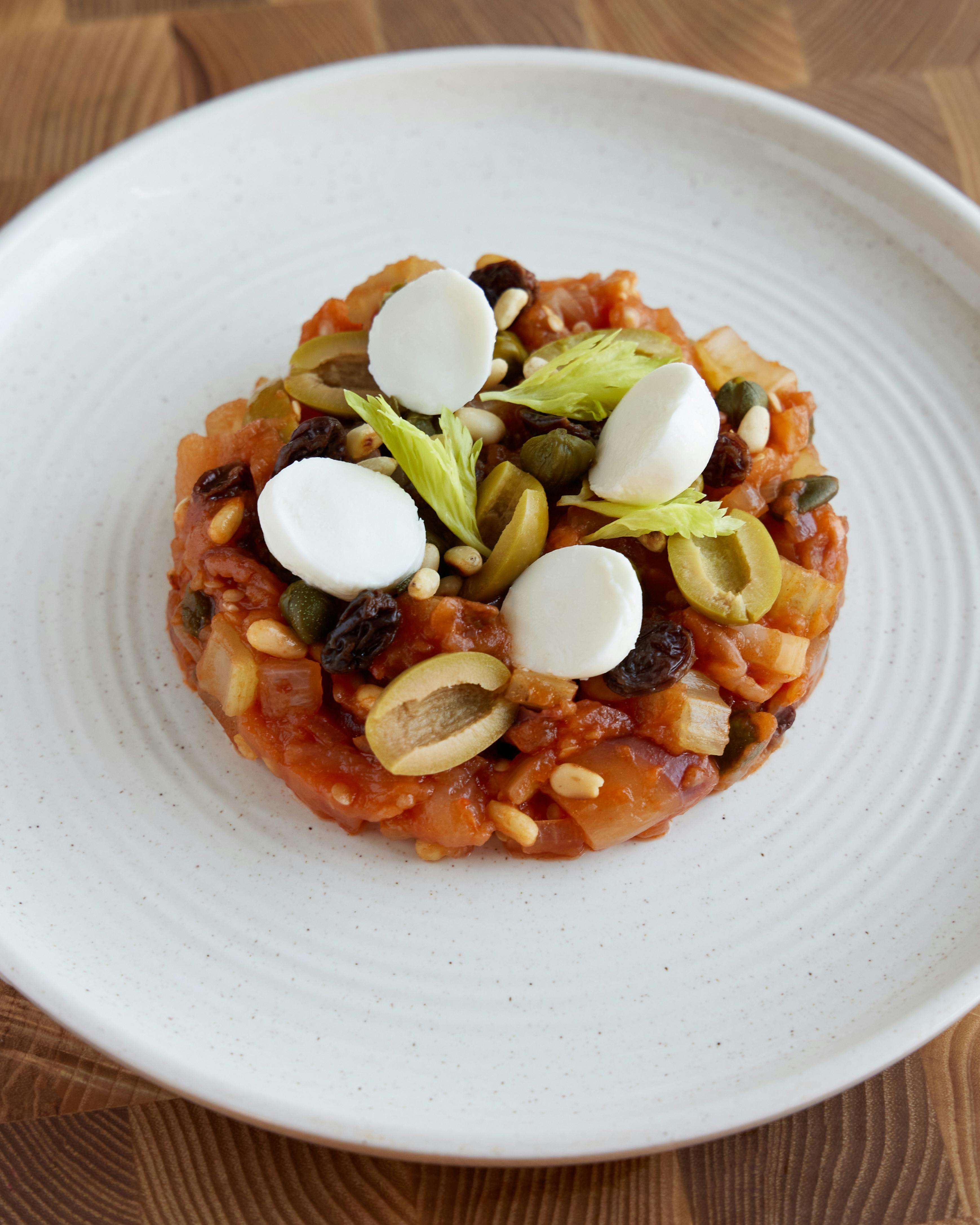
Pisto is a Spanish ratatouille-style dish made primarily from low-to-moderate carb vegetables cooked in olive oil, with an egg added for protein and fat. The base vegetables — zucchini, green peppers, and garlic — are keto-friendly. However, tomato and onion add meaningful net carbs. A standard serving (roughly 200-250g of cooked vegetables) could contribute 8-12g net carbs, which is manageable within a daily keto budget but requires portion awareness. The olive oil base and egg significantly improve the fat-to-carb ratio, making this more keto-compatible than it might appear at first glance. This dish can fit keto in moderate portions but would crowd out carb allowances if consumed in large quantities.
Strict keto practitioners may flag the cumulative carb load from tomatoes and onions as problematic, particularly for those targeting the lower end of the 20g net carb threshold. Some clinical keto protocols would recommend reducing or eliminating onion and tomato to make this dish unambiguously keto.
Pisto is a Spanish vegetable stew similar to ratatouille, and its base ingredients — tomato, green peppers, zucchini, onion, garlic, and olive oil — are entirely plant-based. However, the listed ingredients explicitly include egg, which is an animal product excluded under vegan rules. Pisto manchego is traditionally served with a fried egg on top or with the egg scrambled into the dish. The presence of egg disqualifies this preparation as vegan. Without the egg, pisto would be a high-scoring vegan dish.
Pisto is a Spanish vegetable stew made from paleo-friendly ingredients — tomatoes, zucchini, onion, garlic, and eggs are all fully approved. Olive oil is the preferred cooking fat in paleo. The single disqualifying ingredient is salt (added salt is excluded under strict paleo rules). Without salt it would score a strong 8-9, but since salt is listed as an ingredient and is a standard component of the dish, it must be flagged. The caution rating reflects the salt issue rather than any fundamental problem with the dish itself, which is otherwise an excellent paleo choice.
Many modern paleo practitioners and frameworks (including Mark Sisson's Primal Blueprint) accept small amounts of unrefined salt such as sea salt or Himalayan pink salt, arguing that natural mineral salts were accessible to Paleolithic humans through animal blood, organ meats, and mineral-rich water sources. Under this interpretation, Pisto with a modest amount of sea salt would be fully approved.
Pisto is a Spanish vegetable stew closely related to French ratatouille, built almost entirely on Mediterranean staple ingredients: tomatoes, peppers, zucchini, onion, and garlic, all cooked in extra virgin olive oil. This combination is a textbook example of the plant-forward, olive-oil-centered cooking that defines the Mediterranean diet. The optional egg adds moderate protein and is acceptable within Mediterranean guidelines as part of occasional egg consumption. The dish is unprocessed, contains no refined grains, added sugars, or red meat, and aligns strongly with the dietary pattern. The only reason it does not score a perfect 10 is the inclusion of the egg, which shifts the dish slightly from purely plant-based to a moderate-protein preparation.
Some stricter interpretations of the Mediterranean diet de-emphasize eggs beyond a few per week, and if pisto is served with egg regularly, some practitioners might rate the egg component as 'caution.' However, most Mediterranean diet authorities, including those following traditional Spanish and broader Iberian culinary traditions, consider eggs in this context entirely acceptable.
Pisto is a Spanish vegetable stew — essentially a ratatouille — made almost entirely from plant foods: tomato, green peppers, zucchini, onion, garlic, and olive oil. Every one of these core ingredients is explicitly excluded from the carnivore diet. The only animal-derived component is the egg, which is sometimes served on top, but it represents a minor garnish in a dish that is fundamentally plant-based. Olive oil is a plant-derived fat, also excluded. The overwhelming composition of this dish places it firmly in the 'avoid' category with no ambiguity.
Pisto is a traditional Spanish vegetable stew (similar to ratatouille) made entirely from Whole30-compliant ingredients. Tomatoes, green peppers, zucchini, onion, and garlic are all whole vegetables explicitly allowed on the program. Olive oil is a natural fat that is fully compliant. Salt is explicitly allowed. The egg, often served on top of pisto, is a Whole30-approved protein. Every ingredient in this dish is unprocessed and falls squarely within the Whole30 framework with no excluded ingredients present.
Pisto is a Spanish vegetable stew that contains two major high-FODMAP ingredients that cannot be made safe at standard serving sizes: onion and garlic. Both are among the highest-fructan foods tested by Monash University and are prohibited even in small amounts during the elimination phase. Onion contains fructans at virtually any culinary dose, and garlic is similarly flagged as high-FODMAP at even 1/4 clove. The other ingredients are generally low-FODMAP: tomato is low-FODMAP at standard servings (around 65g), zucchini is low-FODMAP up to 65g, green peppers (capsicum) are low-FODMAP, olive oil is safe, salt is safe, and eggs are low-FODMAP. However, the presence of onion and garlic as core structural ingredients — not trace seasonings — makes this dish unavoidably high-FODMAP in its traditional preparation. There is no realistic way to order or prepare traditional Pisto and have it be elimination-phase safe unless onion and garlic are completely omitted and replaced (e.g., with garlic-infused oil and the green tops of spring onions).
Pisto is a Spanish vegetable medley closely resembling ratatouille, made primarily from DASH-core vegetables: tomatoes, green peppers, zucchini, onion, and garlic. These ingredients are rich in potassium, magnesium, fiber, and antioxidants — exactly what DASH emphasizes. Olive oil is a recommended unsaturated fat within DASH guidelines. The optional egg adds lean protein and is acceptable in moderation under most current DASH interpretations. The main concern is added salt, which should be minimized or eliminated for DASH compliance, particularly for the low-sodium variant (<1,500mg/day). With controlled salt use, this dish aligns very well with DASH principles. The egg inclusion introduces mild uncertainty given evolving guidance on dietary cholesterol.
NIH DASH guidelines historically emphasized limiting dietary cholesterol, which placed eggs under scrutiny. However, updated clinical interpretations following the 2020-2025 Dietary Guidelines — which removed the 300mg/day cholesterol cap — now generally allow eggs in moderation; some conservative cardiologists still recommend limiting whole eggs to 3-4 per week, which may affect scoring if eggs are a regular component of this dish.
Pisto is a Spanish ratatouille-style dish made almost entirely of Zone-favorable ingredients. Tomatoes, zucchini, green peppers, onion, and garlic are all low-glycemic vegetables that Zone strongly encourages — they provide low-net-carb blocks with high fiber and polyphenol content. Olive oil is the ideal Zone fat source, being primarily monounsaturated and anti-inflammatory. The optional egg adds lean protein, which can help balance the meal toward the 40/30/30 ratio. The dish has no refined carbohydrates, no sugar, no saturated fat of concern, and no processed ingredients. As a side dish, it pairs excellently with a lean protein (chicken, fish) to complete a Zone-balanced plate. The main consideration is portioning the olive oil carefully to avoid excess fat blocks, but overall this dish is nearly ideal for Zone eating.
Pisto is a Spanish vegetable stew closely related to French ratatouille, built on a foundation of strongly anti-inflammatory ingredients. Tomatoes, zucchini, green peppers, and onion are all colorful vegetables rich in antioxidants — tomatoes contribute lycopene (especially bioavailable when cooked), peppers provide vitamin C and carotenoids, zucchini offers lutein and zeaxanthin, and onion provides quercetin. Garlic is a well-established anti-inflammatory agent containing allicin and organosulfur compounds. Extra virgin olive oil — the fat base — is one of the most endorsed foods in anti-inflammatory nutrition, delivering oleocanthal, oleic acid, and polyphenols. The optional egg adds choline and selenium, which have anti-inflammatory roles, though arachidonic acid content is a minor consideration. Overall, this is a whole-food, vegetable-forward dish cooked in EVOO with no refined ingredients, no added sugars, and no processed components. It aligns closely with Mediterranean anti-inflammatory eating patterns and Dr. Weil's Anti-Inflammatory Food Pyramid. The score is slightly moderated by the inclusion of nightshade vegetables (tomatoes, peppers) and eggs, both of which carry meaningful scientific debate in the anti-inflammatory context.
Tomatoes and green peppers are nightshades, and while mainstream anti-inflammatory nutrition (including Dr. Weil's pyramid) endorses them for their high antioxidant content, the Autoimmune Protocol (AIP) and researchers like Dr. Tom O'Bryan argue that solanine, lectins, and other alkaloids in nightshades may trigger or worsen inflammation in individuals with autoimmune conditions or gut permeability issues. Additionally, eggs — while broadly accepted in moderate anti-inflammatory frameworks — are flagged by some practitioners for their arachidonic acid content, which can serve as a precursor to pro-inflammatory eicosanoids, though the clinical relevance of this for whole eggs in typical culinary quantities is contested.
Pisto is a Spanish vegetable stew similar to ratatouille, made primarily from non-starchy vegetables (tomato, zucchini, green peppers, onion, garlic) cooked in olive oil, typically served with an egg on top. This combination makes it a solid GLP-1-friendly dish. The vegetable base is high in fiber, rich in water content (supporting hydration), easy to digest, and very nutrient-dense per calorie. The egg adds meaningful protein (6g per egg) and makes this a more complete small meal or substantial side. Olive oil is an unsaturated fat — acceptable in moderate amounts — though the quantity used in cooking matters significantly; traditional recipes can be fairly oil-heavy, which adds calories and fat that could worsen nausea or reflux. With a standard egg included, protein lands around 6-8g per serving, which is modest but reasonable for a side dish. Fiber from the vegetable medley is a genuine strength. The dish is warm, soft-textured, and easily digestible — well-suited to slowed gastric emptying. The main caution is oil quantity: a lighter-handed preparation scores closer to 8-9, while a heavily oiled traditional version pulls the score down toward 6.
Some GLP-1-focused dietitians would rate this higher, emphasizing the exceptional vegetable fiber and micronutrient density; others would caution that without intentional oil moderation, the fat content can trigger nausea or reflux in patients sensitive to higher-fat meals, particularly early in treatment. Individual tolerance to cooked alliums (onion, garlic) also varies, as they can cause bloating in some GLP-1 patients.
*See how scores were generated at our methodology page.
Nutritional profile
Six traits that cut across every diet.
Fiber & Plants
How much whole-plant food and fiber it delivers.
Healthy Fats
The quality of its fats (unsaturated, omega-3).
Whole / Unprocessed
How close it is to its natural, unprocessed form.
Gut Gentle
How easy it is on digestion (low FODMAP, few irritants).
Low Glycemic
How little it spikes your blood sugar.
Protein Density
How much protein it packs per calorie.
Controversy Index
Higher controversy = more disagreement between diets.
Diet-Specific Tips
 Keto — 5/10
View tips
- Tomatoes and onions are the primary carb contributors, adding 6-10g net carbs per serving
- Zucchini and green peppers are keto-friendly, low net-carb vegetables
- Olive oil base aligns well with keto's high-fat requirement
- Egg adds quality fat and protein, improving macronutrient profile
- Portion control is essential — a large serving could push daily carb limits
- No grains, added sugars, or starchy vegetables present
 Paleo — 5/10
View tips
- All vegetables (tomato, zucchini, green pepper, onion, garlic) are paleo-approved
- Olive oil is a preferred paleo cooking fat
- Eggs are fully paleo-approved
- Salt is the sole problematic ingredient under strict paleo rules
- Dish is unprocessed and whole-food based
- With unrefined sea salt substituted, most modern paleo frameworks would fully approve this dish
 Mediterranean — 9/10
View tips
- Primarily composed of Mediterranean staple vegetables: tomato, pepper, zucchini, onion, garlic
- Extra virgin olive oil as the primary and only fat source
- No processed ingredients, added sugars, or refined grains
- Egg is an acceptable moderate-frequency food in the Mediterranean diet
- Traditional Spanish dish reflecting authentic regional Mediterranean cooking
- Low calorie density, high fiber, rich in antioxidants from the vegetables
 Whole30 — 9/10
View tips
- All vegetables (tomato, green pepper, zucchini, onion, garlic) are Whole30-approved whole foods
- Olive oil is an explicitly allowed natural fat
- Salt is explicitly permitted under Whole30 rules
- Eggs are a core Whole30-approved protein source
- No grains, legumes, dairy, added sugar, or other excluded ingredients
- Dish is a whole-food preparation, not a recreation of a banned food category
 DASH — 8/10
View tips
- Predominantly DASH-core vegetables high in potassium, magnesium, and fiber
- Olive oil is a DASH-approved unsaturated fat
- Added salt is a concern — reducing or eliminating salt improves DASH compatibility significantly
- Egg adds lean protein; acceptable in moderation under current dietary guidelines but historically debated
- No saturated fat, no processed ingredients, no added sugars
- Excellent fit for DASH vegetable serving quotas (4-5 servings/day)
 Zone — 8/10
View tips
- All vegetables (tomato, zucchini, green pepper, onion, garlic) are low-glycemic and Zone-favorable carbohydrate sources
- Olive oil is the gold-standard Zone fat — monounsaturated and anti-inflammatory
- High polyphenol content from colorful vegetables aligns with Sears' anti-inflammatory focus
- Egg (if included) provides lean protein to help balance macros toward 40/30/30
- No refined carbohydrates, added sugar, or processed ingredients
- Olive oil quantity should be monitored to keep fat blocks in range (approximately 1 tsp per serving)
- As a side dish, best paired with additional lean protein to complete a full Zone meal
 Anti-Inflammatory — 8/10
View tips
- Extra virgin olive oil base — highest-tier anti-inflammatory fat (oleocanthal, polyphenols)
- Rich array of antioxidant vegetables: lycopene from cooked tomatoes, carotenoids from peppers, quercetin from onion
- Garlic provides allicin and organosulfur anti-inflammatory compounds
- Whole-food, minimally processed preparation with no refined carbs or added sugars
- Nightshade vegetables (tomatoes, green peppers) debated in autoimmune anti-inflammatory contexts
- Egg inclusion is moderate — choline and selenium are beneficial, but arachidonic acid is a minor concern
- Aligns strongly with Mediterranean dietary pattern consistently linked to reduced inflammatory markers
 GLP-1 Friendly — 7/10
View tips
- High vegetable fiber content supports digestion and GLP-1-related constipation prevention
- Egg adds protein (~6g), improving nutritional completeness for a side dish
- Olive oil is a preferred unsaturated fat but portion is critical — traditional recipes can be oil-heavy
- High water content from tomatoes and zucchini supports hydration
- Soft, cooked texture is easy to digest given slowed gastric emptying
- Low sugar, no refined grains, no fried components
- Garlic and onion may cause bloating in some patients
- Nutrient-dense per calorie — strong fit for reduced-appetite eating patterns