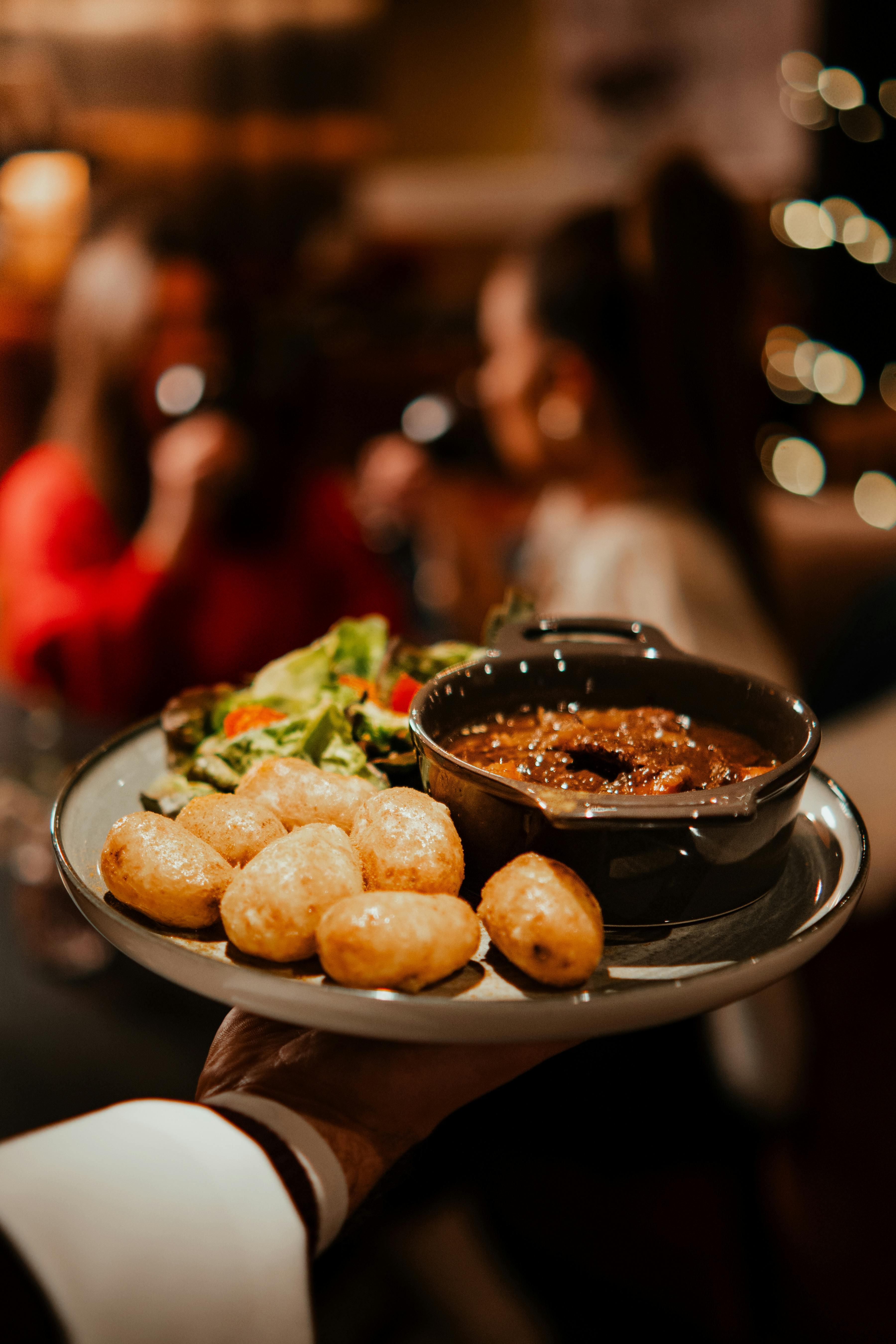
Photo: Léo Gilmant / Pexels
The diets react (see scores below)
Common Ingredients
- oxtail
- red wine
- onion
- carrot
- garlic
- tomato
- bay leaf
- beef broth
Specific recipes may vary.
Incompatible with 7 of 11 diets
Diet Ratings
Rabo de Toro is a slow-braised oxtail stew that is fundamentally keto-friendly in its protein and fat profile — oxtail is a collagen-rich, high-fat cut of beef that fits keto well. However, the braising liquid introduces meaningful carb load: red wine contributes residual sugars and carbohydrates (though much reduces during long cooking), tomato adds sugars, and carrot is a moderate-carb root vegetable. Onion in quantity also adds carbs. The combination of wine, tomato, and carrot in a traditional recipe can push a serving into the 10–20g net carb range depending on portion size and reduction, making it borderline. In small, carefully portioned servings with minimal sauce, it can fit; a full restaurant portion likely challenges keto limits.
Strict keto practitioners argue that even reduced red wine retains enough residual sugar and carbohydrates to merit avoidance, and that the carrot and tomato combination creates cumulative carb load that makes this dish incompatible without significant recipe modification. They would recommend substituting wine with additional beef broth and omitting carrots entirely.
Rabo de Toro is a traditional Spanish braised oxtail dish that is unambiguously non-vegan. It contains multiple animal-derived ingredients: oxtail (beef tail, a direct animal product), beef broth (made from animal bones and meat), and red wine (which, while increasingly vegan-filtered, is used here as a component of an otherwise entirely non-vegan dish. The presence of oxtail and beef broth alone make this completely incompatible with a vegan diet under any interpretation of veganism.
Rabo de Toro is built on a strong paleo foundation: oxtail is an unprocessed, nutrient-dense cut of beef, and the aromatics (onion, carrot, garlic, tomato, bay leaf) are all whole vegetables and herbs fully compatible with paleo. The beef broth is also paleo-approved when made without additives. The one gray-area ingredient is red wine. Alcohol and wine-based cooking are debated in the paleo community — while grapes are paleo, fermentation and the resulting alcohol place wine in a cautious category. Red wine used as a braising liquid also typically reduces significantly, lowering alcohol content, which some paleo practitioners consider acceptable. Overall, the dish is very close to fully paleo-compliant, held back only by the wine component.
Strict paleo authorities, including Loren Cordain's original framework, would flag alcohol in any form as a non-paleo processed substance to be avoided entirely. However, many modern paleo practitioners (Mark Sisson, Robb Wolf) treat occasional red wine as an acceptable indulgence, and cooking wine that reduces during braising is widely tolerated in practical paleo circles.
Rabo de Toro is a traditional Spanish oxtail stew built around beef, which is red meat — one of the most restricted categories in the Mediterranean diet. Guidelines call for red meat only a few times per month at most. Oxtail is a particularly fatty cut, high in saturated fat, compounding the concern. While the accompanying vegetables (onion, carrot, garlic, tomato) and aromatics (bay leaf, red wine) are Mediterranean-friendly ingredients, they do not redeem a dish whose primary protein is a large portion of fatty beef. The beef broth base further concentrates the red meat component. This dish directly contradicts the Mediterranean diet's emphasis on plant-forward eating and minimal red meat consumption.
Rabo de Toro (Spanish oxtail stew) is built around a genuinely carnivore-friendly cut — oxtail is a collagen-rich, nutrient-dense ruminant beef cut that would normally score highly. However, the traditional recipe is dominated by plant-based ingredients: onion, carrot, garlic, tomato, and bay leaf are all excluded plant foods, and red wine (fermented plant product with sugars and plant compounds) is a core component of the braise. While the beef broth base is acceptable, the dish as prepared cannot be considered carnivore-compatible. The oxtail itself is excellent; the preparation method disqualifies the dish entirely.
Rabo de Toro (Spanish braised oxtail) is a classic dish that is otherwise built on Whole30-compliant ingredients — oxtail (beef), vegetables (onion, carrot, garlic, tomato), aromatics (bay leaf), and beef broth are all fully allowed. However, red wine is a core, non-optional ingredient in this dish, and alcohol is explicitly excluded on the Whole30 program. The dish cannot be authentically prepared without it, and even though alcohol cooks off partially during braising, the Whole30 rules exclude alcohol as an ingredient regardless of cooking. A modified version substituting red wine with compliant beef broth or grape juice could be made compliant, but the dish as traditionally described is a clear avoid.
Rabo de Toro as traditionally prepared contains multiple high-FODMAP ingredients that make it unsuitable during the elimination phase. Onion and garlic are among the highest-FODMAP foods tested by Monash University, both being very high in fructans at any cooking amount. They are foundational to this dish and cannot be reduced to negligible quantities while maintaining the dish's character. Red wine contributes some fructans and polyols at typical serving quantities (though a small splash may be tolerable). Beef broth frequently contains onion and garlic as base ingredients, compounding the FODMAP load. While oxtail (beef), carrot, tomato, and bay leaf are individually low-FODMAP at standard servings, the cumulative FODMAP burden from onion and garlic alone is disqualifying. Even long, slow braising does not destroy FODMAPs — fructans leach into the cooking liquid, meaning the entire dish becomes heavily FODMAP-loaded.
Rabo de Toro (Spanish oxtail stew) is fundamentally incompatible with DASH diet principles. Oxtail is a high-fat cut of red meat with significant saturated fat content — DASH explicitly limits red meat and saturated fat. The dish is braised in beef broth, which typically carries high sodium levels, and the slow-braised preparation renders additional fat from the oxtail into the sauce. While the vegetables (onion, carrot, garlic, tomato) and red wine are DASH-friendly components, they do not offset the primary protein concerns. The collagen-rich, fatty nature of oxtail means even a single serving delivers substantial saturated fat well beyond DASH thresholds. Standard beef broth further compounds sodium load. This dish represents exactly the category DASH was designed to limit: fatty red meat preparations with high sodium.
Rabo de Toro (Spanish braised oxtail) presents a mixed Zone Diet profile. The dish provides substantial protein from oxtail, but oxtail is a fatty cut of beef — far from the lean protein ideal of the Zone Diet. It contains significant saturated fat and collagen-rich connective tissue, which elevates the fat content well beyond the 30% target and skews toward saturated rather than monounsaturated fat. On the positive side, the vegetable base (onion, carrot, garlic, tomato) contributes low-glycemic carbohydrates with polyphenols and anti-inflammatory compounds. Red wine adds polyphenols (resveratrol) that align with Sears' later anti-inflammatory emphasis, though it also adds some sugar/alcohol carbohydrates. The dish lacks a lean protein anchor and would need careful portioning — a small serving of oxtail meat (pulled from the bone) paired with additional favorable vegetables could approximate Zone balance, but the inherent fat content of oxtail makes this challenging. As a traditional slow-braise, the fat renders into the braising liquid, making fat separation important for Zone compliance.
In Sears' later writings (Zone Perfect Meals in Minutes, The OmegaRx Zone), his anti-inflammatory framework became more nuanced about saturated fat, acknowledging that the primary concern is arachidonic acid production and inflammatory eicosanoids rather than saturated fat per se. Some Zone practitioners argue that oxtail's gelatin/collagen content and the polyphenol-rich braising liquid (red wine, tomatoes, garlic) partially offset concerns, and that a small portion of pulled oxtail meat with the vegetables can fit within a Zone block structure if the braising fat is skimmed.
Rabo de Toro is a slow-braised oxtail stew with a genuinely mixed anti-inflammatory profile. On the positive side, the dish is rich in anti-inflammatory aromatics and vegetables: garlic, onion, carrot, and tomato all contribute antioxidants and polyphenols (quercetin, lycopene, beta-carotene). Red wine adds resveratrol, which Dr. Weil's Anti-Inflammatory Pyramid recognizes as beneficial in moderate amounts. Bay leaf contributes minor anti-inflammatory phytochemicals. The long braising process integrates these ingredients thoroughly into the dish. However, oxtail is a fatty cut of red meat, high in saturated fat — a category the anti-inflammatory framework explicitly limits. The collagen-rich connective tissue breaks down into gelatin during braising (which some researchers view neutrally or even favorably for gut health), but the overall saturated fat load from a fatty beef cut remains a concern. Beef broth is neutral. The dish contains no omega-3s, no whole grains, no legumes, and no meaningful anti-inflammatory spices like turmeric or ginger. As an occasional meal in a broader anti-inflammatory dietary pattern, this dish is acceptable — the vegetable base and red wine are genuine positives — but the red meat and saturated fat content prevent it from scoring higher than the caution range.
Dr. Weil's framework permits lean poultry and places red meat in the 'limit' rather than 'avoid' category, suggesting occasional consumption of dishes like this is acceptable, especially when paired with antioxidant-rich vegetables and moderate red wine. However, stricter anti-inflammatory protocols and researchers focused on saturated fat's role in upregulating NF-κB and inflammatory cytokines would rate fatty beef cuts more harshly, particularly for individuals with cardiovascular risk or systemic inflammation.
Rabo de Toro is a traditional Spanish braised oxtail stew that presents several significant problems for GLP-1 patients. Oxtail is one of the fattiest cuts of beef available — a typical serving contains 20-30g of fat, heavily weighted toward saturated fat, which directly worsens GLP-1 side effects including nausea, bloating, and reflux. The slow-braise cooking method renders fat into the sauce, meaning even the broth carries a high fat load. While the dish does provide meaningful protein and the vegetables (onion, carrot, tomato, garlic) contribute some fiber and micronutrients, the fat profile disqualifies it. Red wine adds alcohol — though much of the alcohol cooks off during braising, residual alcohol and congeners remain. The dish is also heavy and slow to digest, compounding gastric emptying issues. The vegetable base and long braise are its only redeeming features. A lean protein swap (e.g., braised chicken thighs or lean beef chuck, defatted after cooking) using the same flavor base would be a meaningful upgrade.
Some GLP-1-focused dietitians allow oxtail and similar braised fatty cuts occasionally if the cooking liquid is refrigerated and the solidified fat layer removed before serving — this significantly reduces fat load and may bring the dish into caution territory. The disagreement centers on whether fat-skimming adequately mitigates GI side effect risk, and individual tolerance varies considerably.
*See how scores were generated at our methodology page.
Nutritional profile
Six traits that cut across every diet.
Fiber & Plants
How much whole-plant food and fiber it delivers.
Healthy Fats
The quality of its fats (unsaturated, omega-3).
Whole / Unprocessed
How close it is to its natural, unprocessed form.
Gut Gentle
How easy it is on digestion (low FODMAP, few irritants).
Low Glycemic
How little it spikes your blood sugar.
Protein Density
How much protein it packs per calorie.
Controversy Index
Higher controversy = more disagreement between diets.
Diet-Specific Tips
 Keto — 5/10
View tips
- Oxtail is high-fat, collagen-rich beef — excellent keto protein source
- Red wine adds residual carbs and sugars even after reduction
- Carrot is a moderate-carb root vegetable that adds net carbs
- Tomato contributes natural sugars
- Onion in braising quantities adds meaningful carbs
- Long braise concentrates all carb sources into the sauce
- Manageable with strict portion control and reduced sauce consumption
- Traditional recipe not optimized for keto without modifications
 Paleo — 6/10
View tips
- Oxtail is an unprocessed, paleo-approved protein source
- All vegetables and aromatics (onion, carrot, garlic, tomato, bay leaf) are fully paleo
- Beef broth is paleo-compliant when additive-free
- Red wine is the sole gray-area ingredient — alcohol is debated within the paleo community
- Wine reduces significantly during braising, which some paleo practitioners consider acceptable
- No grains, legumes, dairy, seed oils, or refined sugar present
 Zone — 5/10
View tips
- Oxtail is a high-fat, high-saturated-fat cut — not a Zone-favorable lean protein
- Significant saturated fat content makes hitting the 30% fat target difficult without skimming braising liquid
- Vegetable base (onion, carrot, tomato, garlic) provides favorable low-glycemic Zone carbohydrates
- Red wine contributes polyphenols aligned with Sears' anti-inflammatory emphasis but also adds carbohydrate load
- Dish lacks lean protein anchor; pulled oxtail meat must be carefully portioned to ~25g protein
- No added seed oils or trans fats; fat profile is primarily animal saturated fat
- Carrot is a moderate-glycemic vegetable — Zone classifies it as less favorable but usable in small amounts
- Can be made more Zone-compliant by skimming fat, using small portions, and serving with additional non-starchy vegetables
 Anti-Inflammatory — 4/10
View tips
- Oxtail is a high-fat red meat cut — saturated fat load is a primary concern under anti-inflammatory guidelines
- Garlic, onion, carrot, and tomato contribute antioxidants (quercetin, lycopene, beta-carotene)
- Red wine adds resveratrol, recognized in Dr. Weil's pyramid as conditionally beneficial
- No omega-3 fatty acids, no anti-inflammatory spices (turmeric, ginger), no legumes or whole grains
- Slow braising integrates anti-inflammatory aromatics but does not reduce the saturated fat content of the meat
- Acceptable occasionally within a broader anti-inflammatory pattern, not as a regular staple