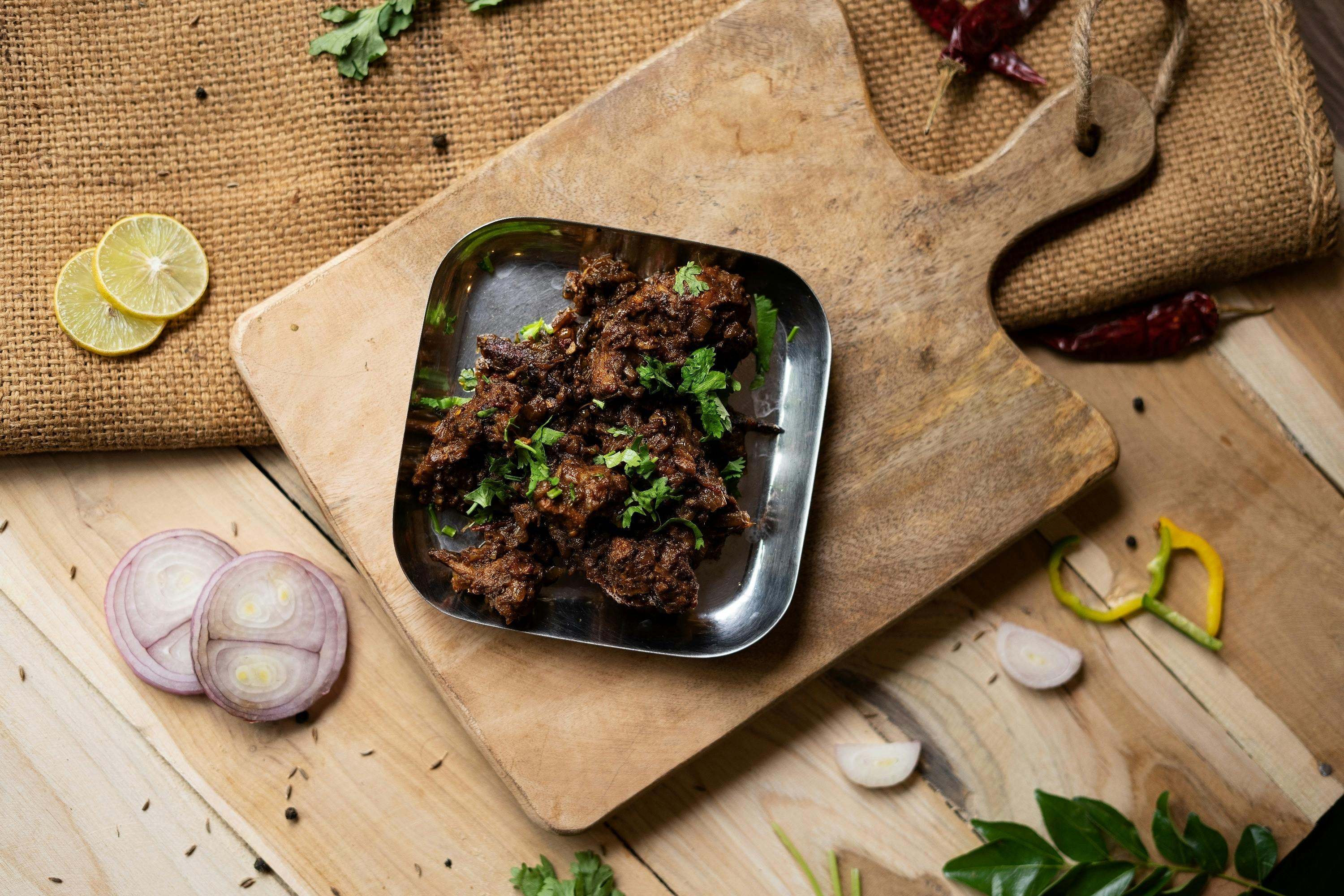
Photo: Mithul Varshan / Pexels
Sri-Lankan
Fish Ambul Thiyal
The diets react (see scores below)
Common Ingredients
- fish
- goraka
- black pepper
- chili powder
- garlic
- ginger
- curry leaves
- pandan
- cinnamon
Specific recipes may vary.
Incompatible with 3 of 11 diets
Diet Ratings
Fish Ambul Thiyal is a Sri Lankan sour fish curry whose ingredients are predominantly keto-friendly. Fish provides excellent high-quality protein with negligible carbs. Goraka (Garcinia cambogia), the defining souring agent, is used in small quantities and contributes minimal net carbs. The remaining spices and aromatics — black pepper, chili powder, garlic, ginger, curry leaves, pandan, and cinnamon — are used in typical culinary amounts and collectively add very few net carbs. There are no grains, sugars, starchy vegetables, or high-carb thickeners. This is a dry-style curry, further reducing risk of hidden carb sources. A standard serving fits comfortably within daily keto carb limits.
Some strict keto practitioners flag curry leaves and pandan as ingredients to monitor in larger quantities, and may scrutinize goraka for any residual sugars in commercial preparations. Those following clinical or therapeutic keto protocols may prefer to verify the exact goraka quantity and source, as processed or packaged goraka pastes sometimes contain additives.
Fish Ambul Thiyal is a traditional Sri Lankan sour fish curry where fish is the central and primary ingredient. Fish is an animal product and is unambiguously excluded from a vegan diet. All other ingredients — goraka (gamboge), black pepper, chili powder, garlic, ginger, curry leaves, pandan, and cinnamon — are plant-based, but the dish cannot be considered vegan due to its fish content.
Fish Ambul Thiyal is an excellent paleo dish. Every ingredient aligns well with paleo principles. Fish is a cornerstone paleo protein. Goraka (Garcinia cambogia), the signature souring agent, is a dried fruit rind used traditionally — wholly natural and unprocessed. Black pepper, chili powder, garlic, ginger, curry leaves, pandan, and cinnamon are all herbs and spices fully compatible with paleo. There are no grains, legumes, dairy, refined sugars, seed oils, or processed additives present. The dish is traditionally slow-cooked with minimal water, relying on natural ingredients only, making it a clean, whole-food preparation consistent with hunter-gatherer eating patterns.
Fish Ambul Thiyal is a dry, sour fish curry built on a foundation of whole fish — a Mediterranean diet staple — with an impressive array of anti-inflammatory spices and aromatics (black pepper, garlic, ginger, cinnamon, chili powder, curry leaves, pandan). Goraka (Garcinia cambogia) acts as a natural acidulant and preservative with no nutritional drawbacks. The dish contains no added sugars, refined grains, or processed ingredients, and is cooked with minimal fat. Fish aligns perfectly with the Mediterranean principle of 2-3 seafood servings per week. The spice profile, while distinctly Sri Lankan rather than Mediterranean, mirrors the herb-and-spice-forward cooking philosophy of traditional Mediterranean cuisine. The only departure is the absence of olive oil as the cooking fat, which is the canonical Mediterranean fat source.
Some strict Mediterranean diet frameworks may assign a slightly lower score because goraka and the specific spice blend are non-traditional to the Mediterranean basin, and the dish is typically cooked without olive oil. However, most modern Mediterranean diet researchers emphasize dietary patterns and food quality over geographic ingredient origin, and this dish's profile — whole fish, whole spices, no processed additives — is fully aligned with those principles.
Fish Ambul Thiyal is a Sri Lankan sour fish curry that, while centered on fish (a carnivore-approved protein), is heavily loaded with plant-based ingredients that make it incompatible with the carnivore diet. Goraka (Garcinia cambogia, a sour tamarind-like fruit) is the defining ingredient giving this dish its characteristic sourness — it is entirely plant-derived. Beyond goraka, the dish contains chili powder, black pepper, garlic, ginger, curry leaves, pandan leaves, and cinnamon — all plant-based spices, aromatics, and herbs that are explicitly excluded on a strict carnivore protocol. While black pepper and salt are tolerated by some lenient carnivore practitioners, the sheer volume and variety of plant ingredients here means this dish cannot be considered carnivore-compatible in any meaningful sense. The fish itself would be approved, but the preparation method disqualifies this dish entirely.
Fish Ambul Thiyal is a traditional Sri Lankan sour fish curry made with entirely Whole30-compliant ingredients. Fish is explicitly allowed as a protein. Goraka (Garcinia cambogia/gamboge), a sour tamarind-like fruit used as a souring and preserving agent, is a natural fruit product with no excluded components. Black pepper, chili powder, garlic, ginger, curry leaves, pandan, and cinnamon are all herbs and spices that are fully permitted on Whole30. There are no grains, legumes, dairy, added sugars, alcohol, or other excluded ingredients present. This is a whole-food, minimally processed dish that aligns perfectly with the spirit and letter of the Whole30 program.
Fish Ambul Thiyal contains garlic, which is one of the highest-FODMAP ingredients known — even small amounts of garlic provide significant fructans and must be avoided during the elimination phase. While fish itself is naturally FODMAP-free and most other ingredients (goraka/Garcinia cambogia, black pepper, chili powder, ginger, curry leaves, pandan, cinnamon) are low-FODMAP or used in trace amounts, the presence of garlic as a primary flavoring ingredient makes this dish unsuitable for the elimination phase. There is no realistic way to consume a standard serving of this traditional dish — where garlic is integral to the recipe and cooked directly into the sauce — without ingesting meaningful fructan loads. Unlike garlic-infused oil, garlic cooked in water-based curries and sauces fully transfers its water-soluble FODMAPs into the dish.
Fish Ambul Thiyal is a Sri Lankan sour fish curry made by slow-cooking fish with goraka (Garcinia cambogia, a sour tamarind-like fruit), black pepper, chili, and aromatics. The dish has several DASH-positive features: fish provides lean protein and omega-3 fatty acids, goraka is a natural souring agent with no sodium, and the aromatic spices (garlic, ginger, curry leaves, pandan, cinnamon) are sodium-free and nutrient-rich. However, the traditional preparation typically involves a significant amount of salt to preserve the dish — Ambul Thiyal is historically a preservation curry, and the salt content in traditional recipes can be quite high. The chili powder and the intensity of the dish also mean portions are small, but sodium from salt added during cooking is the primary concern. Without added salt or with minimal salt, this dish would score much higher (8-9), as the base ingredients are largely DASH-compatible. As typically prepared, the sodium level warrants caution.
NIH DASH guidelines would flag this dish primarily due to traditionally high salt content used in preservation-style cooking. However, updated clinical interpretations note that when prepared with minimal or no added salt — as is possible in home cooking — the fish, spices, and goraka base is highly compatible with DASH principles, and some DASH-oriented dietitians would approve a low-sodium version without hesitation.
Fish Ambul Thiyal is an excellent Zone Diet candidate. The primary protein is fish — a lean protein source that is highly favorable in Zone methodology, providing quality protein blocks with minimal saturated fat and potential omega-3 benefits depending on the fish species used (tuna is traditional). Goraka (Garcinia cambogia/gamboge), the key souring agent, is essentially a low-calorie, low-carb acidic fruit used in small amounts for flavor, contributing negligible macros. The aromatics — garlic, ginger, curry leaves, pandan, cinnamon, black pepper, and chili powder — are all polyphenol-rich, anti-inflammatory seasonings that align perfectly with Dr. Sears' emphasis on omega-3s and polyphenols. This dish is notably dry-cooked with minimal added fat, which means the meal planner has full control over fat blocks (a small drizzle of olive oil can be added to hit the monounsaturated fat target). There are virtually no carbohydrate blocks in the dish itself, so it should be paired with low-glycemic vegetables to complete the Zone meal. The absence of coconut milk (unlike many Sri Lankan curries) keeps saturated fat low, which is a significant Zone advantage.
Fish Ambul Thiyal is a traditional Sri Lankan sour fish curry with an exceptional anti-inflammatory ingredient profile. Fish (typically tuna) provides lean protein and omega-3 fatty acids (EPA/DHA), which are foundational to the anti-inflammatory diet. Goraka (Garcinia cambogia/gamboge), the defining souring agent, contains hydroxycitric acid and has demonstrated antioxidant properties in preliminary research. Black pepper contributes piperine, which notably enhances curcumin bioavailability and has independent anti-inflammatory effects. Chili powder provides capsaicin, a well-established anti-inflammatory compound. Garlic and ginger are both strongly supported anti-inflammatory spices — ginger shares mechanistic similarities with NSAIDs (inhibiting COX and 5-LOX pathways), while garlic's allicin compounds reduce CRP and IL-6 markers. Cinnamon reduces blood glucose and inflammatory cytokines. Curry leaves are rich in carbazole alkaloids with antioxidant and anti-inflammatory properties. Pandan leaves contain flavonoids and phenolic compounds with antioxidant activity. Notably, this dish contains no refined carbohydrates, added sugars, seed oils, or processed additives. The traditional preparation typically uses minimal oil or coconut, and when coconut is used, it's a point of minor consideration (saturated fat), though goraka's acidity means this dish often requires very little added fat at all. Overall, this is a near-ideal anti-inflammatory main dish — whole fish plus a concentrated blend of validated anti-inflammatory spices and aromatics.
Confidence is 'medium' rather than 'high' primarily due to goraka: while traditionally used and showing preliminary antioxidant properties, it lacks the robust clinical evidence base of ingredients like turmeric or ginger. Additionally, if the fish used is farmed rather than wild-caught, the omega-3 to omega-6 ratio is less favorable. Some autoimmune protocol (AIP) practitioners would flag chili powder as a nightshade-derived spice that may trigger inflammation in sensitive individuals.
Fish Ambul Thiyal is a traditional Sri Lankan sour fish curry where the fish (typically tuna or similar firm fish) is dry-cooked with goraka (Garcinia cambogia, a sour tamarind-like fruit), black pepper, and chili powder. The fish itself is an excellent lean protein source, fully aligned with GLP-1 dietary priorities. However, two ingredients create meaningful concern: chili powder in meaningful quantities and black pepper used assertively can worsen GLP-1-associated nausea, reflux, and gastric discomfort given the slowed gastric emptying effect of these medications. This dish is typically prepared quite spicy and quite sour, both of which can irritate a stomach that is already under GLP-1 stress. Goraka (Garcinia cambogia) is acidic and may further aggravate reflux symptoms that GLP-1 patients commonly experience. On the positive side, this is a dry or minimally-oiled preparation — not fried, not heavy in saturated fat — and the aromatics (garlic, ginger, curry leaves, pandan, cinnamon) are generally well-tolerated and even mildly beneficial. If prepared with restrained chili and spice levels, this dish shifts meaningfully toward approve territory. As typically prepared at full traditional spice intensity, the GI irritation risk justifies a caution rating.
Some GLP-1-focused dietitians would rate this more favorably, noting that spice tolerance varies widely among patients and that the lean, low-fat fish protein base is nutritionally strong; they would recommend simply adjusting chili powder down rather than avoiding the dish. Others flag that sour-and-spicy combinations are among the most commonly reported triggers for GLP-1 nausea flares, particularly in the first several months of treatment, and would advise avoiding dishes like this until side effects stabilize.
*See how scores were generated at our methodology page.
Nutritional profile
Six traits that cut across every diet.
Fiber & Plants
How much whole-plant food and fiber it delivers.
Healthy Fats
The quality of its fats (unsaturated, omega-3).
Whole / Unprocessed
How close it is to its natural, unprocessed form.
Gut Gentle
How easy it is on digestion (low FODMAP, few irritants).
Low Glycemic
How little it spikes your blood sugar.
Protein Density
How much protein it packs per calorie.
Controversy Index
Higher controversy = more disagreement between diets.
Diet-Specific Tips
 Keto — 8/10
View tips
- Fish is zero-carb, high-protein, and keto-ideal
- Goraka (Garcinia cambogia) used in small amounts — minimal net carb contribution
- No grains, sugar, starchy vegetables, or high-carb thickeners
- Spices and aromatics contribute negligible net carbs at culinary quantities
- Dry-style cooking method avoids carb-dense sauces or coconut milk additions
- Whole, unprocessed ingredients align with keto food quality preferences
 Paleo — 9/10
View tips
- Fish is a primary paleo-approved protein source
- Goraka (Garcinia cambogia) is a natural fruit-based souring agent — fully paleo
- All spices (black pepper, chili, cinnamon) and aromatics (garlic, ginger) are paleo-approved
- Curry leaves and pandan are natural herbs with no paleo concerns
- No grains, legumes, dairy, seed oils, or refined sugars present
- Traditional dry-cooking method avoids processed or added ingredients
 Mediterranean — 8/10
View tips
- Whole fish as primary protein — core Mediterranean food
- No refined grains, added sugars, or processed ingredients
- Rich anti-inflammatory spice profile (garlic, ginger, black pepper, cinnamon)
- No olive oil used — cooking fat diverges from Mediterranean standard
- Goraka is a natural, whole-food souring agent — no nutritional concerns
- Aligns with Mediterranean emphasis on fish 2-3 times weekly
 Whole30 — 9/10
View tips
- Fish is explicitly allowed on Whole30
- Goraka is a natural sour fruit used as a flavoring agent — compliant
- All spices and aromatics (black pepper, chili powder, garlic, ginger, cinnamon) are fully allowed
- Curry leaves and pandan are natural herbs — compliant
- No excluded ingredients: no grains, dairy, legumes, or added sugars
- Whole, unprocessed dish that honors the spirit of Whole30
 DASH — 5/10
View tips
- Fish is a DASH-recommended lean protein rich in omega-3s
- Goraka (Garcinia cambogia) is a natural souring agent with no sodium — favorable
- All spices and aromatics are sodium-free and DASH-compatible
- Traditional Ambul Thiyal preparation uses significant salt as a preservation method — primary DASH concern
- No saturated fat, no processed ingredients, no added sugars
- Low-sodium home preparation would elevate this to an 'approve' rating
- Chili powder quantity may be high but is not a DASH disqualifier
 Zone — 8/10
View tips
- Fish is a highly favorable Zone lean protein source with potential omega-3 benefits
- Goraka contributes negligible carbohydrates and has anti-inflammatory properties
- Dry cooking style means no added fats are locked in — fat blocks are fully controllable
- No coconut milk means low saturated fat, unlike many South Asian curries
- Aromatics (garlic, ginger, cinnamon, curry leaves) are polyphenol-rich and anti-inflammatory — aligned with Sears' later Zone writing
- Dish is nearly carb-free, requiring low-glycemic vegetable sides to complete the 40/30/30 ratio
- Minimal processing — whole food ingredients throughout
 Anti-Inflammatory — 8/10
View tips
- Fish provides lean protein and omega-3 fatty acids (EPA/DHA) — core anti-inflammatory nutrients
- Goraka (Garcinia) contributes antioxidant hydroxycitric acid and gives the dish its characteristic acidity with minimal added fat required
- Black pepper (piperine) — anti-inflammatory and bioavailability-enhancing compound
- Ginger — inhibits COX and 5-LOX inflammatory pathways, comparable to NSAIDs in mechanism
- Garlic — allicin compounds linked to reduced CRP and pro-inflammatory cytokines
- Cinnamon — reduces inflammatory markers and supports blood glucose regulation
- Chili powder — capsaicin with documented anti-inflammatory effects; minor AIP concern for nightshade-sensitive individuals
- Curry leaves and pandan — flavonoids and phenolic antioxidant compounds
- No refined carbohydrates, added sugars, seed oils, or processed additives
- Wild-caught vs. farmed fish distinction affects omega-3:omega-6 ratio
 GLP-1 Friendly — 5/10
View tips
- Lean fish is an excellent high-protein, low-fat GLP-1-compatible base
- Chili powder and black pepper at traditional intensity may worsen nausea and reflux due to slowed gastric emptying
- Goraka (Garcinia cambogia) is highly acidic and may aggravate GLP-1-related reflux
- Dry cooking method avoids excess fat — not fried or oil-heavy
- Garlic, ginger, curry leaves, pandan, and cinnamon are generally well-tolerated and nutritionally neutral to positive
- Dish is portion-friendly and not calorie-dense
- Spice level adjustment significantly changes the risk profile of this dish